Revision Surgery Is Not Always a Simple Adjustment.
Many patients considering revision eyelid surgery believe the problem can be corrected simply by changing the fold height, removing scar tissue, or adjusting asymmetry.
In some cases, this may be true.
However, certain failed eyelid surgeries involve deeper structural problems that cannot be corrected through simple cosmetic modification alone.
When support structures, muscle balance, tissue integrity, or functional stability have already been significantly compromised, revision surgery often becomes far more complex than patients initially expect.
The Problem Is Sometimes Structural, Not Cosmetic.
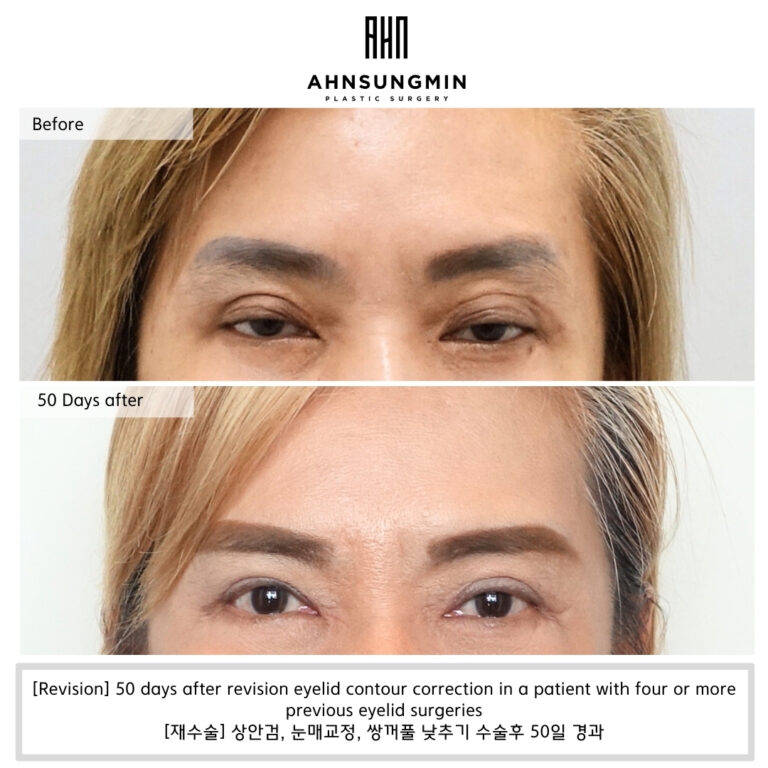
One of the most important realities in revision eyelid surgery is that the visible appearance of the eyelid may not fully reflect the severity of the underlying structural damage.
Patients may focus on a fold that appears too high, uneven, thick, or unnatural.
But underneath the visible appearance, there may already be scar adhesion, tissue deficiency, residual ptosis, muscle imbalance, compromised support structures, or progressive instability caused by previous surgery.
In these situations, simply creating a lower fold or removing tissue does not solve the underlying problem.
Repeated Revision Surgery Can Increase Structural Damage.
One of the most difficult situations in revision eyelid surgery occurs when multiple procedures have already been performed without fully identifying the original structural problem.
Each additional surgery may increase scar formation, tissue restriction, structural instability, and functional imbalance.
Over time, the amount of healthy functional tissue available for correction may gradually decrease.
For this reason, revision surgery should not become a repeated cycle of temporary cosmetic adjustments.
The goal is not simply to change appearance again.
The goal is to restore structural balance as safely and conservatively as possible.
Some Conditions Become More Difficult to Correct Over Time.
In certain patients, prolonged structural imbalance may gradually lead to worsening asymmetry, unstable folds, progressive hollowing, chronic eyelid tension, incomplete eye closure, or scar-related restriction that becomes increasingly difficult to improve.
Patients sometimes continue pursuing repeated revisions believing another simple adjustment will eventually solve the problem.
In reality, the structural condition itself may continue to deteriorate over time.
This is why careful evaluation becomes important before additional tissue damage or instability progresses further.
Revision Surgery Requires Careful Judgment.
Not every failed eyelid surgery should be corrected immediately.
In some situations, additional healing time remains the safest recommendation.
However, when structural instability, progressive tissue imbalance, or functional discomfort continues to worsen, early evaluation by a surgeon experienced in complex revision eyelid surgery may become important.
The purpose of evaluation is not to encourage unnecessary surgery.
It is to determine whether meaningful structural recovery remains possible—and whether continued delay or repeated procedures may create additional limitations later.
Progressive Structural Changes After Multiple Eyelid Surgeries.
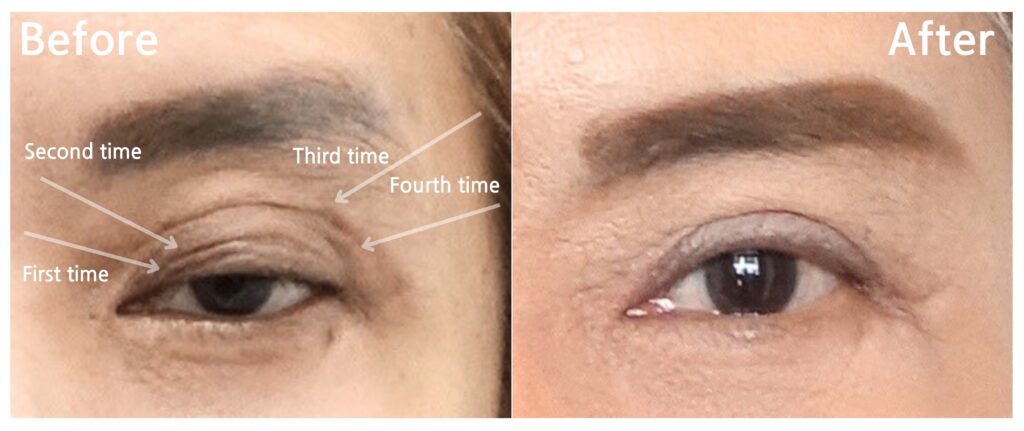
Repeated eyelid surgery without correction of the underlying structural imbalance may gradually increase scar restriction, tissue instability, asymmetry, and functional discomfort over time.
Frequently Asked Questions
1. Why can some failed eyelid surgeries not be corrected with simple revision?
In some patients, the underlying problem involves structural instability, scar adhesion, tissue deficiency, muscle imbalance, or compromised support structures rather than appearance alone. In these situations, simple cosmetic adjustment may not fully address the underlying condition.
2. Why does repeated revision surgery sometimes make correction more difficult?
Each additional surgery may increase scar formation, tissue restriction, and structural instability. Over time, healthy functional tissue available for correction may gradually decrease.
3. Can structurally damaged eyelids still be improved?
Improvement is often possible when functional support structures remain, but each case requires careful structural evaluation and realistic long-term planning.
4. Should failed eyelid surgery always be corrected immediately?
Not always. In many situations, additional healing time is still important. However, progressive structural imbalance or worsening functional instability may require earlier evaluation before further deterioration develops.
5. What is the goal of complex revision eyelid surgery?
The goal is not simply to change the visible appearance again, but to restore structural balance, functional stability, and long-term improvement as safely and conservatively as possible.
Related Insights
Repeated revision surgery without correcting the underlying structural problem may gradually increase tissue instability and scar-related restriction over time.
Revision Eyelid Surgery Case: Multiple Folds After Four Previous Surgeries
Residual ptosis and unstable eyelid opening often continue to affect fold stability even after previous surgery.
Revision Ptosis Surgery Case: Correcting Residual Ptosis and Restoring Clearer Eyelid Opening
Multiple eyelid folds are often caused by deeper structural imbalance rather than the crease itself alone.
Why Multiple Eyelid Folds Sometimes Require Revision Surgery
In some revision ptosis cases, skin imbalance and unstable folds cannot be corrected through ptosis adjustment alone.
Why Revision Ptosis Surgery Sometimes Requires Skin Excision and Multiple Fold Correction
Revision surgery focused only on making the eyes appear larger may fail to address the underlying structural instability responsible for long-term imbalance.
Why Revision Ptosis Surgery Should Not Focus Only on Bigger Eyes
Request a Structural Revision Evaluation with Dr. Ahn.
Patients considering revision eyelid surgery in Korea often seek evaluation after unsuccessful or repeated procedures that failed to restore long-term structural balance.
Dr. Ahn Sung Min approaches complex revision eyelid surgery through detailed structural analysis, conservative surgical judgment, and long-term functional stability rather than repeated cosmetic overcorrection.
Request a structural revision evaluation to determine whether underlying structural instability may still be contributing to persistent postoperative problems.
Seeing the Eye as a Whole, Not in Parts
A Clinic Dedicated to Eyelid Revision Surgery in Korea
Ahnsungmin Plastic Surgery
