Revision Types We Commonly Evaluate
Every revision case is different.
We focus on identifying the underlying structural problem and restoring functional balance,
natural appearance, and long-term stability.
Revision eyelid surgery requires more than correcting the visible fold. Previous surgery can change scar tissue, eyelid function, tissue availability, and structural support. Each revision is therefore planned according to the cause of the problem, not simply the appearance of the eyelid.
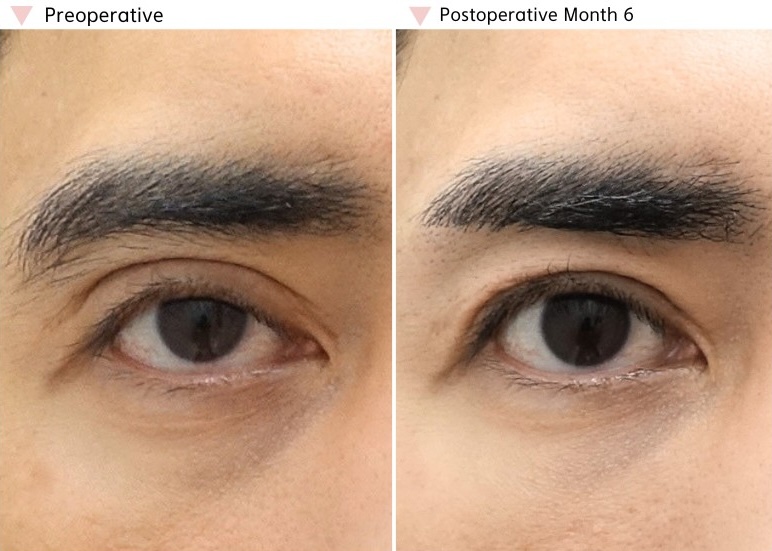
HIGH FOLD REVISION
Excessively high, thick, or unstable folds caused by tension, scar adhesion, or imbalance between eyelid opening and crease fixation.
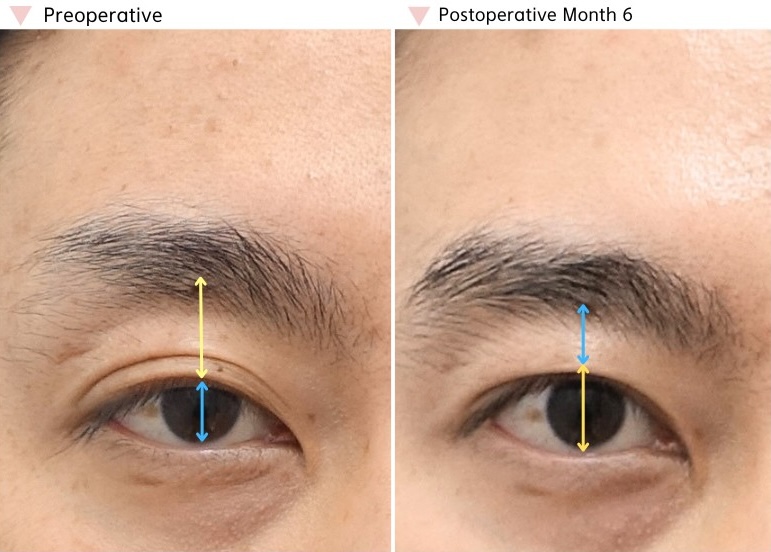
REVISION PTOSIS CORRECTION
Persistent heaviness, incomplete eye opening, forehead compensation, or unstable eyelid function after previous ptosis surgery.
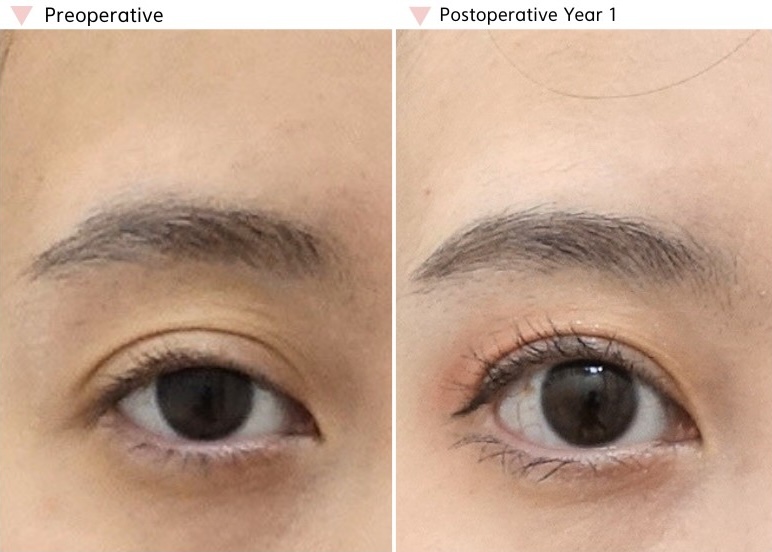
UPPER EYELID REVISION
Multiple folds, asymmetry, crease instability, scar adhesion, or structural imbalance after previous upper eyelid surgery.
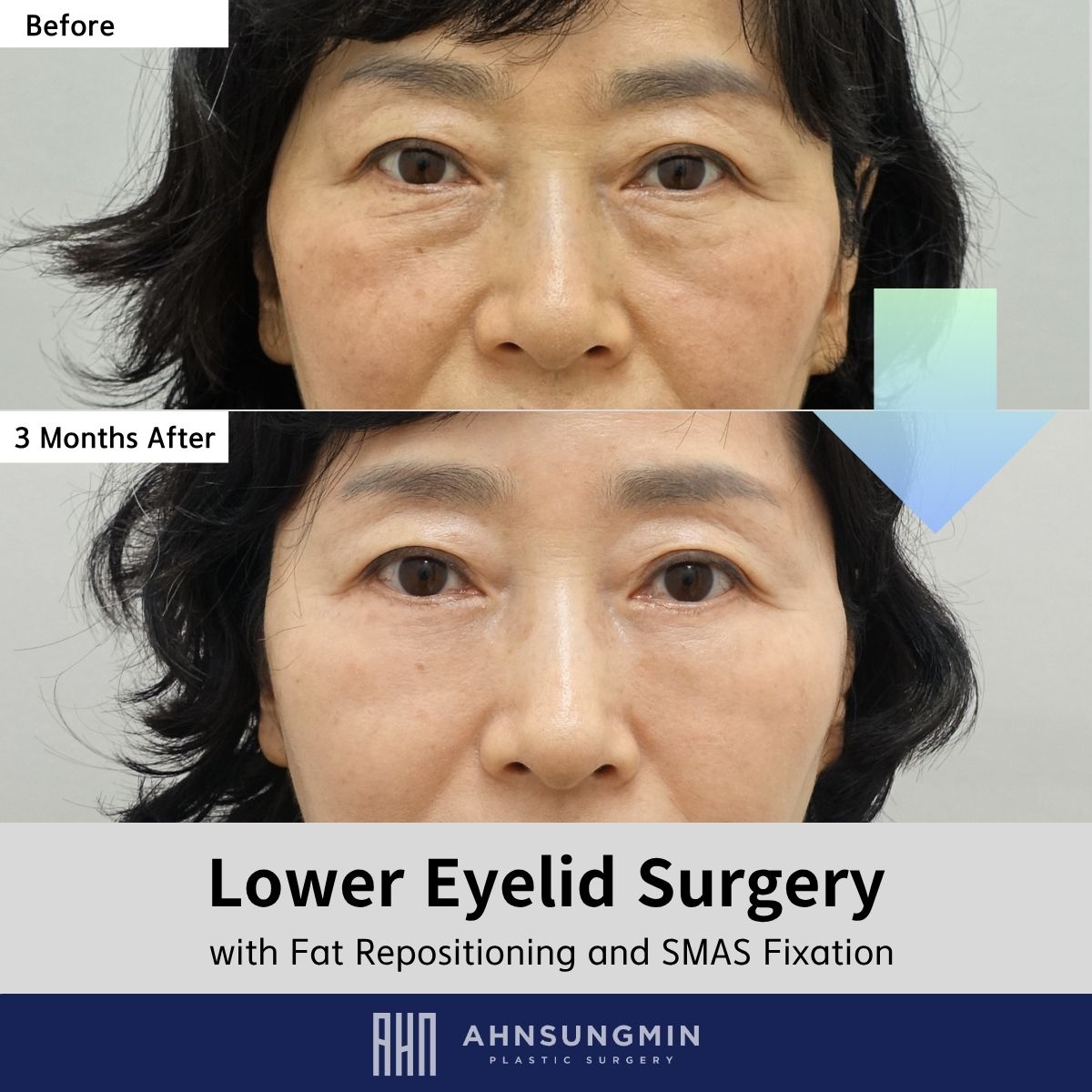
LOWER EYELID REVISION
Retraction, hollowing, ectropion, skin shortage, or instability after lower blepharoplasty or fat repositioning surgery.
Explore Revision Eyelid Surgery Cases
See real revision cases involving high folds, residual ptosis, multiple folds, asymmetry, scar adhesion, and structural problems after previous eyelid surgery.
Eyelid revision surgery is performed when the results of a previous eyelid procedure no longer function as intended or fail to create a natural appearance. Many patients seeking revision eyelid surgery in Korea have experienced problems such as high or unstable creases, persistent asymmetry, incomplete ptosis correction, scar adhesion, or lower eyelid changes including retraction, hollowing, and structural instability.
In many failed eyelid surgery cases, the problem is not simply aesthetic, but structural. Previous surgery can alter the balance between skin, muscle, connective support, and eyelid movement, making revision significantly more complex than the original procedure. For this reason, successful eyelid revision surgery requires careful analysis of the underlying structural problem rather than simply creating a larger fold or repeating the previous approach.
At Ahnsungmin Plastic Surgery, revision eyelid surgery is approached with a focus on structural analysis, functional recovery, tissue preservation, and long-term stability. Each case is evaluated individually to determine whether revision is appropriate, how much correction is realistically possible, and how the eyelid can be restored without creating additional imbalance or long-term instability.
Many international patients seeking eyelid revision surgery in Korea are not simply looking for cosmetic change, but for correction of failed eyelid surgery, restoration of natural eyelid function, and long-term structural stability.
Eyelid revision surgery requires not only surgical technique, but precise judgment of timing, scar condition, tissue limitations, and structural balance
Why Eyelid Revision Surgery Is More Complex.
Unlike primary eyelid surgery, revision procedures must address structural changes created by previous operations. Failed eyelid surgery can alter the balance between skin, muscle, connective tissue, and eyelid support, making revision significantly more complex than the original procedure.
These structural problems may include scar adhesion, skin shortage, unstable crease fixation, asymmetry, ptosis imbalance, lower eyelid retraction, or weakening of the eyelid support structures. In many cases, the problem is not simply the appearance of the fold itself, but deeper instability within the eyelid layers.
Correcting these issues often requires scar release, tissue preservation, structural reinforcement, and careful repositioning of existing support structures rather than aggressive tissue removal. Excessive correction during revision surgery can further increase tension, instability, and long-term functional problems.
Because every revision case is different, surgical planning must be individualized based on tissue condition, previous surgical history, remaining structural support, and long-term stability.
Structural Analysis Before Revision Surgery.
Successful eyelid revision surgery begins with identifying the underlying structural cause of the problem rather than focusing only on the visible appearance of the eyelid.
In many cases, concerns such as thick folds, asymmetry, incomplete ptosis correction, hollowing, or lower eyelid retraction are not isolated cosmetic problems, but the result of deeper structural imbalance created by previous surgery.
Careful structural analysis may include evaluation of scar adhesion, skin availability, eyelid support, muscle function, crease fixation, tissue tension, and the overall balance between the upper and lower eyelid structures.
This process is important because revision surgery should not simply repeat or reverse the previous operation. Without understanding the underlying cause of the problem, additional surgery may further increase tension, instability, or long-term functional imbalance.
By carefully evaluating tissue condition and structural stability, the surgical plan can focus on restoring balance, function, and long-term eyelid support rather than making superficial cosmetic adjustments alone.
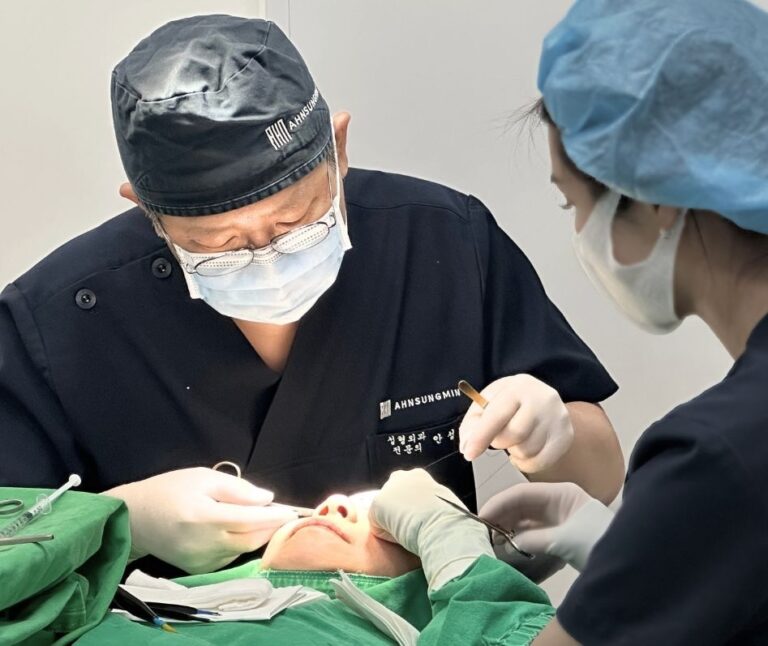
Why Choose Ahnsungmin Plastic Surgery for Revision Eyelid Surgery?
Revision eyelid surgery requires careful evaluation of what has changed after previous surgery, including scar tissue, eyelid function, tissue availability, and structural support. For this reason, the experience and clinical focus of the surgeon are especially important when planning revision surgery.
At Ahnsungmin Plastic Surgery, revision cases are evaluated individually based on the cause of the previous surgical problem, the condition of the remaining tissues, and the degree of correction that can be achieved safely and realistically.
Focused Eyelid Practice
Our practice is focused on eyelid surgery, including complex revision cases involving high folds, multiple folds, residual ptosis, asymmetry, scar adhesion, hollowing, and lower eyelid complications.
Cause-Based Evaluation
Revision planning begins with identifying why the previous surgery produced an unstable, unnatural, or functionally limited result rather than simply attempting to change the visible eyelid shape.
One-Surgeon Care
Evaluation, surgical planning, surgery, and postoperative assessment are performed through a consistent one-surgeon approach.
Long-Term Structural Stability
The goal of revision surgery is not simply to create an immediate cosmetic change. Tissue preservation, functional balance, natural eyelid movement, and long-term structural stability are considered throughout surgical planning.
Upper Eyelid Revision.
Upper eyelid revision procedures often address problems such as excessively high creases, multiple folds, unstable crease formation, asymmetry, incomplete ptosis correction, or eyelid tightness caused by previous surgery.
In many failed upper eyelid surgeries, the problem is not simply the size of the fold itself, but imbalance between eyelid opening, crease fixation, scar tissue, and soft tissue support. Previous surgery may also create excessive tension or structural instability that affects both appearance and eyelid function.
Rather than simply lowering or adjusting the crease height, successful upper eyelid revision focuses on restoring a more natural relationship between eyelid movement, crease formation, and structural balance.
Depending on the condition of the tissues, revision surgery may require scar release, preservation of remaining tissue, adjustment of crease fixation, or correction of underlying ptosis imbalance rather than aggressive removal of tissue.
The goal of upper eyelid revision surgery is not simply to create a larger or smaller fold, but to restore comfortable eyelid movement, functional stability, and a more natural appearance over time.
Lower Eyelid Revision.
Lower eyelid revision surgery is often required when problems such as eyelid retraction, hollowing, persistent eye bags, asymmetry, ectropion, or unnatural lower eyelid tension develop after previous surgery.
In many failed lower eyelid surgeries, the problem is not simply residual fat or appearance, but weakening of the lower eyelid support structures, skin shortage, scar adhesion, or structural imbalance created during the previous operation.
These cases often require careful structural analysis, tissue preservation, scar release, fat repositioning, and reinforcement of the lower eyelid support system rather than aggressive removal of skin or fat.
Because the lower eyelid plays an essential role in protecting the eye and maintaining eyelid stability, excessive correction can increase the risk of long-term retraction, dryness, functional discomfort, and recurrent deformity.
For this reason, successful lower eyelid revision surgery focuses not only on cosmetic improvement, but also on restoring structural support, natural contour, and long-term functional stability.
When Revision Surgery Requires Patience.
In many cases, eyelid revision surgery should not be performed immediately after the original procedure. After surgery, tissues continue to heal, scar tissue continues to mature, and the structural balance of the eyelid may continue to change for several months.
Operating too early can make accurate evaluation difficult and may increase the risk of additional scar formation, tissue damage, overcorrection, or long-term instability. In some cases, problems that appear severe during the early recovery period may partially improve as swelling decreases and scar tension softens over time.
For this reason, successful revision surgery often requires patience before additional correction is considered. Waiting allows the surgeon to better evaluate scar condition, tissue limitations, eyelid support, and the true structural cause of the problem.
Revision surgery should not begin with the question of how quickly another procedure can be performed, but whether the eyelid has stabilized enough for safe and predictable correction.
Careful timing is therefore an essential part of successful eyelid revision surgery and long-term structural stability.
Eyelid Revision Insights.
Successful eyelid revision surgery requires more than cosmetic adjustment. In many failed eyelid surgery cases, the underlying problem involves structural imbalance, scar adhesion, tissue shortage, or weakening of the eyelid support system.
Understanding these structural problems can help patients make safer and more informed decisions before considering additional surgery.
The following revision insights explain common causes of failed eyelid surgery, important principles of structural analysis, and the factors surgeons evaluate before planning revision procedures.
These insights reflect how revision eyelid surgery is approached through structural analysis, functional evaluation, tissue preservation, and long-term surgical planning.
Why excessively high folds are often related to unstable fixation, excessive tension, and imbalance between eyelid opening and crease formation.
Why persistent ptosis after surgery may reflect underlying imbalance in eyelid muscle function and structural support.
Why repeated upper eyelid surgery can increase scar adhesion, tissue limitation, and long-term structural instability.
Why successful upper eyelid revision focuses on comfortable eyelid movement, functional stability, and long-term balance rather than aggressive crease adjustment.
Lower Eyelid Revision Insights
Lower eyelid revision surgery often involves complex structural problems related to eyelid support, tissue shortage, scar adhesion, and long-term functional stability.
The following revision insights explain why lower eyelid revision becomes increasingly difficult after previous surgery and how structural support influences long-term outcomes.
Why lower eyelid retraction often reflects deeper structural tension and weakening of the lower eyelid support system after surgery.
Why excessive skin removal can permanently limit revision options and increase long-term instability in lower eyelid surgery.
Why Lower Eyelid Revision Becomes Much More Difficult After Multiple Surgeries
Why repeated lower eyelid surgery increases scar adhesion, tissue damage, and structural instability over time.
Why lower eyelid support plays a critical role in preventing retraction, ectropion, and long-term postoperative instability.
Frequently Asked Questions About Eyelid Revision Surgery.
How long should I wait before eyelid revision surgery?
In most cases, revision surgery should be delayed until the tissues have fully healed and scar formation has stabilized. This process typically takes several months and in some cases up to a year. Operating too early can increase the risk of further structural imbalance and unpredictable results.
Why is eyelid revision surgery more difficult than primary surgery?
Revision surgery must address changes caused by previous procedures, including scar tissue, altered anatomy, and tissue imbalance. Unlike primary surgery, the goal is not simply reshaping the eyelid but restoring structural balance and function.
Can all failed eyelid surgeries be corrected?
Not all cases can be fully corrected. The outcome depends on factors such as skin availability, scar condition, and remaining structural support. In some situations, improvement is possible but complete restoration may be limited.
What are the most common reasons for eyelid revision surgery?
Common reasons include high or unnatural creases, asymmetry, incomplete ptosis correction, lower eyelid retraction, and hollowing after surgery. Many of these issues are related to underlying structural imbalance rather than purely cosmetic concerns.
What is the most important factor in successful eyelid revision surgery?
Accurate structural analysis is the most important factor. Identifying the root cause of the problem allows the surgeon to plan a procedure that restores function and long-term stability rather than making superficial adjustments.
Can high fold eyelid surgery be corrected?
High fold revision surgery depends on the condition of the eyelid tissues, scar adhesion, and remaining structural support. In many cases, the goal is not simply lowering the crease, but restoring a more natural relationship between eyelid function and crease formation.
Why do some ptosis surgeries fail over time?
In some cases, ptosis surgery may become unstable over time due to scar formation, tissue tension, structural imbalance, or progressive weakening of eyelid support. Early appearance does not always reflect long-term stability.
Can lower eyelid retraction be fully corrected?
The degree of improvement depends on the severity of tissue shortage, scar condition, and remaining lower eyelid support. Some cases can improve significantly, while others may have structural limitations that prevent complete correction.
Why is skin shortage such a serious problem in revision surgery?
Once excessive skin has been removed, the eyelid may lose structural flexibility and protective support. Skin shortage can increase tension, instability, retraction risk, and long-term functional problems.
Why do surgeons sometimes recommend waiting before revision surgery?
Healing continues for several months after surgery. Swelling, scar maturation, and tissue stabilization can significantly change the appearance of the eyelid over time. Operating too early may increase the risk of additional instability and unpredictable results.
Is eyelid revision surgery in Korea suitable for international patients?
Many international patients seek revision eyelid surgery in Korea because of the specialized experience required for complex eyelid revision cases. However, successful revision surgery depends on accurate structural evaluation and realistic surgical planning rather than location alone.
Request an Eyelid Revision Consultation
If you are considering eyelid revision surgery, a careful evaluation of your current eyelid structure and previous surgical history is essential.
At Ahnsungmin Plastic Surgery, each case is analyzed based on structural balance, functional condition, and long-term stability rather than short-term cosmetic changes.
Revision surgery should not begin with the question of how much can be changed, but whether the eyelid can be corrected safely and naturally.
Contact Option
Seoul, Republic of Korea
