Lateral Canthoplasty
LATERAL CANTHOPLASTY SURGERY IN KOREA
Creating eye shape harmony—not simply extending the outer corner.
Lateral canthoplasty is not simply about making the eyes appear longer or larger. Successful correction requires careful evaluation of eye shape, lower eyelid support, canthal position, and overall facial balance. At Ahnsungmin Plastic Surgery, lateral canthoplasty focuses on creating a more natural, balanced, and refined eye contour while preserving long-term stability and minimizing unnecessary tension.

Lateral Canthoplasty
Key Considerations
- Eye shape and facial balance
- Lateral canthal position
- Lower eyelid support
- Structural stability
- Long-term natural results
Lateral canthoplasty is not simply about extending the outer corner of the eye.
Successful correction requires careful evaluation of eye shape, lower eyelid support, canthal position, and overall facial harmony. The goal is to create a more balanced eye contour while preserving structural stability and natural appearance over time.
Because every eye is different, the amount of correction should be determined by anatomy rather than cosmetic preference alone.
Our Surgical Philosophy
Successful lateral canthoplasty is not simply about extending the outer corner. Our approach focuses on improving overall eye shape harmony while maintaining structural balance and natural contour.
Not every eye benefits from lateral canthoplasty.
Horizontal eye length, canthal tilt, lower eyelid support, tissue flexibility, and anatomical limitations are carefully evaluated before determining whether correction is appropriate.
Excessive lowering or aggressive extension can increase the risk of recurrence, instability, or unnatural appearance. Long-term structural stability remains a primary consideration in every case.
The goal is not to create dramatically altered eyes, but to achieve a more balanced and harmonious appearance that looks natural both at rest and during expression.
The Ahnsungmin Approach
Unlike traditional eye-widening procedures that focus primarily on enlargement, our approach prioritizes structural balance and natural eye shape harmony.
Careful assessment of the lateral canthus, lower eyelid support, and surrounding anatomy helps determine whether lateral canthoplasty is appropriate and how much correction can be performed safely.
The objective is not to maximize length, but to achieve a more balanced and natural relationship between the eyes and surrounding facial structures.
Combined Procedures
Lateral canthoplasty is sometimes performed together with double eyelid surgery, epicanthoplasty, ptosis correction, or asymmetry correction when additional structural balance is required.
The appropriate combination depends on each patient’s anatomy, eye shape, and long-term surgical goals.
Surgical Philosophy
Successful lateral canthoplasty should create harmony rather than draw attention.
Natural eye shape, stable support, and long-term balance are often more important than aggressive extension or dramatic cosmetic change.
At Ahnsungmin Plastic Surgery, lateral canthoplasty is approached through careful anatomical evaluation, structural preservation, and individualized surgical planning.

Approximately 1 hour

Carefully placed within the natural lateral canthal contour to minimize visible scarring while allowing stable structural repositioning.

Not required

Typically 5-7 days after surgery

Initial recovery generally occurs within 1–2 weeks.

Local anesthesia with real-time functional evaluation
CASE 1
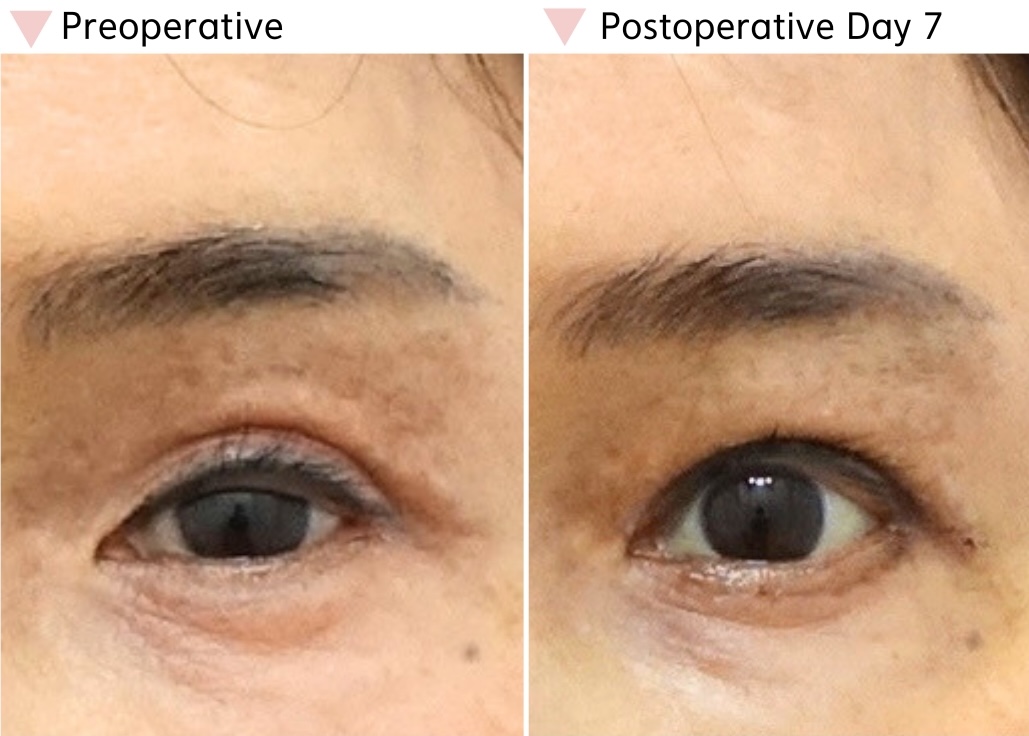
Triple Lateral Canthoplasty Case
Before surgery, the eyes appeared shorter horizontally, with a relatively elevated outer corner and limited visibility of the lower iris. To improve overall eye shape harmony, lateral canthoplasty, outer corner lowering, and lower canthoplasty were performed together.
The surgical plan focused on three key changes: increasing horizontal eye length, lowering the outer corner to create a softer contour, and exposing more of the lower iris to achieve a more open appearance. Rather than pursuing excessive enlargement, the goal was to create a natural and balanced eye shape that complements the patient’s facial features.
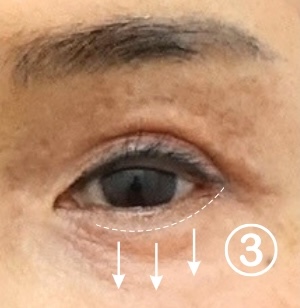
How Triple Lateral Canthoplasty Changes Eye Shape
A combination of lateral canthoplasty, outer corner lowering, and lower canthoplasty designed to improve overall eye shape balance.
① Lateral Canthoplasty
Extends the horizontal eye length to create a longer and more balanced eye shape.
② Outer Corner Lowering
Lowers the outer corner position to create a softer and less upturned appearance.
③ Lower Eyelid Lowering (Lower Canthoplasty)
Reveals more of the lower iris by opening the lower outer eyelid, creating a more open and refreshed look.
CASE 2
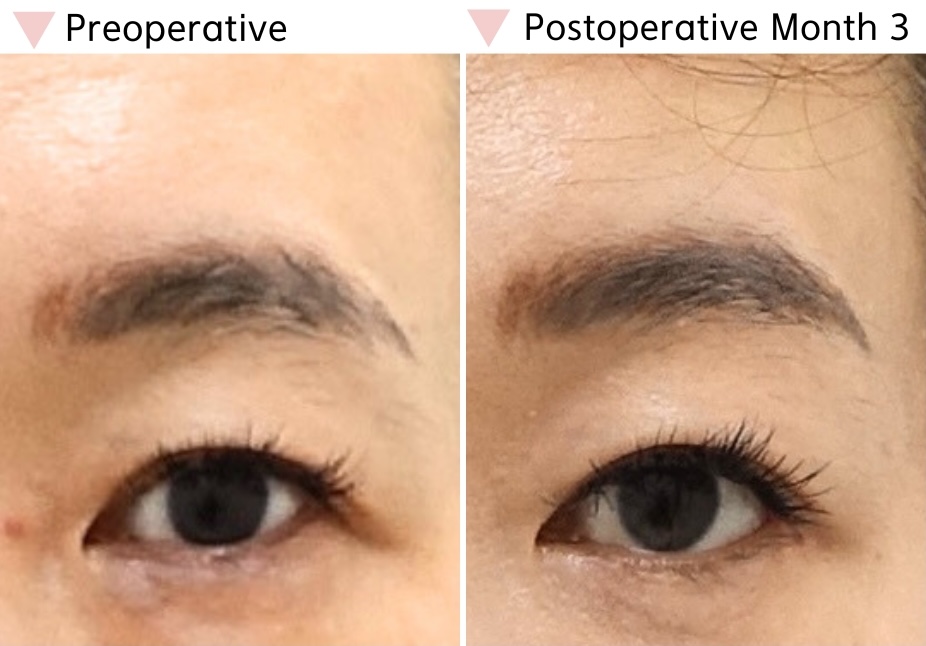
Dual Lateral Canthoplasty Case
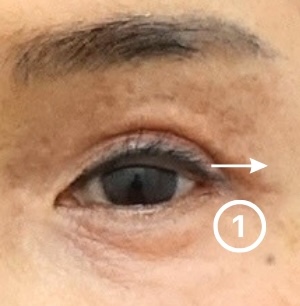
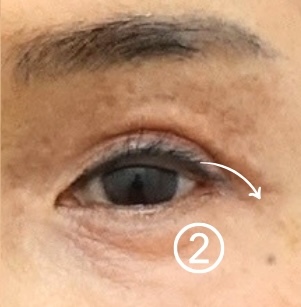
This case demonstrates a combination of Lateral Canthoplasty and Outer Corner Lowering.
The goal was not simply to widen the eyes horizontally, but to improve overall eye shape balance by increasing horizontal eye length and lowering the outer corner position. By reducing the upward tilt of the outer eye corner, the eye contour appears softer, more balanced, and naturally aligned.
At Ahnsungmin Plastic Surgery, the procedure focuses on repositioning the outer canthal complex itself rather than simply creating a temporary opening at the outer corner. This structural approach allows for a more stable result while minimizing the tendency for the outer corner to return to its previous position over time.
The objective is not maximum enlargement, but a natural, harmonious eye shape that complements the patient’s facial features and maintains long-term stability.
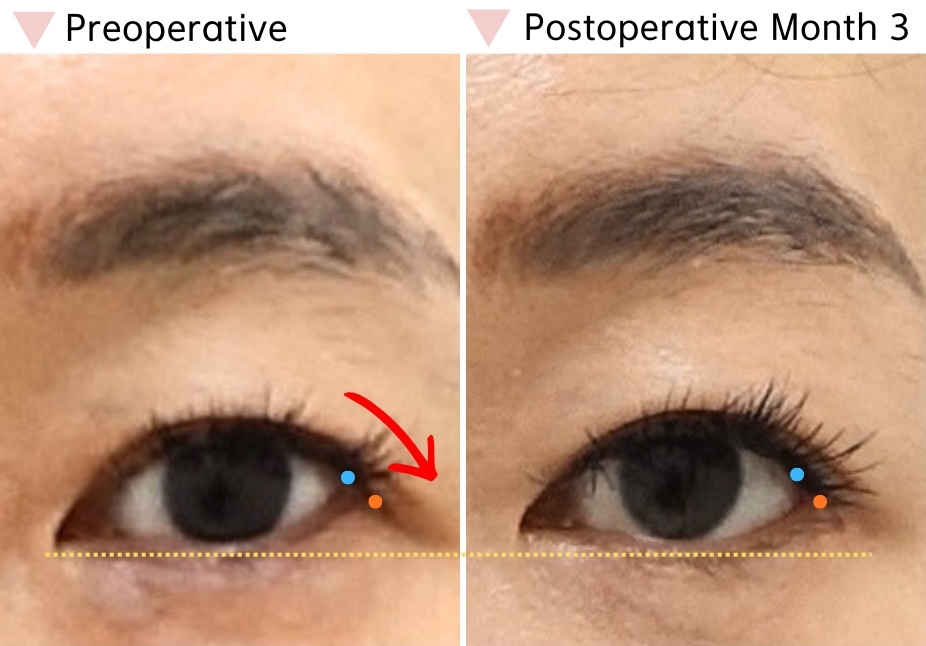
Structural Repositioning of the Lateral Canthus
This detailed image explains the same dual canthoplasty case more clearly.
The blue point indicates the original position of the lateral canthal apex before surgery. The orange point shows the new position after surgery. By moving the lateral canthal apex downward and outward, the surgery improved horizontal eye length while lowering the outer corner position.
This is different from simply opening the outer corner. The goal was to reposition the structural point of the outer eye corner to create a longer, softer, and more balanced eye shape with greater long-term stability.
Why Canthoplasty Can Improve Eye Opening
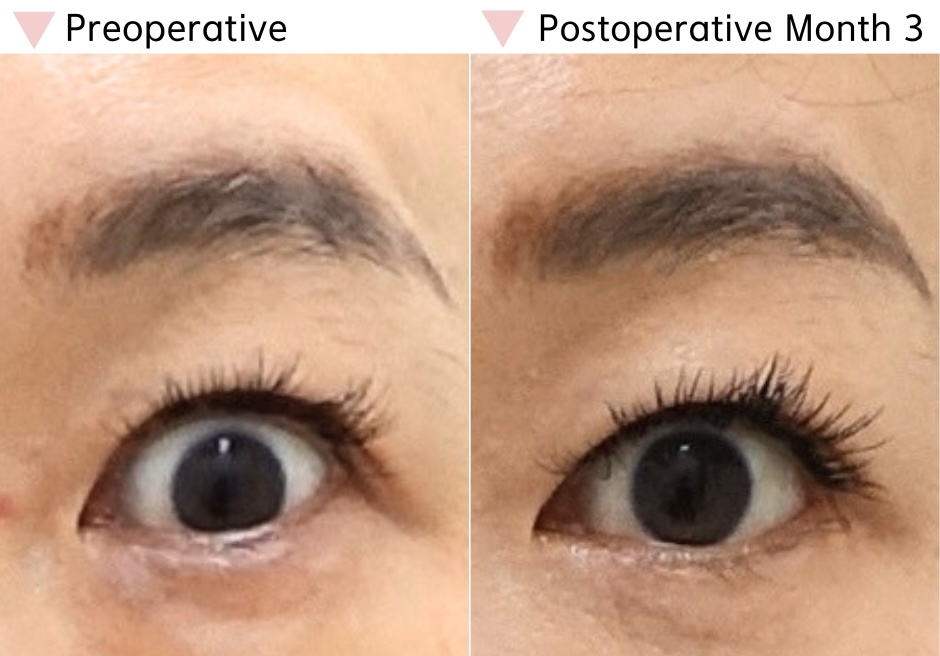
Many people think lateral canthoplasty is performed simply to make the eyes look larger. However, the horizontal width of the eye can also influence how comfortably the eyelids open.
In this case, the outer corner width was relatively limited before surgery. When the patient attempted to open the eyes widely, the lower eyelid and surrounding skin were pulled upward, creating resistance to natural eye opening. As a result, the eye shape appeared tight and less stable during active eye opening.
After dual canthoplasty, the horizontal eye width was expanded and the outer corner position was adjusted. With improved lateral support and increased horizontal space, the eyelids were able to open more comfortably without excessive upward pulling of the lower eyelid.
This is why canthoplasty is not always performed for cosmetic enlargement alone. In selected patients, improving horizontal eye width can contribute to more stable eye opening, better eyelid balance, and a more natural eye contour during expression.
CASE 3
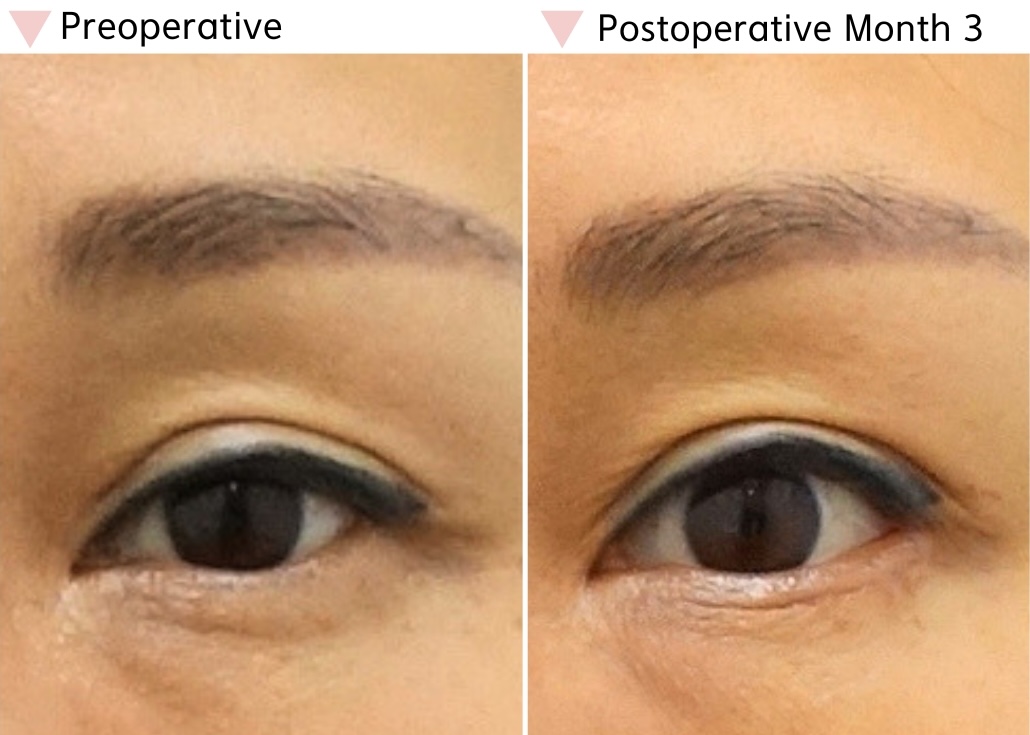
Improved Eye Opening Through Horizontal Expansion
Before surgery, the horizontal width of the eye was relatively limited, causing the lower eyelid and surrounding soft tissue to move upward when the patient attempted to open the eyes more fully. This created a tighter appearance and reduced the stability of eye opening.
After lateral canthoplasty and outer corner lowering, additional horizontal space was created at the outer corner of the eye. As a result, the lower eyelid was able to remain more relaxed during eye opening, allowing the eye to open more comfortably and naturally.
At postoperative month 3, the eye appears not only longer horizontally, but also more stable during active eye opening. The goal of surgery was not simply to enlarge the eye, but to improve overall eyelid balance, reduce unnecessary tension, and create a more natural and comfortable eye shape.
Revision and Reconstructive Lateral Canthoplasty IN KOREA
Revision and Reconstructive Lateral Canthoplasty
Revision surgery is not always about changing the eye shape.
In many cases, the goal is to restore structural balance,
improve comfort, and recreate a more natural appearance after overcorrection or instability.
CASE 4
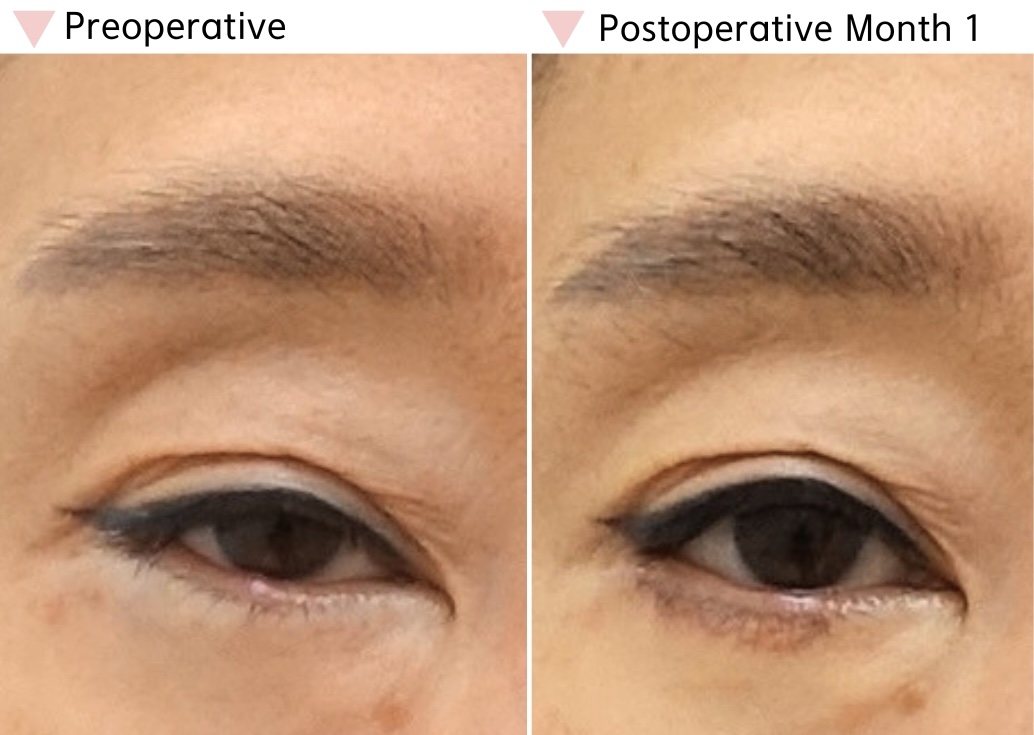
Revision Lateral Canthoplasty Case
This patient had previously undergone lateral canthoplasty but remained dissatisfied with the overall eye shape and horizontal eye length.
Rather than simply reopening the outer corner, revision surgery focused on improving the position and stability of the lateral canthus while restoring a more balanced eye contour. At postoperative month 1, the eye appears longer and more refined, with improved horizontal width and a more natural outer corner shape.
The goal of revision lateral canthoplasty is not simply to create a larger eye, but to achieve stable structural correction and long-term aesthetic balance.
CASE 5
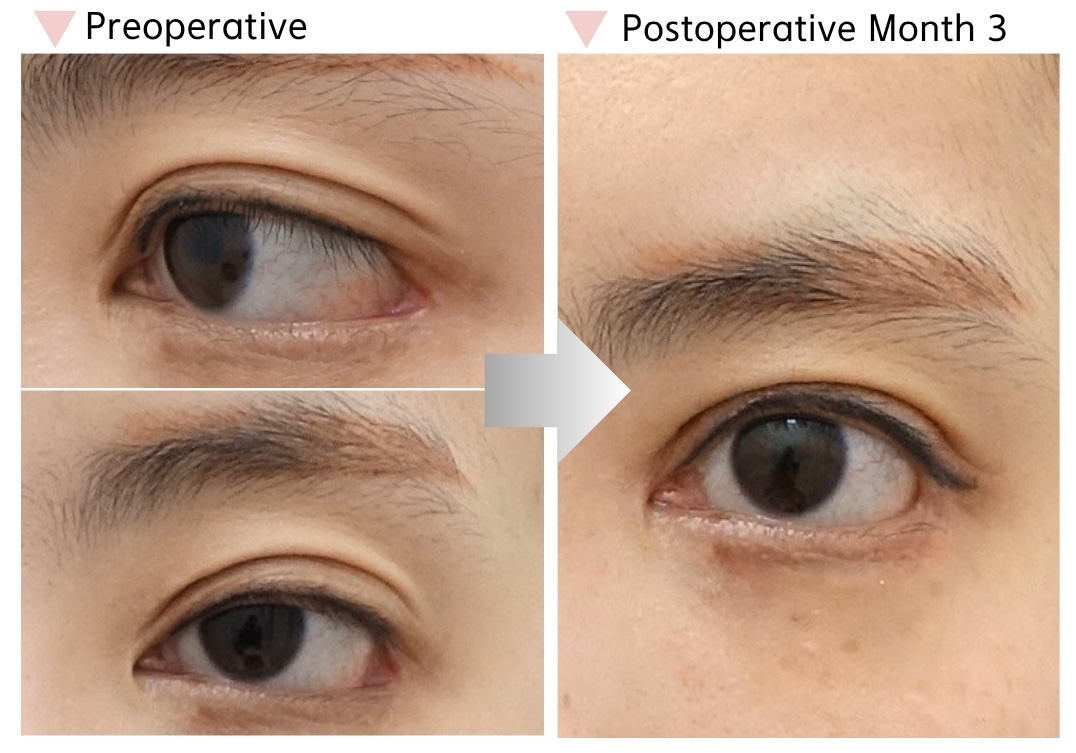
Revision Lateral Canthoplasty Restoration Case
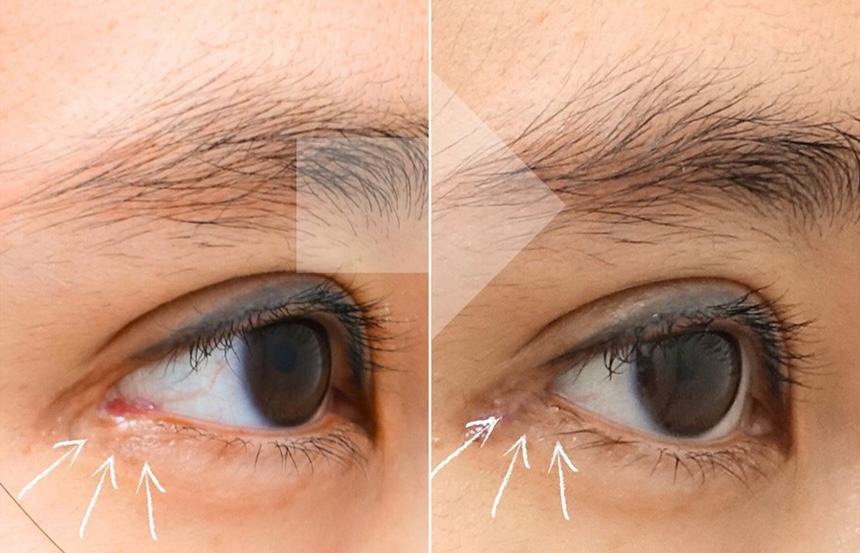
Before revision surgery, the patient had undergone an overly aggressive lateral canthoplasty that resulted in excessive exposure of the outer corner. The connection between the upper and lower eyelid margins became unnatural, creating an unbalanced eye contour.
The problem was not only aesthetic. Excessive exposure of the outer corner caused dryness, foreign body sensation, and recurrent irritation, leading to ongoing discomfort in daily life.
Revision surgery focused on restoring the natural position and contour of the lateral canthus rather than creating additional enlargement. The goal was to reduce excessive exposure, improve eyelid balance, and recreate a more natural and protective eye shape.
The photograph shown here was taken three months after revision surgery. The outer corner appears more stable, the excessive exposure has been reduced, and the overall eye contour demonstrates improved structural harmony and comfort.
CASE 6
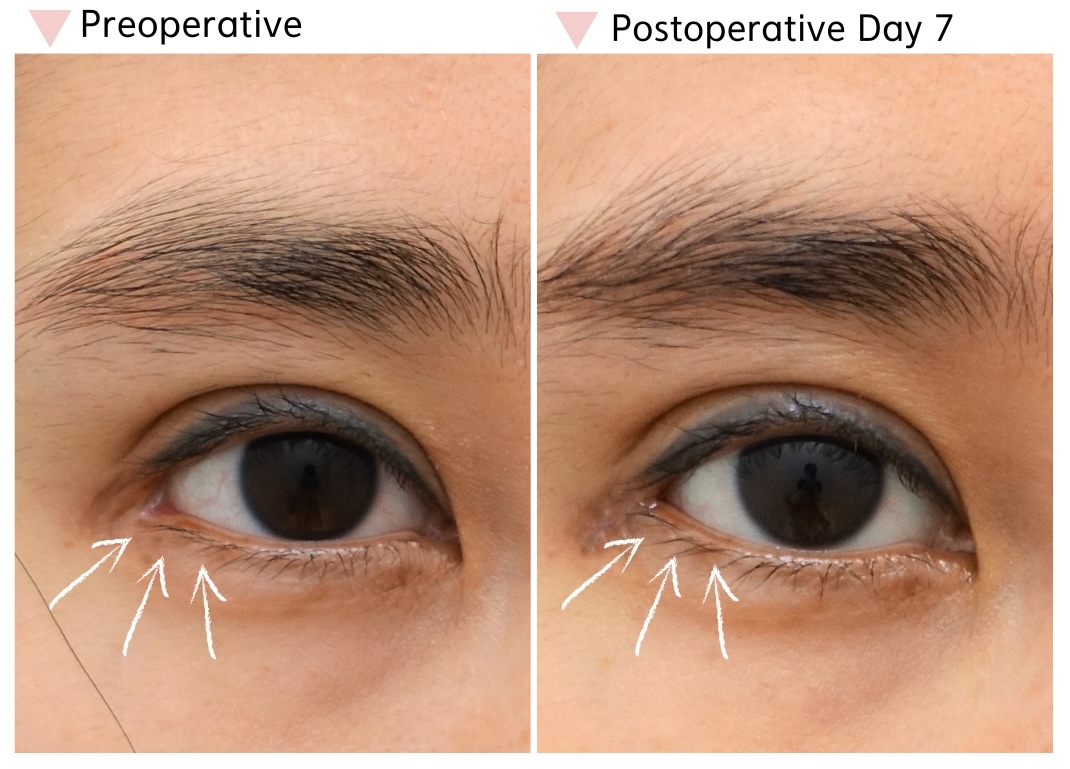
Restoring the Natural Outer Corner
This patient had excessive exposure of the outer corner following previous canthoplasty. The lower eyelid and lateral canthus no longer formed a natural connection, creating both cosmetic and functional concerns.
Restoration surgery focused on rebuilding the natural contour of the outer corner rather than creating additional enlargement. As shown in the postoperative image, the lower eyelid and lateral canthus reconnect more naturally, improving both structural stability and overall eye comfort.
LATERAL CANTHOPLASTY IN KOREA
Frequently Asked Questions
About Eye Shape Balance and Lateral Canthoplasty
Answers to common questions about eye shape harmony, lateral canthoplasty,
recovery, lower eyelid support, and long-term surgical stability.
FAQ
Frequently Asked Questions
1. What is lateral canthoplasty?
Lateral canthoplasty is a procedure that modifies the position and shape of the outer corner of the eye to improve overall eye contour and facial balance. The goal is not simply to make the eyes appear larger, but to create a more harmonious eye shape.
2. Does Lateral Canthoplasty Always Make the Eyes Look Bigger?
Not necessarily. In many cases, the goal is to improve eye shape harmony and facial balance rather than simply create a larger appearance. Natural proportions are often more important than maximum enlargement.
3. Who is a Good Candidate for Lateral Canthoplasty?
Patients with a naturally short horizontal eye length, upward outer canthal position, or eye shape imbalance may be candidates. A careful anatomical evaluation is necessary to determine whether the procedure is appropriate.
4. Why Do Surgeons Evaluate Eye Shape Before Lateral Canthoplasty?
Not every eye benefits from lateral canthoplasty. Eye shape, lower eyelid position, canthal tilt, and structural support must be evaluated together to determine whether surgery is appropriate.
5. Can Lateral Canthoplasty Be Combined with Other Procedures?
Yes. Lateral canthoplasty is often performed together with double eyelid surgery, epicanthoplasty, ptosis correction, or asymmetry correction when additional structural balance is needed.
6. Why is Lower Eyelid Support Important in Lateral Canthoplasty?
Lower eyelid support plays a critical role in maintaining eye shape stability. Insufficient support may increase the risk of recurrence, asymmetry, or an unnatural postoperative appearance.
7. Why Do Some Lateral Canthoplasty Results Look Unnatural?
Excessive lowering or overextension of the outer corner can disrupt the natural relationship between the upper and lower eyelids. Successful lateral canthoplasty should prioritize balance and stability rather than maximum change.
8. Is Recurrence Possible After Lateral Canthoplasty?
Recurrence can occur if excessive correction is attempted or if anatomical limitations are not fully considered. Long-term stability is an important factor in surgical planning.
9. Does Lateral Canthoplasty Leave Visible Scars?
The incision is typically placed in a location that heals discreetly. Scar visibility varies depending on individual healing characteristics and surgical technique.
10. How Long Is the Recovery Period?
Initial swelling and bruising generally improve over several weeks, while the final contour continues to stabilize over several months as the tissues heal.
11. Can Lateral Canthoplasty Be Performed for Revision Cases?
Yes. Some patients seek revision surgery due to recurrence, asymmetry, visible scarring, or dissatisfaction with a previous result. Revision planning depends on tissue condition, scar formation, and remaining structural support.
12. Can Lateral Canthoplasty Be Revised?
Revision may be possible depending on tissue condition, scar formation, and remaining structural support. Careful evaluation is required before considering additional surgery.
13. What Is the Most Important Factor in Successful Lateral Canthoplasty?
Accurate anatomical evaluation and realistic surgical planning are often more important than the amount of correction itself. Long-term stability and natural eye shape harmony should remain the primary goals.
Related Insights
- When Lateral Canthoplasty Revision Focuses on Stability Instead of Bigger Eyes
- Lateral Canthoplasty Case: Expanding Eye Width and Softening the Outer Eye Shape
- Lateral Canthoplasty Case: Eye Width Expansion and Balanced Outer Corner at 3 Months
- Lower Eyelid Surgery and Lateral Canthoplasty Performed During the Same Operation
Ahnsungmin Surgical Philosophy
At Ahnsungmin Plastic Surgery, eyelid surgery is approached through careful structural analysis rather than simply focusing on cosmetic change.
Many eyelid conditions such as ptosis, eyelid hollowing, lower eyelid bags, or postoperative imbalance are closely related to the underlying anatomy of the eyelid.
Our surgical philosophy focuses on restoring natural balance while preserving healthy tissue and achieving long-term structural stability.
Request a Revision Evaluation
Share your photos and surgical history for an initial assessment.
Seoul, Republic of Korea
