Restoring balance—not forcing symmetry.
Many patients believe uneven eyes are simply a cosmetic difference. In reality, asymmetry often develops because of differences in eyelid opening, fold height, muscle function, skin distribution, or structural support. Successful correction begins by identifying the underlying cause rather than trying to make both eyes appear identical. Our approach focuses on restoring balance, improving function when necessary, and creating a more natural and harmonious appearance.
✓ Uneven Eyelid Opening
✓ Uneven Fold Height
✓ Residual Ptosis
✓ Multiple Folds
✓ Post-Surgical Asymmetry
✓ Structural Imbalance
20+ Years
Focused on
Eyelid Surgery
Revision
Specialist
Focus
Patients
from 30+
Countries
One
Surgeon
Care
Who May Benefit From Asymmetry Correction?
Many patients believe uneven eyes are simply a cosmetic difference.
In reality, asymmetry often develops because of differences in eyelid opening, fold height, muscle function, scar tissue, or structural support.
Successful correction begins by identifying the underlying cause rather than trying to make both eyes appear identical.
The goal is not perfect symmetry, but a more balanced and natural appearance.
Uneven Eyelid Opening
Uneven Fold Height
Post-Surgical Asymmetry
Residual
Ptosis
Structural Imbalance
One Eye Appears Smaller
When Asymmetry Correction May Be Appropriate
Not every case of uneven eyes requires surgical correction.
Some differences are naturally occurring and do not interfere with eyelid function or overall facial balance.
Correction may be considered when asymmetry is associated with limited eyelid opening, residual ptosis, structural imbalance, or changes following previous surgery.
The goal is not to make both eyes identical, but to restore balance while preserving a natural appearance.
UNDERSTANDING ASYMMETRY
Common Causes of Uneven Eyes
Uneven eyes are often caused by differences in eyelid function, crease formation, tissue support, or previous surgery. Understanding the source of the imbalance is essential before planning correction.
Ptosis
Uneven Fold Height
Scar Adhesion
Previous Eyelid Surgery
Structural Support Differences
Why Uneven Eyes Cannot Be Corrected by Fold Adjustment Alone
Procedures that focus only on surface appearance cannot correct true asymmetry.
In many patients, uneven eyes are not caused by the crease itself, but by differences in muscle function, tissue resistance, or structural support.
Creating or adjusting a double eyelid fold may change how the eyes appear temporarily—but it does not correct the underlying imbalance.
In some cases, it can even exaggerate the asymmetry.
Correction must begin with understanding the cause—not altering the surface.
Our Diagnostic Approach to Asymmetry
At our clinic, asymmetry correction begins with identifying the true source of imbalance.
We evaluate:
• Eyelid opening differences
• Muscle function and eyelid strength
• Fold height and crease position
• Brow compensation patterns
• Tissue resistance and scar adhesion
• Previous surgical history
Rather than focusing on visual symmetry alone, we determine why the imbalance exists.
Surgery is recommended only when correction can improve long-term functional and structural balance.
CASE 1
Restoring Balance Through Functional Correction
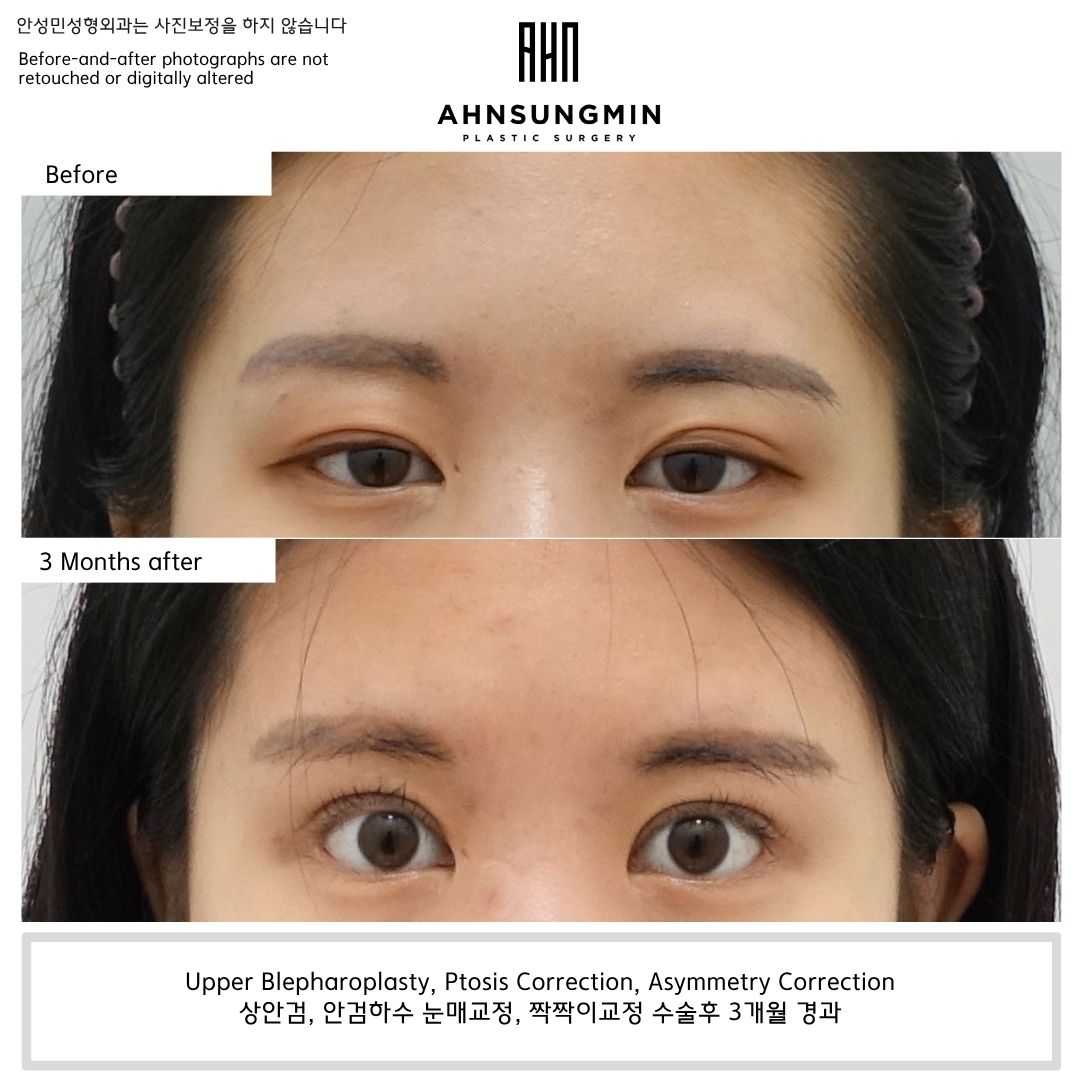
This patient presented with several concerns following previous eyelid surgery, including a high crease, eyelid asymmetry, and incomplete eyelid opening.
Rather than treating each issue separately, the revision plan focused on understanding how eyelid function, crease position, and overall balance were affecting the appearance of the eyes.
The procedure included ptosis correction, high-fold revision, and asymmetry correction as part of a comprehensive strategy to improve both function and long-term stability.
In complex revision surgery, successful outcomes often depend on addressing the relationship between multiple structural problems rather than focusing on a single visible concern.
Some patients who appear asymmetrical after surgery are actually experiencing residual ptosis rather than a simple crease imbalance.
Learn more about why residual ptosis can persist after eyelid surgery.
→ Residual Ptosis After Surgery
CASE 2
Improving Uneven Eyelid Opening and Eye Symmetry
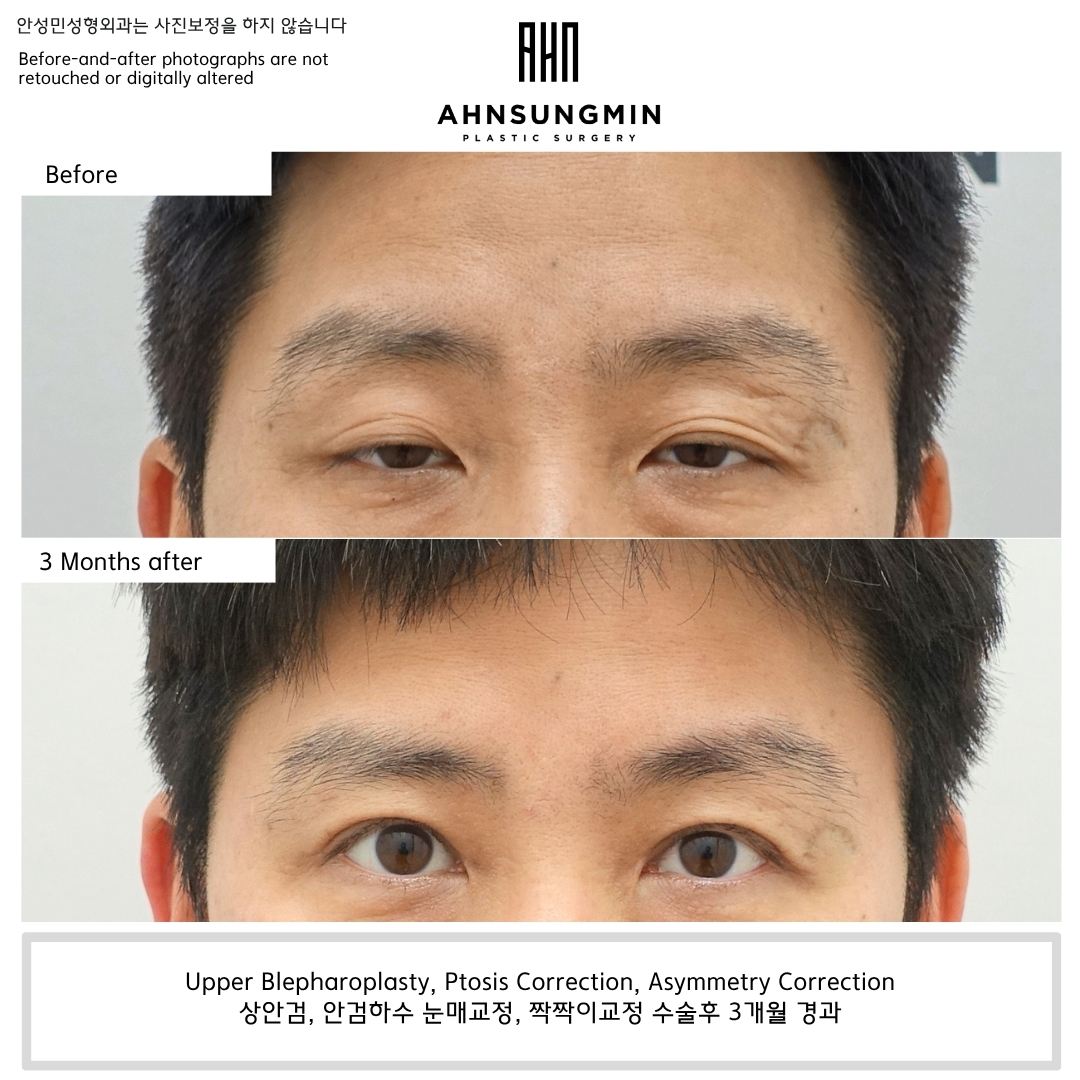
Before surgery, this patient showed uneven eyelid opening and noticeable asymmetry.
The treatment combined upper blepharoplasty, ptosis correction, and asymmetry correction to address the underlying functional imbalance.
Rather than pursuing perfect symmetry, the goal was to improve eyelid function and restore a more natural balance between the eyes.
At 3 months after surgery, eyelid opening appears more balanced and overall symmetry has improved.
CASE 3
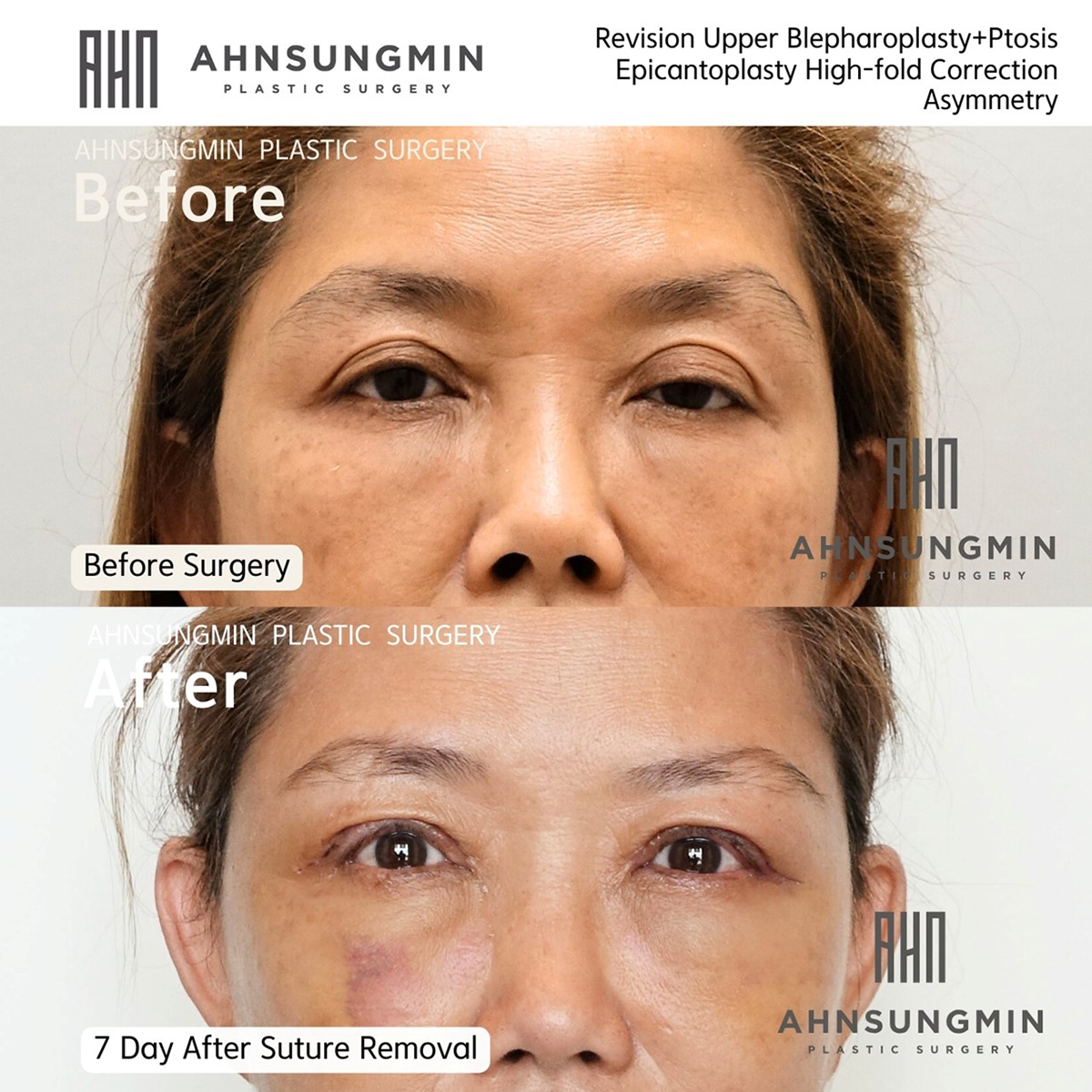
Correcting Eyelid Asymmetry Through Revision Surgery
Before surgery, this patient showed uneven eyelid opening and noticeable asymmetry following previous eyelid surgery.
Revision surgery was performed to improve eyelid function, correct asymmetry, and restore a more balanced appearance.
At 7 days after suture removal, eyelid opening appears more symmetrical and balanced.
Learn more about revision surgery for postoperative eyelid asymmetry.
→ Revision Eyelid Surgery Korea
CASE 4
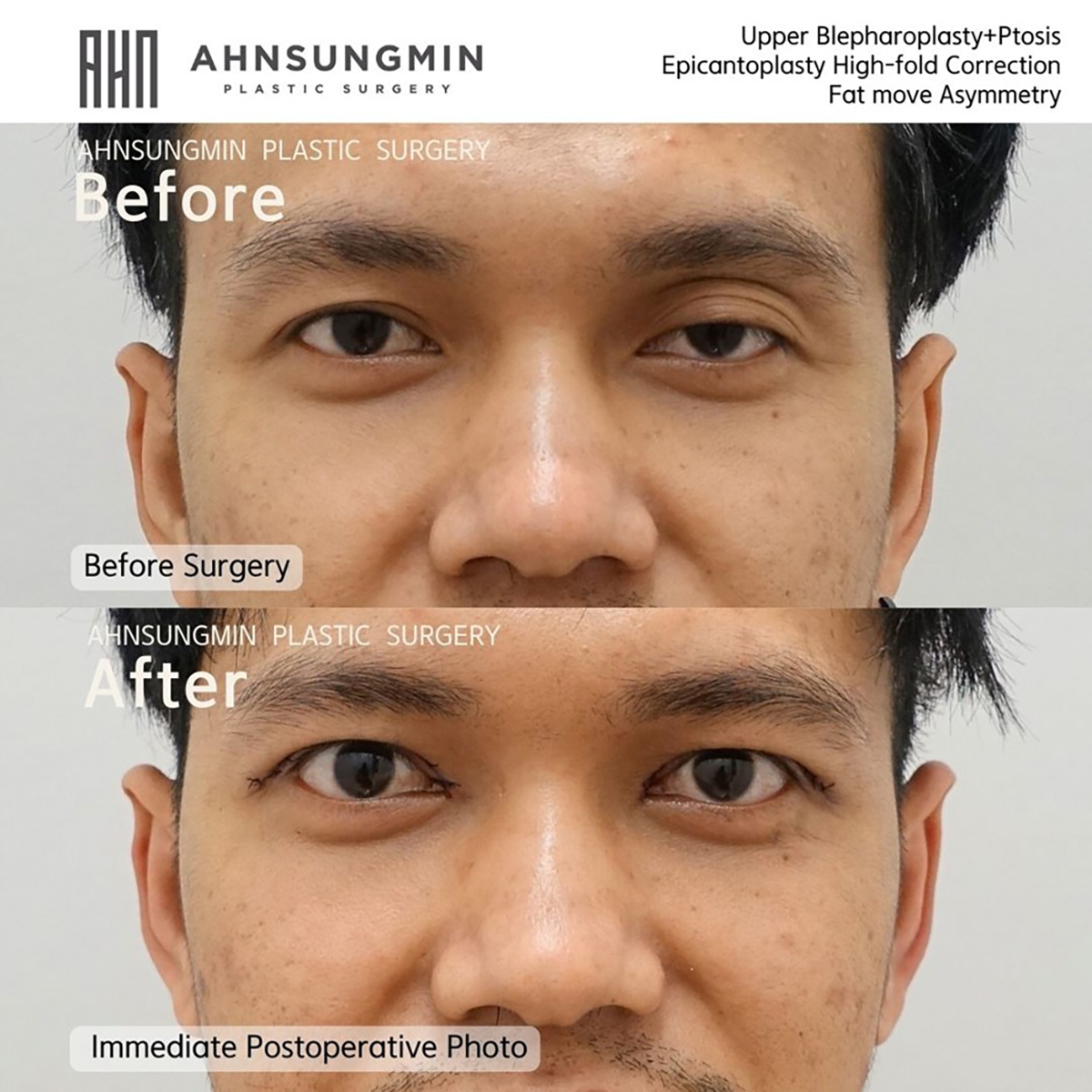
Restoring Eyelid Balance and Eye Symmetry
Before surgery, this patient showed uneven eyelid opening and asymmetry.
Surgery was performed to improve eyelid function and restore a more balanced appearance.
Improved eyelid opening and symmetry can already be observed immediately after surgery.
What to Expect from Uneven Eyes Correction Surgery
Before considering correction, it is important to understand that uneven eyes do not all share the same cause.
Some cases are related to eyelid opening strength, while others involve crease position, scar tissue, structural support, or previous surgery.
For this reason, asymmetry correction is not performed using a single standardized technique.
The treatment plan depends on identifying the underlying cause and determining whether functional or structural improvement is possible.
In many patients, uneven eyes are related to differences in eyelid opening strength rather than crease position alone.
Learn more about the relationship between ptosis and asymmetry.
→ How Ptosis Can Cause Uneven Eyes
Realistic Expectations for Asymmetry Correction
Asymmetry correction is designed to improve balance—not create perfect mirror-image symmetry.
Perfect symmetry is rarely found in natural anatomy, and attempting to force identical eyes may sometimes create new imbalance.
→ Why Perfect Symmetry Is Not Always Natural
Some natural differences may remain even after surgery, and early recovery changes should not be mistaken for the final result.
In many cases, meaningful evaluation requires several months of healing before stability can be assessed.
Surgery is recommended only when correction is expected to improve function, structural balance, or long-term stability.
Not every uneven eye requires surgery, and sometimes observation is the most appropriate decision.
Our Surgical Philosophy
Successful asymmetry correction begins by identifying the underlying cause. Differences in eyelid opening, fold height, brow position, or scar tissue must be analyzed before planning correction.
Many cases of asymmetry are related to ptosis or uneven muscle function. Restoring balanced eyelid movement is often more important than matching appearance alone.
No two asymmetry cases are identical. Surgical planning is customized according to anatomy, previous surgery history, and the specific source of imbalance.
The goal is not perfect mirror-image symmetry. The objective is a natural and harmonious balance that remains stable over time.

Approximately 1-2 hour

Varies according to the cause of asymmetry and the surgical plan.

Not required

Typically 5-7 days after surgery

Initial recovery generally occurs within 1–2 weeks.
Local anesthesia with real-time functional evaluation
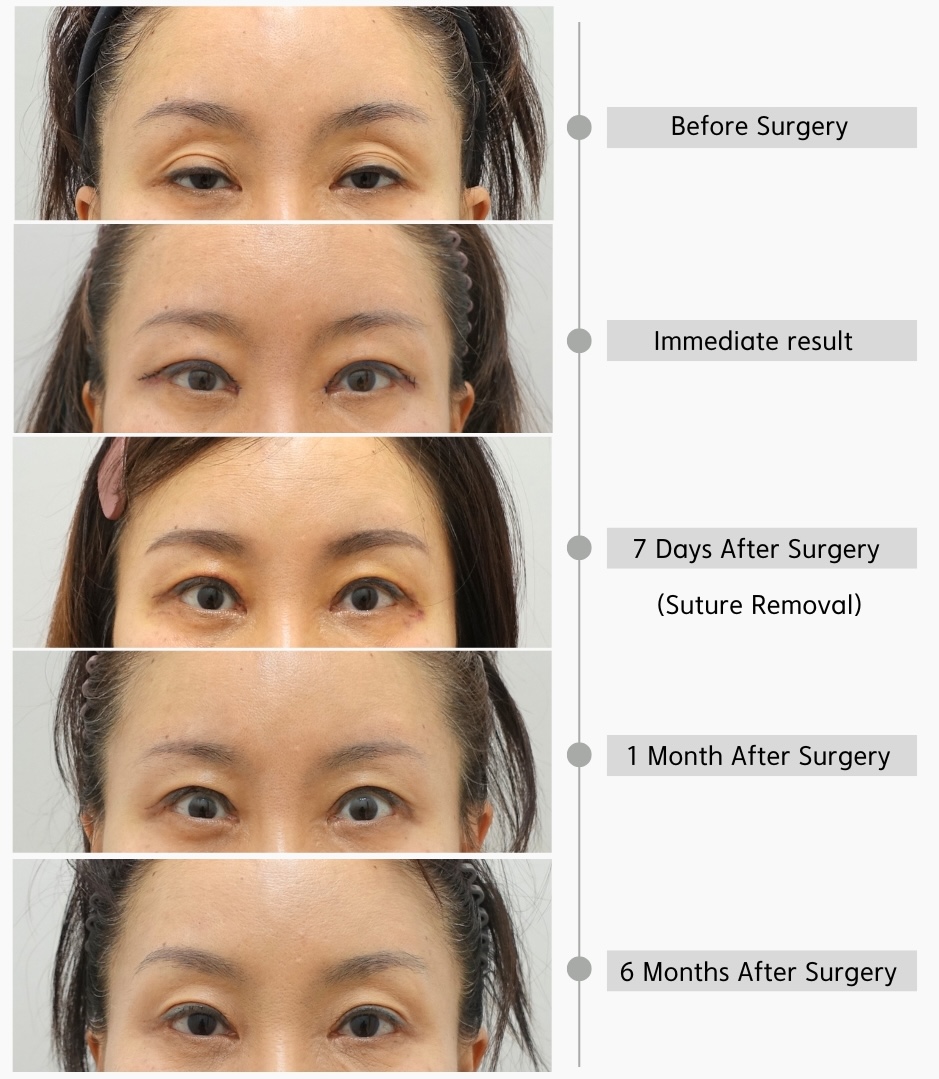
ASYMMETRY RECOVERY TIMELINE
Balance Appears Gradually
Recovery after asymmetry correction is not immediate.
Swelling, tissue adaptation, and muscle function may temporarily make the eyes appear more uneven during the early healing period.
As healing progresses, balance gradually improves and the final result becomes easier to evaluate.
For this reason, asymmetry correction should be assessed over time rather than in the first few weeks after surgery.
ASYMMETRY RECOVERY TIMELINE
Recovery after asymmetry correction often requires patience.
Because the eyes heal independently, swelling, tissue adaptation, and muscle function may recover at different rates during the early stages of healing.
For this reason, temporary asymmetry is common immediately after surgery and does not necessarily represent the final outcome.
As swelling gradually decreases and tissues stabilize, eyelid balance becomes more apparent over time.
Meaningful evaluation is possible only after sufficient healing has occurred.
The goal of asymmetry correction is not immediate perfection, but a natural and stable balance that develops gradually throughout the recovery process.
The final result of asymmetry correction should be judged over time—not immediately after surgery.
Related Insight
Why Does My Upper Eyelid Feel Tight After Revision Surgery?
A feeling of tightness is one of the most common concerns after revision surgery.
In many cases, it reflects swelling, scar maturation, and tissue remodeling rather than a surgical complication.
INTERNATIONAL PATIENTS
Many of our revision patients travel to Korea after undergoing surgery elsewhere.
We provide online photo evaluations, individualized consultation planning, and coordinated scheduling for international patients.
Because revision surgery often requires detailed analysis, the consultation process begins long before the day of surgery.
Patients are encouraged to submit photographs and surgical history in advance so that a more meaningful evaluation can take place before arriving in Korea.
Online Photo Evaluation
Submit photographs before traveling.
Personalized Surgical Planning
Individualized assessment for each case.
International Patient Coordination
Assistance with scheduling and preparation.
One-Surgeon
Care
Direct care from consultation through follow-up.
ASYMMETRY CORRECTION IN KOREA
Frequently Asked Questions
Answers to common questions about asymmetry correction,
recovery,
candidacy,
and long-term outcomes.
FAQ
Uneven eyes can develop for many reasons, including differences in eyelid-opening muscle function, crease height, tissue support, brow position, natural anatomy, or previous eyelid surgery.
Successful correction begins by identifying the underlying cause rather than focusing only on appearance.
No.
Some asymmetries are mild, naturally occurring, and do not affect eyelid function or overall facial balance.
In certain cases, observation may be more appropriate than surgical correction.
Yes.
Differences in eyelid-opening muscle function are one of the most common causes of asymmetry.
When one eyelid opens less than the other, the eyes may appear uneven even if the crease height is similar.
Yes.
Differences in crease height can create visible asymmetry.
However, fold height is only one possible cause. A thorough evaluation is necessary to determine whether the imbalance is related to the fold itself, muscle function, or structural support.
Yes.
Asymmetry may occur after surgery due to differences in healing, scar formation, tissue resistance, incomplete correction, or changes in eyelid support structures.
The appropriate treatment depends on identifying the specific cause.
No.
Natural human faces are not perfectly symmetrical.
The goal of surgery is to create a more balanced, natural, and stable appearance rather than identical eyes.
Initial recovery generally occurs within 1–2 weeks.
However, swelling resolution, tissue adaptation, and functional stabilization may continue for several months.
Final balance should not be judged too early.
Swelling, tissue resistance, and muscle adaptation may temporarily exaggerate asymmetry during the healing process.
This is often a normal part of recovery and does not necessarily indicate a problem.
In some cases, long-term changes in tissue healing, muscle function, or aging may influence eyelid balance.
Careful surgical planning helps reduce the risk of recurrence.
Revision should only be considered after sufficient healing time.
In most cases, at least 6–12 months are recommended before a meaningful evaluation can be made.
Premature intervention may increase the risk of scarring and further imbalance.
The most important factor is identifying the source of the imbalance.
Successful correction depends on understanding whether the asymmetry is related to muscle function, crease formation, tissue support, previous surgery, or natural anatomy.
In many cases, yes.
Because the eyes are a central feature of the face, improving eyelid balance can contribute to a more harmonious overall appearance.
However, the objective is natural balance rather than perfect symmetry.
Not every asymmetry benefits from surgical correction.
Some differences are mild, naturally occurring, or unrelated to eyelid function.
In these situations, observation may be a more appropriate option than surgery.
Standard eyelid surgery often focuses on creating or adjusting a fold.
Asymmetry correction focuses on identifying and correcting the underlying cause of imbalance, which may involve muscle function, tissue support, scar tissue, or previous surgical changes.
The goal is not to make the eyes identical.
The objective is to restore balance, improve function when necessary, and achieve a natural appearance that remains stable over time.
Why Patients Travel To Korea For Uneven Eyes Correction With Dr. Ahnsungmin
Many patients seeking correction for uneven eyes have already been told that asymmetry is difficult to treat.
They often travel to Korea because successful asymmetry correction requires more than adjusting appearance. It requires understanding the underlying cause of imbalance and determining whether meaningful improvement is possible.
At Ahnsungmin Plastic Surgery, every asymmetry case is evaluated through structural analysis, functional assessment, and long-term planning before any surgical decision is made.
For many international patients, that careful decision-making process is just as important as the surgery itself.
ASYMMETRY CORRECTION IN KOREA
REQUEST AN ASYMMETRY EVALUATION
Every asymmetry case is different.
The first step is not planning surgery.
It is understanding the cause of the imbalance and whether meaningful correction is possible.
Request an asymmetry evaluation to receive a personalized assessment of your condition.
Online Consultation Available for International Patients
Ahnsungmin Surgical Philosophy
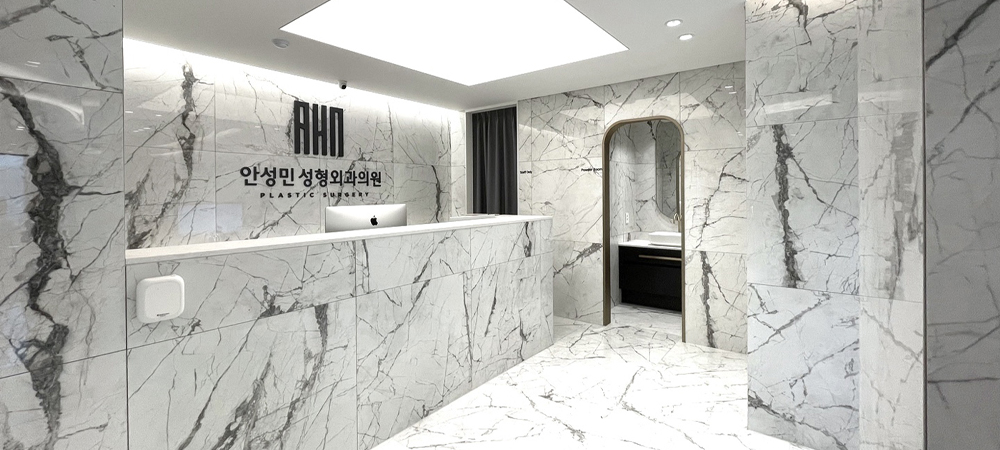
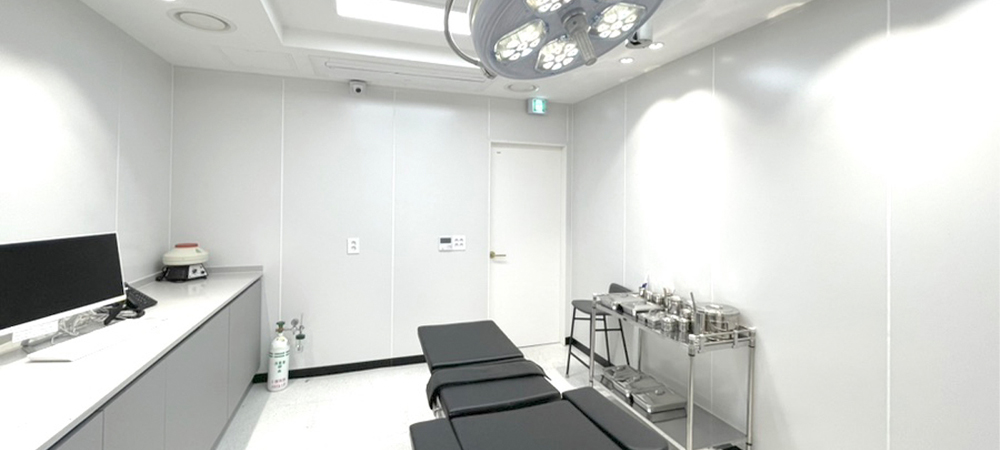
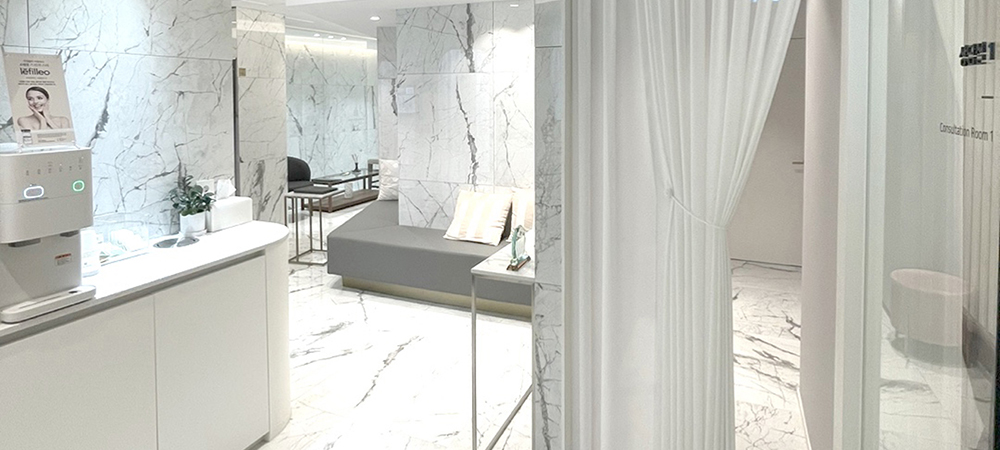
At Ahnsungmin Plastic Surgery, eyelid surgery is approached through careful structural analysis rather than simply focusing on cosmetic change.
Many eyelid conditions such as ptosis, eyelid hollowing, lower eyelid bags, or postoperative imbalance are closely related to the underlying anatomy of the eyelid.
Our surgical philosophy focuses on restoring natural balance while preserving healthy tissue and achieving long-term structural stability.
Request an Uneven Eyes Evaluation
Share your photos for an initial assessment of eyelid asymmetry and possible treatment options.
Seoul, Republic of Korea
