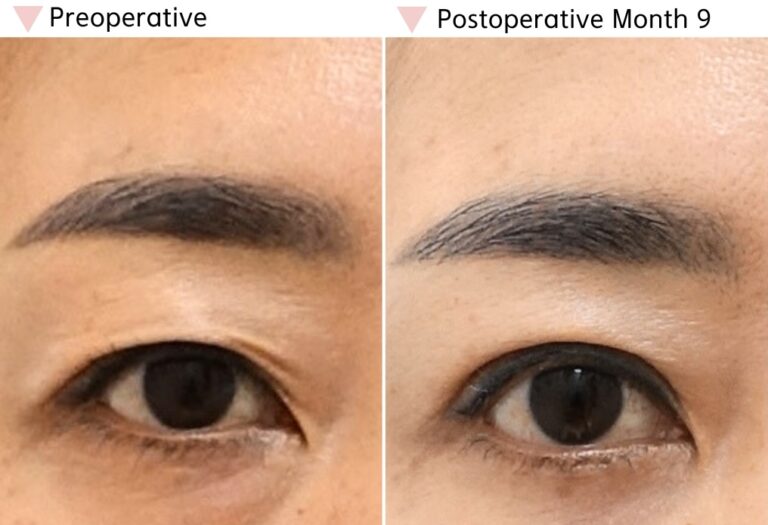
Many patients become concerned when their upper eyelid begins to feel tight after revision surgery.
The eyelid may feel stiff when blinking.
Some patients notice a pulling sensation when looking upward.
Others feel that the eyelid no longer moves as naturally as it did before surgery.
Because revision surgery often involves tissues that have already undergone previous procedures, patients sometimes worry that this tightness means the surgery is failing.
In most cases, however, temporary tightness during recovery is not unusual.
Tightness Is Often Part of the Healing Process
One of the most common concerns after revision eyelid surgery occurs during the first several weeks of recovery.
Patients may notice that the eyelid feels tighter than expected.
The fold may feel firm.
The tissues may seem less flexible.
Some patients describe a sensation that the eyelid is being pulled upward or stretched.
Although these symptoms can feel alarming, they are often related to normal healing and temporary scar contracture rather than a permanent problem.
Why Revision Surgery Feels Different
Recovery after revision surgery is often different from recovery after primary surgery.
The tissues have already experienced previous surgery, scar formation, and structural changes.
As healing begins again, temporary stiffness and tissue contraction may become more noticeable than patients expect.
For this reason, patients who have undergone revision surgery may occasionally experience a stronger sensation of tightness compared to those recovering from primary eyelid surgery.
The First Month Is Often the Most Noticeable
Many patients become most aware of tightness during the first month after surgery.
The swelling may have already improved, but the tissues are still actively healing beneath the surface.
At this stage, the eyelid can feel firm, restricted, or less natural during movement.
Because patients often expect recovery to be nearly complete once swelling decreases, this period sometimes creates unnecessary anxiety.
In reality, healing continues long after the visible swelling improves.
Recovery Continues Beyond What Patients Can See
One of the most important things patients should understand is that tissue recovery does not end when the eyelid begins to look better.
Scar tissue continues to soften.
The tissues gradually become more flexible.
The eyelid slowly adapts to its new structural position.
While every patient heals differently, mild pulling sensations may continue for several months.
In some patients, noticeable improvement continues throughout the first three to six months of recovery.
For this reason, temporary tightness during the early recovery period should not be mistaken for the final result.
A Recovery Example
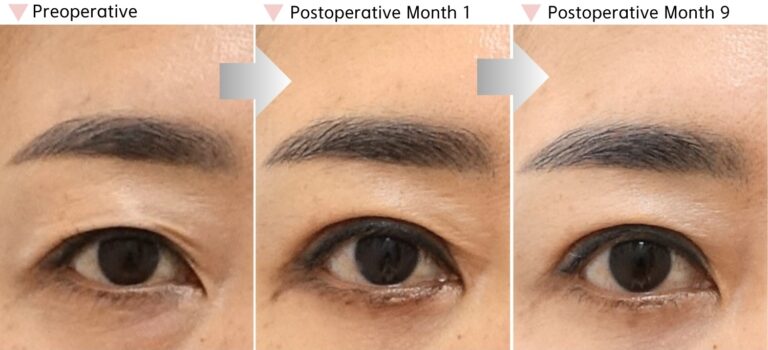
Preoperative and postoperative month 9 photographs following revision upper eyelid surgery.
Many patients experience temporary tissue tightness, pulling sensations, or scar contracture during the early recovery period after revision surgery. These symptoms are often most noticeable during the first month and may continue to improve gradually over the following three to six months as the tissues soften and stabilize.
The postoperative month 9 result demonstrates long-term recovery and improved eyelid stability after tissue maturation.
When Evaluation May Be Helpful
Not every sensation of tightness requires intervention.
However, evaluation may be appropriate if the tightness progressively worsens, if eyelid movement becomes increasingly restricted, or if significant asymmetry develops during recovery.
The goal is not to react to every sensation during healing.
The goal is to determine whether recovery is progressing in a stable and predictable direction.
Recovery Requires Patience
Patients often judge recovery based on what they feel today.
However, revision eyelid surgery recovery is often measured in months rather than weeks.
Temporary tightness, stiffness, and pulling sensations frequently improve as scar tissue matures and the eyelid gradually regains flexibility.
For this reason, early recovery should be viewed as part of the healing process rather than the final outcome.
Frequently Asked Questions
1. Is it normal to feel tightness after revision eyelid surgery?
Yes. Temporary tightness and stiffness are common during the early stages of healing and often improve gradually over time.
2. Why does the eyelid feel tighter after revision surgery than after my first surgery?
Revision surgery involves tissues that have already undergone previous surgery and scar formation. As a result, temporary tissue tightness may be more noticeable during recovery.
3. How long can pulling sensations last after revision eyelid surgery?
Many patients notice improvement within the first few months, but mild tightness may continue for three to six months while tissues continue to soften and adapt.
4. Does tightness mean scar tissue is forming incorrectly?
Not necessarily. Temporary scar contracture is a normal part of healing and does not automatically indicate an abnormal result.
5. When should I be concerned about persistent tightness?
Evaluation may be helpful if symptoms progressively worsen, if eyelid movement becomes increasingly restricted, or if significant asymmetry develops during recovery.
Insights
Recovery after revision surgery often continues long after swelling improves.
Why Some Failed Eyelid Surgeries Cannot Be Corrected With Simple Revision
Patients frequently underestimate how long revision recovery continues beneath the surface.
Why Some Revision Surgeries Should Only Be Evaluated After Some Time Has Passed
Scar tissue maturation often continues long after the eyelid begins to look better externally.
How Many Times Can Eyelid Revision Surgery Be Performed?
Patients often worry that temporary recovery changes represent the final result.
When Revision Is Possible—and When It Is Not
Request a Revision Eyelid Recovery Evaluation
Patients recovering from revision eyelid surgery may occasionally experience temporary tightness, pulling sensations, or stiffness during the healing process.
If recovery concerns persist or if symptoms continue to interfere with comfort and daily activities, a personalized evaluation may help determine whether healing is progressing as expected.
Request a Revision Eyelid Recovery Evaluation
Online consultation available for international patients.
Seeing the Eye as a Whole, Not in Parts
A Clinic Dedicated to Eyelid Revision Surgery in Korea
Ahnsungmin Plastic Surgery
