When Eyelid Surgery Does Not Go As Planned
Revision surgery begins with understanding why the first surgery failed. At AHNSUNGMIN Plastic Surgery, we focus on cause-based analysis, structural balance, and long-term stability—not simply performing another operation.
✓ High Fold
✓ Multiple Folds
✓ Residual Ptosis
✓ Asymmetry
✓ Scar Adhesion
✓ Hollow Appearance
20+ Years
Focused on
Eyelid Surgery
Revision
Specialist
Focus
Patients
from 30+
Countries
One
Surgeon
Care
REVISION EYELID SURGERY IN KOREA
Not every problem requires more surgery.
The goal of revision surgery is not to do more,
but to understand what should be corrected —
and what should be left alone.

Understanding why the first surgery failed.
Restoring balance, not simply changing the crease.
Avoiding unnecessary correction whenever possible.
Focused on lasting, natural results.
One surgeon from consultation to follow-up.
REVISION EYELID SURGERY CASES
Real Results from Structural Revision
These cases represent patients who underwent revision eyelid surgery after unsatisfactory outcomes elsewhere.
Each case required a different approach based on anatomy, tissue condition, and the cause of failure.
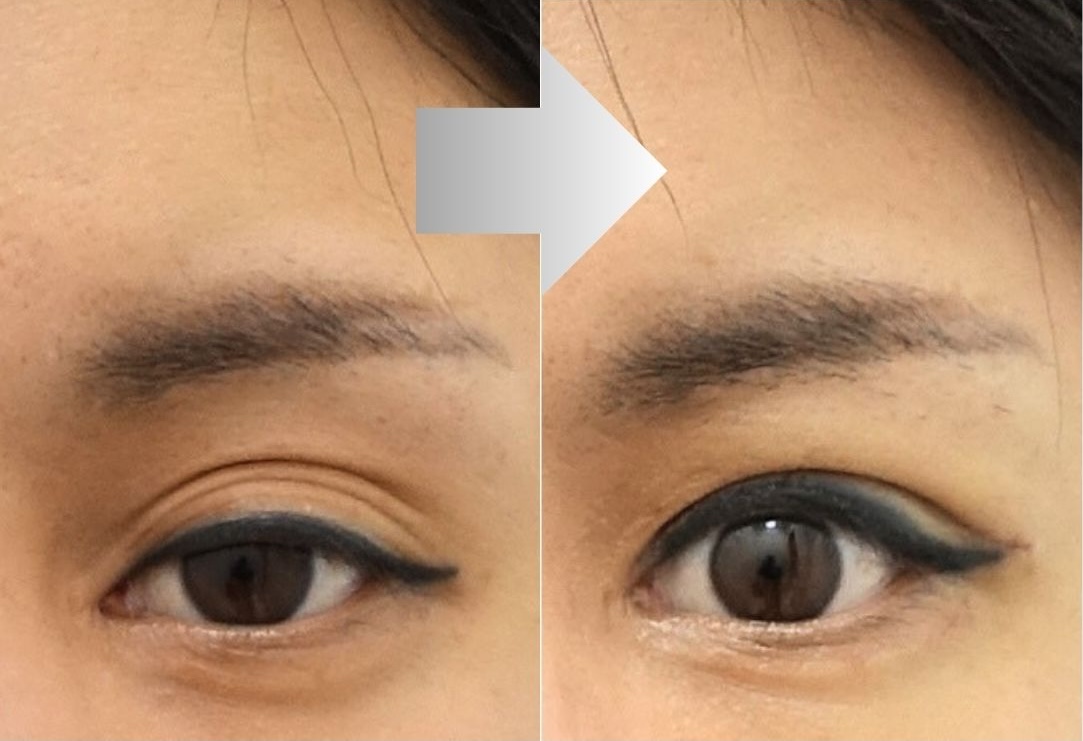
Multiple Folds
Multiple folds often result from scar tissue and unstable eyelid structure after previous surgery.
Revision planning focuses on restoring a more natural and stable crease.
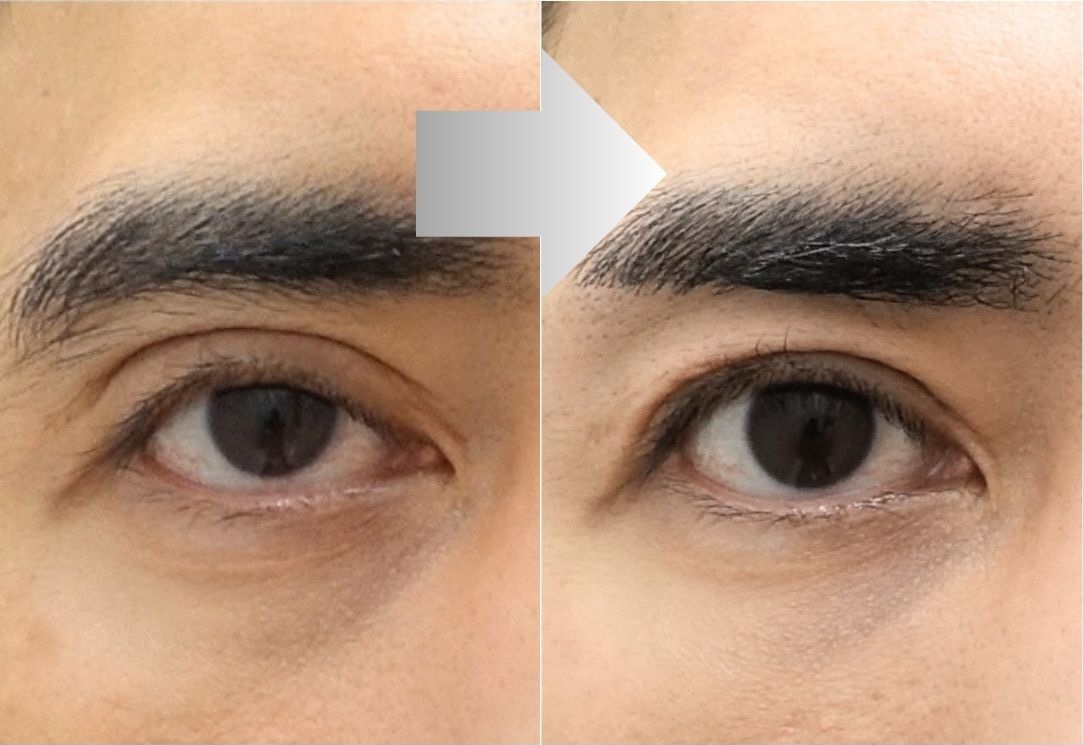
High Fold
A high crease may make the eyes appear hollow, tense, or less natural over time.
Revision planning focuses on restoring balance while preserving long-term stability.
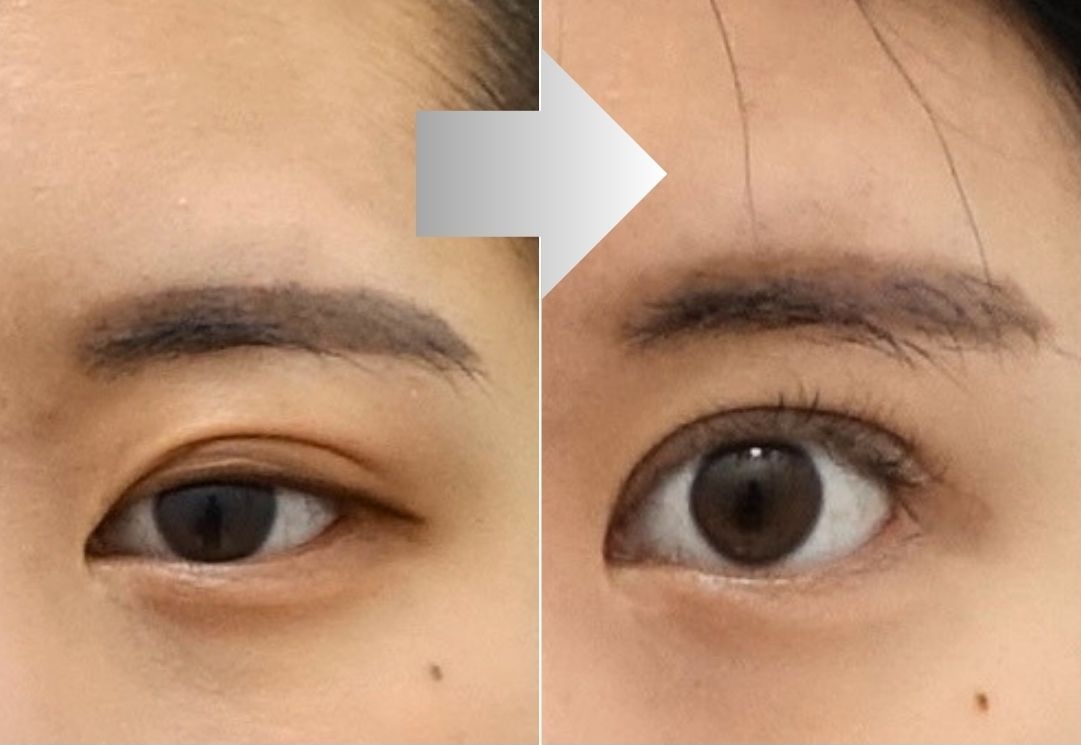
Residual Ptosis
The eyes may still appear heavy or partially closed after previous surgery.
Revision surgery focuses on improving eyelid function and restoring a more balanced appearance.
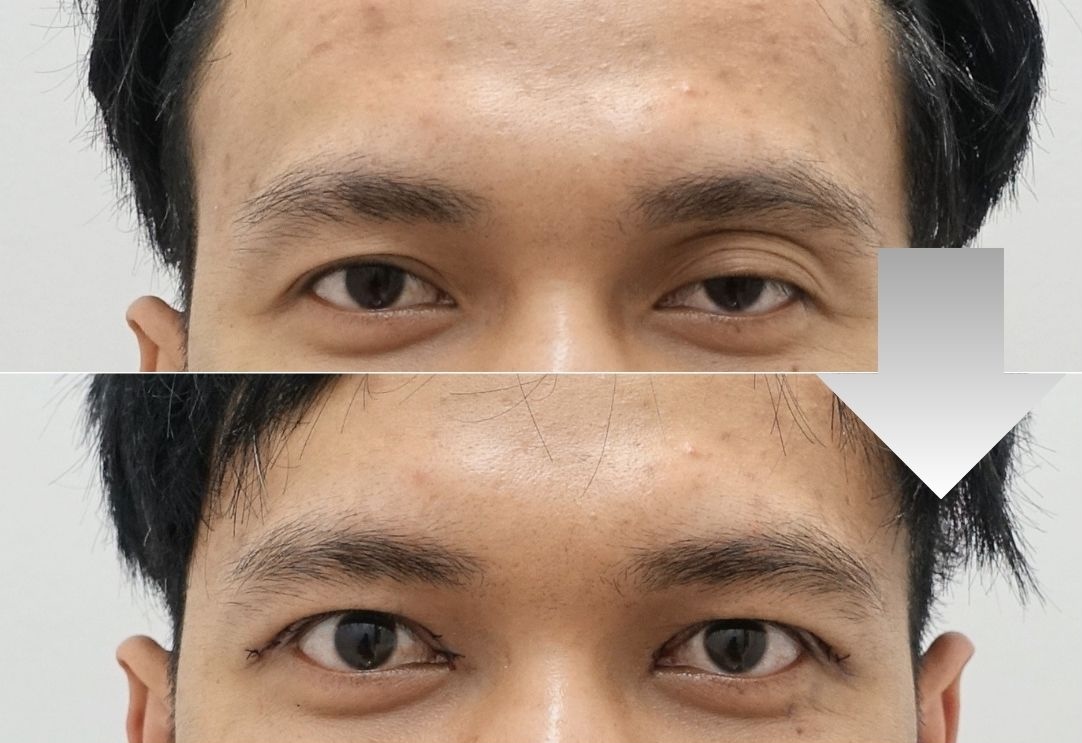
Asymmetry
Eyelid asymmetry may result from differences in crease height, ptosis, scar tissue, or healing.
Revision planning begins with identifying the underlying cause rather than simply matching the folds.
THE REVISION PROCESS
Revision Begins Long Before Surgery
Every revision case follows a different timeline.
The decision to operate depends on tissue condition,
healing status, and the cause of failure.
WHY REVISION SURGERY OFTEN GOES WRONG
Many revision surgeries fail not because the case is difficult, but because the original problem was never correctly understood.
In many patients, what appears to be a surface issue—such as crease height or asymmetry—is actually a deeper problem involving muscle function, scar adhesion, or structural imbalance.
As a result, revision procedures may be repeated without addressing the true cause of the problem.
Additional correction without proper analysis often creates further imbalance rather than improvement.
STEP 01
We begin by reviewing photographs and understanding the patient's surgical history.
STEP 02
The focus is identifying why the previous surgery failed—not deciding how to operate.
STEP 03
In some cases surgery is recommended. In others, observation or waiting may be the better choice.
STEP 04
Revision surgery is planned based on structural balance and tissue condition.
STEP 05
The final result is evaluated over time, not immediately after surgery.
OUR APPROACH TO REVISION SURGERY
Every revision begins with identifying the cause of failure—not planning the next procedure.
We evaluate muscle function, scar formation, tissue condition, and structural balance before making any decision.
Surgery is considered only when the underlying cause can be clearly identified and safely corrected.
The patient must understand the cause of failure and the rationale for the proposed correction.
Without that understanding, surgery should not proceed.
CASE 1
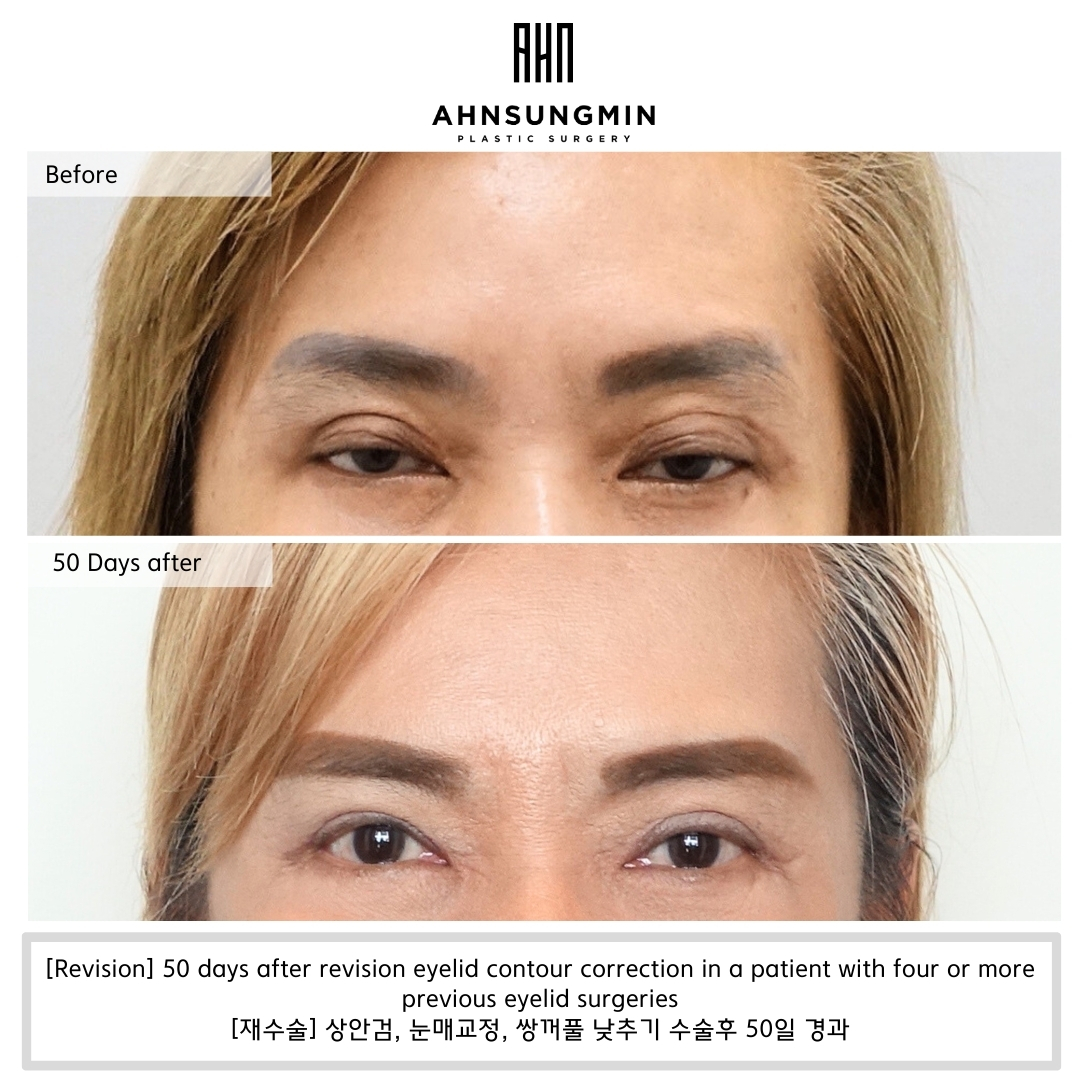
A Revision Case Based on Structural Analysis
Revision Performed After 4 Previous Eyelid Surgeries
This patient had undergone multiple previous eyelid surgeries and continued to experience functional and aesthetic concerns.
The visible problem was not simply the eyelid shape itself, but a combination of scar adhesion, structural imbalance, and tissue changes from prior procedures.
Rather than pursuing additional enlargement or aggressive correction, the revision plan focused on restoring balance and long-term stability.
Every revision case requires a different strategy, but the principle remains the same: identify the true cause before attempting correction.
When Repeated Surgery Fails to Address the Cause
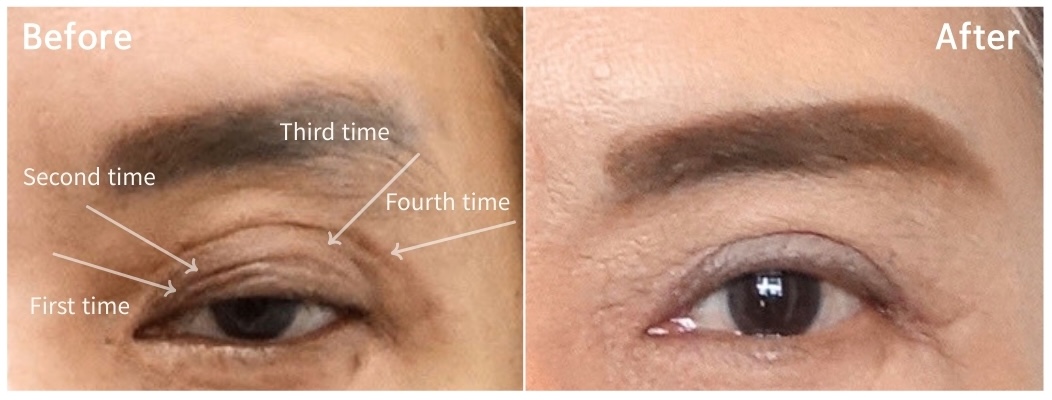
This patient had undergone four previous eyelid surgeries.
The multiple visible lines on the eyelid are not separate problems—they are the result of repeated attempts to correct a problem without fully understanding its structural cause.
Revision surgery is not about performing another operation.
It begins with understanding why the previous operations failed and whether meaningful correction is still possible.
CASE 2
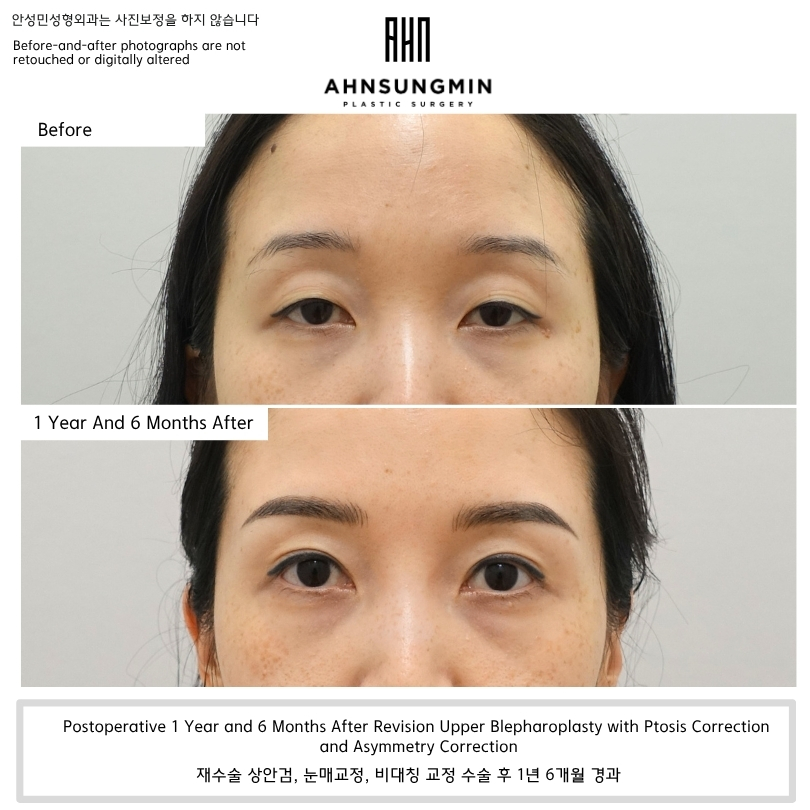
A Revision Focused on Function, Not Just the Fold
This patient presented with persistent eyelid heaviness and incomplete eyelid opening following previous surgery.
Although the crease itself was visible, the underlying issue was not simply the fold height. Residual ptosis and imbalance in eyelid function continued to affect the appearance of the eyes.
The revision plan focused on restoring more natural eyelid opening while maintaining balance between both eyes. Rather than creating a larger or more prominent crease, the goal was to improve function and long-term stability.
In revision surgery, correcting the underlying cause often produces a more natural result than changing the visible crease alone.
CASE 3
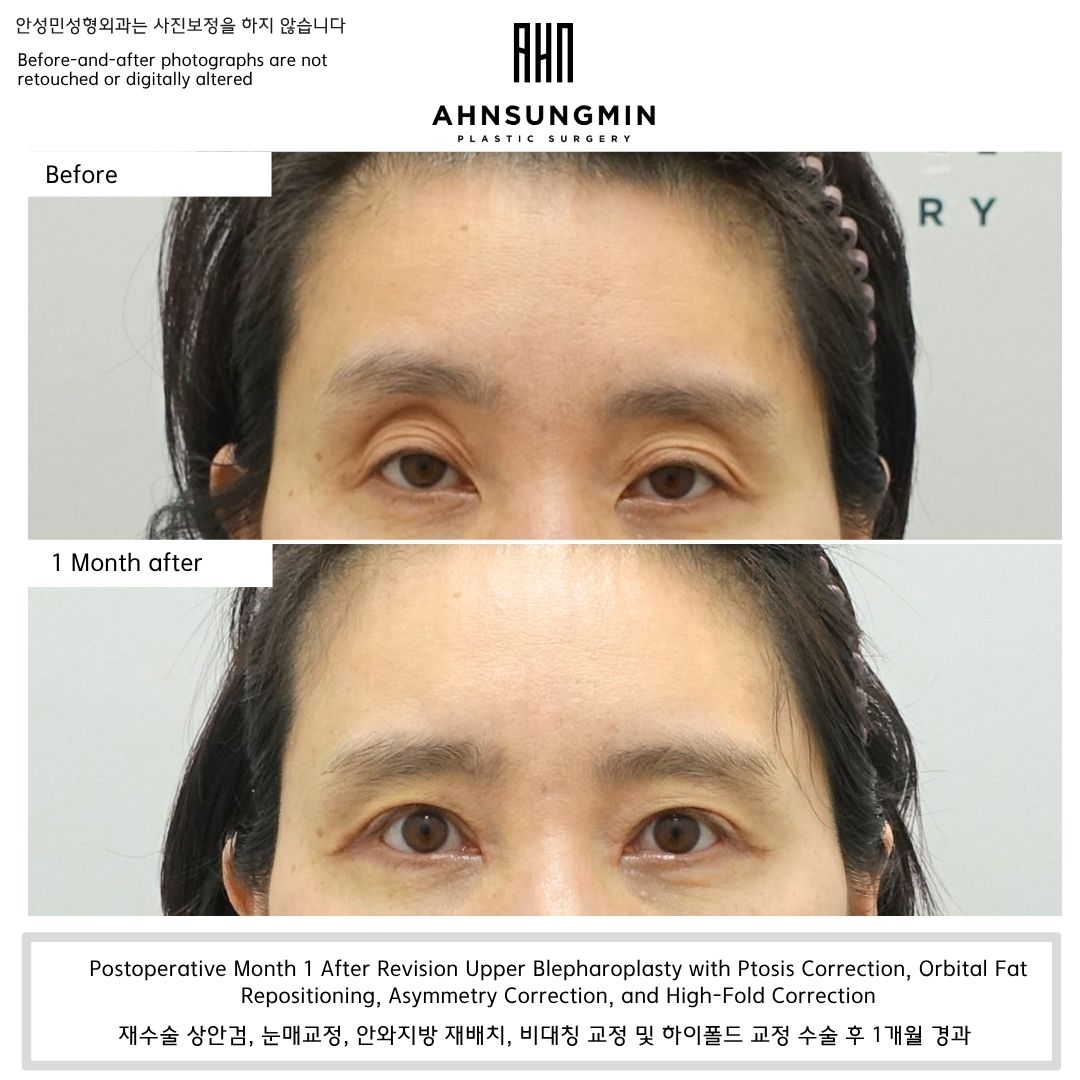
A Revision Focused on Restoring Structure, Not Adding Volume
Another important finding was asymmetry in eyelid function. Before surgery, one eyebrow sat noticeably higher than the other as the forehead compensated for unequal eyelid opening. Because one side required greater effort to keep the eye open, the eyebrow remained elevated and the upper eyelid appeared more sunken on that side.
In cases like this, hollowing is often not simply a volume problem. It may reflect altered tissue position, chronic brow compensation, and underlying imbalance in eyelid function.
Learn More: Why Eyes May Look Hollow Even After Double Eyelid Surgery
Learn More: Why Hollow Eyes Are Not Always Caused by Volume Loss
CASE 4
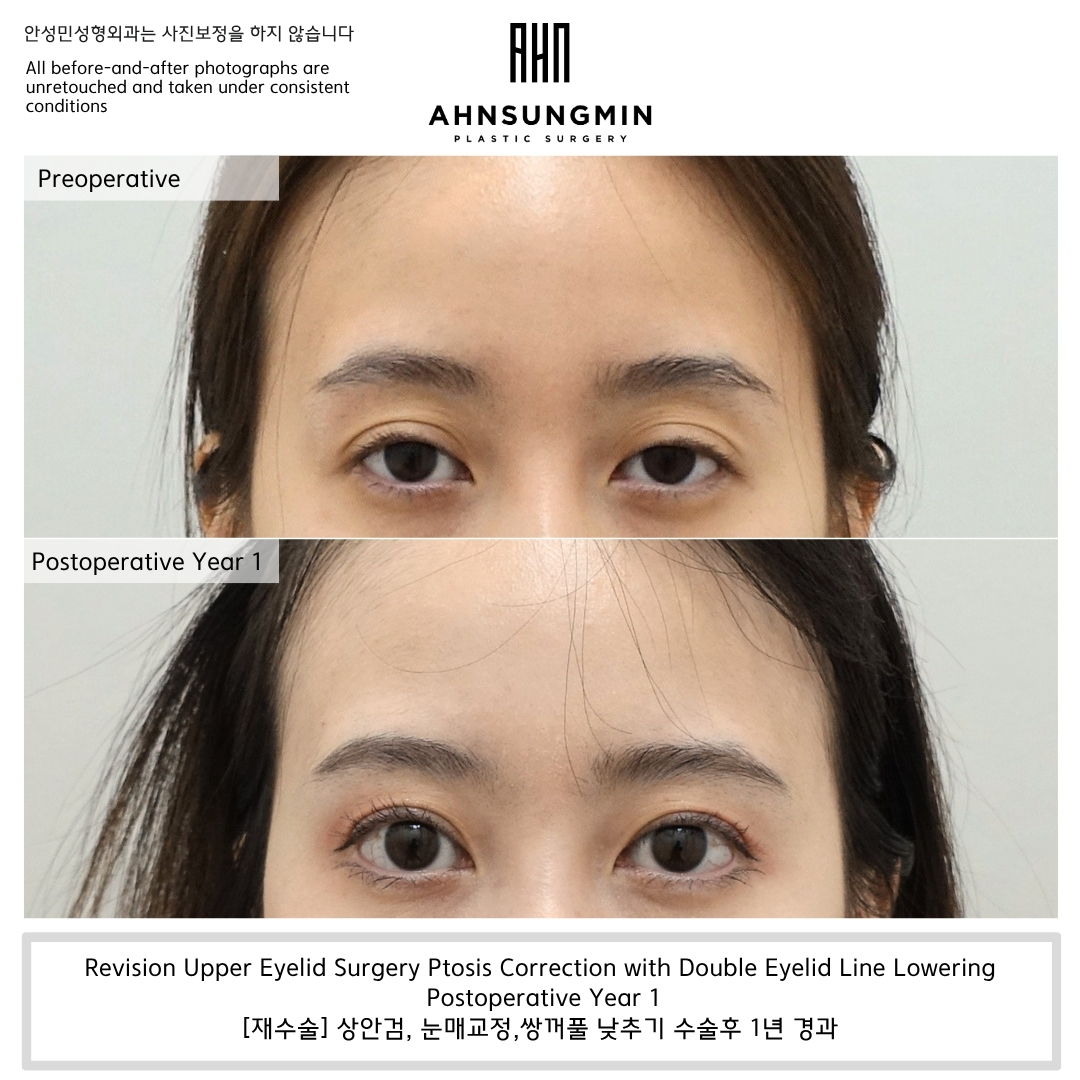
A Revision Designed to Lower an Unnaturally High Fold
This patient was concerned about an eyelid crease that appeared too high and did not feel balanced with the natural anatomy of the eyes.
While a high fold is often perceived as a cosmetic issue, the underlying problem can involve the relationship between eyelid opening, crease position, and overall facial balance.
The revision plan focused on lowering the crease to a more natural position while simultaneously improving eyelid function through ptosis correction. The goal was not to create a larger appearance, but to restore a crease height that looked more comfortable and proportionate.
In revision surgery, a lower and more natural fold often creates a result that feels more stable, balanced, and harmonious over time.
CASE 5
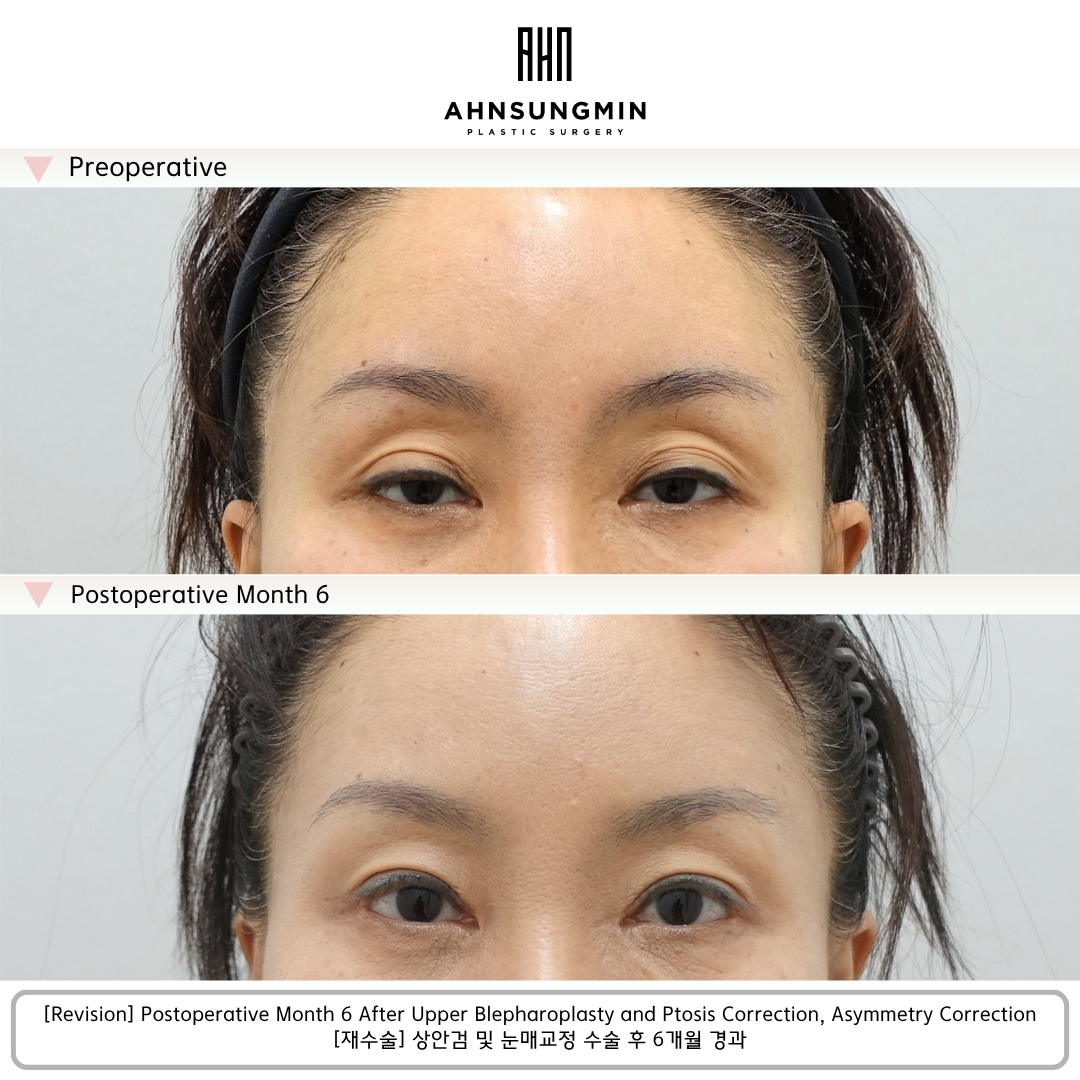
A Revision Focused on Restoring Eyelid Symmetry
Revision Performed After 2 Previous Eyelid Surgeries
This patient presented with noticeable differences in eyelid opening and overall eye shape following previous surgery.
Although asymmetry is often perceived as a problem of appearance alone, it frequently reflects underlying differences in eyelid function, tissue support, or crease position.
The revision plan focused on improving eyelid balance through careful adjustment of eyelid function and structural support rather than simply matching crease height.
In revision surgery, perfect symmetry is rarely the goal. The objective is to achieve better balance, natural movement, and long-term stability between both eyes.
CASE 6
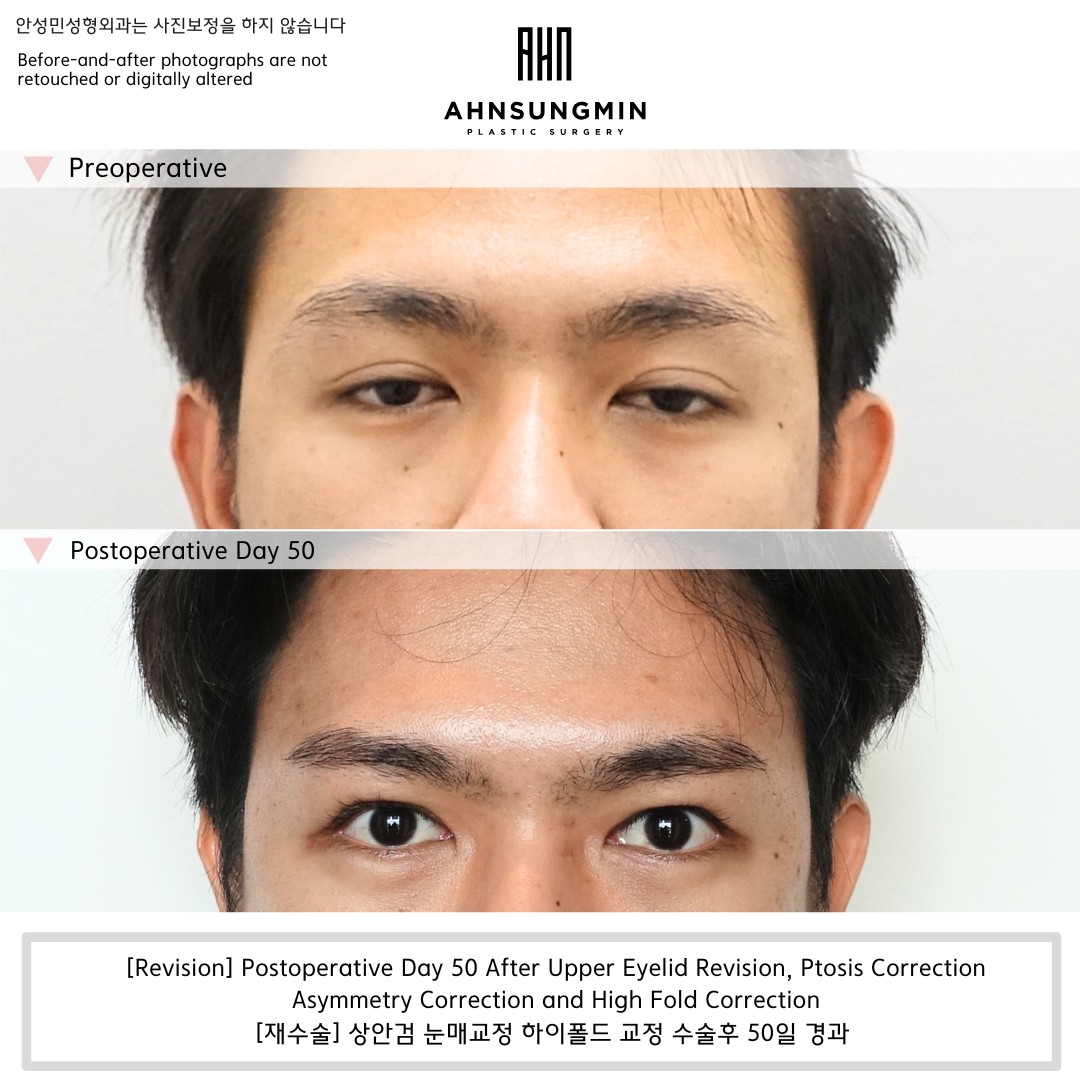
A Revision Focused on Eyelid Opening and Balance
Revision Performed After 2 Previous Eyelid Surgeries
This patient presented with persistent eyelid heaviness, asymmetry, and incomplete eyelid opening following previous surgery.
Although the visible concerns appeared to involve the crease itself, the underlying issue was primarily functional. Differences in eyelid opening and muscle balance contributed to an uneven appearance and a tired expression.
The revision plan focused on improving eyelid function through ptosis correction while simultaneously addressing asymmetry and crease imbalance.
In revision surgery, improving the way the eyelids function often produces a more natural result than simply changing the appearance of the fold.
CASE 7
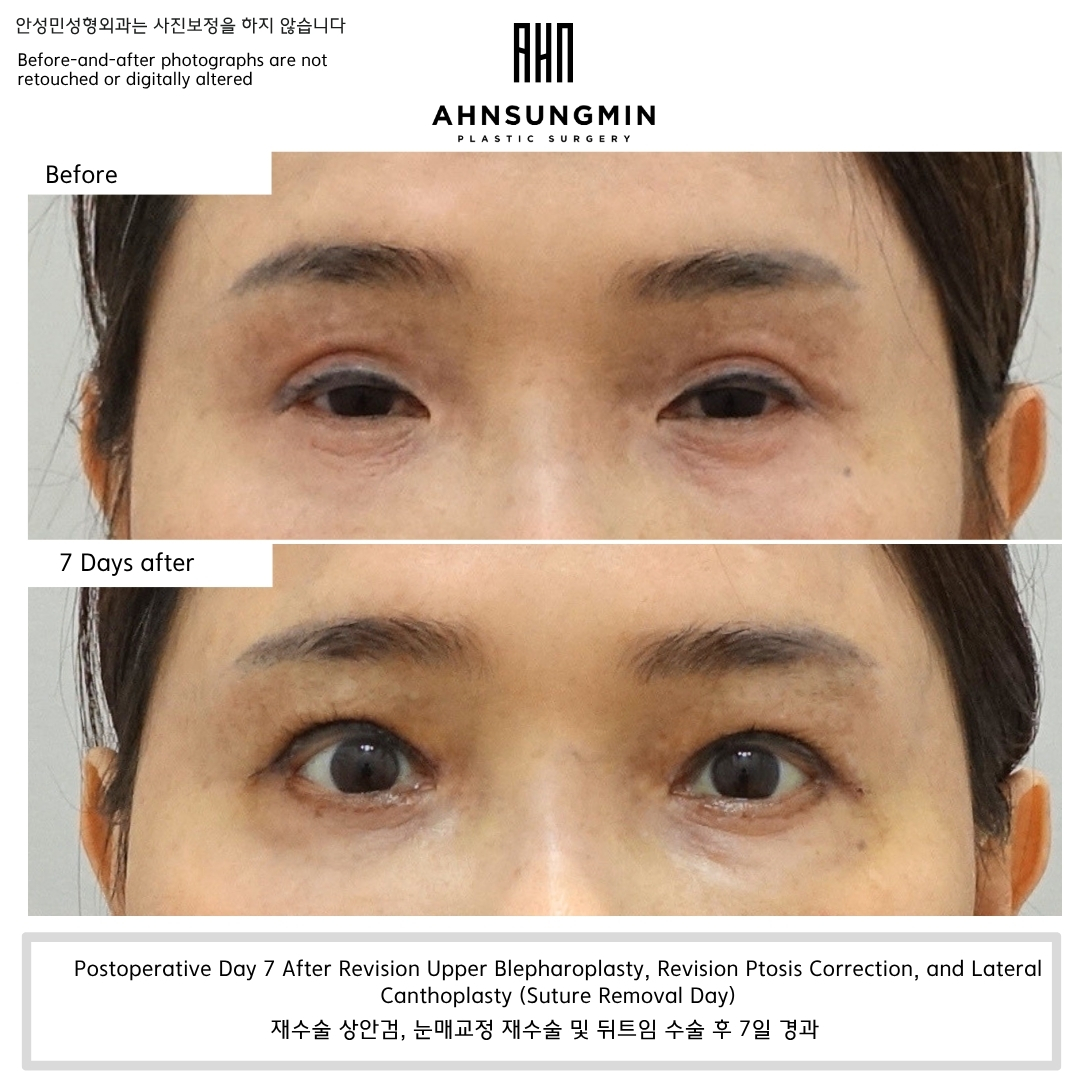
A Revision Focused on Both Width and Eyelid Opening
This patient presented with persistent concerns following previous eyelid surgery, including limited eyelid opening and insufficient horizontal eye width.
Rather than focusing on the crease alone, the revision plan addressed both vertical and horizontal dimensions of the eye. Ptosis correction was performed to improve eyelid opening, while lateral canthoplasty was used to enhance the outer contour and create a more balanced horizontal shape.
The goal was not simply to make the eyes appear larger, but to improve overall eye proportions and create a more natural relationship between eyelid function and eye shape.
In revision surgery, meaningful improvement often comes from understanding which structural elements require correction rather than repeatedly modifying the crease itself.
CASE 8
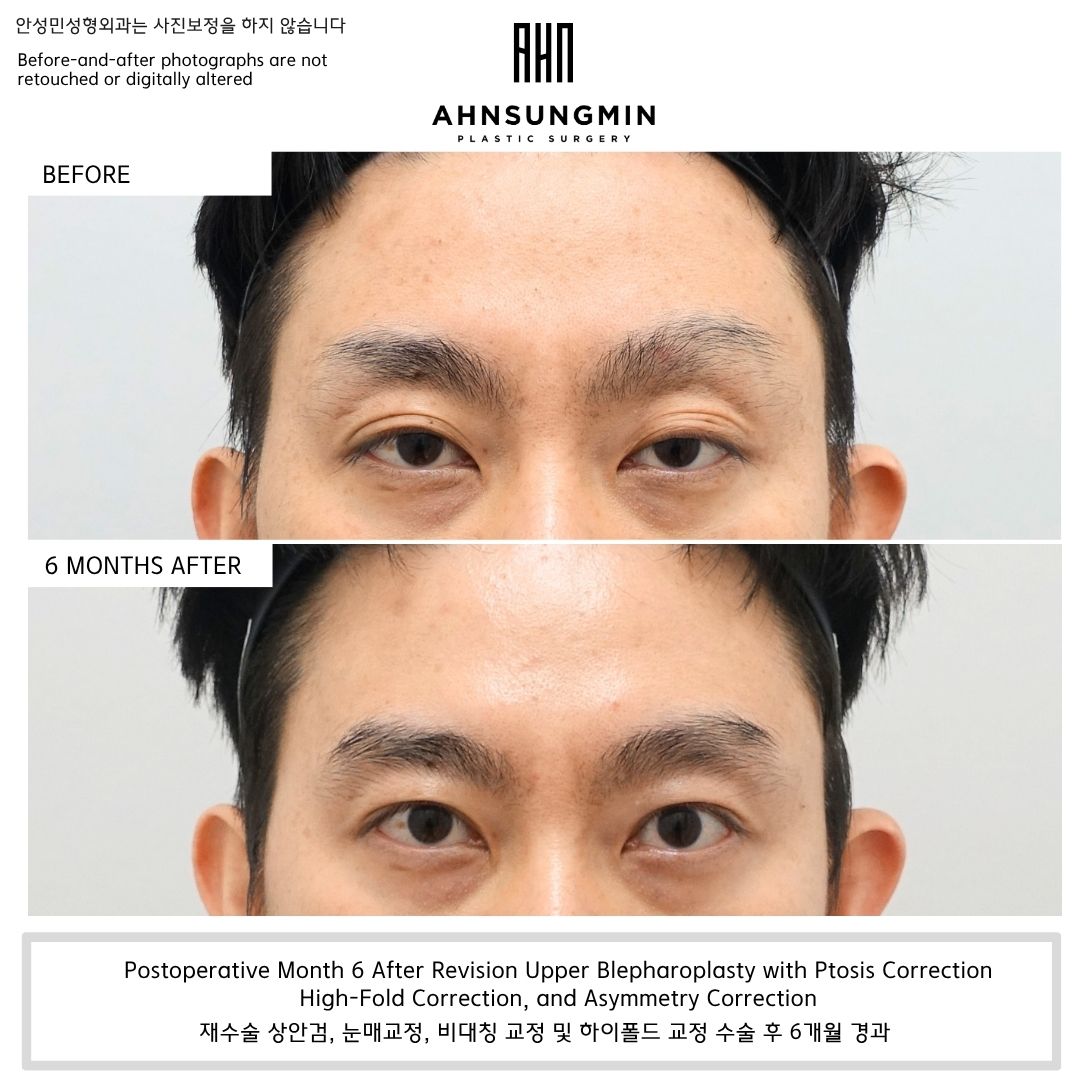
A Complex Revision Focused on Restoring Balance
This patient presented with several concerns following previous eyelid surgery, including a high crease, eyelid asymmetry, and incomplete eyelid opening.
Rather than treating each issue separately, the revision plan focused on understanding how eyelid function, crease position, and overall balance were affecting the appearance of the eyes.
The procedure included ptosis correction, high-fold revision, and asymmetry correction as part of a comprehensive strategy to improve both function and long-term stability.
In complex revision surgery, successful outcomes often depend on addressing the relationship between multiple structural problems rather than focusing on a single visible concern.
CASE 9
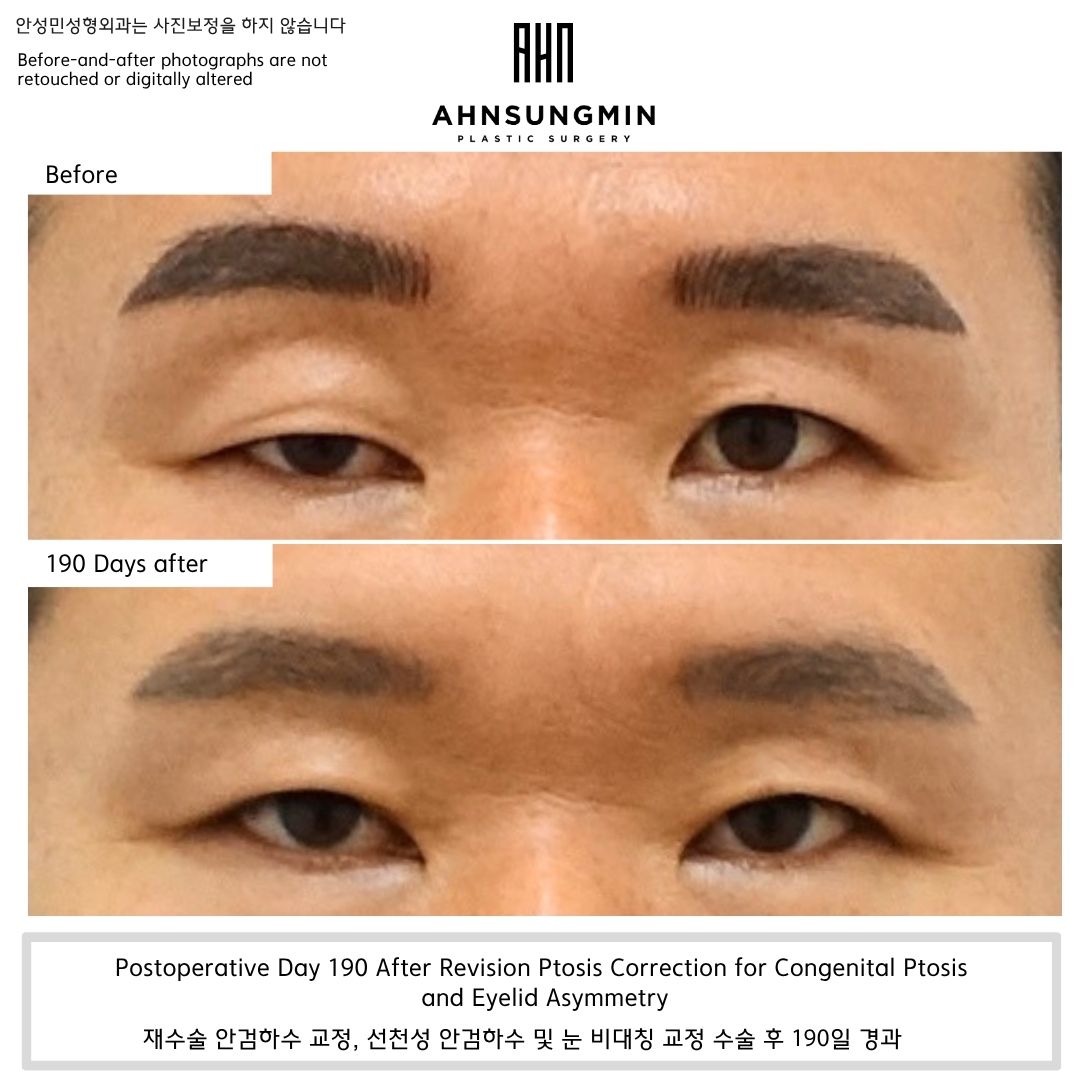
Congenital Ptosis Revision Focused on Functional Balance
This patient had lived with congenital ptosis and noticeable eyelid asymmetry since childhood. Because of the difficulty opening the eyes evenly, the forehead was constantly recruited to help raise the eyelids.
Revision surgery focused on improving the remaining ptosis and reducing the need for excessive forehead compensation. Rather than simply making the eyelids look symmetrical, the goal was to restore better functional balance between the two eyes.
At 190 days after surgery, eyelid opening and overall symmetry had improved with a more natural resting appearance. In congenital ptosis revision, reducing compensatory forehead use and restoring functional balance can be just as important as the visible eyelid position.
WHEN REVISION IS NOT THE RIGHT CHOICE
Not every problem requires another surgery.
In some patients, the tissue has already been significantly altered by previous procedures, making further correction difficult or unsafe.
In others, the healing process is still ongoing, and premature intervention may increase scarring, instability, or tissue damage.
Revision surgery should not be performed simply because a patient is dissatisfied.
The underlying cause must be clearly identified, and the potential benefits of surgery must outweigh the risks.
Choosing not to operate is sometimes the most appropriate decision.
TIMING IS PART OF THE DECISION
Revision surgery is not only about how to operate, but when to operate.
Swelling, scar maturation, tissue stiffness, and eyelid adaptation can continue for months after surgery.
What appears to be asymmetry or an unnatural fold during early recovery may improve significantly as the tissues stabilize.
Operating too early may worsen scarring, distort existing structures, and limit future revision options.
For this reason, waiting is not simply a delay—it can be an important part of the treatment itself.
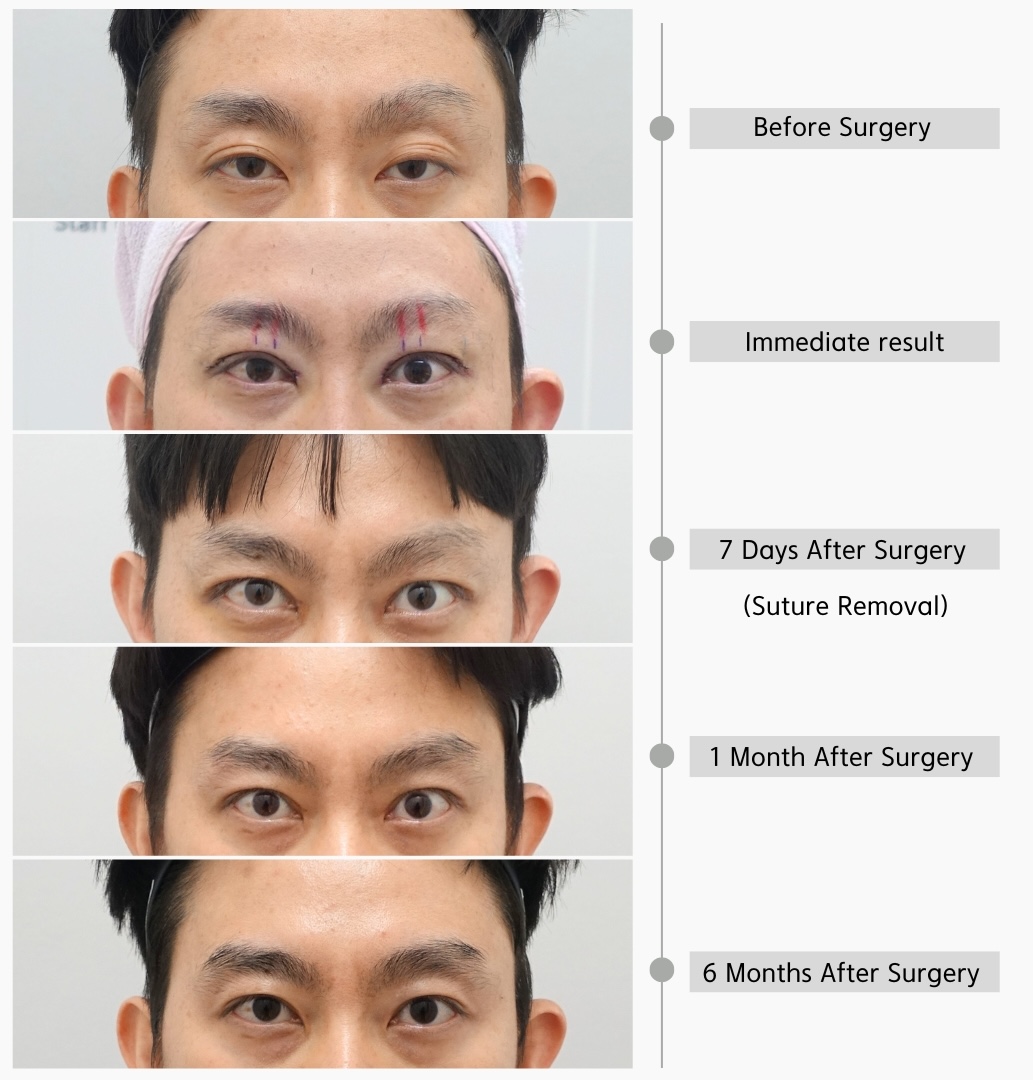
REVISION RECOVERY TIMELINE
Healing Takes Time
Revision surgery often requires a longer recovery period than primary surgery.
Scar tissue, previous operations, and individual healing responses can all influence the recovery process.
For this reason, the final result is evaluated gradually rather than immediately after surgery.
REVISION RECOVERY TIMELINE
Revision surgery often requires a longer recovery period than primary eyelid surgery.
Because the tissues have already undergone previous operations, healing is influenced not only by swelling, but also by scar maturation, tissue remodeling, and structural adaptation.
For this reason, the appearance seen immediately after surgery rarely represents the final outcome.
Throughout the recovery process, the eyelid gradually settles as swelling decreases and scar tissue softens over time.
Meaningful evaluation becomes possible only after sufficient healing has occurred.
The goal of revision surgery is not an immediate transformation, but a stable and lasting improvement that continues to develop during the months following surgery.
The final result of revision surgery is measured over time, not immediately after surgery.
Related Insight
Why Does My Upper Eyelid Feel Tight After Revision Surgery?
A feeling of tightness is one of the most common concerns after revision surgery.
In many cases, it reflects swelling, scar maturation, and tissue remodeling rather than a surgical complication.
Insights
Explore expert perspectives on eyelid surgery, recovery, and long-term results.
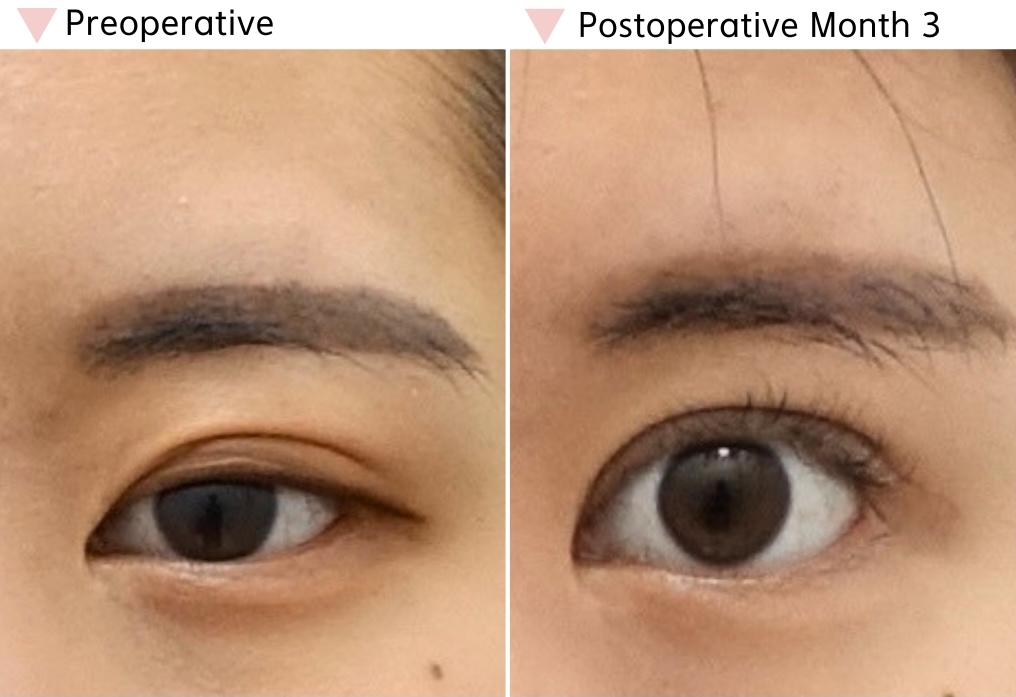
Why Eyelid Revision Surgery Requires a Different Approach
Structural problems require structural solutions. Learn why revision surgery demands careful planning.
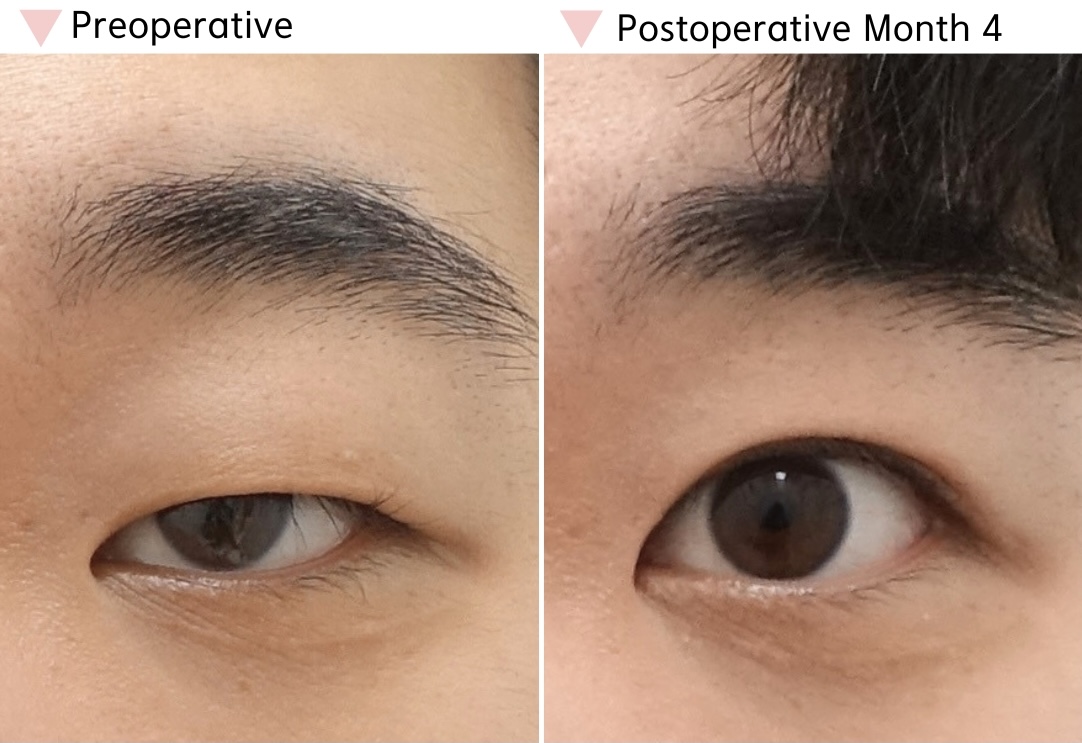
Ptosis vs.Pseudoptosis: What's the Difference?
Not every heavy eyelid is true ptosis. Discover why an accurate diagnosis matters.
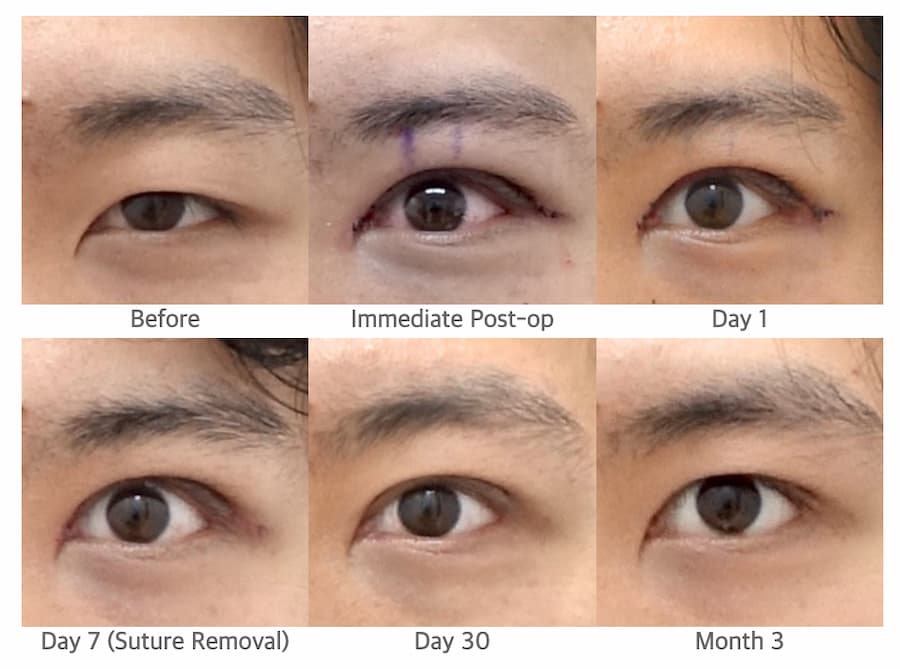
Ptosis Surgery Recovery Timeline: What to Expect From Day 1 to Month 3
Ptosis recovery takes time. Learn what to expect from Day 1 through Month 3 as swelling decreases and healing progresses.

How Long Should You Wait Before Revision Eyelid Surgery?
Revision timing depends on healing, scar maturation, and tissue stability. Learn why waiting can be an important part of successful revision surgery.
WHO IS A GOOD CANDIDATE FOR REVISION SURGERY
Revision eyelid surgery may be considered when a persistent problem can be traced to an identifiable structural or functional cause.
Common concerns include multiple folds, an excessively high crease, residual ptosis, eyelid asymmetry, scar adhesion, and structural imbalance following previous surgery.
However, candidacy depends not only on appearance, but also on tissue condition, previous surgical history, eyelid function, and whether meaningful correction can be performed safely.
Repeated Crease Formation
Excessively Elevated Crease
Incomplete Eyelid Opening
Persistent Imbalance
Many of our revision patients travel to Korea after undergoing surgery elsewhere.
We provide online photo evaluations, individualized consultation planning, and coordinated scheduling for international patients.
Because revision surgery often requires detailed analysis, the consultation process begins long before the day of surgery.
Patients are encouraged to submit photographs and surgical history in advance so that a more meaningful evaluation can take place before arriving in Korea.
Online Photo Evaluation
Submit photographs before traveling.
Personalized Surgical Planning
Individualized assessment for each case.
International Patient Coordination
Assistance with scheduling and preparation.
One-Surgeon
Care
Direct care from consultation through follow-up.
REVISION EYELID SURGERY IN KOREA
Frequently Asked Questions
Answers to common questions about revision surgery,
recovery,
candidacy,
and long-term outcomes.
Revision surgery should not be performed until the tissues have healed sufficiently and the underlying problem can be accurately evaluated.
In many cases, waiting several months—or sometimes longer—is an important part of the treatment process itself.
No. Some problems can be improved significantly, while others may have limitations due to scarring, tissue loss, or changes from previous surgeries.
The goal of revision surgery is not perfection, but meaningful improvement, functional balance, and long-term stability.
Repeated surgery often occurs when the visible problem is treated without fully understanding the underlying cause.
Successful revision surgery begins with identifying why the previous surgery failed before deciding how to correct it.
Recovery after revision surgery is often longer and less predictable than after primary eyelid surgery.
Swelling, scar maturation, and tissue remodeling continue for months, and the final result is evaluated gradually over time.
Not necessarily. Many international patients begin with an online photo evaluation.
Photographs, surgical history, and previous operative information can help determine whether revision surgery may be appropriate before an in-person consultation is scheduled.
Common reasons for revision surgery include multiple folds, excessively high creases, residual ptosis, eyelid asymmetry, scar adhesion, upper eyelid hollowing, and structural imbalance following previous surgery.
In some cases, yes. Congenital ptosis may involve differences in eyelid muscle function, which can cause persistent asymmetry and excessive forehead compensation when opening the eyes.
Revision surgery focuses on evaluating the remaining ptosis and restoring better functional balance rather than simply making both eyelids look identical. The degree of improvement depends on the underlying muscle function, previous surgery, and existing tissue condition.
Why Patients Travel To Korea For Revision Surgery With Dr. Ahnsungmin
Many patients seeking revision surgery have already undergone one or more procedures and are looking for answers rather than another operation.
They often travel to Korea because revision surgery requires more than technical correction. It requires understanding why the previous surgery failed, whether meaningful improvement is possible, and when surgery should be avoided.
At Ahnsungmin Plastic Surgery, every revision case is evaluated through structural analysis, functional assessment, and long-term planning before any surgical decision is made.
For many international patients, that careful decision-making process is just as important as the surgery itself.
Because successful revision surgery often begins with knowing when not to operate.
REVISION EYELID SURGERY IN KOREA
REQUEST A REVISION EVALUATION
Every revision case is different.
The first step is not scheduling surgery.
It is understanding why the previous surgery failed and whether meaningful correction is possible.
Request a revision evaluation to receive a personalized assessment of your condition.
Online Consultation Available for International Patients
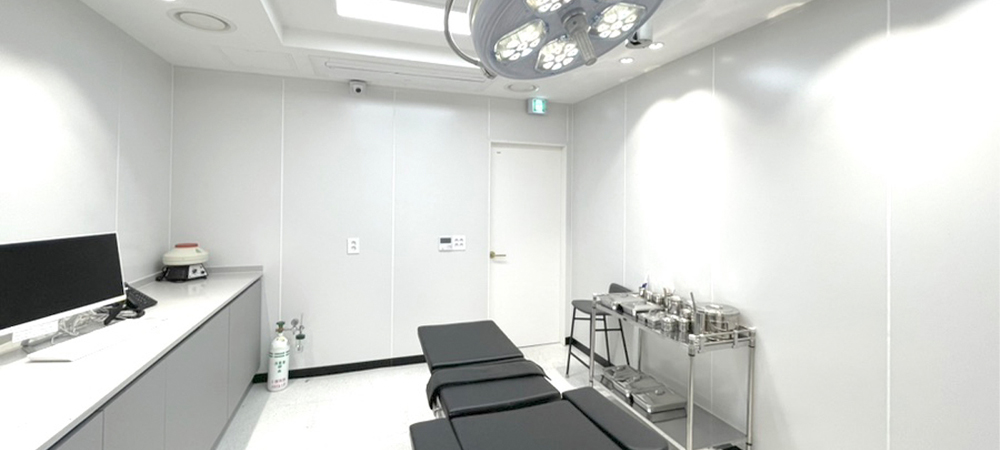
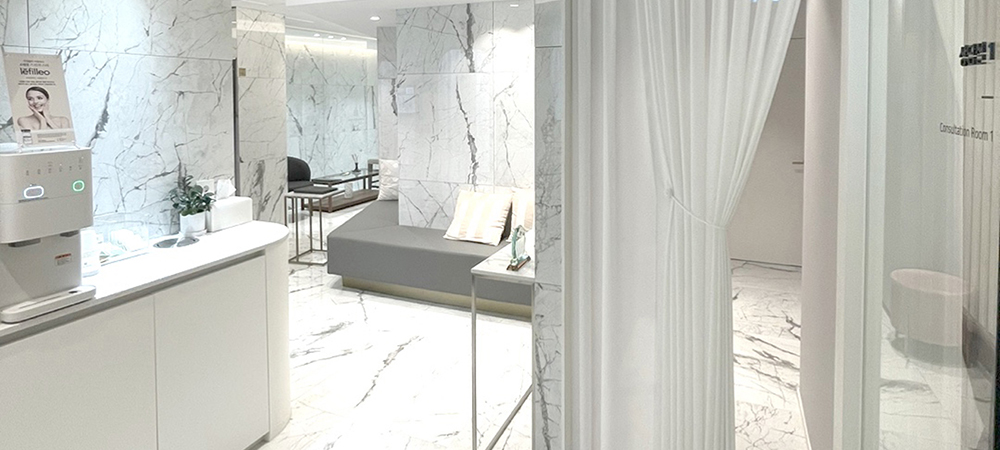
Ahnsungmin Surgical Philosophy
At Ahnsungmin Plastic Surgery, eyelid surgery is approached through careful structural analysis rather than simply focusing on cosmetic change.
Many eyelid conditions such as ptosis, eyelid hollowing, lower eyelid bags, or postoperative imbalance are closely related to the underlying anatomy of the eyelid.
Our surgical philosophy focuses on restoring natural balance while preserving healthy tissue and achieving long-term structural stability.
Request a Revision Evaluation
Share your photos and surgical history for an initial assessment.
Seoul, Republic of Korea
