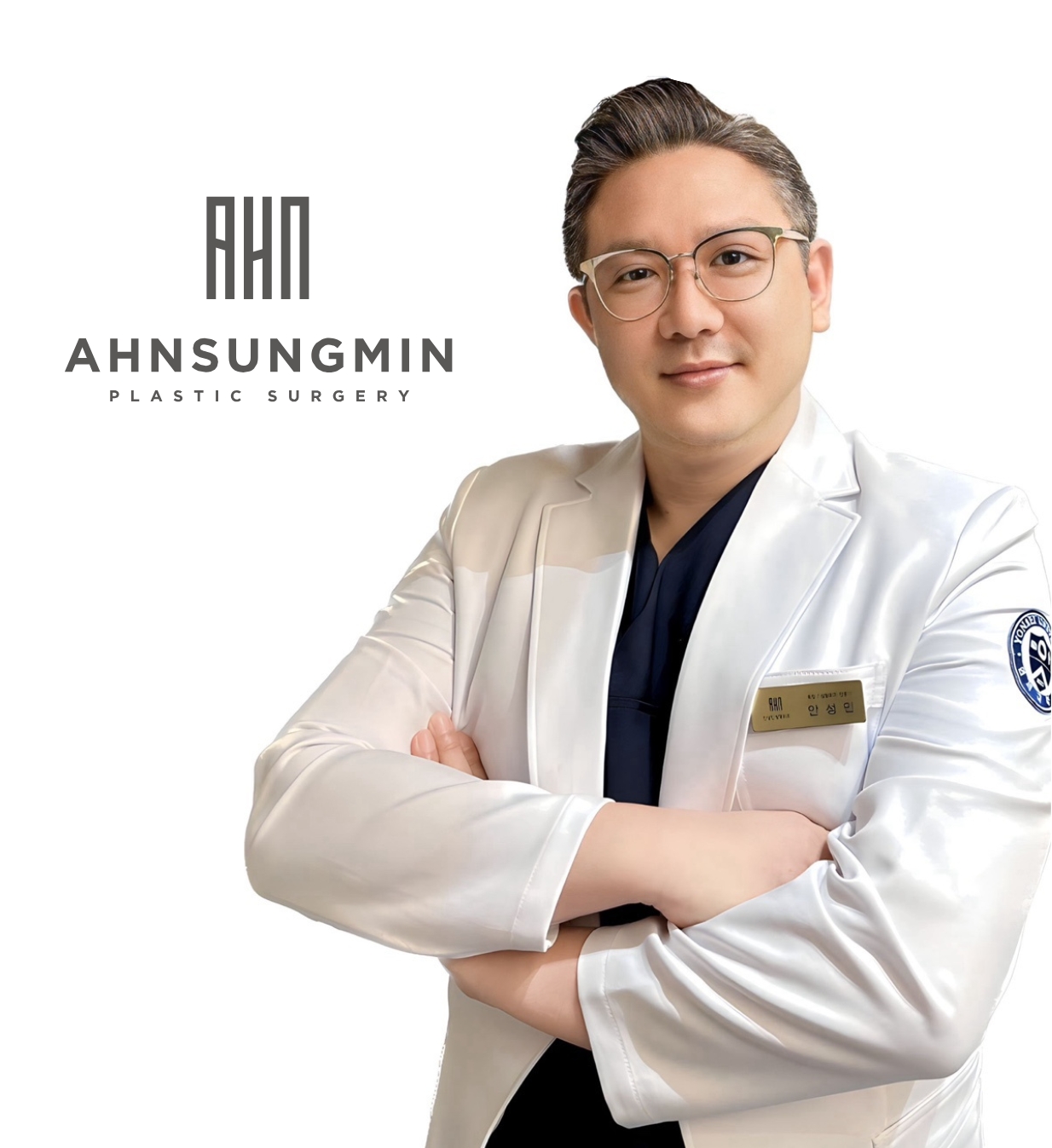
Board-Certified Plastic Surgeon Chief Director of Ahnsungmin Plastic Surgery
Dr. Ahnsungmin is a board-certified plastic surgeon in Korea whose clinical practice is focused exclusively on eyelid surgery. With more than 20 years of experience, he has particular expertise in complex eyelid revision surgery, ptosis correction, structural reconstruction, and functional eyelid restoration.
His approach begins with identifying the underlying cause of each concern rather than treating appearance alone. Eyelid function, scar adhesion, muscle balance, tissue condition, previous surgery, and structural support are carefully evaluated before a surgical plan is made.
This approach is particularly important in revision surgery, where previous procedures may have altered normal anatomy and where unnecessary intervention can create further structural problems.
Dr. Ahnsungmin therefore emphasizes precise diagnosis, conservative correction, tissue preservation, and long-term stability rather than exaggerated aesthetic change.
Many international patients travel to Korea seeking Dr. Ahnsungmin’s expertise in complex primary and revision eyelid surgery.
Education and Training
Graduate of Yonsei University College of Medicine
Professional Memberships
Member of the Korean Society of Plastic and Reconstructive Surgeons
Member of the Korean Society for Aesthetic Plastic Surgery
Member of the Korean Society of Microsurgery
Member of the Korean Cleft Palate-Craniofacial Association
Professional Experience
Former Director of Fine Plastic Surgery Clinic
Former Director of Bom Plastic Surgery Clinic
Awards and Recognition
Recipient of the Minister of Health and Welfare Award
Recipient of the Best Medical Paper Award
Surgical Philosophy
Dr. Ahnsungmin approaches eyelid surgery not simply as an aesthetic procedure, but as a structural and functional correction guided by long-term stability and precise surgical judgment.
Each case is carefully evaluated based on scarring, adhesions, muscle function, tissue balance, and support structures. Surgical decisions are made only after identifying the underlying cause of imbalance, rather than simply modifying visible appearance.
This approach is especially important in complex revision eyelid surgery, where structural weakness, residual ptosis, hollowing, asymmetry, and previous surgical changes must be analyzed carefully before further intervention is considered.
His surgical philosophy is centered on:
• Functional recovery before aesthetic enhancement
• Conservative and precise structural correction
• Long-term stability over short-term cosmetic change
In revision eyelid surgery, excessive correction often creates additional structural problems and increases the risk of repeated revision procedures. For this reason, every surgical plan is designed to preserve functional tissue, minimize unnecessary intervention, and achieve stable long-term outcomes.
In some cases, the most appropriate decision is to delay surgery until tissue recovery and structural stability can be evaluated more accurately.
Clinical Expertise
Dr. Ahnsungmin’s clinical practice is devoted exclusively to eyelid surgery. Over more than 20 years, he has developed particular expertise in complex revision procedures, functional correction, and advanced reconstructive eyelid surgery.
Complex Revision Eyelid Surgery
Treatment of structurally complex eyelids following previous surgery, with emphasis on accurate diagnosis, tissue preservation, and long-term stability.
Multiple Revision Eyelid Surgery
Management of patients who have undergone two or more previous eyelid operations requiring individualized structural analysis and careful surgical planning.
Male Revision Eyelid Surgery
Revision surgery designed to restore natural masculine eyelid characteristics while preserving functional balance and avoiding overcorrection.
Revision Ptosis Correction
Correction of residual or recurrent ptosis after previous surgery through detailed assessment of muscle function and eyelid support structures.
Congenital Ptosis Correction
Individualized correction of congenital ptosis based on eyelid development, muscle function, and long-term facial balance.
Upper & Lower Eyelid Reconstruction
Structural reconstruction for patients with tissue deficiency, scarring, or deformity following previous surgery.
Revision Lower Blepharoplasty
Correction of lower eyelid complications including hollowing, retraction, asymmetry, or persistent bulging after previous surgery.
High Fold Revision
Lowering or reshaping unnaturally high eyelid creases while preserving structural integrity and achieving natural eyelid balance.
Eyelid Asymmetry Correction
Correction of eyelid asymmetry through analysis of the underlying structural and functional causes rather than surface appearance alone.
Functional Eyelid Restoration
Restoration of eyelid function and stability through conservative structural correction designed for predictable long-term outcomes.
Dr. Ahnsungmin has particular expertise in evaluating complex eyelids that have undergone previous surgery.
Revision eyelid surgery differs from primary surgery because scar tissue, altered anatomy, tissue deficiency, muscle imbalance, and previous structural changes may all influence what can safely be corrected.
For this reason, the first question is not simply how to revise the eyelid, but whether another operation is appropriate—and when it should be performed.
When necessary, Dr. Ahnsungmin may recommend waiting rather than proceeding with immediate surgery. Careful timing, tissue preservation, and long-term structural stability remain central to his revision philosophy.
International patients from around the world travel to Korea seeking Dr. Ahnsungmin’s approach to complex eyelid surgery and revision.
Many begin with an online photo evaluation before deciding whether to travel. Previous surgical history, current concerns, and photographs are reviewed to determine whether further evaluation or revision surgery may be appropriate.
From consultation and surgery in Korea to postoperative follow-up after returning home, every stage of treatment remains under the direction of the same surgeon.
REVISION EYELID SURGERY IN KOREA
Frequently Asked Questions
About Dr. Ahnsungmin
Answers to common questions about Dr. Ahnsungmin’s surgical philosophy, revision approach, and long-term treatment principles.
Frequently Asked Questions
01. When should revision eyelid surgery be avoided?
In some cases, additional surgery performed too early may increase structural instability and scarring. Careful timing is often essential in revision surgery.
02. Can severely damaged eyelids still be improved?
Improvement is often possible when functional support structures remain, but each case requires careful structural evaluation.
03. Why do some revision surgeries fail repeatedly?
Repeated revision surgery without identifying the underlying structural problem may lead to additional tissue imbalance and instability.
04. Is larger correction always better in revision surgery?
Excessive correction frequently creates additional functional and structural problems. Long-term stability often requires a more conservative approach.
