Epicanthoplasty Correction
EPICANTHOPLASTY CORRECTION IN KOREA
Creating Natural Balance Between the Eyes
Epicanthoplasty is not simply about making the eyes appear larger. The goal is to improve balance between the eyes, soften excessive tension of the epicanthal fold, and create a more harmonious inner eye contour. At Ahnsungmin Plastic Surgery, every procedure is planned based on facial proportion, eye spacing, and long-term stability rather than maximum enlargement. Our approach focuses on natural correction while preserving structural balance and avoiding overcorrection.
Our Surgical Focus
• Careful adjustment of the epicanthal fold
• Improvement of inner corner visibility
• Optimization of eye spacing and facial proportion
• Preservation of natural anatomy
• Long-term structural stability
The Ahnsungmin Difference
Many patients believe epicanthoplasty is simply a procedure to create larger eyes. In reality, excessive correction can lead to unnatural appearance, imbalance, visible scarring, or difficulty with future revision surgery.
Our philosophy focuses on restoring harmony rather than maximizing exposure. Every correction is individually planned according to the patient’s anatomy, facial proportions, and long-term goals to achieve natural and stable results.
Our Surgical Philosophy
Successful epicanthoplasty is not simply about removing the epicanthal fold. Our approach focuses on creating balance between the eyes, improving inner corner harmony, and preserving natural facial proportions rather than maximizing exposure.
The shape of the epicanthal fold, eye spacing, skin tension, and surrounding anatomy are carefully evaluated to determine whether epicanthoplasty is appropriate and how much correction is realistically beneficial.
Excessive tissue removal can create an unnatural appearance and make future revision more difficult. Whenever possible, healthy tissue is preserved to maintain natural contours and long-term stability.
Our goal is not to create dramatically larger eyes, but to achieve a more balanced and harmonious appearance that remains natural over time and during facial expression.
Epicanthoplasty Correction
Our Method Prioritizes
• Natural inner corner contours
• Balanced facial proportions
• Preservation of healthy tissue
• Reduced risk of overcorrection
• Stable long-term results
Perfect Pairing
Epicanthoplasty is often combined with Ptosis Correction when limited eyelid opening is present, or with Revision Eyelid Surgery when previous procedures have created imbalance around the inner corner. Rather than simply creating larger eyes, the goal is to achieve a more natural relationship between the inner corner, eyelid crease, and overall facial features. Rather than simply creating larger eyes, the goal is to achieve a more natural relationship between the inner corner, eyelid crease, and overall facial features.
Approximately 1hour
Carefully designed within the inner corner contour based on individual anatomy.
Not required
Typically 5-7 days after surgery
Initial recovery generally occurs within 1–2 weeks.
Local anesthesia with real-time functional evaluation
CASE 1
Improving Eye Opening and Inner Corner Balance
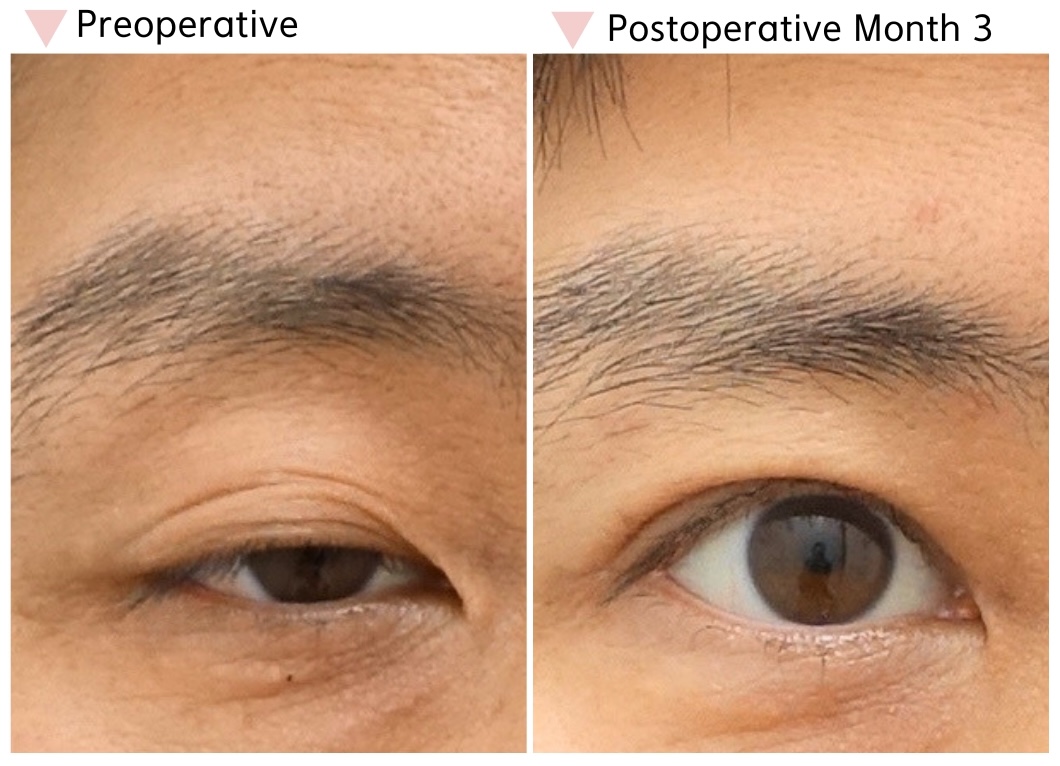
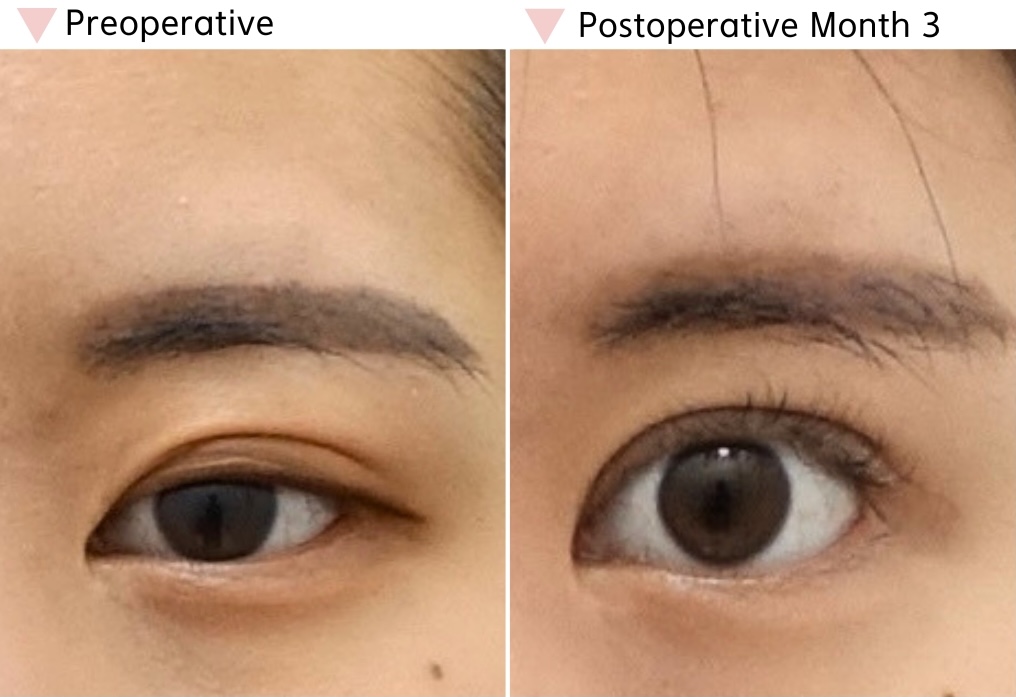
Before surgery, the patient showed both a prominent epicanthal fold and limited eyelid opening. The inner corner was partially covered, while the upper eyelid position reduced visible iris exposure, making the eyes appear smaller and less defined.
Epicanthoplasty correction and ptosis correction were performed together to improve both inner corner balance and eyelid function. Rather than focusing on enlargement alone, the goal was to create a more natural relationship between the inner corner, eyelid crease, and overall eye shape.
At postoperative month 3, the inner corner appears more open and defined, while improved eyelid opening allows greater iris exposure and a brighter, more balanced appearance. The result is a natural-looking eye shape with improved function, proportion, and long-term stability.
CASE 2
Enhancing Eye Definition Through Inner Corner Correction
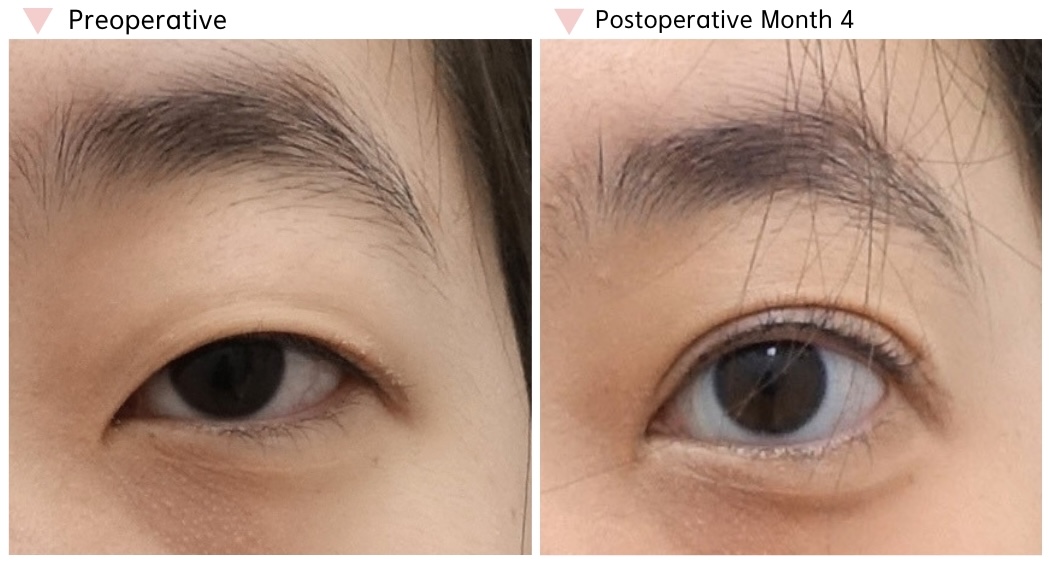
Before surgery, a prominent epicanthal fold partially covered the inner corner of the eye, making the eyes appear shorter horizontally and less defined. The inner corner contour blended into the surrounding skin, reducing overall eye clarity.
Epicanthoplasty was performed to reveal the natural inner corner and improve the visible horizontal length of the eye. Rather than creating excessive exposure, the goal was to establish a more balanced relationship between the inner corner, eyelid crease, and overall facial proportions.
At postoperative month 4, the inner corner appears more visible and refined. Improved eye width and definition contribute to a brighter and more harmonious appearance while maintaining a natural contour and long-term stability.
CASE 3
Improving Inner Corner Balance and Eye Opening
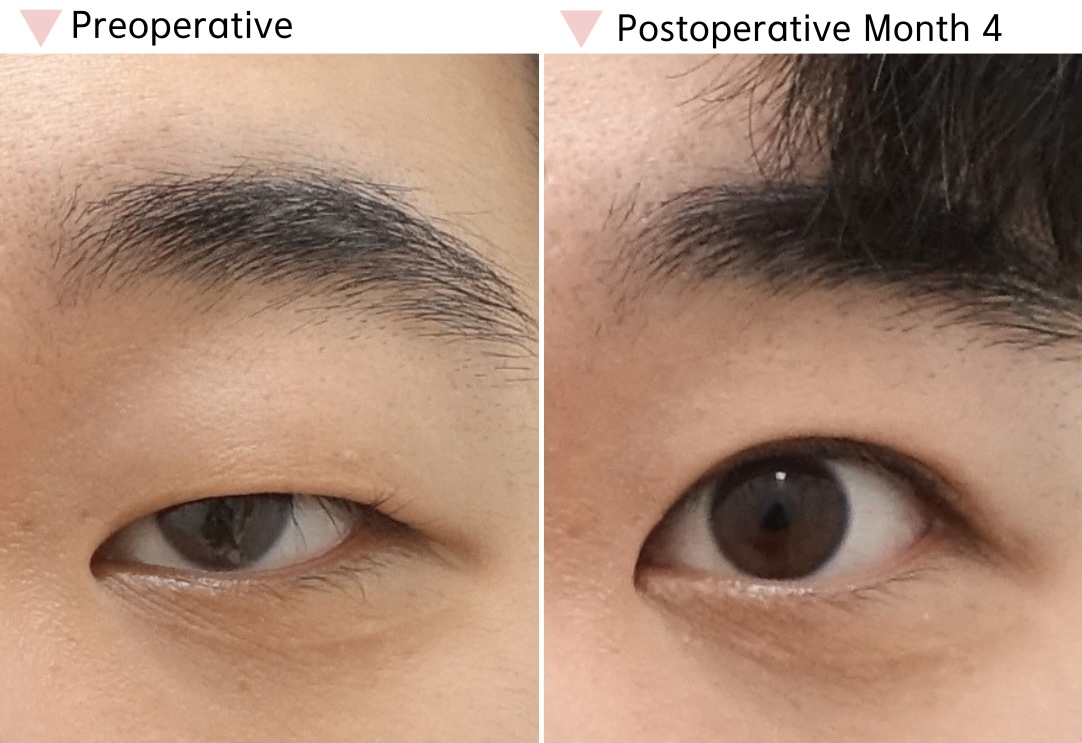
Before surgery, the epicanthal fold partially covered the inner corner, while limited eyelid opening reduced visible iris exposure. Epicanthoplasty correction and ptosis correction were performed together to improve both eye function and inner corner balance.
At postoperative month 4, the inner corner appears more open and defined, while improved eyelid opening creates a brighter and more balanced eye appearance. The result is a natural eye shape with improved proportion and long-term stability.
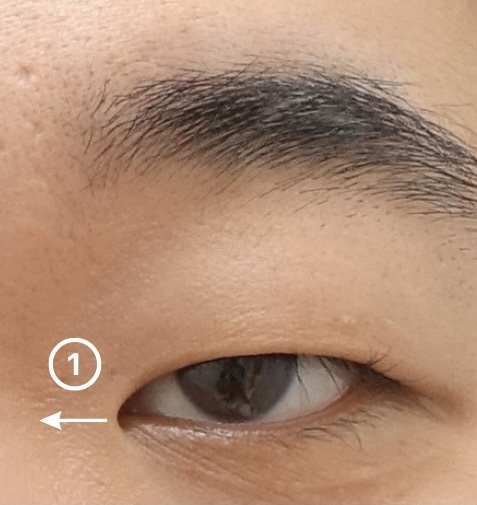
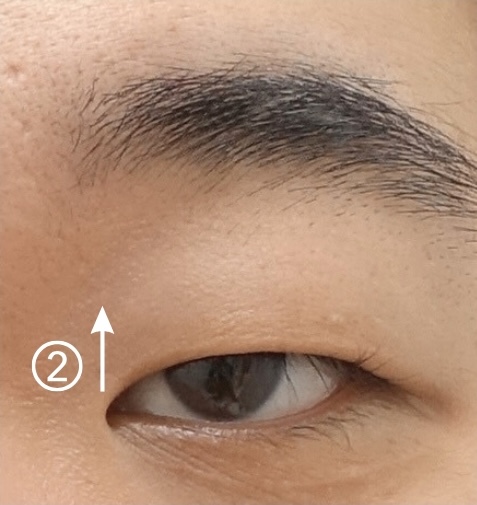
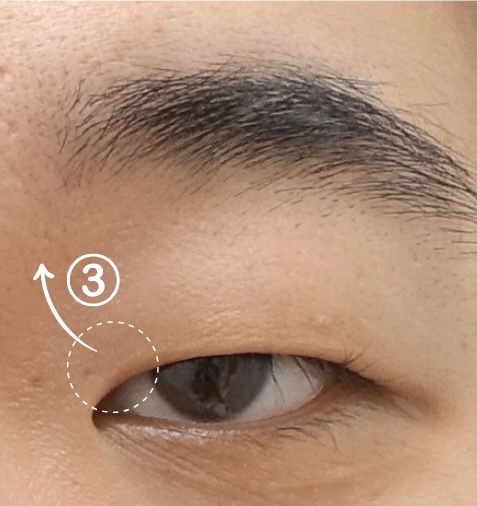
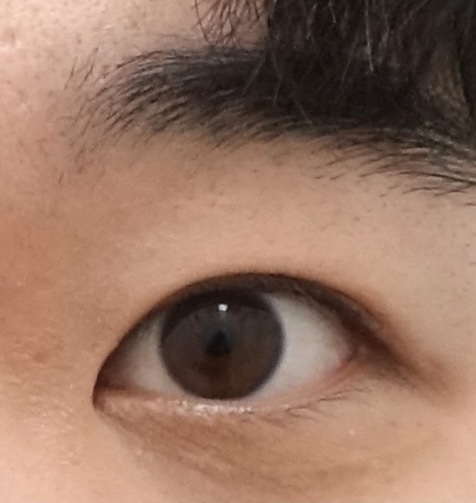
– The inner corner is advanced forward to increase the visible horizontal width of the eye. – This helps create a longer and more balanced eye shape.
– The inner corner is gently extended upward. – This improves the transition between the inner corner and the eyelid crease, creating a brighter and more open appearance.
– The epicanthal fold (Mongolian fold) is carefully reduced. – This reveals more of the natural inner corner and helps reduce the appearance of a covered or crowded eye shape.
CASE 4
Epicanthoplasty Revision and Ptosis Correction
Before surgery, the patient had undergone previous epicanthoplasty but continued to have residual epicanthal fold tension and limited eyelid opening.
Revision epicanthoplasty, Epi-Up canthoplasty, epicanthal fold reduction, and ptosis correction were performed to improve inner corner balance and eye opening.
At postoperative month 3, the inner corner appears more open and defined, while improved eyelid function creates a brighter, more balanced, and naturally proportioned eye appearance.
CASE 5
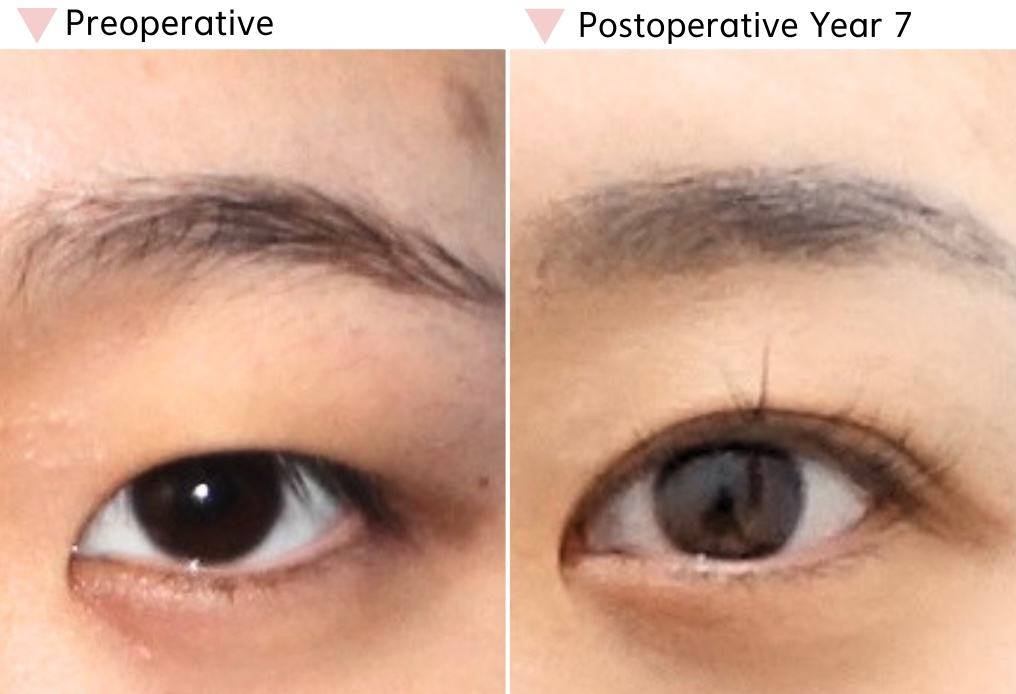
At postoperative year 7, the inner corner contour remains stable and natural.
This long-term follow-up demonstrates that successful epicanthoplasty is not measured by immediate enlargement, but by how well balance and proportion are maintained over time.
CASE 6
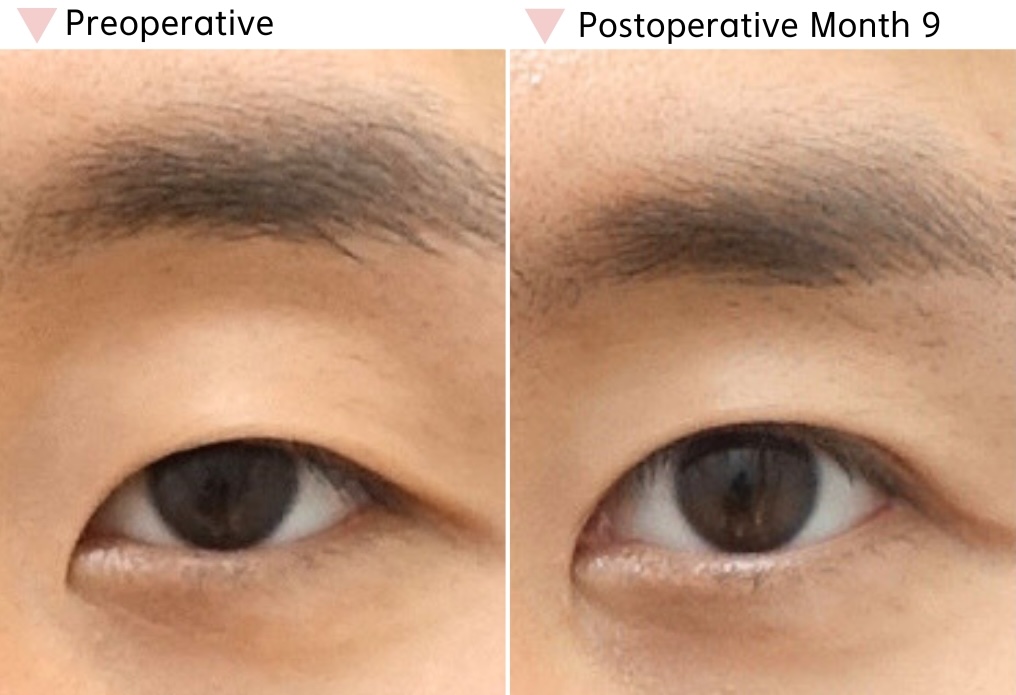
Before surgery, the inner corner was partially covered by the epicanthal fold, creating a shorter and less defined eye shape.
At postoperative month 9, the inner corner appears more visible and refined. Improved eye definition and balance contribute to a brighter appearance while maintaining natural proportions and long-term stability.
EPICANTHOPLASTY CORRECTION IN KOREA
Frequently Asked Questions
About Epicanthoplasty Correction
Answers to common questions about epicanthal fold correction,
inner corner balance, revision surgery, recovery, scarring, and long-term surgical stability.
FAQ
Frequently Asked Questions About Epicanthoplasty Correction
Q1. What is the purpose of epicanthoplasty?
Epicanthoplasty reduces the epicanthal fold covering the inner corner of the eye. The goal is not simply to create larger eyes, but to improve balance between the eyes, enhance inner corner definition, and create a more harmonious eye shape.
Q2. Does epicanthoplasty make the eyes look larger?
It can create the appearance of larger eyes by exposing more of the inner corner and improving horizontal eye length. However, the primary goal is achieving better proportion and balance rather than maximum enlargement.
Q3. Can epicanthoplasty be combined with double eyelid surgery?
Yes. Epicanthoplasty is commonly combined with double eyelid surgery when the epicanthal fold limits crease visibility or when additional balance between the inner corner and eyelid crease is desired.
Q4. Will a scar remain after epicanthoplasty?
All surgical incisions heal with some degree of scar formation. However, with proper surgical design and healing, scars typically become less noticeable over time and are often well concealed within the natural contours of the inner corner.
Q5. Can overcorrected epicanthoplasty be revised?
In many cases, revision surgery is possible. However, revision procedures are often more complex because of scar tissue, tissue deficiency, and changes in the natural anatomy. Careful evaluation is required before planning revision surgery.
Q6. How long does recovery take after epicanthoplasty?
Most swelling and bruising improve within the first few weeks. However, scar maturation and final contour refinement may continue for several months as the tissues soften and stabilize.
Q7. Can epicanthoplasty make the eyes look unnatural?
Excessive correction can sometimes create an unnatural appearance, overly exposed inner corners, or imbalance with the rest of the face. For this reason, surgical planning should focus on harmony and proportion rather than maximum exposure.
Q8. Who is a good candidate for epicanthoplasty?
Patients with a prominent epicanthal fold, limited inner corner visibility, or imbalance between the eyes and surrounding facial features may benefit from epicanthoplasty. A detailed anatomical evaluation is necessary to determine whether the procedure is appropriate.
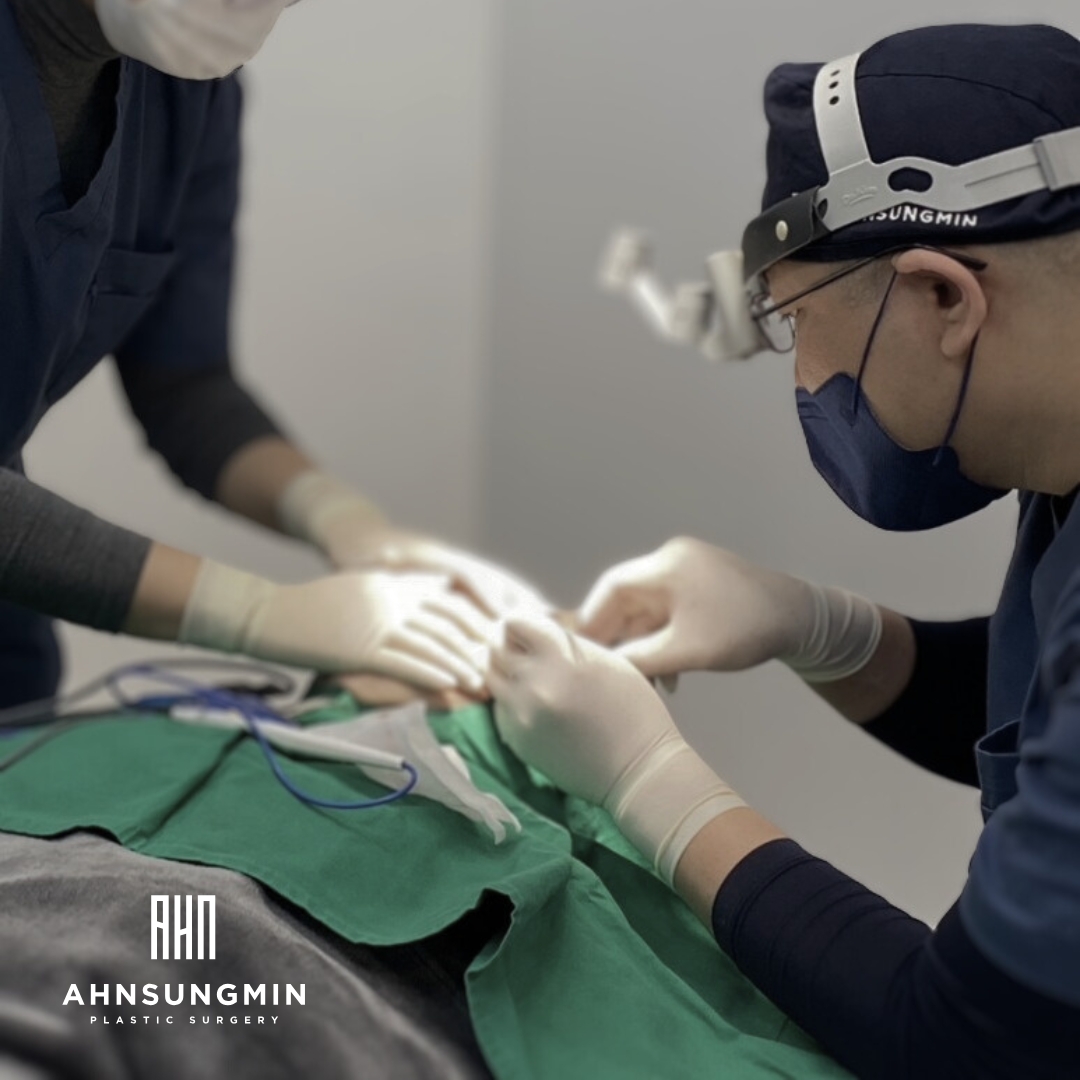

Ahnsungmin Surgical Philosophy
At Ahnsungmin Plastic Surgery, eyelid surgery is approached through careful structural analysis rather than simply focusing on cosmetic change.
Many eyelid conditions such as ptosis, eyelid hollowing, lower eyelid bags, or postoperative imbalance are closely related to the underlying anatomy of the eyelid.
Our surgical philosophy focuses on restoring natural balance while preserving healthy tissue and achieving long-term structural stability.
What Our Patients Say?
“Words can’t express my gratitude to Dr. Ahn and the team at Ahnsungmin Plastic Surgery. My surgery in July 2023 was more than just a procedure – it was the beginning of a new chapter in my life. Dr. Ahn’s exceptional skill and understanding of facial harmony created results that exceeded my expectations. Thank you for helping me discover my best self!”
“I was nervous about having eyelid surgery, but Dr. Ahn and his team at Ahnsungmin made me feel completely at ease. They were so patient with all my questions and really took the time to understand what I wanted. The results are beyond my expectations – natural and beautiful!”
Contact Us Today
Seoul, Republic of Korea