Before and After
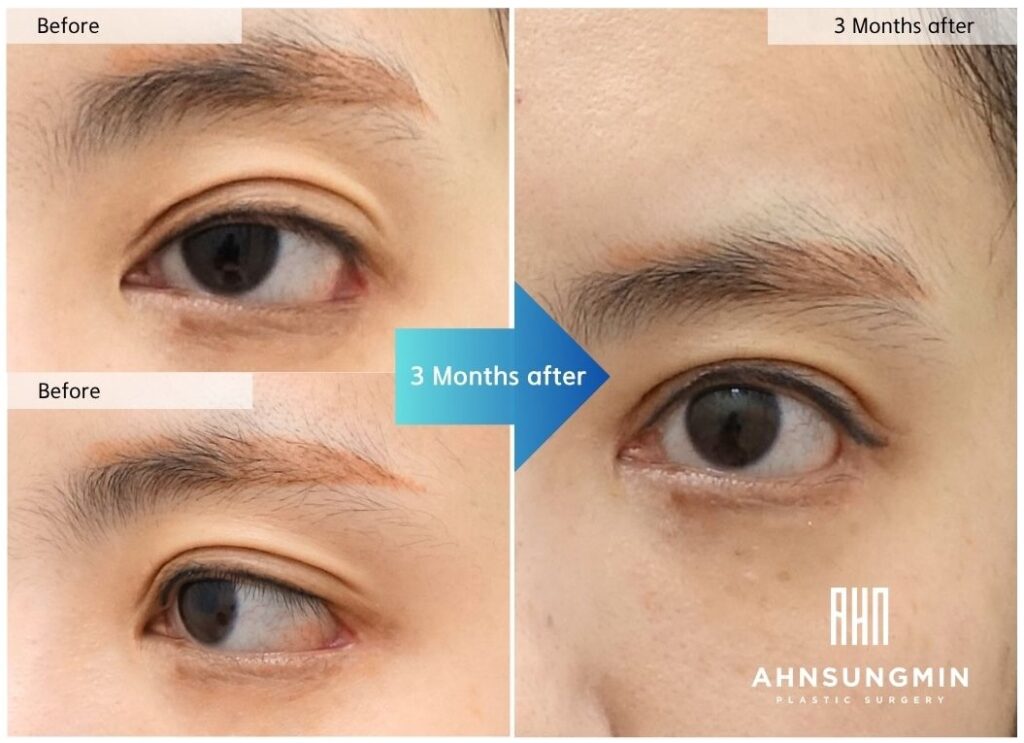
This patient presented after previous lateral canthoplasty with an outer corner appearance that felt overly extended and structurally unstable over time.
Rather than simply wanting larger-looking eyes, the patient’s concern involved tension around the outer corner and an unnatural contour that no longer appeared balanced with the rest of the eye.
At 3 months after revision surgery, the outer corner appears more stable and naturally integrated with the overall eye shape without excessive lateral extension.
A Structural Problem
In some lateral canthoplasty cases, the issue is not insufficient extension, but excessive tension and imbalance created during the initial procedure.
When the outer corner is aggressively pulled or extended beyond the patient’s natural anatomical support, the eye contour may gradually begin to appear strained or unnatural over time.
In revision cases, restoring stability often becomes more important than creating additional enlargement.
This is especially true when scar tissue, altered support structures, or long-term tension have already affected the natural balance of the outer corner.
Why Bigger Was Not the Goal
In this case, the goal was not to create a more elongated or dramatically larger appearance.
Instead, the focus was placed on reducing excessive lateral tension and restoring a more natural relationship between the outer corner and the lower eyelid contour.
Aggressive extension may initially appear attractive in some cases, but long-term stability depends on respecting the natural limits of the surrounding support structures.
For this reason, revision surgery often requires a more conservative and structurally balanced approach.
Restoring Stability
The revision approach focused on improving outer corner stability while preserving a natural eye shape.
Rather than maximizing extension, the correction was planned according to the patient’s existing tissue condition, scar pattern, and lower eyelid balance.
Special attention was given to avoiding additional tension and maintaining smoother continuity between the outer corner and lower eyelid.
In some revision cases, the goal is not additional enlargement, but restoration of a more stable and natural outer corner structure.
When excessive extension or long-term tension has affected the normal balance of the eye, revision surgery may focus on recovery of contour, support, and structural continuity rather than creating a larger appearance.
For many patients, successful lateral canthoplasty revision is ultimately about restoring comfort, stability, and a more natural eye shape over time.
Results
At 3 months postoperatively, the outer corner appears less strained and more naturally balanced with the surrounding eye contour.
The eye maintains a softer and more stable appearance without exaggerated extension.
Although tissue adaptation and scar maturation continue during recovery, the overall direction already reflects improved structural balance rather than enlargement alone.
Understanding Revision Recovery
This case demonstrates that lateral canthoplasty revision is not always about making the eyes bigger again.
In many patients, the real goal is to restore stability, reduce unnatural tension, and recover a more natural outer corner contour after previous overcorrection.
Successful revision surgery often depends more on restraint, structural understanding, and long-term balance than on additional extension itself.
Related Insights
→ Understanding Lateral Canthoplasty and Outer Corner Balance
→ Why Some Eyelid Revisions Require Structural Recovery
→ Understanding Recovery and Tissue Stabilization After Eyelid Surgery
→ Lateral Canthoplasty Case: Expanding Eye Width and Softening the Outer Eye Shape
→ Lateral Canthoplasty Case: Eye Width Expansion and Balanced Outer Corner at 3 Months
Frequently Asked Questions
Why do some patients need lateral canthoplasty revision surgery?
In some patients, excessive extension, scar tissue, long-term tension, or structural imbalance after previous surgery may create an unnatural outer corner appearance that requires revision.
Is lateral canthoplasty revision always about making the eyes bigger?
No.
In many revision cases, the goal is to restore stability, reduce excessive tension, and recover a more natural outer corner contour rather than creating additional enlargement.
Why can excessive lateral extension look unnatural over time?
When the outer corner is extended beyond the natural support structures of the eye, long-term tension and imbalance may gradually create a strained or unnatural appearance.
Can lateral canthoplasty revision improve outer corner tension?
In some patients, yes.
Revision surgery may help reduce excessive lateral tension and improve the structural balance between the outer corner and lower eyelid.
Why is structural stability important in revision surgery?
Long-term stability often depends on respecting the natural anatomical support of the eye rather than creating aggressive extension. Structural balance is important for maintaining a natural appearance over time.
How long does recovery after lateral canthoplasty revision take?
Swelling, tissue adaptation, and scar maturation continue for several months after revision surgery. Early postoperative changes may continue to soften as healing progresses.
Can revision surgery help restore a more natural eye contour?
In many patients, revision surgery focuses on restoring a softer and more natural outer corner contour rather than creating a more dramatic appearance.
Why does revision surgery often require a conservative approach?
Scar tissue, altered support structures, and previous overcorrection may increase the complexity of revision cases. Conservative planning often improves long-term stability and recovery.
Request a Lateral Canthoplasty Revision Evaluation
If you are considering lateral canthoplasty revision in Korea, you may request a personalized evaluation based on your current outer corner condition, scar pattern, eye balance, and long-term recovery goals.
