Results Do Not Appear All at Once
Lower eyelid surgery recovery timeline does not appear immediately after the procedure. The appearance of the under-eye area changes gradually over time as swelling subsides and tissues stabilize.
Many patients expect instant improvement, but recovery is a progression rather than a single moment of change.
Preoperative Condition
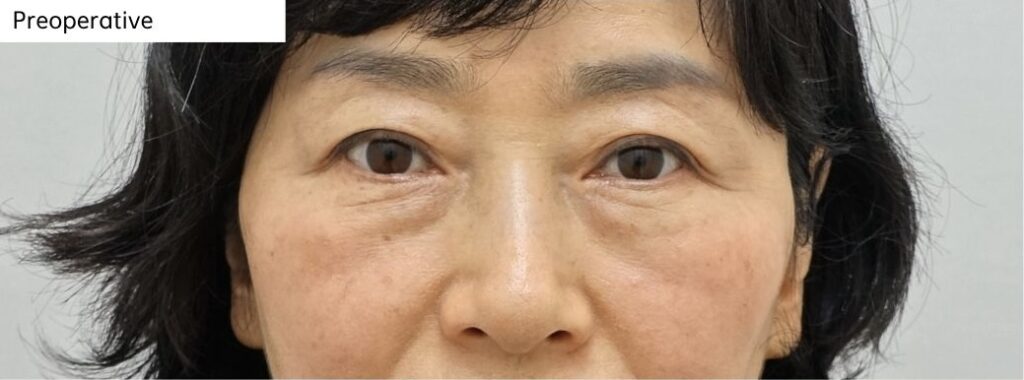
Before surgery, the lower eyelid showed under-eye bulging, shadowing, and structural volume imbalance.
This was not simply a case of excess fat, but a problem of uneven distribution and lack of support.
Preoperative vs Postoperative Month 3
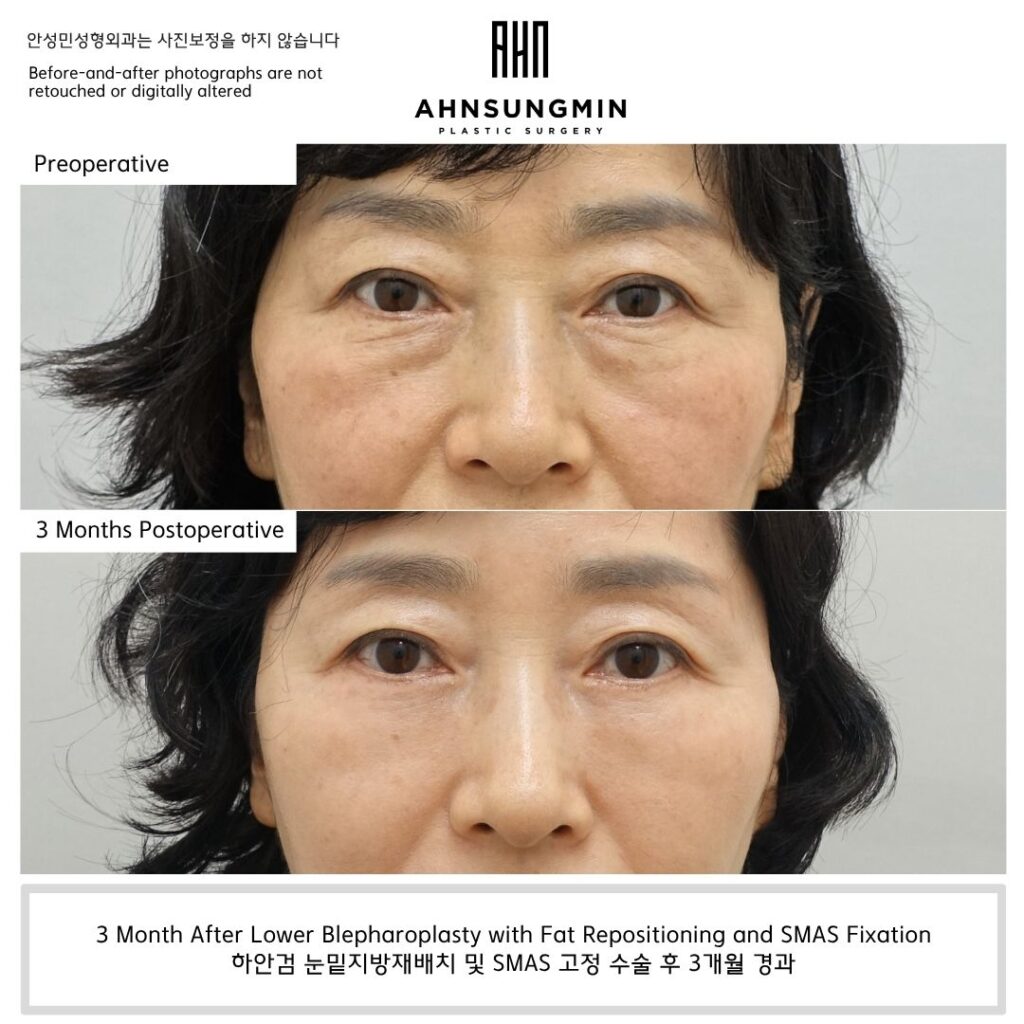
This comparison shows what actually changes over time. The goal was not to remove volume, but to reposition it in a way that restores balance between the lower eyelid and the cheek.
The result is not defined by tightness or excessive correction, but by a smoother, more natural contour.
Immediately After Surgery
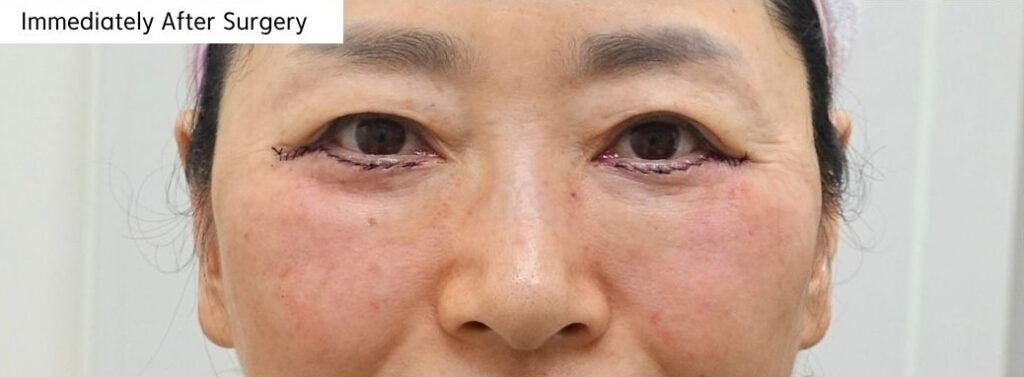
Immediately after surgery, swelling and sutures are visible. This stage does not represent the final outcome and should not be used to evaluate results.
Postoperative Day 1 (Dressing Visit)
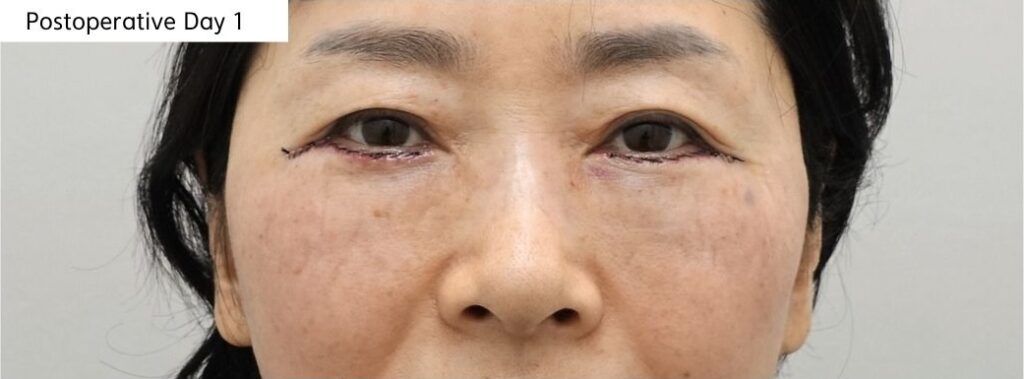
At one day after surgery, swelling and bruising are expected. This is a normal part of the healing process rather than a complication.
Postoperative Day 7 (Suture Removal)
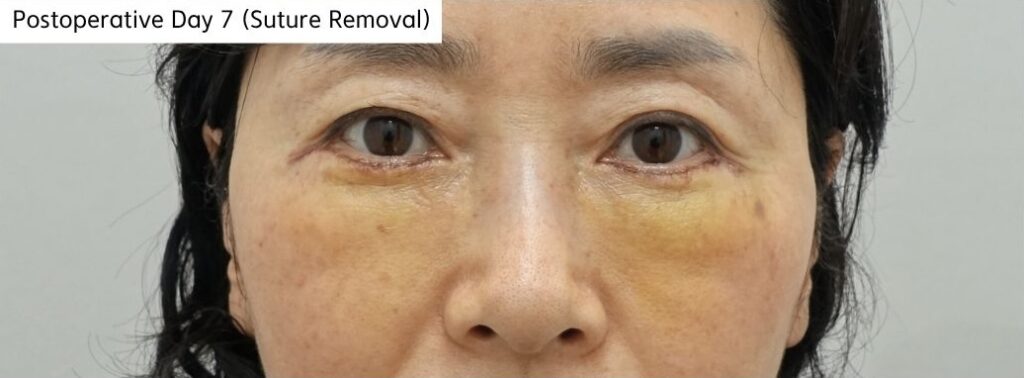
By day 7, sutures are removed and swelling begins to decrease. Early contour changes become visible, although the result is still evolving.
Postoperative Month 1
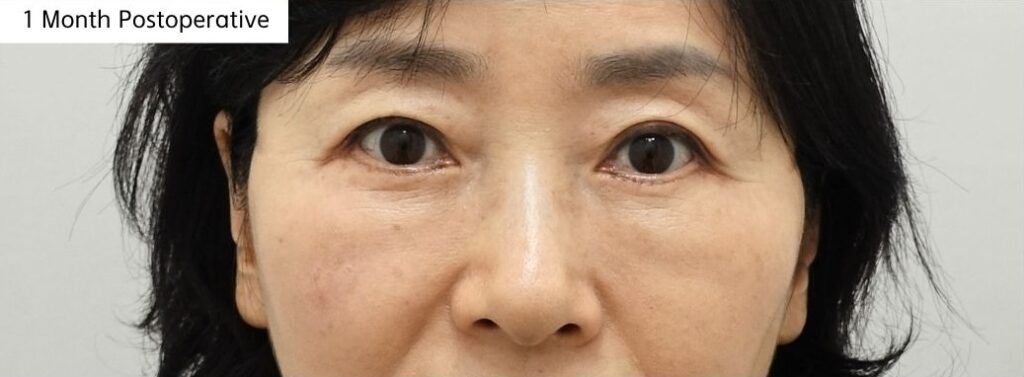
At one month, improvement becomes noticeable. The contour appears smoother, but mild swelling may still remain. This stage represents early recovery rather than the final result.
Postoperative Month 3
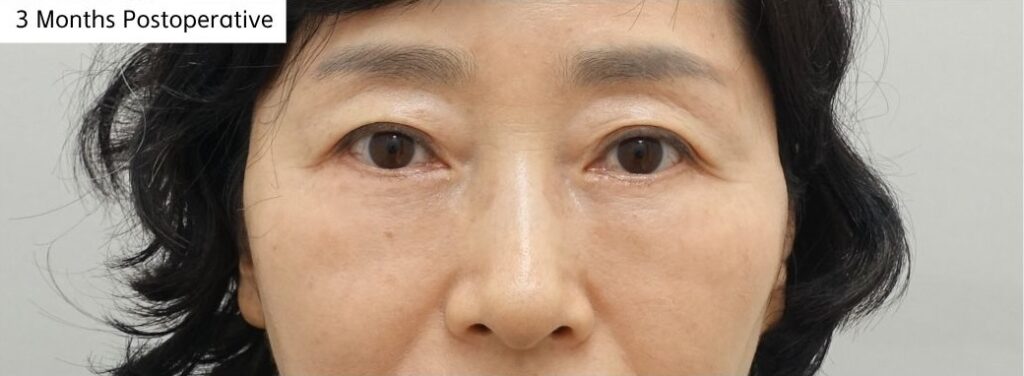
At three months, the contour becomes more stable and natural. The transition between the lower eyelid and cheek appears smoother, without signs of hollowing or overcorrection.
This stage reflects structural stability rather than temporary change.
Why Timing Matters
Evaluating lower eyelid surgery too early often leads to misunderstanding. Temporary swelling or minor asymmetry can appear concerning but typically resolves over time.
To see how results develop, refer to
1 month result case and
2 month result case.
A Structural Approach to Recovery
Lower eyelid surgery is not about removing fat. It is about restoring structure.
Aggressive fat removal may create short-term improvement, but it often leads to hollowing over time. This is why volume preservation and repositioning are critical.
For a deeper understanding, see
why fat removal can lead to hollowing.
Understanding the Timeline
Lower eyelid surgery results are not defined by a single moment. Each stage reflects a different phase of healing.
Natural outcomes emerge gradually as the underlying structure stabilizes.
Frequently Asked Questions
When do lower eyelid surgery results look natural?
Most patients begin to see natural results around 1 to 3 months after surgery. Swelling gradually decreases, and the contour becomes more stable over time.
Is swelling normal after lower eyelid surgery?
Yes, swelling and bruising are normal in the early recovery period. These changes typically improve within the first few weeks and continue to settle over time.
Why does the under-eye area look uneven at first?
Temporary asymmetry can occur due to swelling and tissue adjustment. This usually resolves as healing progresses.
Can fat removal cause hollow eyes?
Yes. Excessive fat removal can lead to hollowing over time. This is why fat repositioning is often preferred to preserve volume and maintain a natural contour.
How long does full recovery take?
Initial recovery occurs within a few weeks, but full stabilization of the lower eyelid contour typically takes several months.
