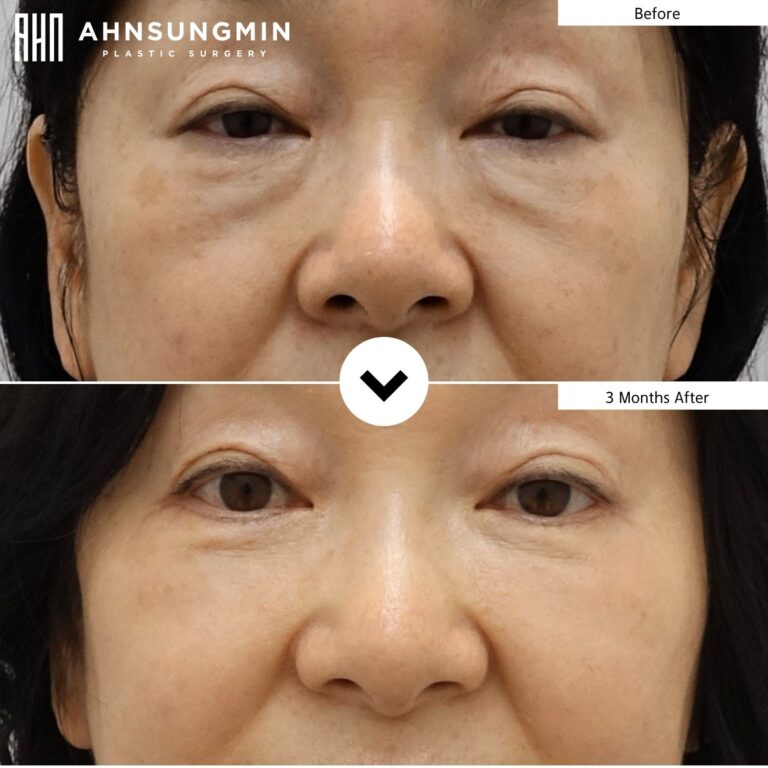
Quick Answer
A hollow under-eye after lower eyelid surgery is often related to excessive fat removal, loss of structural support, or insufficient preservation of natural volume.
The problem may become more noticeable over time as the transition between the lower eyelid and cheek becomes less supported.
Why This Happens More Often Than You Think
Why does my under-eye look hollow after lower eyelid surgery?
This is one of the most common concerns patients experience after surgery.
And in many cases, it is not a natural result.
It is a structural outcome caused by how the surgery was performed.
A hollow appearance is not subtle.
It is a visible sign that something essential has been removed or not properly preserved.
This Is Not Aging — It Is Overcorrection
Many patients are told that hollowing is simply part of aging.
It is not.
When the under-eye appears sunken after surgery, it is most often the result of excessive fat removal or loss of structural support.
This is not refinement.
It is overcorrection.
This Is Not About Removing Fat — It Is About Preserving Structure
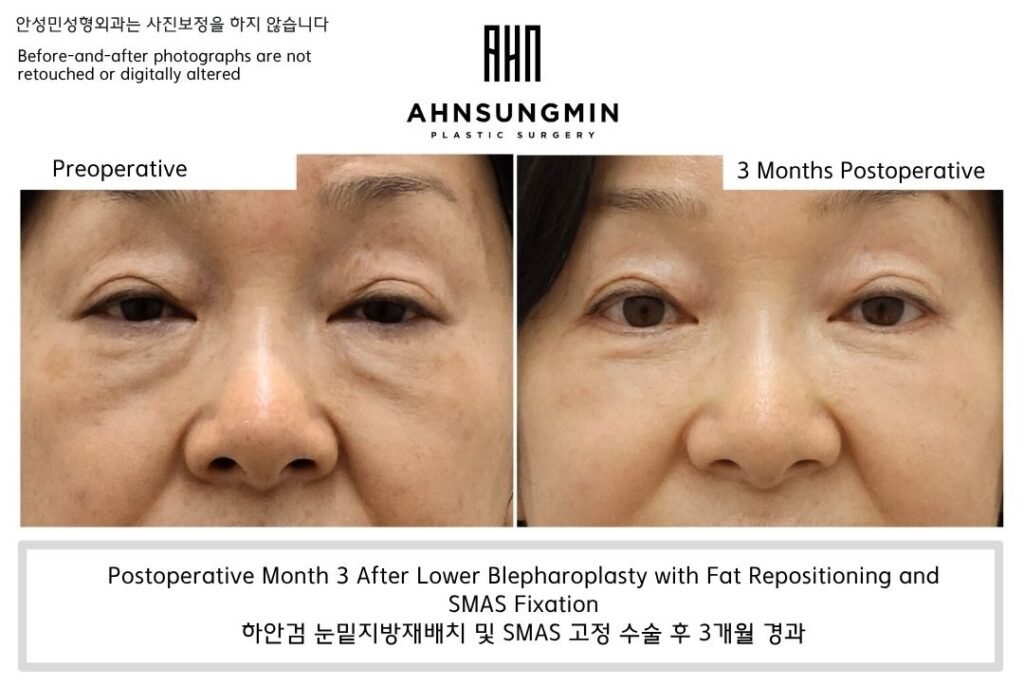
This result was not achieved by removing more.
It was achieved by preserving what should not be removed.
In this case, the fat was repositioned to smooth the contour while maintaining natural volume.
As a result, the lower eyelid does not appear hollow or flat.
It maintains a soft, continuous transition.
This is the difference between removal and structural correction.
What Causes a Hollow Under-Eye After Surgery
There are three primary causes:
Excessive fat removal
Loss of structural support
Failure to preserve natural volume
When fat that should remain is removed, the contour collapses.
The transition between the lower eyelid and the cheek becomes abrupt.
This creates the hollow, tired appearance patients notice after surgery.
Loss of Aegyo-Sal Is a Structural Problem
Aegyo-sal is not simply fat.
It is part of a functional structure that contributes to natural expression and volume.
When this structure is removed or flattened, the lower eyelid loses its balance.
The result is a hollow, aged, and unnatural appearance—even after surgery.
Why Hollowing Becomes More Noticeable Over Time
In many cases, hollowing becomes more noticeable as time passes.
As skin elasticity decreases and support weakens, the absence of volume becomes more visible.
Patients often feel that the result worsens over time.
This is not a delayed complication.
It is the natural progression of structural imbalance.
The appearance of the lower eyelid continues to change during healing, which is why results should be evaluated according to the lower eyelid surgery recovery timeline.
Why Revision Is More Difficult Than Prevention
Once volume is removed, it cannot simply be restored.
Correction often requires fat repositioning, grafting, or structural reinforcement.
These procedures are more complex and less predictable than the original surgery.
A hollow result is not easily reversed.
→ Request a Lower Eyelid Revision Evaluation
The Decision Must Be Made Before Surgery
A hollow under-eye is not a minor aesthetic issue.
It is a structural problem.
It is not aging.
It is a surgical outcome.
And once it occurs, complete restoration is difficult.
That is why the most important decision is made before the first surgery—not after.
Common Questions About Hollow Under-Eye After Surgery
Q. Why does my under-eye look hollow after surgery?
A. This is usually caused by excessive fat removal or loss of structural support.
Q. Can hollow under-eyes be corrected?
A. Correction is possible, but more complex. Prevention during the initial surgery is more important.
Q. Is hollowing normal after lower eyelid surgery?
A. Temporary changes in contour can occur during recovery, but persistent hollowing may be related to excessive fat removal, volume loss, or reduced structural support.
Q. Does removing under-eye fat cause hollow eyes?
A. Excessive fat removal can contribute to a hollow appearance by reducing the natural volume that supports the transition between the lower eyelid and cheek.
Q. Can fat repositioning prevent under-eye hollowing?
A. Fat repositioning can help preserve and redistribute existing volume in appropriately selected patients, but the surgical plan should depend on the individual anatomy and structural condition.
Final Perspective
Lower eyelid surgery is not about how much can be removed.
It is about whether the structure will remain stable after everything is done.
If that question is not answered, the result will not last.
Once structure is lost, it cannot be fully recreated.
Related Insight:
Why Preserving Aegyo-Sal Matters in Lower Eyelid Surgery
→ Loss of aegyo-sal is one of the primary causes of hollowing after surgery.
Seeing the Eye as a Whole, Not in Parts
A Clinic Dedicated to Eyelid Revision Surgery in Korea
Ahnsungmin Plastic Surgery
