Lower Eyelid Fat Repositioning
Restore a smoother under-eye contour by preserving and repositioning your own fat—not by removing it aggressively. Support. Preservation. Long-Term Stability.
✓ Eye Bags
✓ Tear Trough Hollowing
✓ Under-Eye Shadows
✓ Fat Repositioning
✓ SMAS Support
✓ Long-Term Stability
20+ Years
Focused on
Eyelid Surgery
Revision
Specialist
Focus
Patients
from 30+
Countries
One
Surgeon
Care
LOWER BLEPHAROPLASTY IN KOREA
Successful surgery begins with the right diagnosis.
The goal of lower blepharoplasty is not simply to remove eye bags.
It begins with understanding the underlying structural changes and choosing the safest, most balanced approach for long-term stability.

Understanding the underlying causes of eye bags, hollowing, and structural aging.
Preserving and repositioning your own fat for a smoother, natural contour.
Supporting the lower eyelid with SMAS fixation for long-term stability.
Refreshing the under-eye area without creating a hollow or overcorrected appearance.
One surgeon providing consultation, surgery, and long-term follow-up.
LOWER BLEPHAROPLASTY CASES
Every Lower Eyelid Tells a Different Story
No two lower eyelids age in the same way.
Every case is planned according to each patient’s anatomy, with an emphasis on structural support, tissue preservation, and natural long-term results.
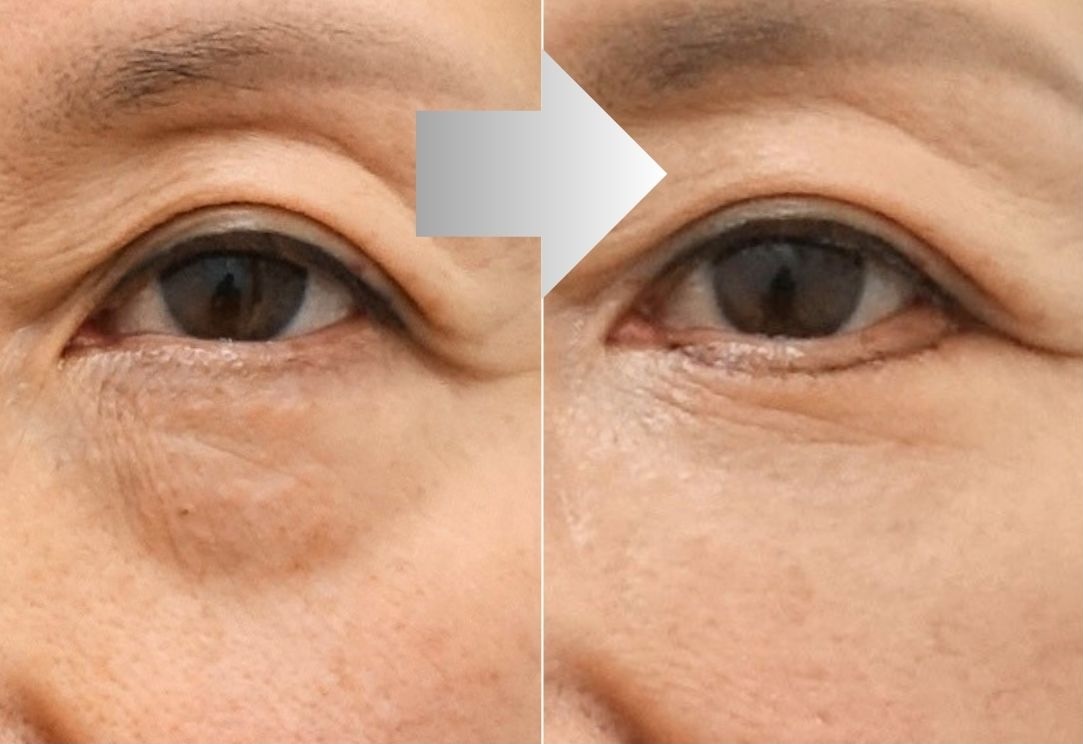
Hollow Under Eyes
For patients concerned about under-eye hollowing after aging or surgery.
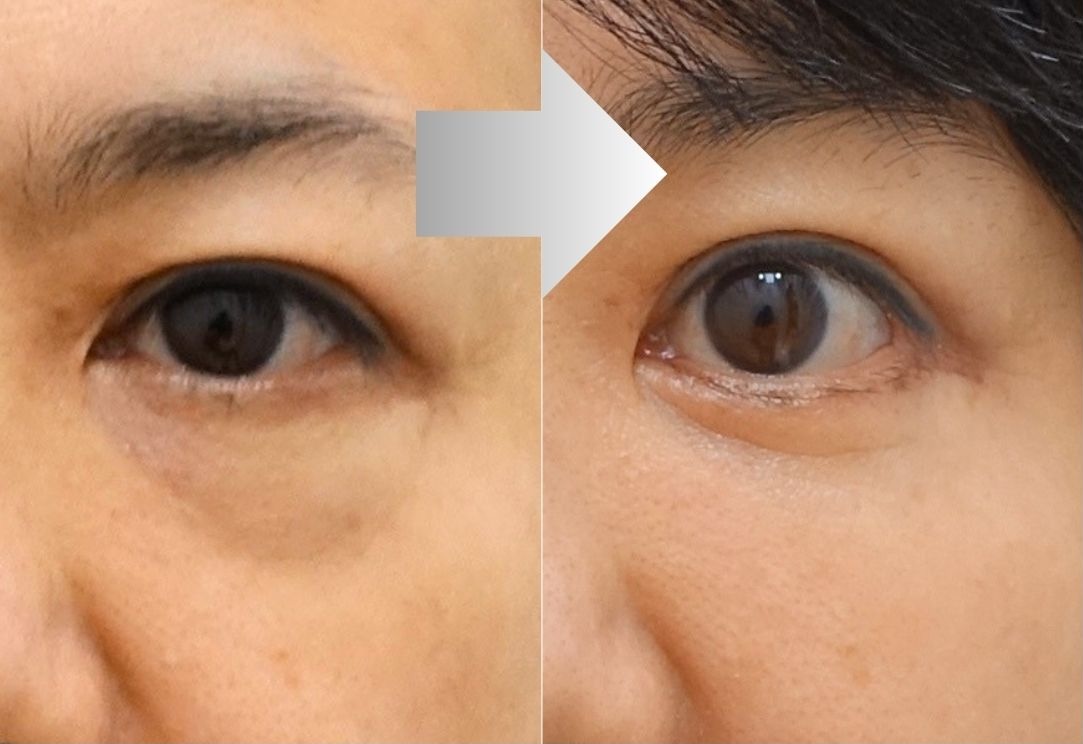
Natural Aegyo-sal Preservation
Preserve youthful lower eyelid volume while smoothing contours.
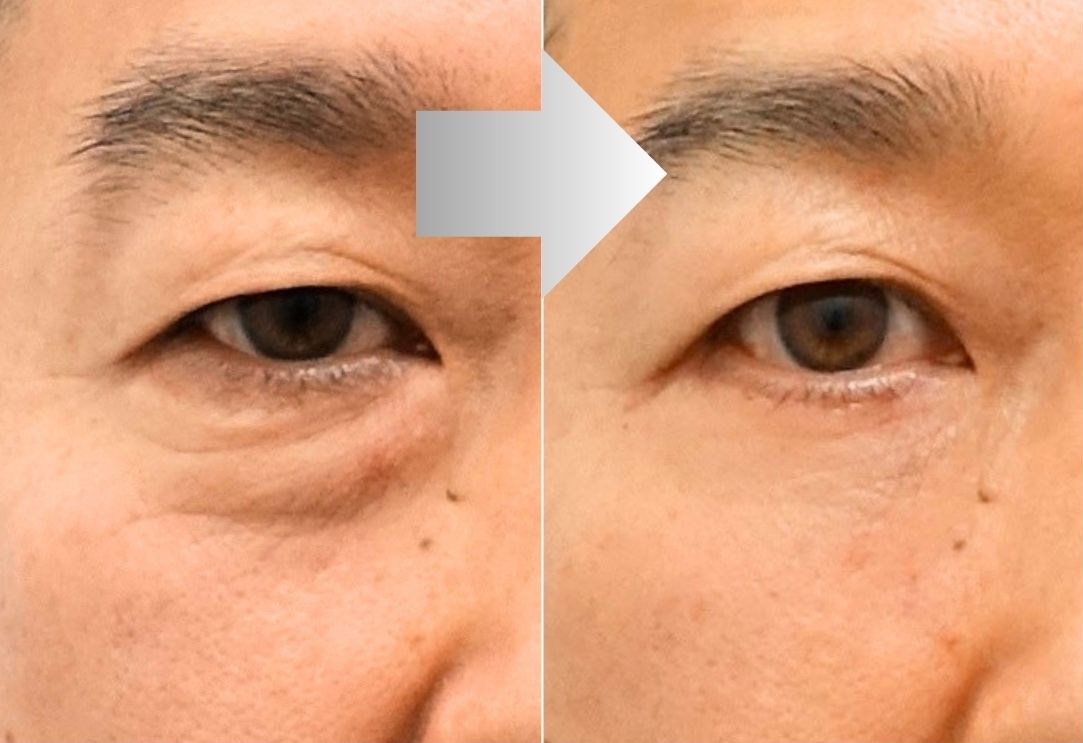
What Lower Blepharoplasty Is Really About
Many people assume lower blepharoplasty is simply about removing eye bags.
In reality, successful lower eyelid rejuvenation requires much more than fat removal.
Eye bags, tear trough hollowing, skin laxity, and midface descent often develop together as part of the aging process. Rather than focusing on volume reduction alone, treatment should begin with understanding the underlying structural changes.
At Ahnsungmin Plastic Surgery, every procedure is planned to restore support, preserve natural tissue, and achieve stable, natural-looking results over time.
Common Concerns We Hear From Patients
Many patients considering lower blepharoplasty often describe concerns such as:
- My eye bags make me look tired even when I feel rested.
- My under-eye area looks puffy in photos.
- I look older than I feel because of my eye bags.
- I am worried about looking hollow after surgery.
- I have dark shadows beneath my eyes.
- My eye bags came back after previous surgery.
- My lower eyelids look uneven or pulled down after surgery.
- I want natural improvement without looking like I had surgery.
Although these concerns may appear different, they are often caused by the same underlying structural changes involving fat position, tissue support, skin laxity, and midface descent.
At Ahnsungmin Plastic Surgery, treatment begins by identifying the underlying cause before selecting the most appropriate surgical approach.
Eye Bag Removal Surgery in Korea
Many people believe eye bag surgery is simply about removing fat.
In reality, natural lower eyelid rejuvenation depends on understanding why eye bags develop and restoring structural support—not simply removing volume.
Aggressive fat removal can lead to hollowing, tear trough deformity, and an unnatural appearance over time. Whenever possible, we preserve and reposition existing fat to maintain a smoother, more natural transition between the lower eyelid and the cheek.
Rather than removing more tissue, we focus on preserving support, repositioning fat, and creating natural, long-term results.
Recovery Timeline After Lower Blepharoplasty
Lower blepharoplasty recovery occurs gradually over several months as swelling decreases and the lower eyelid tissues stabilize.
While most patients return to daily activities within 1–2 weeks, continued softening, contour refinement, and structural stabilization often continue over the following months.
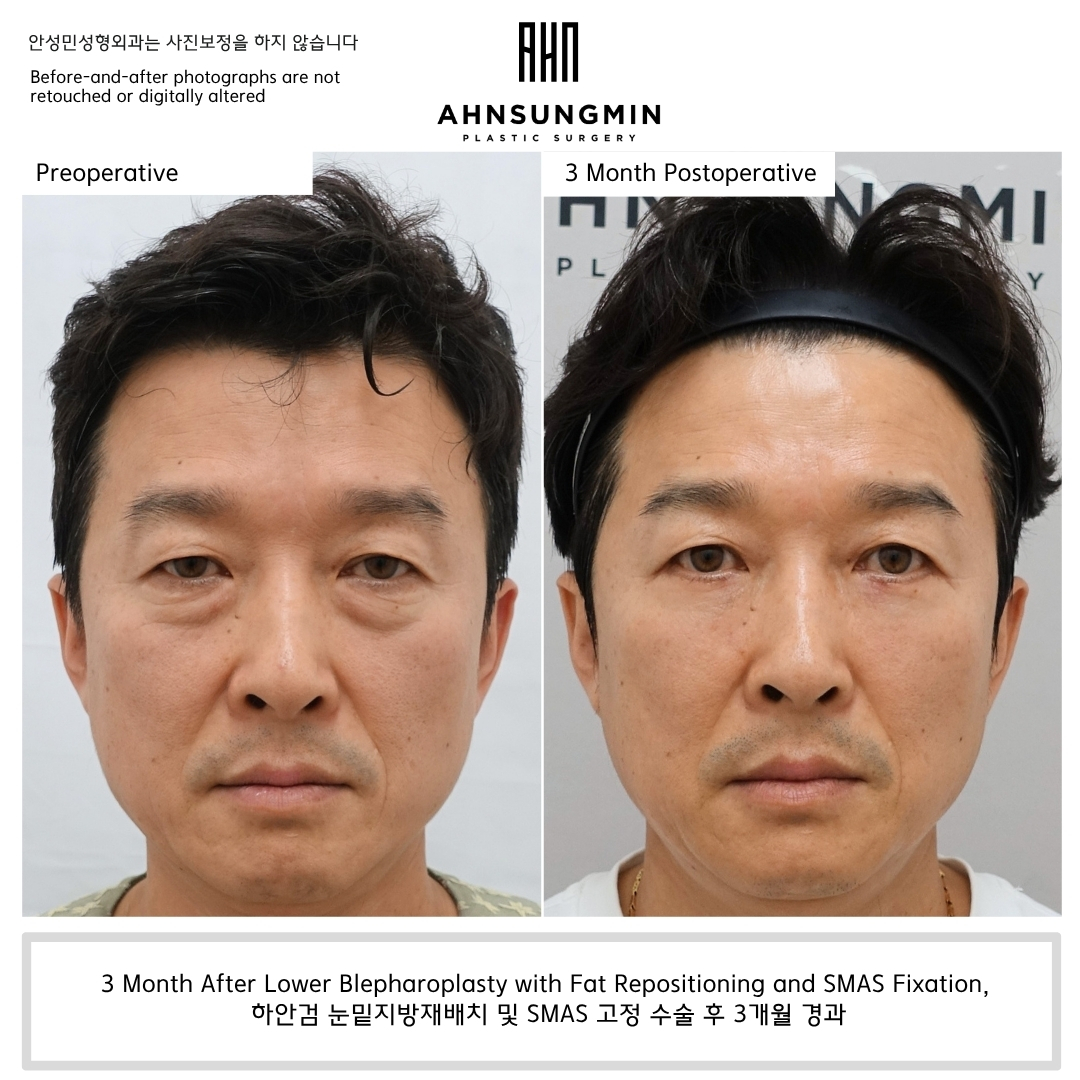
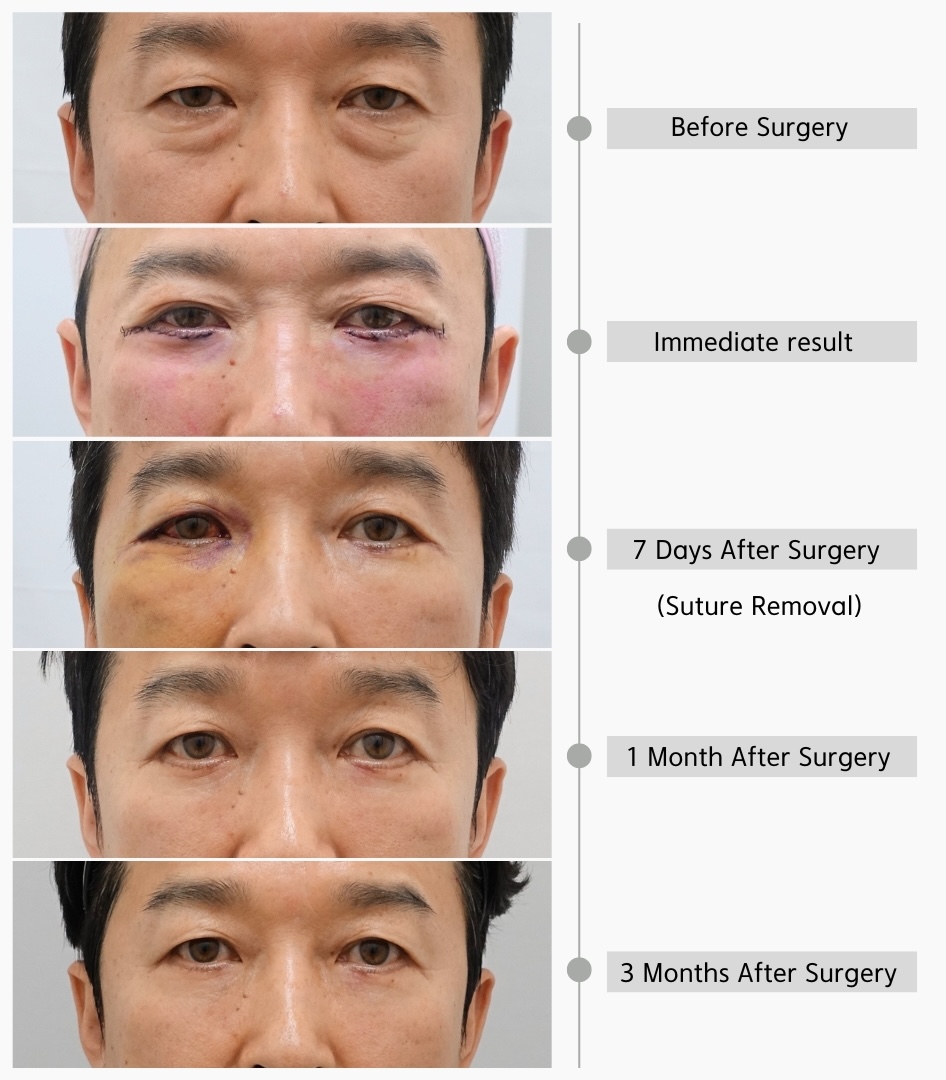
Real Recovery Example
Man in his 40s
This patient in his 40s presented with prominent lower eyelid bags, tear trough hollowing, and a tired appearance.
Immediately after surgery, swelling and bruising were visible as expected. Most bruising improved significantly by 7 days after surgery following suture removal.
At 1 month, the lower eyelid contour appeared smoother and more natural. By 3 months, residual swelling had continued to decrease, resulting in a more refined transition between the lower eyelid and cheek.
This case demonstrates how lower blepharoplasty results continue to improve as healing progresses and the tissues gradually stabilize.
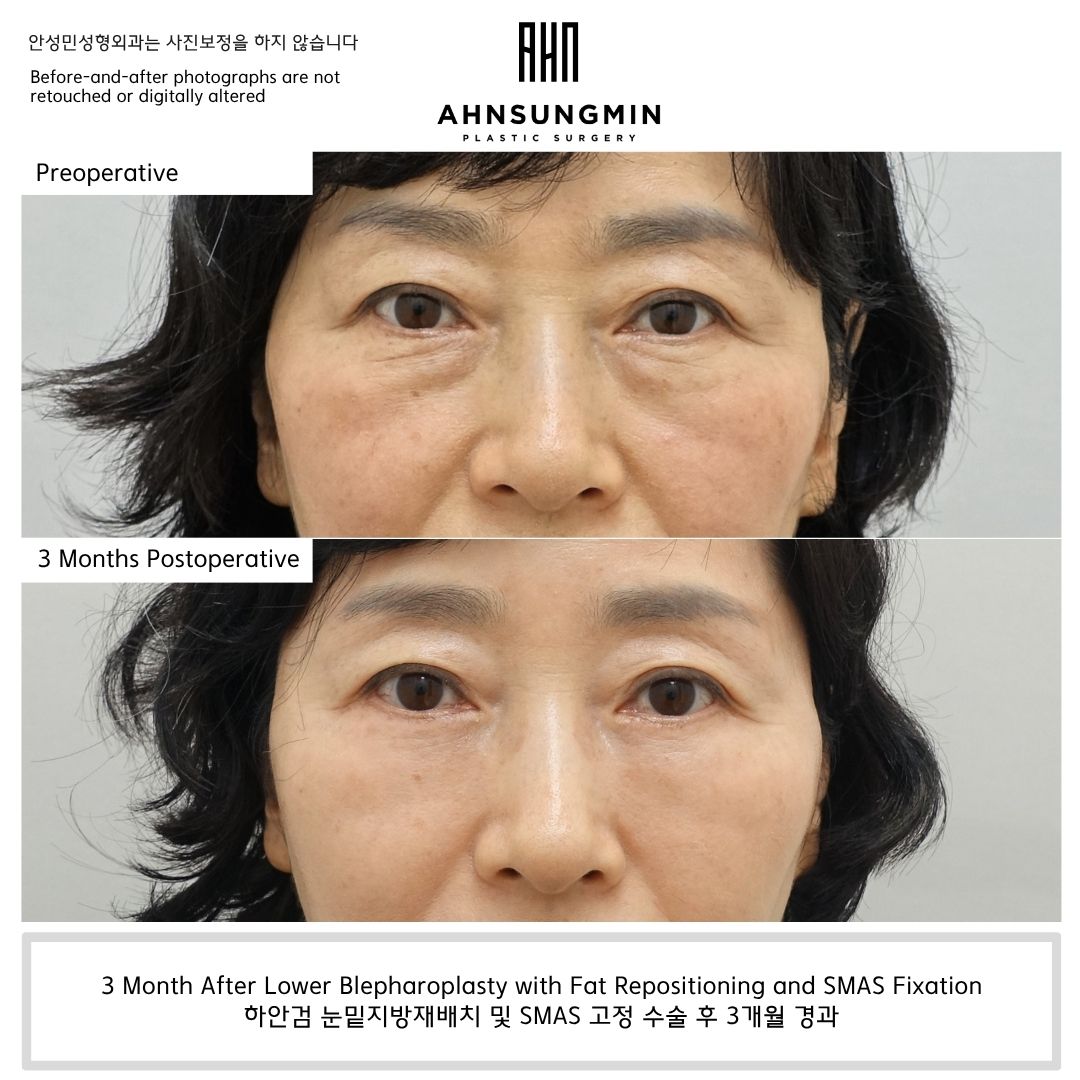
Real Recovery Example
Woman in her 50s
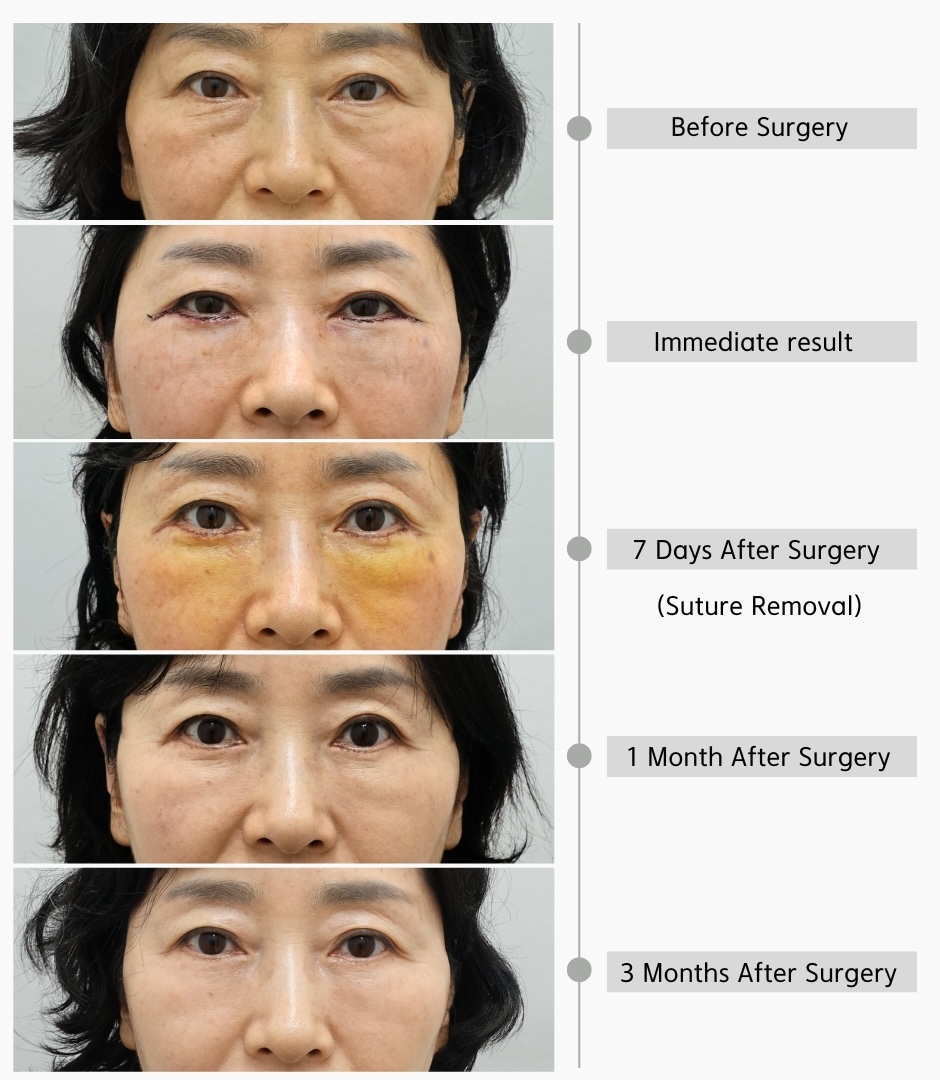
This patient in her 50s presented with prominent lower eyelid bags and under-eye volume imbalance that contributed to a tired appearance.
Immediately after lower blepharoplasty with fat repositioning, swelling and bruising were visible as expected. Most bruising improved significantly within the first week after suture removal.
At 1 month, the lower eyelid contour appeared smoother and more natural. By 3 months, continued healing resulted in improved lower eyelid-cheek transition and a more refreshed appearance.
This recovery timeline demonstrates how lower eyelid surgery results continue to evolve over several months as swelling resolves and the tissues gradually stabilize.
LOWER BLEPHAROPLASTY BEFORE & AFTER
Natural Improvement.
Long-Term Stability.
Real Recovery Example
Man in his 50s
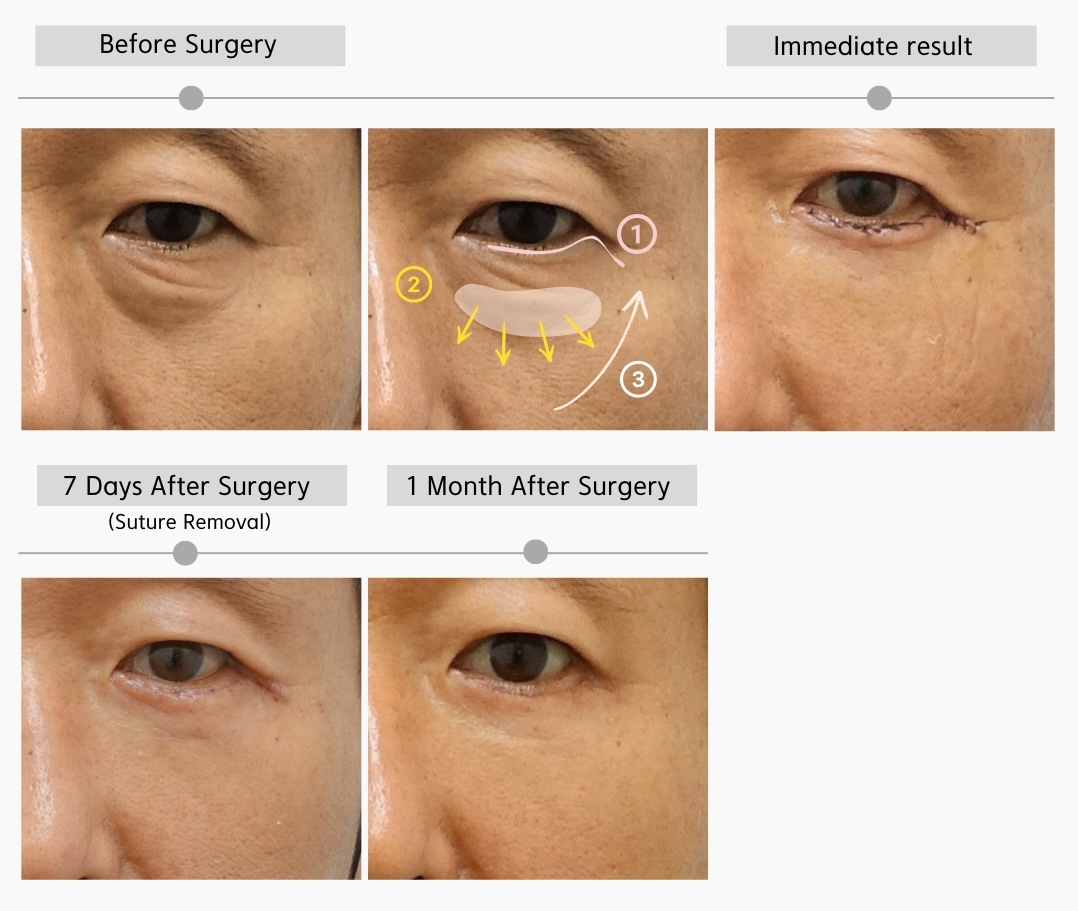
1. Lower Eyelid Incision
2. Fat Repositioning
3. SMAS Suspension and Fixation
Recovery Progress
This patient in his 50s presented with lower eyelid bags and tear trough hollowing.
Swelling and bruising were most noticeable during the first week after surgery and gradually improved following suture removal.
At 1 month, the lower eyelid contour appeared smoother and more natural.
This case demonstrates the typical recovery process after lower blepharoplasty with fat repositioning and SMAS fixation.
Real Recovery Example
Woman in her 60s
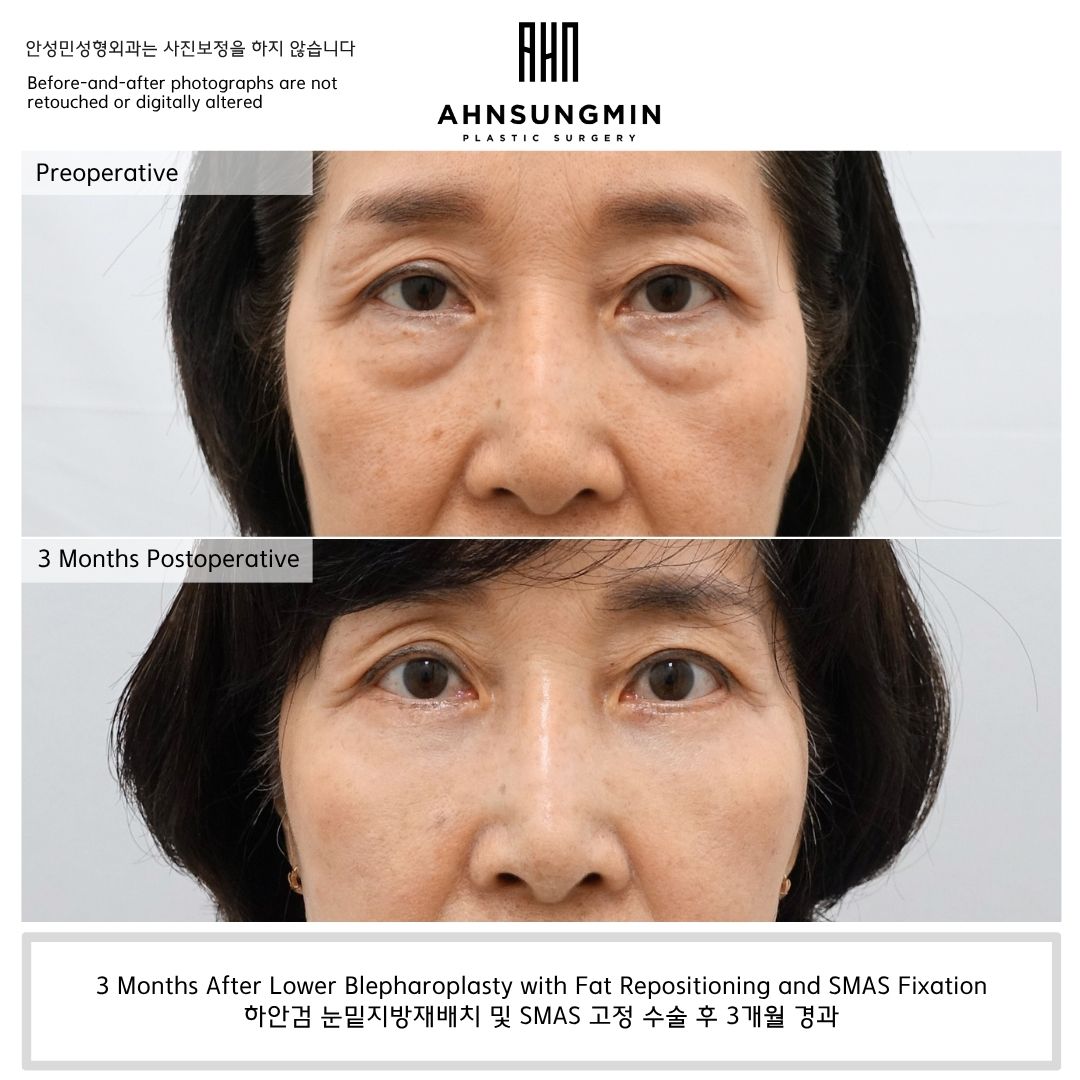
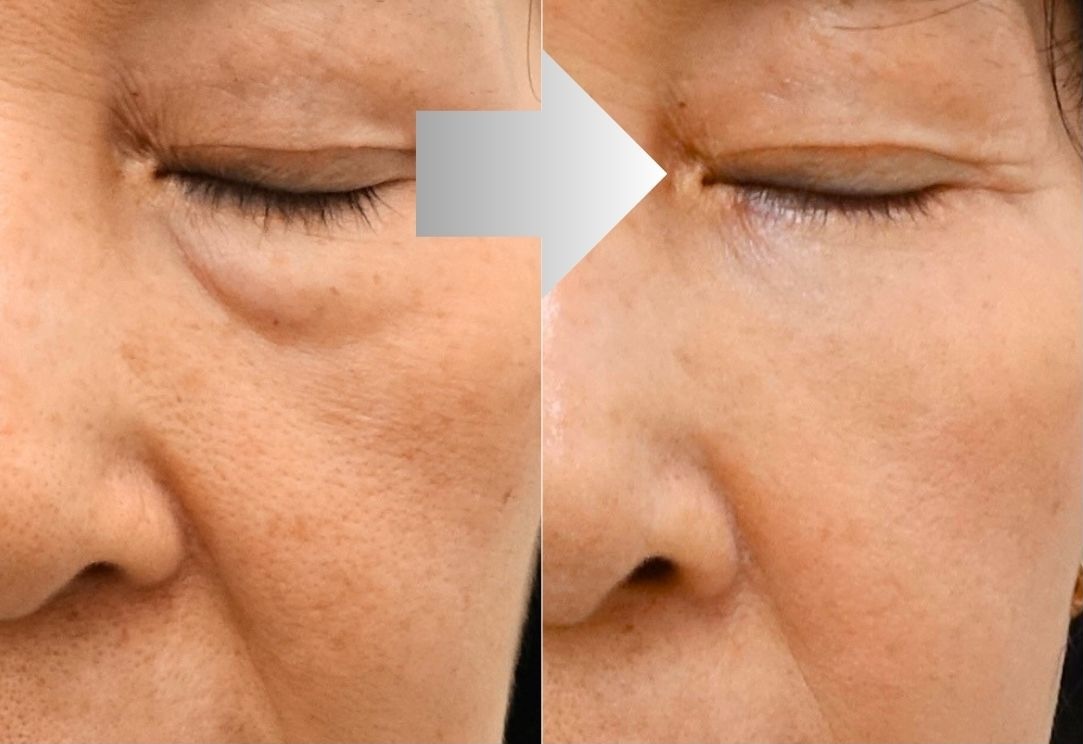
Improvement Beyond the Open-Eye View
Lower blepharoplasty results should not be evaluated only when the eyes are open.
When the eyes are closed, residual lower eyelid bulging and contour irregularities can often be assessed more clearly. In this case, improvement is visible not only in the open-eye view but also when the eyes are gently closed.
Notice how the lower eyelid-cheek transition appears smoother and the protruding fat pockets are reduced, while maintaining a natural eyelid contour.
This case illustrates an important principle of lower blepharoplasty: successful rejuvenation is not achieved by aggressive tissue removal, but by restoring structural balance while preserving natural anatomy.
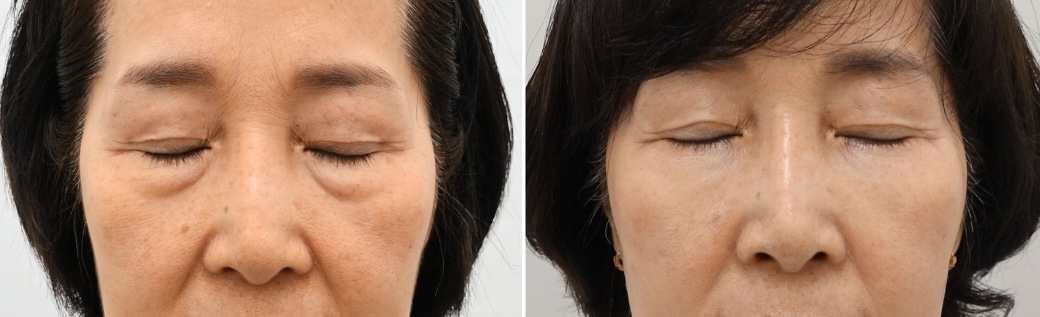
Woman in her 70s
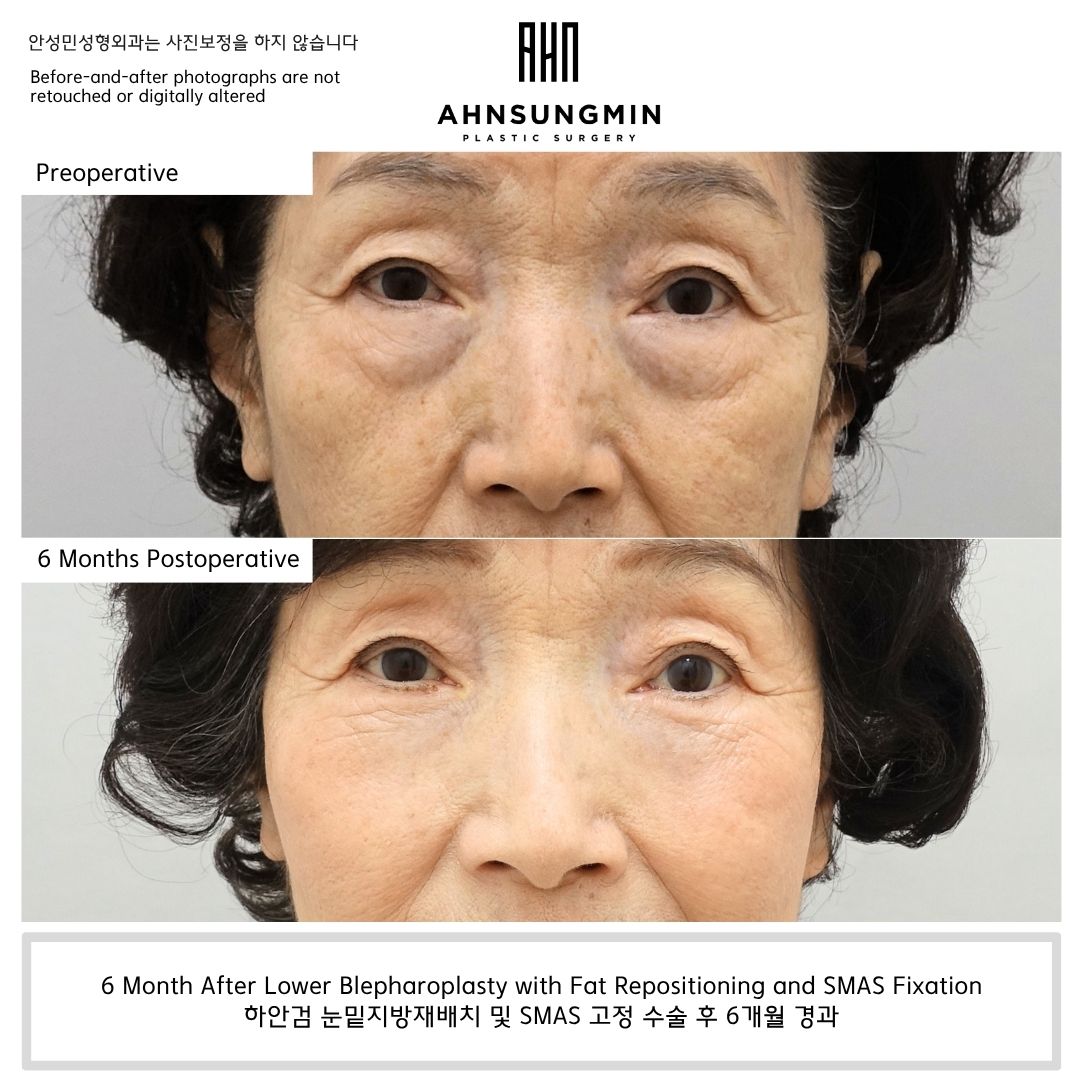
Natural Rejuvenation Without Overcorrection
Not every wrinkle needs to be removed.
The goal of surgery is to improve lower eyelid bags and restore a smoother eyelid-cheek transition while preserving natural facial character.
This case demonstrates a more refreshed appearance without creating an overcorrected look.
Young Adult Patient
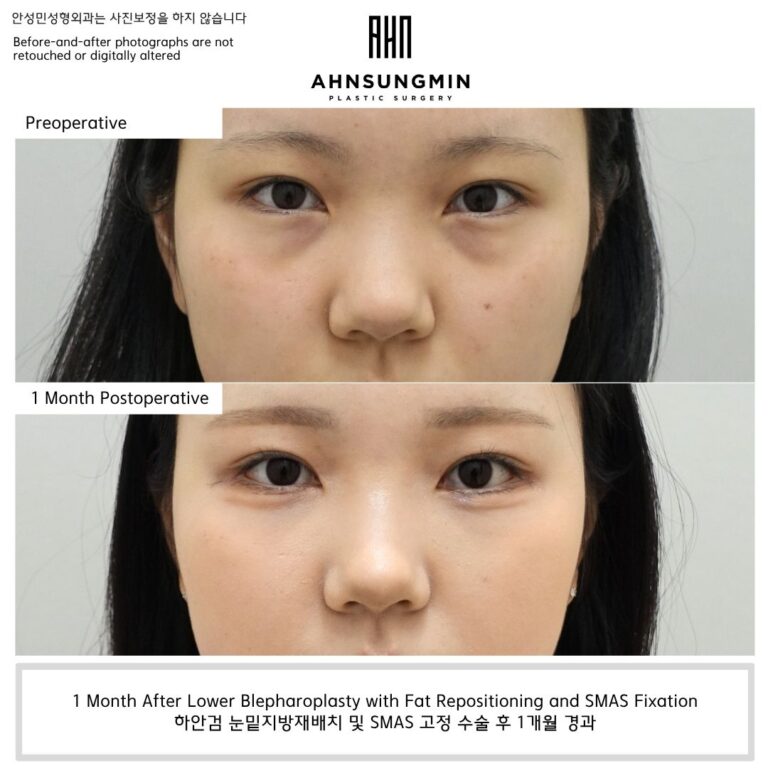
Preserving the Natural Aegyo-sal
A youthful appearance depends not only on reducing puffiness but also on preserving natural lower eyelid volume.
This case demonstrates how lower blepharoplasty can improve under-eye contour while maintaining the natural aegyo-sal and youthful eye shape.
Interested in learning why preserving the natural aegyo-sal is often a key part of successful lower blepharoplasty?
Read our Insight: Why Preserving the Aegyo-Sal Matters in Lower Blepharoplasty
Woman in her 30s
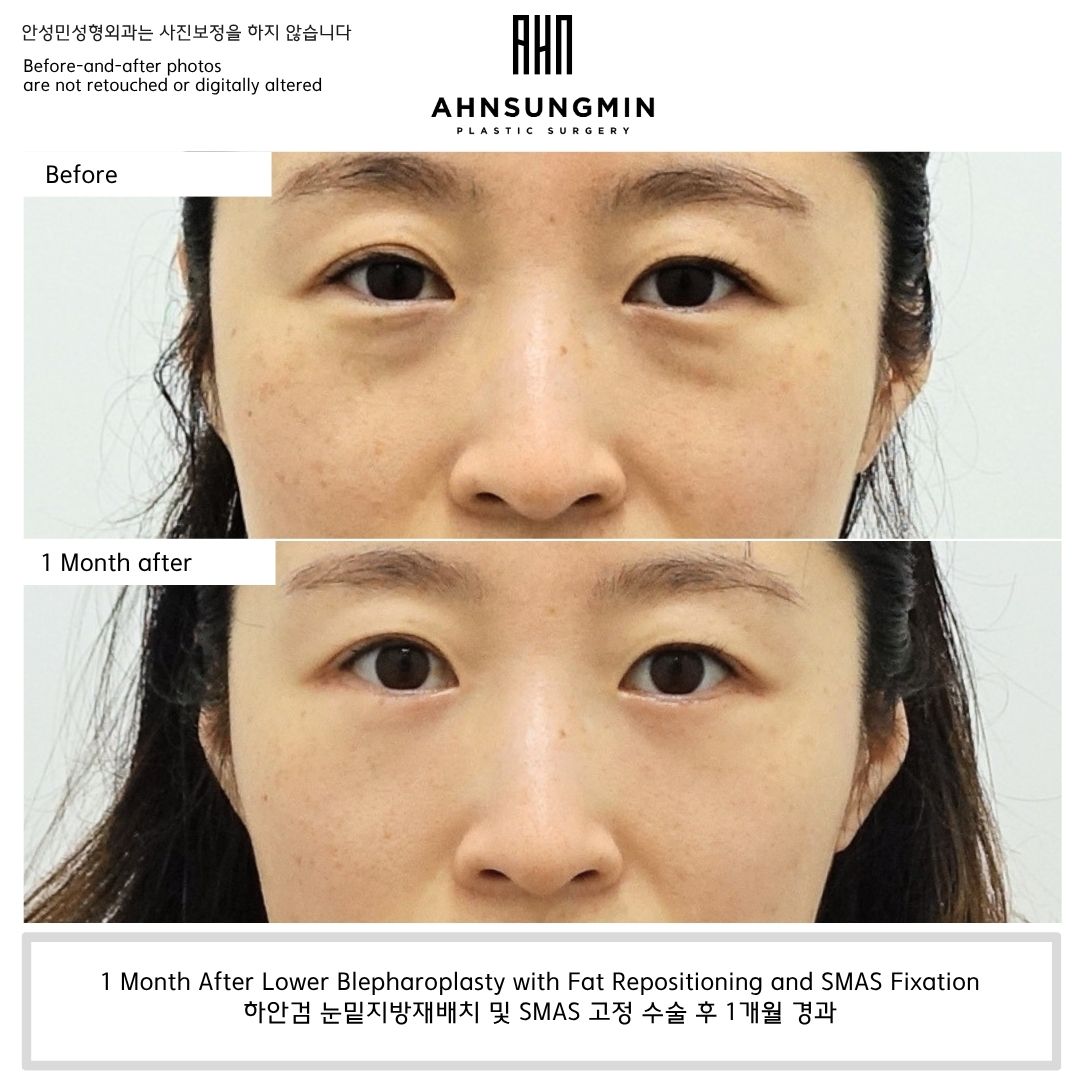
Under-Eye Shadows Can Appear Earlier Than Expected
A tired or dark under-eye appearance is not limited to older patients.
Even in younger adults, volume imbalance and the transition between the lower eyelid and cheek can create persistent shadowing that makes the eyes appear fatigued.
This case demonstrates how lower blepharoplasty can improve under-eye contour and reduce shadowing while preserving a natural and youthful appearance.
Man in his 60s
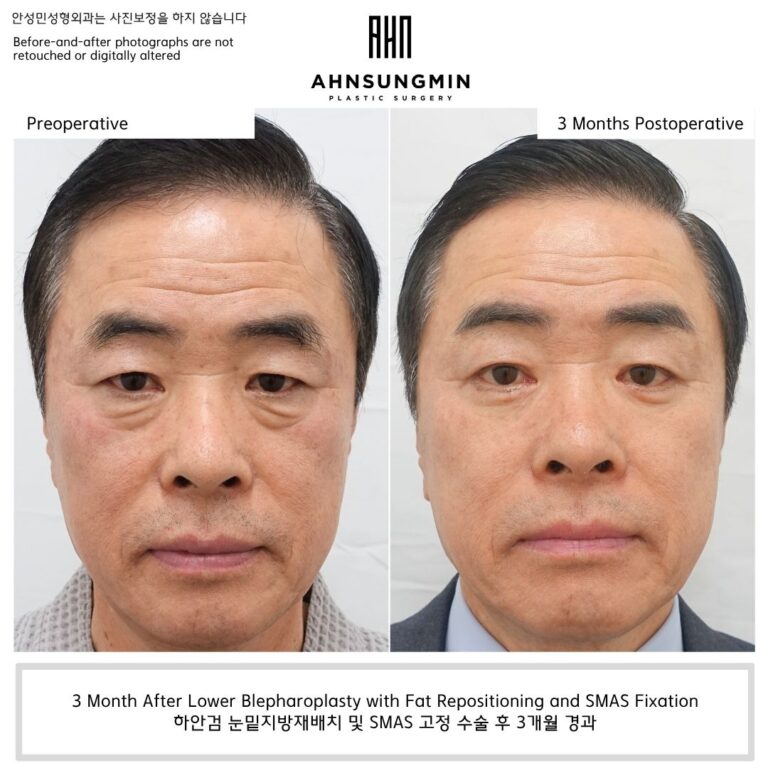
Not Every Wrinkle Should Be Removed
In patients with advanced age-related skin laxity, removing too much skin can create unnecessary tension on the lower eyelid.
Attempting to eliminate every wrinkle may increase the risk of lower eyelid malposition or ectropion. For this reason, careful judgment regarding how much skin to remove is often more important than aggressive excision.
This case demonstrates how meaningful rejuvenation can be achieved while maintaining long-term eyelid stability and natural facial character.
Woman in her 50s
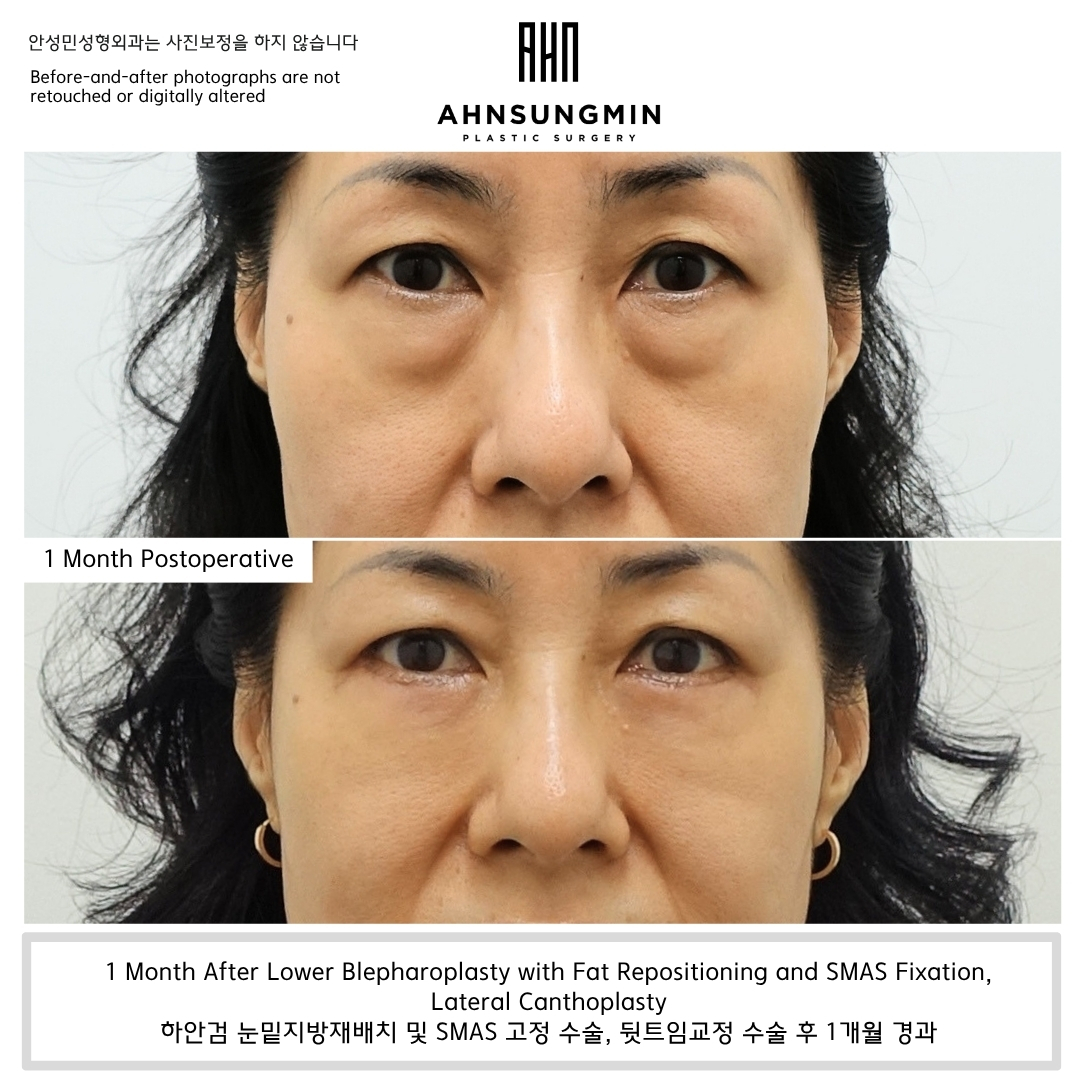
Lower Blepharoplasty Combined With Lateral Canthoplasty
A tired or shadowed under-eye appearance is not limited to older patients.
In some younger patients, volume imbalance beneath the eyes and a narrow horizontal eye shape can contribute to a fatigued appearance despite otherwise youthful facial features.
For this reason, lower blepharoplasty may sometimes be combined with lateral canthoplasty when additional horizontal support and balance are needed.
Rather than focusing only on removing puffiness, the goal is to improve the transition between the lower eyelid and cheek while creating a more natural and stable eye contour.
This case demonstrates how structural correction and careful lateral support can help achieve a brighter and more refreshed appearance.
This case demonstrates how structural correction and lateral support can improve both under-eye contour and eye shape.
Man in his 60s
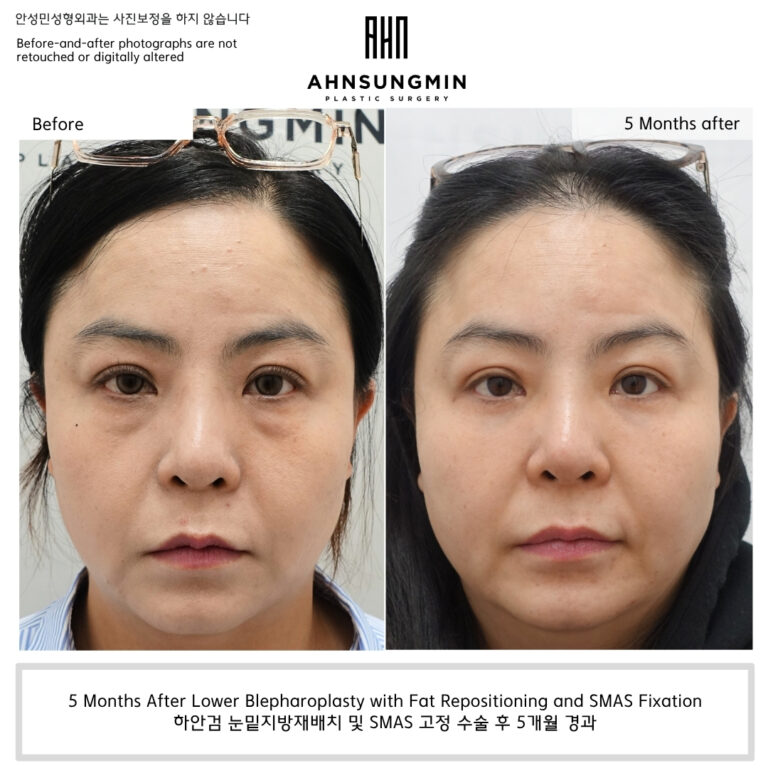
Lower Eyelid Bags and Tear Trough Hollowing
Lower eyelid bags are often caused not only by protruding fat but also by volume imbalance beneath the eyes.
Lower blepharoplasty with fat repositioning and SMAS fixation can help improve the lower eyelid-cheek transition while preserving natural facial characteristics.
At 5 months after surgery, the under-eye contour appears smoother, creating a less tired and more refreshed appearance.
Our Surgical Approach.
At Ahnsungmin Plastic Surgery, lower eyelid rejuvenation is not based on a single technique. Every procedure is planned by combining lower blepharoplasty, fat repositioning, and midface support according to each patient’s anatomy. Rather than removing more tissue, our goal is to restore structural balance, preserve natural support, and achieve long-term stability.
Our Surgical Philosophy
Successful lower blepharoplasty is not about removing more tissue. It is about restoring structural balance while preserving natural function and long-term stability.
Every patient is evaluated for fat distribution, skin quality, eyelid support, and midface anatomy before surgery.
Treatment is planned according to the underlying structural causes rather than a one-size-fits-all approach.
Most patients are not looking for dramatic change.
Surgery should help patients look more rested—not like a different person.
No two lower eyelids age the same way.
Every treatment plan is individualized according to anatomy, structural support, and long-term goals.
Why a Structural Approach Matters
Many problems after lower blepharoplasty are not cosmetic—they are structural.
Excessive skin removal may lead to eyelid retraction, while aggressive fat removal can create hollowing and accelerate the aging appearance.
Successful lower blepharoplasty begins by restoring support, preserving tissue, and respecting the natural anatomy rather than removing more.
What Makes Our Approach Different.
Unlike conventional approaches that focus on removing fat or tightening skin, our philosophy emphasizes structural preservation and long-term stability.
Every procedure is carefully planned based on each patient’s anatomy, combining lower blepharoplasty, fat repositioning, and midface support only when necessary.
Our goal is not to make patients look different, but to restore a smoother, more youthful lower eyelid while preserving natural volume, function, and facial expression.
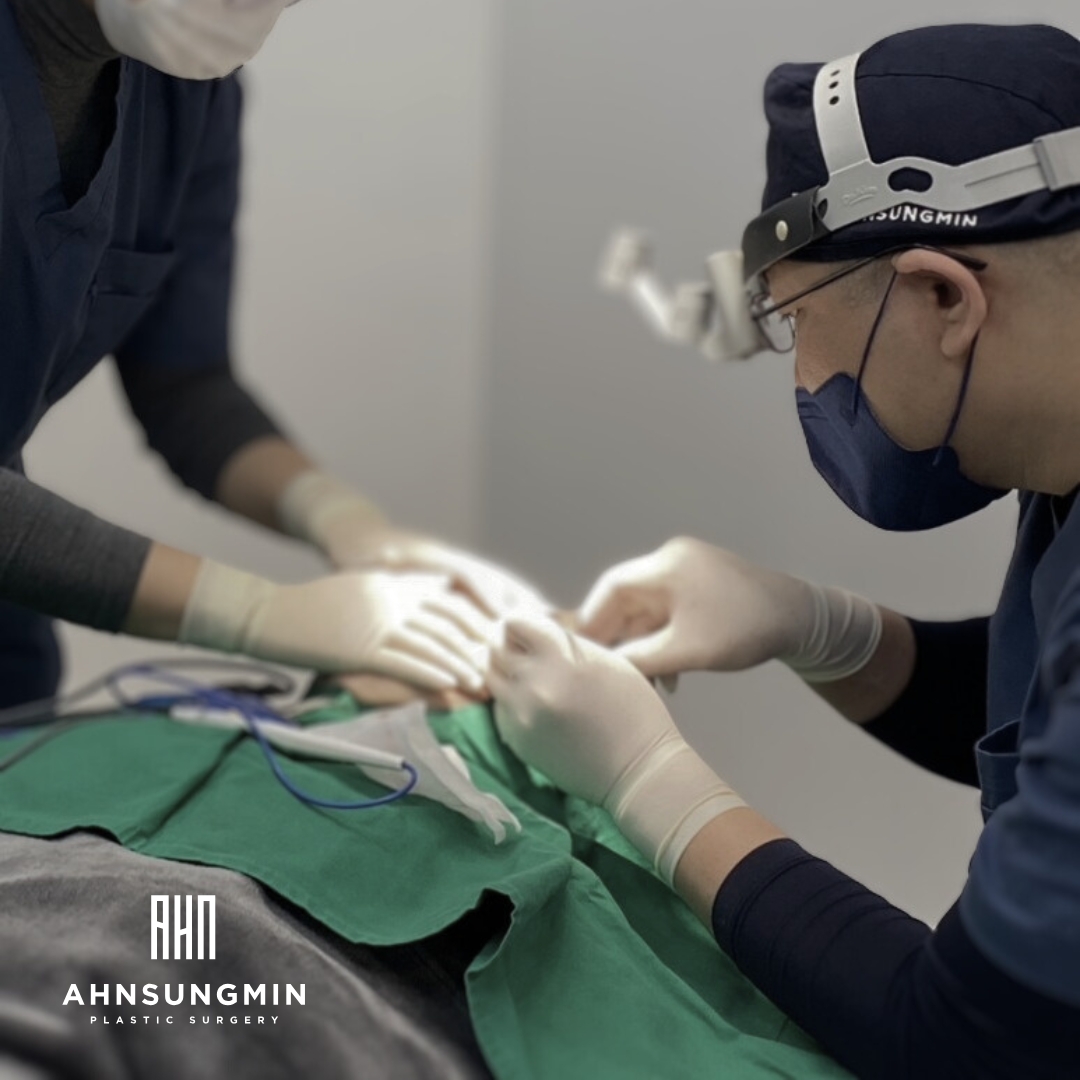
What Lower Blepharoplasty Can Improve.
Lower blepharoplasty can address much more than prominent eye bags.
Depending on each patient’s anatomy, treatment may improve:
- Under-eye bags
- Tear trough hollowing
- Loose lower eyelid skin
- Midface volume loss and descent
- Irregular lower eyelid contour
The goal is not simply to remove tissue, but to restore a smoother, naturally supported transition between the lower eyelid and the cheek.
When Lower Blepharoplasty Should Be Carefully Considered.
Not every under-eye concern requires surgery.
When lower eyelid support is weak or skin deficiency is already present, aggressive correction may increase the risk of eyelid retraction, ectropion, or an unnatural hollow appearance.
For this reason, every patient should undergo a careful structural evaluation before deciding whether surgery is the right option.
Sometimes, choosing a more conservative approach leads to the safest and most natural long-term outcome.

Approximately 2 hours

Carefully hidden beneath the lower eyelashes for minimal visible scarring.
Not required

Typically 5-7 days after surgery
Initial recovery generally occurs within 1–2 weeks.

Local anesthesia with real-time functional assessment during surgery
LOWER BLEPHAROPLASTY IN KOREA
Frequently Asked Questions
Lower Blepharoplasty Recovery & Results
Answers to common questions about lower eyelid surgery,
recovery, and long-term outcomes.
FAQ
1. Is lower blepharoplasty only for older patients?
No. Lower eyelid bags, puffiness, and tear trough hollowing can affect both younger and older patients. Treatment is based on anatomy rather than age.
2. What is fat repositioning?
Fat repositioning uses existing lower eyelid fat to improve hollow areas beneath the eyes instead of simply removing volume. This often creates a smoother and more natural contour.
3. Why is SMAS fixation performed?
SMAS fixation provides additional support between the lower eyelid and cheek. Structural support can improve long-term stability and help maintain surgical results over time.
4. How long does recovery take?
Most bruising and swelling improve during the first 1–2 weeks. Significant improvement is often visible within the first month, while subtle refinement continues for several months.
5. Will all wrinkles disappear after surgery?
No. The goal is improvement, not complete wrinkle removal. Excessive skin excision can increase the risk of lower eyelid retraction or ectropion, making balance and preservation important.
6. When can the final result be evaluated?
Although early changes are visible within weeks, final evaluation is generally recommended several months after surgery as swelling resolves and tissues stabilize.
7. Can lower blepharoplasty make the eyes look unnatural?
Natural results depend on preserving anatomy and maintaining proper support. Modern lower blepharoplasty focuses on structural correction rather than aggressive tissue removal.
8. Can lower blepharoplasty be combined with other procedures?
Yes. Depending on the patient’s anatomy, lower blepharoplasty may be combined with fat repositioning, SMAS fixation, brow lift, ptosis correction, or other procedures when appropriate.
Need a Personalized Lower Blepharoplasty Evaluation?
Many lower eyelid concerns involve a combination of fat protrusion, hollowing, skin laxity, and structural support issues.
A personalized evaluation can help determine whether lower blepharoplasty, fat repositioning, or additional support procedures may be appropriate.
Lower Eyelid Surgery Insights
Lower eyelid surgery requires careful structural judgment. Many problems that appear after surgery are not simply cosmetic issues, but structural issues involving skin support, fat position, and healing time. The following articles explain common situations and important considerations after lower eyelid surgery.
Why Lower Eyelid Bags Come Back After Surgery.
Understanding why lower eyelid bulging can recur after surgery and the structural factors behind recurrence.
When Fat Removal Becomes the Beginning of Hollowing.
Why excessive fat removal may create hollowing rather than rejuvenation.
Why We Consider the SMAS Layer to Prevent Lower Eyelid Retraction.
The role of deeper structural support in preventing postoperative eyelid retraction.
How Long Should You Wait Before Revising Retraction.
Why patience and healing time are essential before considering revision surgery.
Why Some Retractions Should Not Be Revised.
Understanding when revision surgery may cause more harm than benefit.
When Lower Eyelid Surgery Fails, It Usually Begins With One Problem.
Understanding how excessive skin removal can lead to lower eyelid instability and complex revision surgery.
Why Ectropion Often Appears Months After Lower Eyelid Surgery.
Understanding why lower eyelid retraction and ectropion may develop months after surgery as swelling subsides and structural tension becomes visible.
Why Not Every Lower Eyelid Wrinkle Should Be Removed.
Understanding how aggressively removing wrinkles can increase downward tension and lead to eyelid instability.
Why Lower Eyelid Retraction Is One of the Most Difficult Problems in Revision Surgery.
Understanding why skin shortage, scar formation, and structural imbalance make lower eyelid retraction difficult to correct.
Why Lower Eyelid Skin Removal Can Cause Long-Term Structural Problems.
Understanding how excessive skin removal can create long-term eyelid instability and make revision surgery significantly more complex.
Lower Blepharoplasty Recovery: 3 Months After Fat Repositioning Surgery.
Understanding the natural recovery timeline after lower eyelid surgery and why early postoperative appearances may not reflect the final structural result.
Why Patients Travel to Korea for Lower Blepharoplasty with Dr. Ahnsungmin
Many international patients travel to Korea because successful lower blepharoplasty requires more than simply removing eye bags.
It requires careful evaluation of fat position, skin laxity, lower eyelid support, and midface descent before deciding how much should be preserved, repositioned, or corrected.
At Ahnsungmin Plastic Surgery, every case is planned through structural analysis, tissue preservation, and long-term stability rather than aggressive fat or skin removal.
For international patients, this careful decision-making process is an important part of achieving natural results without hollowing or overcorrection.
LOWER BLEPHAROPLASTY IN KOREA
REQUEST A PERSONALIZED LOWER EYELID EVALUATION
Every lower eyelid is different.
The first step is not deciding on surgery—it is understanding the cause of your eye bags, hollowing, skin laxity, or under-eye concerns.
A personalized evaluation helps determine whether lower blepharoplasty, fat repositioning, midface support, or another approach is the best solution for natural, long-term results.
Online Consultation Available for International Patients
Ahnsungmin Surgical Philosophy
At Ahnsungmin Plastic Surgery, eyelid surgery is approached through careful structural analysis rather than simply focusing on cosmetic change.
Many eyelid conditions such as ptosis, eyelid hollowing, lower eyelid bags, or postoperative imbalance are closely related to the underlying anatomy of the eyelid.
Our surgical philosophy focuses on restoring natural balance while preserving healthy tissue and achieving long-term structural stability.
REQUEST YOUR LOWER EYELID EVALUATION
Share your photos and surgical history for an initial assessment.
Seoul, Republic of Korea
