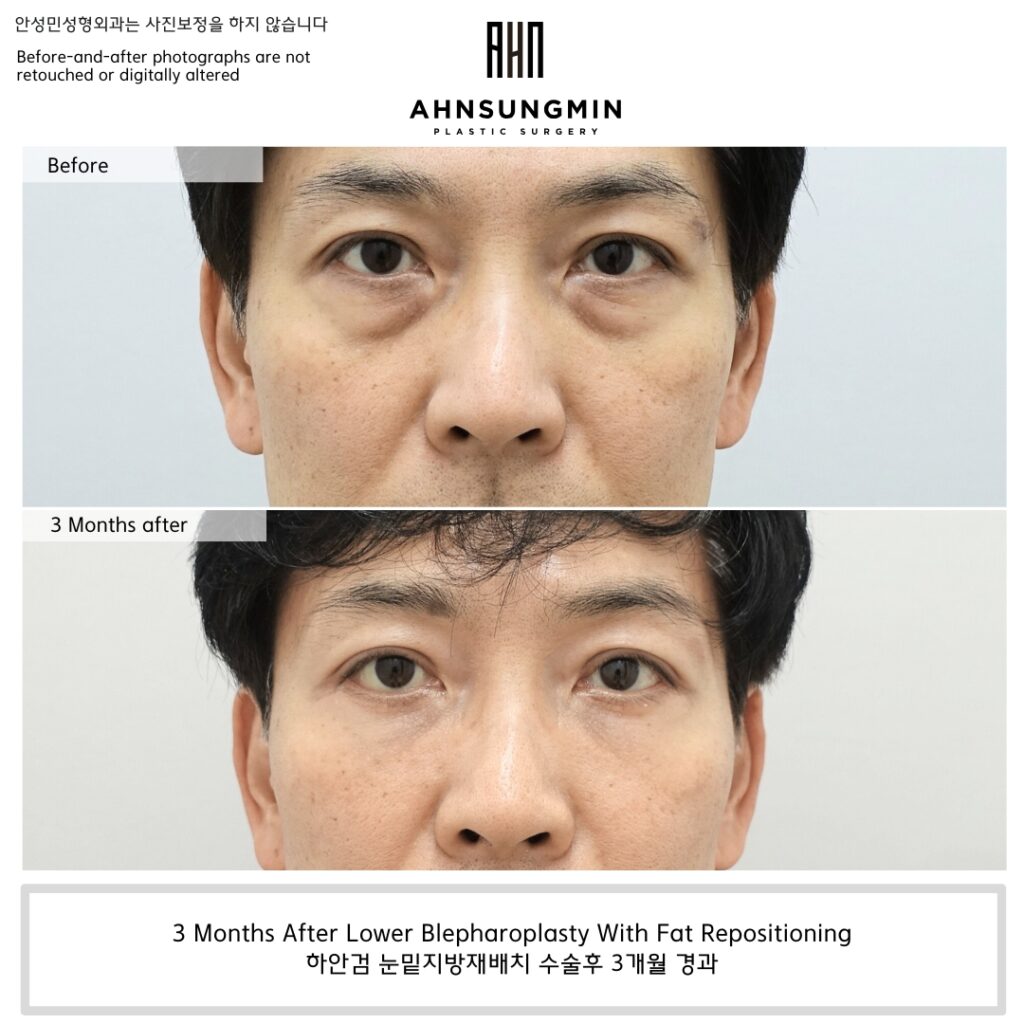
Early Postoperative Appearances Can Be Misleading
In lower eyelid surgery, the early postoperative appearance does not always represent the final outcome. During the first few weeks after surgery, swelling, temporary tissue tension, and postoperative edema can mask subtle structural changes in the lower eyelid.
As swelling gradually subsides and scar maturation progresses, the true balance between skin, muscle, fat, and supporting structures becomes more visible over time.
For this reason, some changes in the lower eyelid may appear gradually over several months rather than immediately after surgery. This is also why early postoperative appearances can sometimes be misleading.
Lower eyelid surgery should therefore never be judged too early during recovery.
Structural Balance Becomes Clearer as Healing Progresses
The lower eyelid is a delicate anatomical structure where even small differences in tissue tension, support, or volume can influence the final appearance. When the healing process continues, scar contraction and tissue settling can slowly reveal the true relationship between the eyelid and the cheek.
This is why surgeons who focus on long-term stability do not judge the success of lower eyelid surgery too early. Immediate postoperative photographs can sometimes be reassuring, but they do not always reflect the final structural outcome.
Some patients may initially appear smooth after surgery but later develop:
- lower eyelid hollowing
- tightness
- volume deficiency
- structural asymmetry
This delayed progression is one reason why long-term follow-up is important after revision lower blepharoplasty.
Conservative Surgical Planning Helps Prevent Late Complications
One of the most important principles in lower eyelid surgery is avoiding excessive tissue removal. When skin or structural support is overly reduced, the lower eyelid may gradually lose stability as healing progresses.
At Ahnsungmin Plastic Surgery, surgical planning focuses on maintaining structural support, preserving tissue balance, reducing long-term tension, and achieving long-term stability rather than pursuing aggressive early changes. This is one reason why tissue preservation often produces more natural long-term lower eyelid results.
Aggressive correction may initially appear smooth, but it does not always produce stable long-term results. In many patients, lower eyelid hollowing becomes more noticeable over time when structural support is weakened.
Stable Lower Eyelid Surgery Results Require Time
Lower eyelid surgery should always be evaluated with patience. As tissues recover and scars mature, the eyelid gradually settles into its natural position.
For both surgeons and patients, understanding this healing timeline is essential. True surgical outcomes are not determined by the first few weeks, but by the stability of the eyelid months after the procedure. This is why eyelid revision recovery timelines should always be evaluated with patience.
In lower eyelid surgery, long-term stability is often more important than immediate postoperative appearance.
Frequently Asked Questions
1. Why can lower eyelid surgery results change several months after surgery?
Lower eyelid surgery results may change over time because swelling gradually decreases, scar tissue matures, and tissue tension continues to settle during the healing process.
2. Can early lower eyelid surgery results be misleading?
Yes. Early postoperative swelling can temporarily hide subtle structural problems such as hollowing, tightness, asymmetry, or lower eyelid retraction.
3. Why do some lower eyelid problems appear later during recovery?
Some lower eyelid problems become more noticeable as healing progresses because the true relationship between the skin, muscle, fat, and supporting structures gradually becomes visible over time.
4. Does aggressive lower eyelid surgery increase the risk of long-term complications?
Excessive tissue removal may increase the risk of long-term instability, including hollowing, tightness, lower eyelid retraction, and structural imbalance.
5. How long does lower eyelid recovery usually take?
Initial recovery may occur within several weeks, but final lower eyelid stabilization and scar maturation often continue for several months after surgery.
Request a Lower Eyelid Recovery Evaluation
Some lower eyelid changes may only become noticeable as swelling decreases and healing progresses over time.
If you are concerned about delayed hollowing, tightness, asymmetry, lower eyelid retraction, or structural instability after previous lower eyelid surgery, a detailed evaluation may help determine the current condition of the eyelid and supporting tissues.
At Ahnsungmin Plastic Surgery, evaluation focuses on structural balance, tissue support, long-term stability, and realistic recovery expectations rather than aggressive correction alone.
Request a Lower Eyelid Evaluation
Seeing the Eye as a Whole, Not in Parts
A Clinic Dedicated to Eyelid Revision Surgery in Korea
Ahnsungmin Plastic Surgery
