Before and After
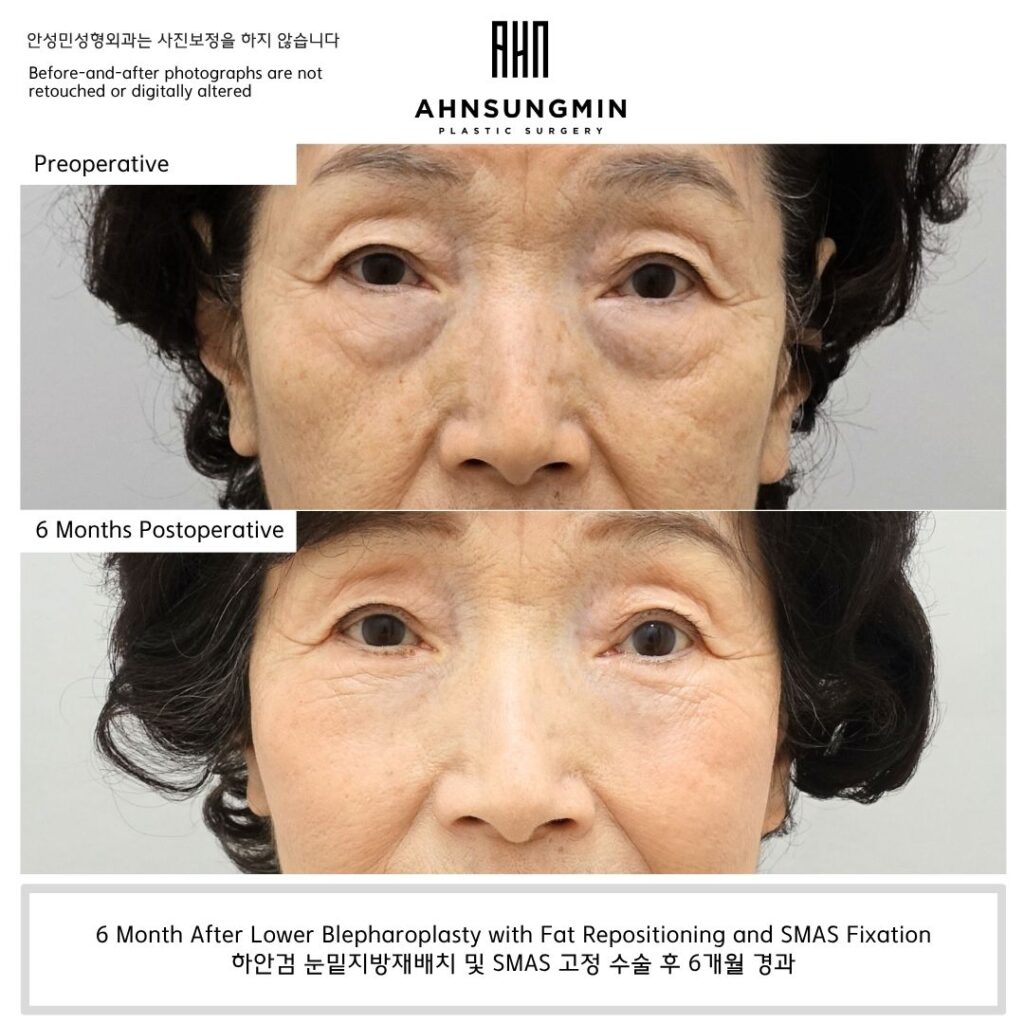
Aging Around the Lower Eyelid Is Not Simply About Excess Skin.
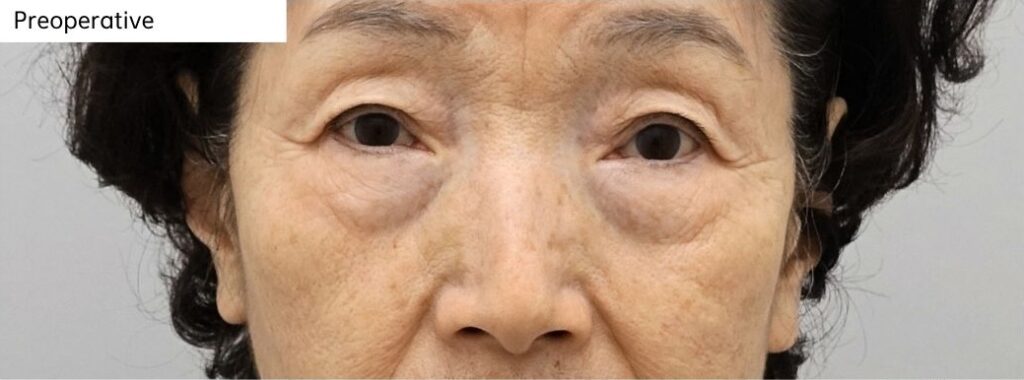
This patient in her 70s presented with lower eyelid bulging, volume imbalance, and progressive weakening of the lower eyelid support structures.
In younger patients, aggressive tightening or extensive skin removal may sometimes appear visually effective in the short term.
However, elderly lower eyelid surgery requires a very different surgical philosophy.
At this stage of aging, the tissues become thinner, circulation weakens, healing capacity decreases, and structural support gradually deteriorates over time.
For this reason, attempting to remove every wrinkle or excessively flatten the under-eye area may increase the risk of unnatural tension, prolonged swelling, lower eyelid instability, or functional complications.
In elderly patients, lower eyelid surgery should not focus on creating an artificially tight appearance.
The goal should be restoring balance while preserving safety, softness, and long-term stability.
Why Fat Was Preserved Instead of Aggressively Removed.
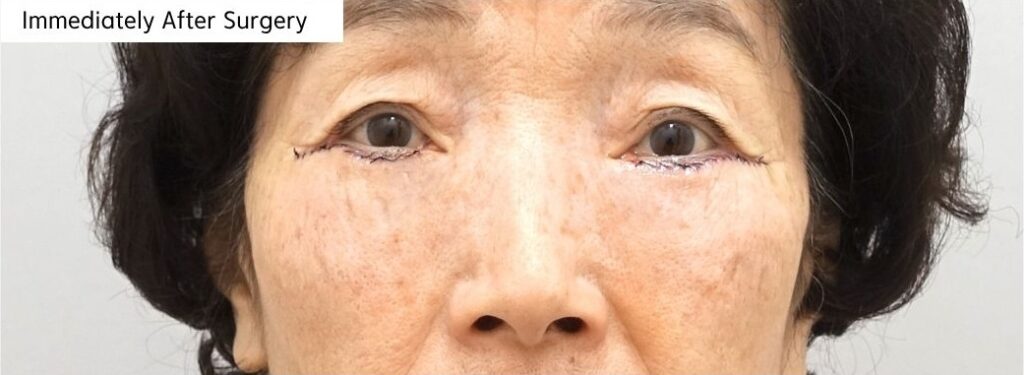
Lower blepharoplasty was performed with a focus on structural correction and volume preservation rather than aggressive excision.
No excessive fat removal was performed.
Instead, the protruding fat was repositioned structurally to preserve under-eye volume while improving contour transition between the lower eyelid and midface.
Septal reinforcement and SMAS fixation were also performed to improve structural support and long-term lower eyelid stability.
In elderly lower eyelid surgery, aggressive fat removal may create hollowing, skeletal appearance, or progressive lower eyelid weakness over time.
Because of this, preserving volume is often safer and more natural than excessive removal.
The objective was not to erase every sign of aging, but to create a more stable and harmonious lower eyelid contour appropriate for the patient’s age and tissue condition.
Early Recovery Should Not Be Judged Too Quickly.
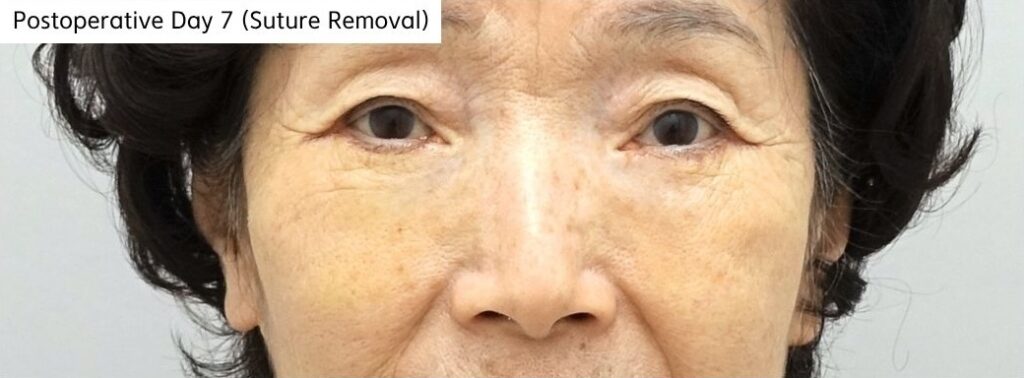
At postoperative day 7, swelling and bruising were still present, which is expected during the early healing process.
In patients in their 70s, recovery speed depends heavily on blood pressure control, vascular condition, sleep quality, systemic health, and tissue healing capacity.
This is one reason elderly lower eyelid surgery requires careful postoperative monitoring and conservative recovery management.
Temporary swelling, firmness, or asymmetry during the early recovery period does not necessarily indicate a poor result.
The tissues continue adapting gradually over time.
Because lower eyelid surgery recovery evolves slowly beneath the surface, early appearance alone should never be used to judge the final outcome.
Postoperative Month 6
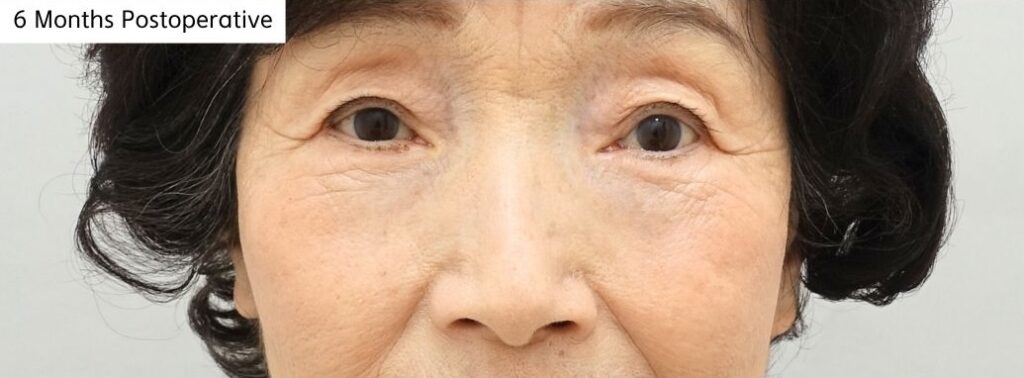
At 6 months postoperative, the lower eyelid contour appears smoother, softer, and more structurally balanced while still maintaining a natural appearance appropriate for the patient’s age.
Importantly, the result does not attempt to eliminate every natural wrinkle or sign of aging.
Instead, the surgical goal was harmony.
By preserving volume, reducing excessive bulging, reinforcing structural support, and avoiding overcorrection, the lower eyelid was stabilized without creating an artificial or excessively tightened appearance.
In elderly lower blepharoplasty patients, long-term stability is often more important than dramatic short-term change.
This is why restraint, structural support, circulation preservation, and tissue balance remain critical principles in lower eyelid surgery for older patients.
Surgical Approach
Lower eyelid surgery was performed with a focus on structural correction, volume preservation, septal reinforcement, and long-term stability rather than aggressive fat removal or excessive tightening.
Because lower eyelid recovery continues gradually over time, it may be helpful to review our
Lower Blepharoplasty Recovery Timeline in Korea
to better understand how healing and tissue stabilization progress after surgery.
Many patients also wonder why certain wrinkles or natural expression lines may remain visible even after successful surgery. Learn more in:
Why Are Some Wrinkles Still Visible After Lower Eyelid Surgery?
You may also explore additional
Lower Eyelid Surgery Cases
to better understand how recovery and long-term structural changes develop after surgery.
Lower Eyelid Surgery Recovery FAQ
Is lower eyelid surgery safe for patients in their 70s?
Lower eyelid surgery may still be performed safely in selected elderly patients when overall health condition, blood pressure control, tissue quality, and recovery capacity are carefully evaluated before surgery.
Why was fat preserved instead of removed?
Aggressive fat removal in elderly patients may increase hollowing, lower eyelid weakness, and unnatural appearance over time. Structural fat repositioning often creates a softer and more stable result.
Why were some wrinkles intentionally left untreated?
Attempting to eliminate every wrinkle may increase tension and functional risk in elderly lower eyelid surgery. Natural aging harmony is often safer and more appropriate than aggressive tightening.
Does recovery take longer in elderly patients?
Yes. Healing speed in elderly patients is often influenced by circulation, blood pressure, sleep, tissue quality, and systemic health condition.
When does the final result become stable?
Although visible swelling improves gradually within weeks, deeper tissue stabilization and scar maturation may continue for several months after surgery.
Request a Lower Eyelid Surgery Evaluation
Every lower eyelid ages differently.
In elderly patients especially, surgical planning should focus not only on cosmetic improvement, but also on structural stability, circulation, recovery capacity, and long-term safety.
If you are considering lower eyelid surgery in Korea, you may request a personalized evaluation based on your current lower eyelid structure, tissue condition, and recovery potential.
