Choosing the Right Surgeon for Natural Inner Corner Balance
Epicanthoplasty is more than creating larger-looking eyes. Successful inner corner surgery requires careful evaluation of facial proportion, eye spacing, skin tension, and the natural anatomy of the epicanthal fold. At AHNSUNGMIN Plastic Surgery, every procedure is individually planned to create a balanced relationship between the inner corner, eyelid crease, and overall facial appearance. Rather than pursuing maximum enlargement, our approach emphasizes natural contours, structural preservation, and long-term stability for results that remain harmonious over time.
- Personalized Anatomical Evaluation
- Natural Inner Corner Contours
- Balanced Facial Proportions
- Tissue Preservation
- Long-Term Structural Stability
- Revision Epicanthoplasty Expertise
Patients often seek evaluation because of concerns like these—not simply because they want larger eyes.
Many patients believe epicanthoplasty is simply a procedure to create larger eyes. In reality, excessive correction can lead to unnatural appearance, imbalance, visible scarring, or difficulty with future revision surgery.
Our philosophy focuses on restoring harmony rather than maximizing exposure. Every correction is individually planned according to the patient’s anatomy, facial proportions, and long-term goals to achieve natural and stable results. In some patients, a comprehensive eyelid evaluation may indicate that procedures such as ptosis correction or upper blepharoplasty should be considered to achieve better overall balance.
□ Eyes Look Too Close Together
The inner corners appear crowded, making the eyes feel narrow despite normal eye size.
□ Eyes Look Too Far Apart
Some patients seek better facial balance when the relationship between the eyes appears overly wide.
□ Eyes Look Small
A prominent epicanthal fold can make the eyes appear shorter and less defined.
□ Hidden Inner Corner
The natural inner corner is partially covered, reducing eye definition and brightness.
□ Prominent Epicanthal Fold
Excess skin across the inner corner can influence both eye shape and facial proportion.
□ Previous Unnatural Surgery
Some patients seek revision after excessive correction, visible scarring, or an unnatural inner corner appearance.
Not every patient with these concerns requires epicanthoplasty. Careful anatomical evaluation is essential before determining the most appropriate treatment.
Why Choosing the Right Surgeon Matters
Epicanthoplasty is often misunderstood as a procedure that simply creates larger eyes. In reality, successful inner corner surgery depends on achieving harmony—not maximum exposure.
Every patient has a different relationship between the epicanthal fold, eye spacing, eyelid position, and overall facial proportions. Removing too much tissue or creating excessive exposure can result in an unnatural appearance, visible scarring, or imbalance that may be difficult to revise.
At AHNSUNGMIN Plastic Surgery, every procedure begins with a careful anatomical evaluation rather than a predetermined surgical plan. Our goal is to determine whether epicanthoplasty is truly appropriate, how much correction is beneficial, and how to preserve natural contours while achieving balanced, long-term results.
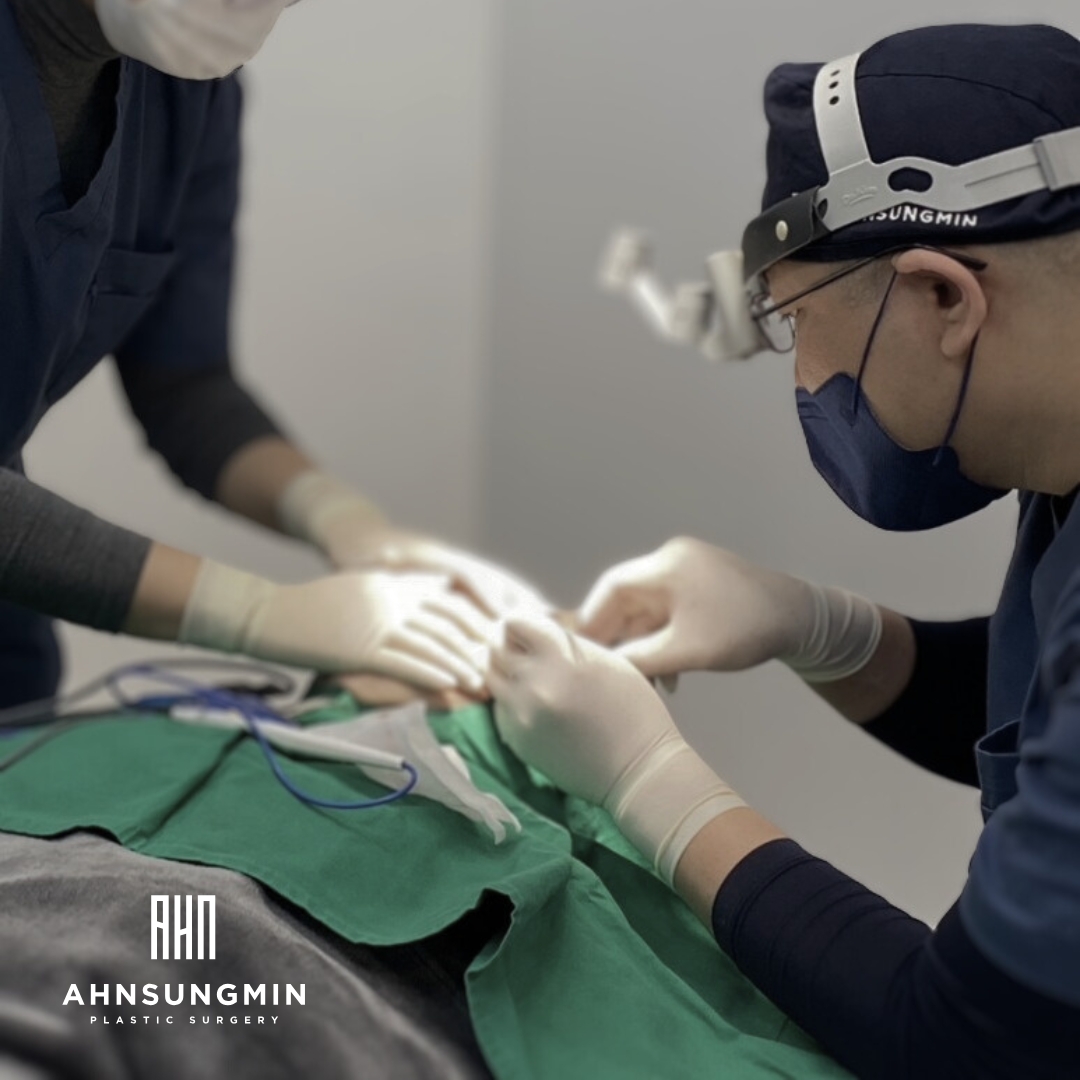
Every procedure is customized according to the patient's epicanthal fold, eye spacing, skin tension, and facial proportions.
The objective is not simply larger eyes, but a harmonious relationship between the inner corner, eyelids, and surrounding facial features.
Healthy tissue is preserved whenever possible to reduce unnecessary scarring and maintain long-term flexibility.
Surgical planning focuses on results that remain natural over time rather than dramatic changes immediately after surgery.
The AHNSUNGMIN Approach
Successful epicanthoplasty is not determined by how much the inner corner is opened, but by how naturally it blends with the rest of the face. Our approach prioritizes careful planning, conservative correction, and long-term harmony rather than maximum enlargement.
Lorem ipsum dolor sit amet, consectetur adipiscing elit. Ut elit tellus, luctus nec ullamcorper mattis, pulvinar dapibus leo.
The relationship between the inner corner, eyelid crease, and eye opening is evaluated as a whole to create balanced, natural-looking results.
Every procedure is customized based on the patient's anatomy, including eye spacing, skin tension, and the shape of the epicanthal fold.
Overcorrection can create an unnatural appearance and make future revision more difficult. We perform only the amount of correction that is truly beneficial.
Our goal is to achieve stable, harmonious results that continue to look natural as healing progresses over time.
Improving Eye Opening and Inner Corner Balance
CASE 1
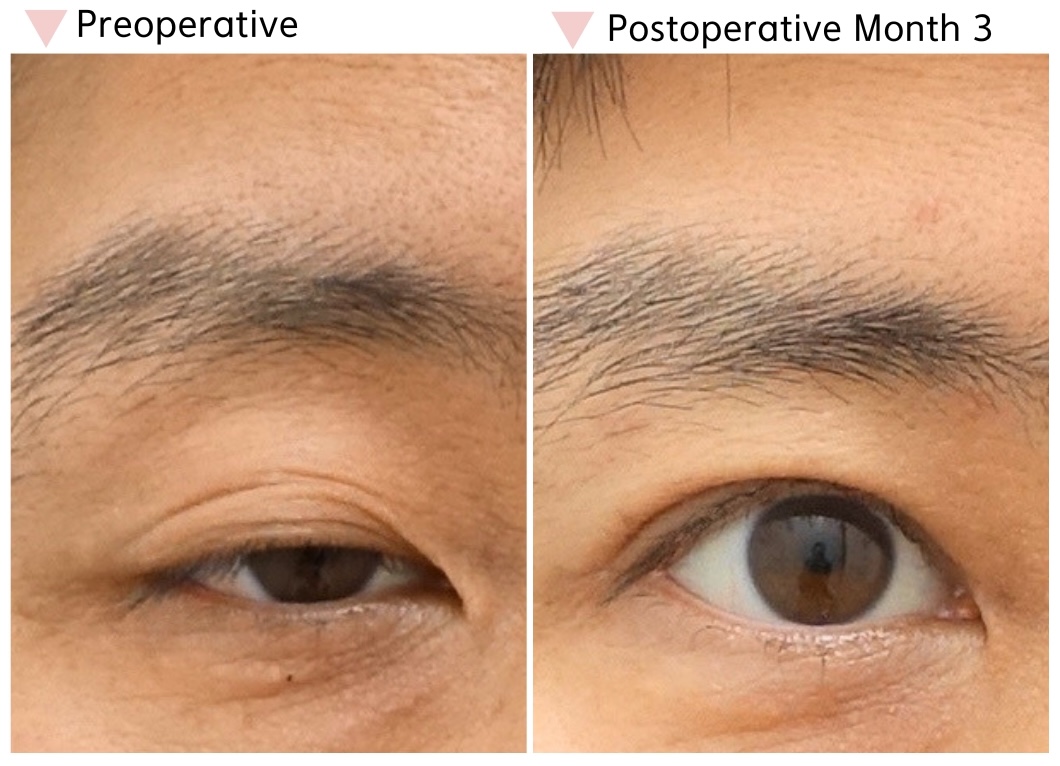
Improving Eye Opening and Inner Corner Balance
Before surgery, the patient showed both a prominent epicanthal fold and limited eyelid opening. The inner corner was partially covered, while the upper eyelid position reduced visible iris exposure, making the eyes appear smaller and less defined.
Epicanthoplasty correction and ptosis correction were performed together to improve both inner corner balance and eyelid function. Rather than focusing on enlargement alone, the goal was to create a more natural relationship between the inner corner, eyelid crease, and overall eye shape.
At postoperative month 3, the inner corner appears more open and defined, while improved eyelid opening allows greater iris exposure and a brighter, more balanced appearance. The result is a natural-looking eye shape with improved function, proportion, and long-term stability.
CASE 2
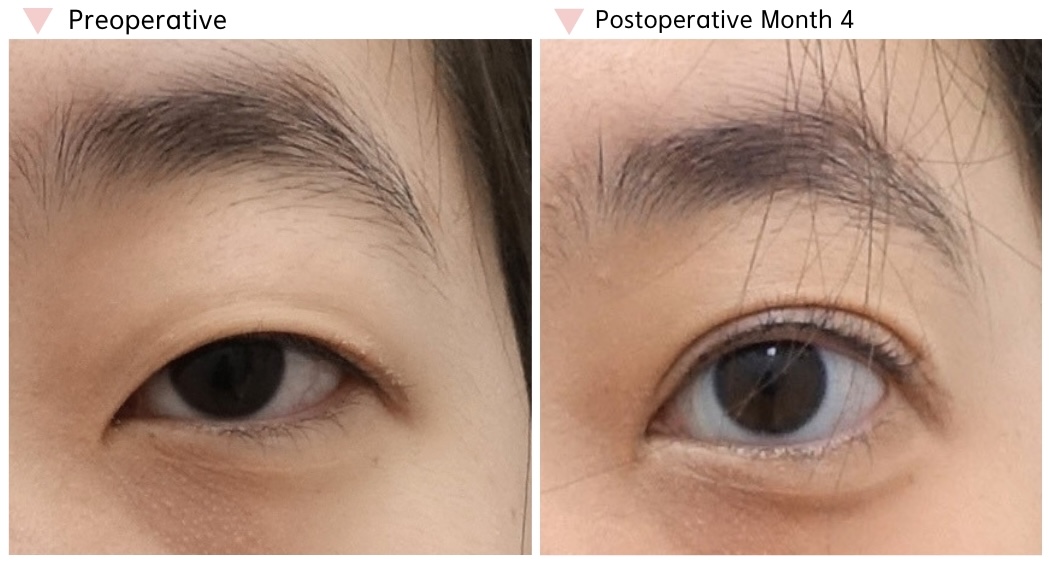
Enhancing Eye Definition Through Inner Corner Correction
Before surgery, a prominent epicanthal fold partially covered the inner corner of the eye, making the eyes appear shorter horizontally and less defined. The inner corner contour blended into the surrounding skin, reducing overall eye clarity.
Epicanthoplasty was performed to reveal the natural inner corner and improve the visible horizontal length of the eye. Rather than creating excessive exposure, the goal was to establish a more balanced relationship between the inner corner, eyelid crease, and overall facial proportions.
At postoperative month 4, the inner corner appears more visible and refined. Improved eye width and definition contribute to a brighter and more harmonious appearance while maintaining a natural contour and long-term stability.
CASE 3
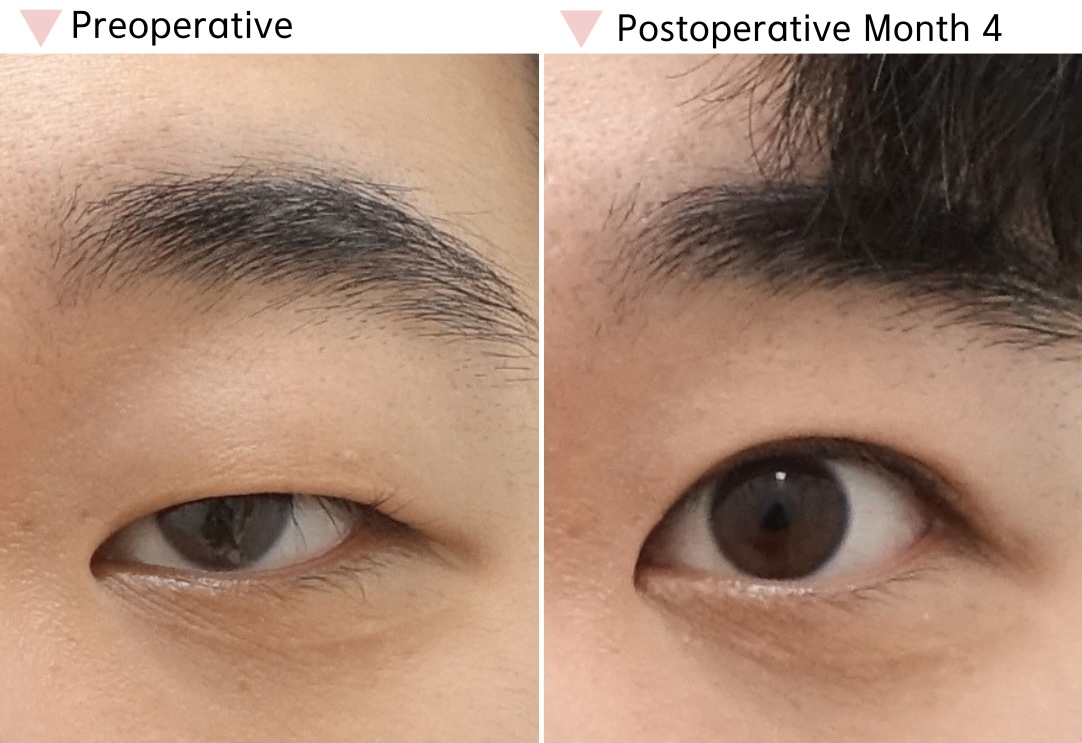
Improving Inner Corner Balance and Eye Opening
Before surgery, the epicanthal fold partially covered the inner corner, while limited eyelid opening reduced visible iris exposure. Epicanthoplasty correction and ptosis correction were performed together to improve both eye function and inner corner balance.
At postoperative month 4, the inner corner appears more open and defined, while improved eyelid opening creates a brighter and more balanced eye appearance. The result is a natural eye shape with improved proportion and long-term stability.
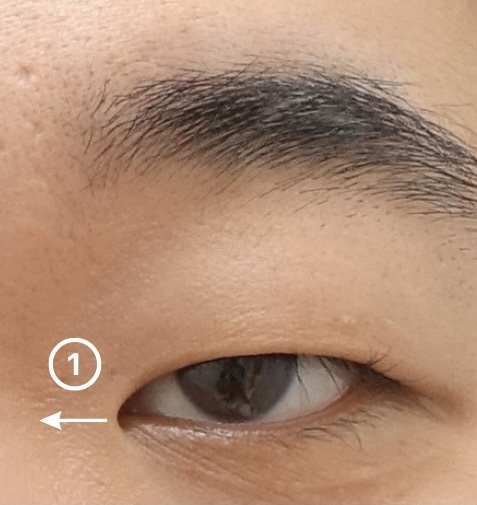
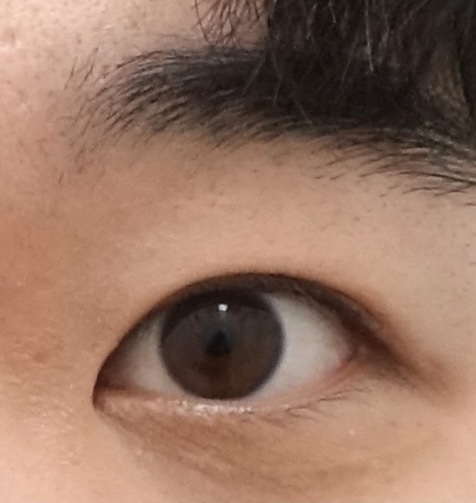
– The inner corner is advanced forward to increase the visible horizontal width of the eye. – This helps create a longer and more balanced eye shape.
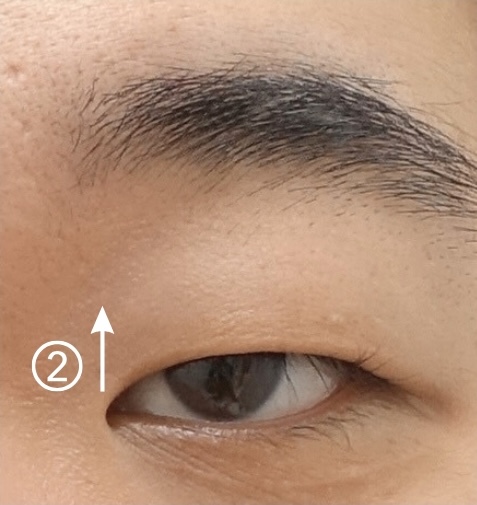
– The inner corner is gently extended upward. – This improves the transition between the inner corner and the eyelid crease, creating a brighter and more open appearance.
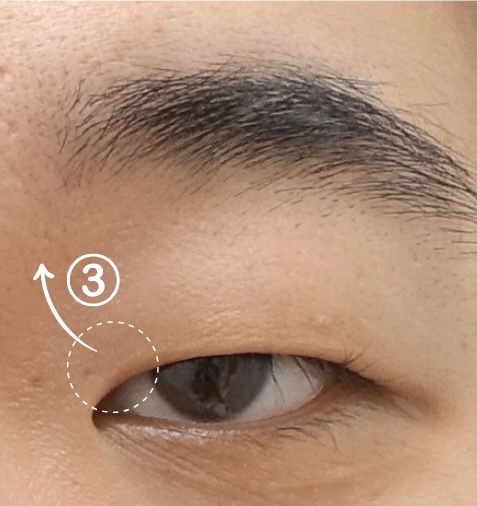
– The epicanthal fold (Mongolian fold) is carefully reduced. – This reveals more of the natural inner corner and helps reduce the appearance of a covered or crowded eye shape.
CASE 4
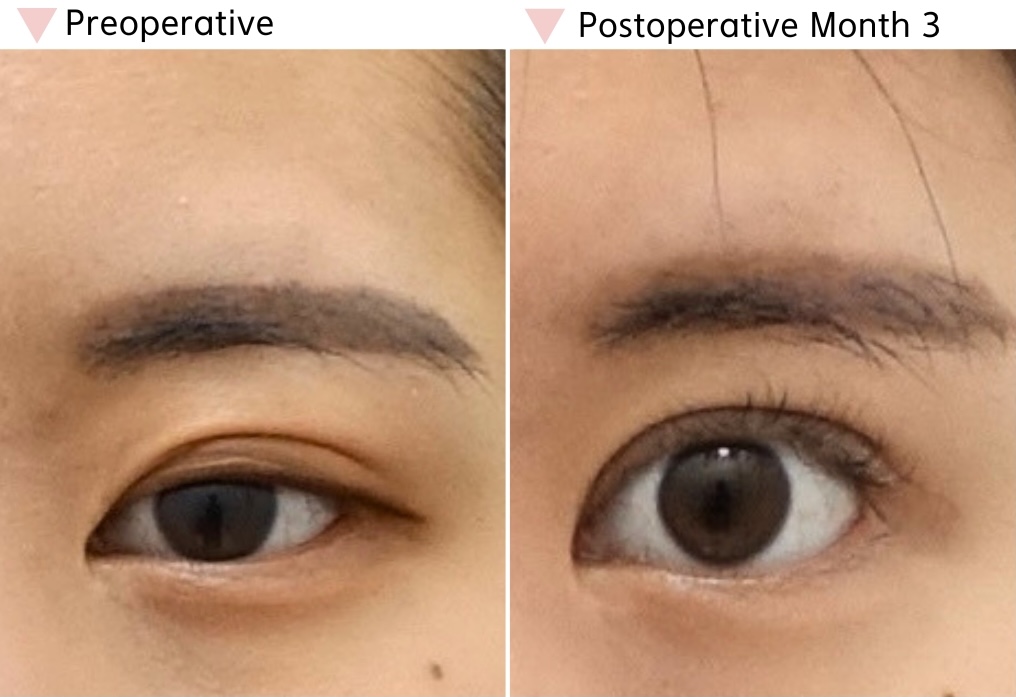
Epicanthoplasty Revision and Ptosis Correction
Before surgery, the patient had undergone previous epicanthoplasty but continued to have residual epicanthal fold tension and limited eyelid opening.
Revision epicanthoplasty, Epi-Up canthoplasty, epicanthal fold reduction, and ptosis correction were performed to improve inner corner balance and eye opening.
At postoperative month 3, the inner corner appears more open and defined, while improved eyelid function creates a brighter, more balanced, and naturally proportioned eye appearance.
CASE 5
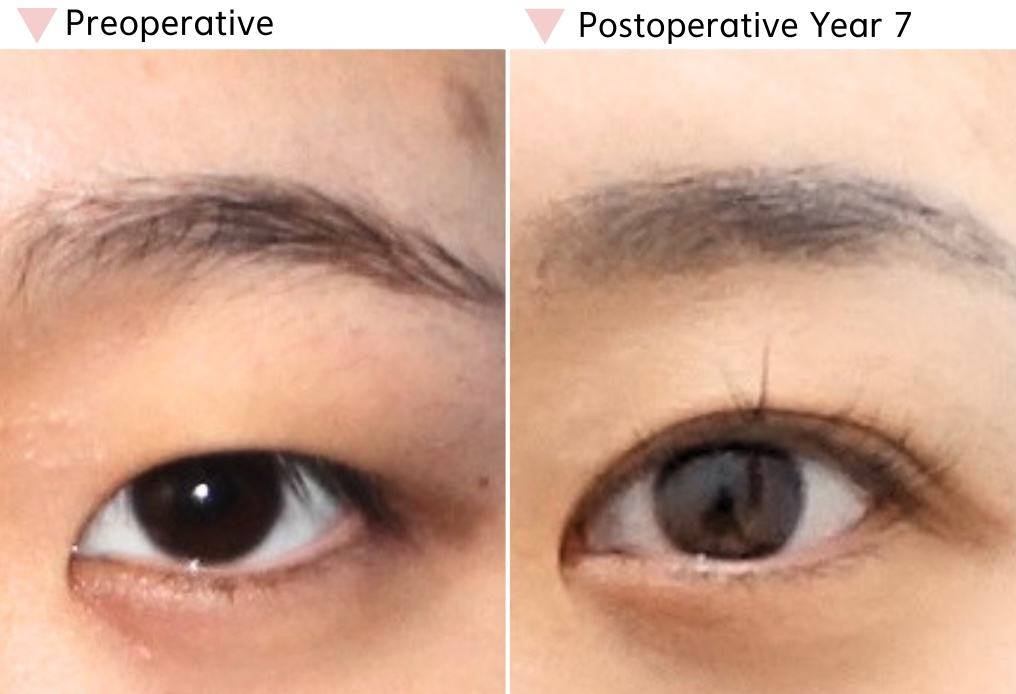
At postoperative year 7, the inner corner contour remains stable and natural.
This long-term follow-up demonstrates that successful epicanthoplasty is not measured by immediate enlargement, but by how well balance and proportion are maintained over time.
CASE 6
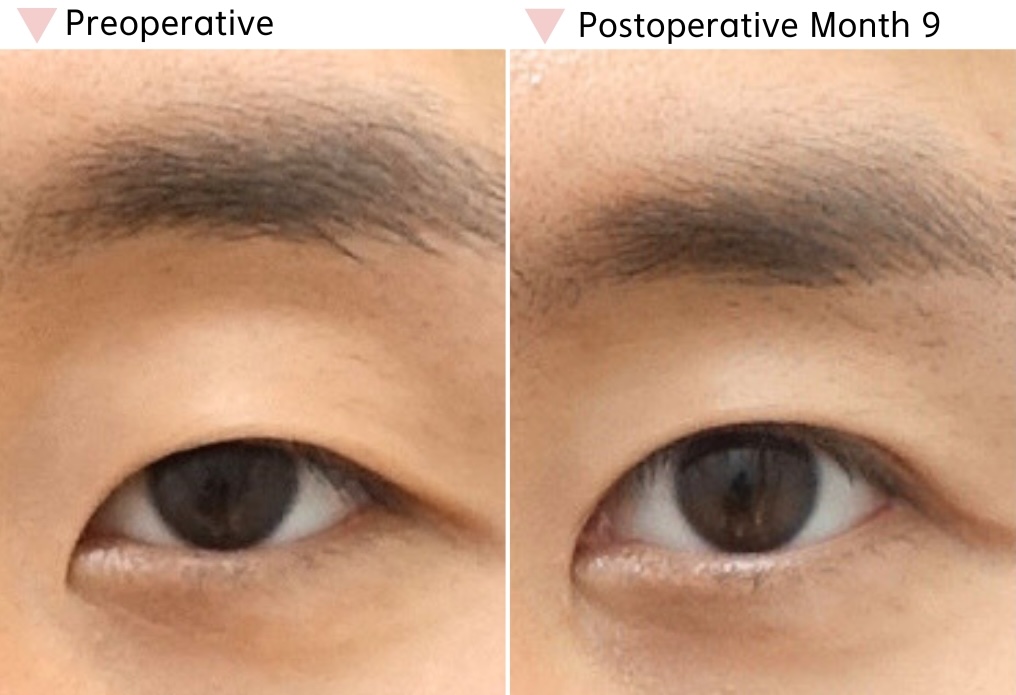
Before surgery, the inner corner was partially covered by the epicanthal fold, creating a shorter and less defined eye shape.
At postoperative month 9, the inner corner appears more visible and refined. Improved eye definition and balance contribute to a brighter appearance while maintaining natural proportions and long-term stability.
Epicanthoplasty Recovery Timeline
Recovery after epicanthoplasty is a gradual process. Swelling decreases, scars continue to mature, and the inner corner becomes softer and more natural over time. Final results should be evaluated only after healing has stabilized.
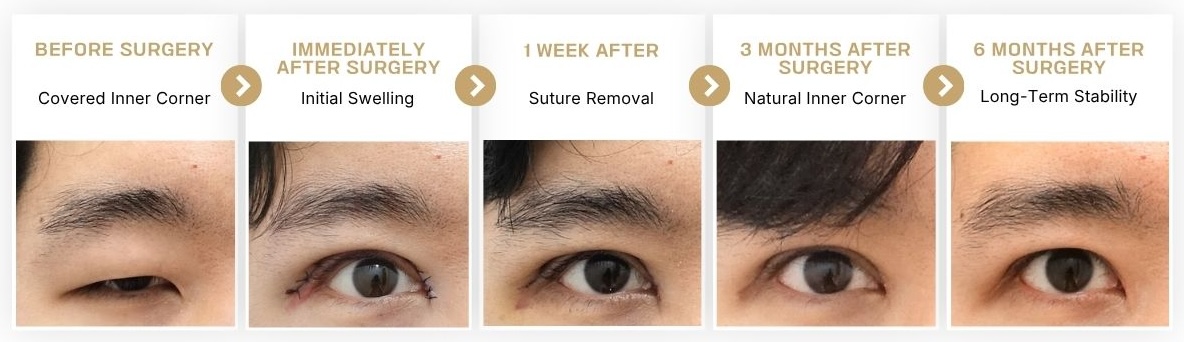
Recovery varies depending on individual anatomy, surgical complexity, and the natural healing process.
Choosing the right procedure begins with understanding the anatomy, recovery, and long-term outcomes. Explore our related insights below.
Epicanthoplasty Recovery Timeline: What to Expect
Follow the typical healing process from the first week through six months after surgery and understand when the final results should be evaluated.
Does Epicanthoplasty Make the Eyes Look Bigger?
Learn how epicanthoplasty changes eye proportions and why creating a more open inner corner often makes the eyes appear larger without increasing their actual size.
Can Epicanthoplasty Leave a Visible Scar?
Learn how careful surgical planning, healing, and scar maturation influence long-term scar visibility after epicanthoplasty.
Who Is a Good Candidate for Epicanthoplasty?
Find out whether your anatomy is suitable for epicanthoplasty and why individualized evaluation is essential before surgery.
EPICANTHOPLASTY CORRECTION IN KOREA
Frequently Asked Questions
About Epicanthoplasty Correction
Answers to common questions about epicanthal fold correction,
inner corner balance, revision surgery, recovery, scarring, and long-term surgical stability.
FAQ
Patients with a prominent epicanthal fold, a partially covered inner corner, or concerns about eye balance may benefit from epicanthoplasty. A detailed anatomical evaluation is essential to determine whether inner corner surgery is the most appropriate treatment.
Not necessarily. The goal is not simply to enlarge the eyes, but to improve harmony between the inner corner, eyelids, and overall facial proportions. Natural balance is often more important than maximum exposure.
Every patient has a different epicanthal fold, eye spacing, skin tension, and facial anatomy. Excessive correction may lead to visible scarring, imbalance, or an unnatural appearance. Careful surgical planning is essential for achieving stable, natural-looking results.
Yes. Epicanthoplasty is frequently combined with double eyelid surgery, ptosis correction, or revision eyelid surgery when multiple anatomical factors contribute to the patient’s concerns.
Most patients can return comfortably to normal daily activities within one to two weeks. Swelling and scar maturation continue to improve over several months, and the inner corner becomes softer and more refined as healing progresses.
In many cases, revision is possible. However, revision epicanthoplasty is generally more complex because of scar tissue, tissue deficiency, or anatomical changes caused by previous surgery. Careful evaluation is required before planning revision treatment.
When the procedure is planned according to individual anatomy and facial proportion, epicanthoplasty can create a more visible and refined inner corner while maintaining a natural relationship with the eyelid crease and surrounding facial features.
Our approach focuses on precise anatomical evaluation, conservative correction, tissue preservation, and long-term structural stability rather than maximum eye enlargement. Every surgical plan is individually designed to create natural, balanced results that complement the patient’s overall facial features.
REQUEST AN EPICANTHOPLASTY EVALUATION
Every patient’s inner eye anatomy is different.
The first step is understanding the epicanthal fold, eye spacing, skin tension, eyelid position, and overall facial proportions.
Our evaluation focuses on determining whether epicanthoplasty is appropriate and how much correction can create a natural, balanced result without overexposure.
Online Consultation Available for International Patients
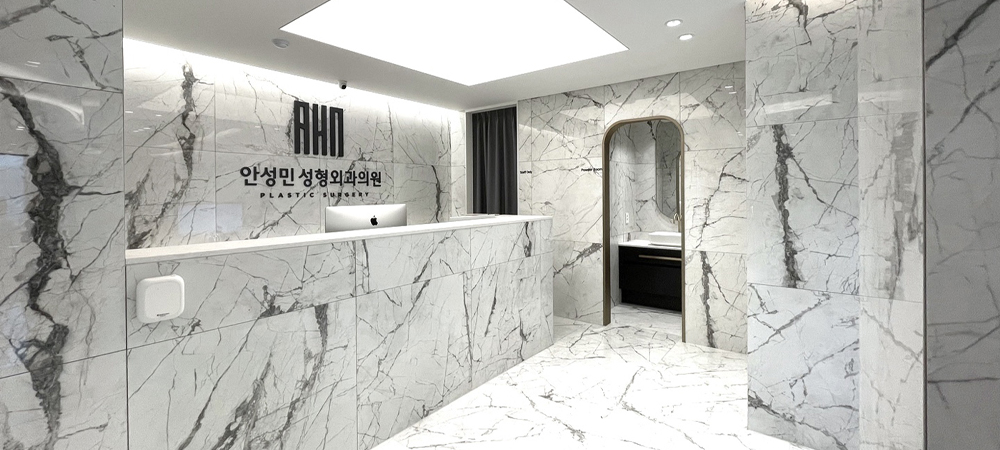
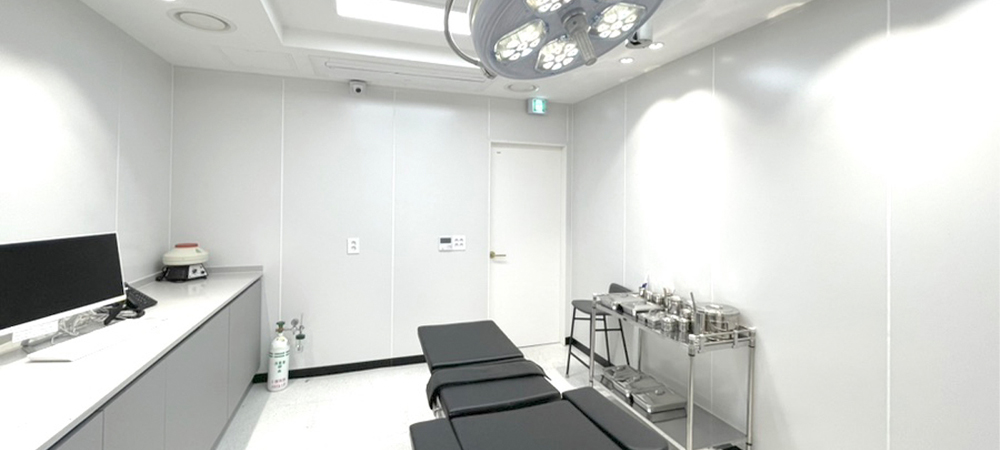
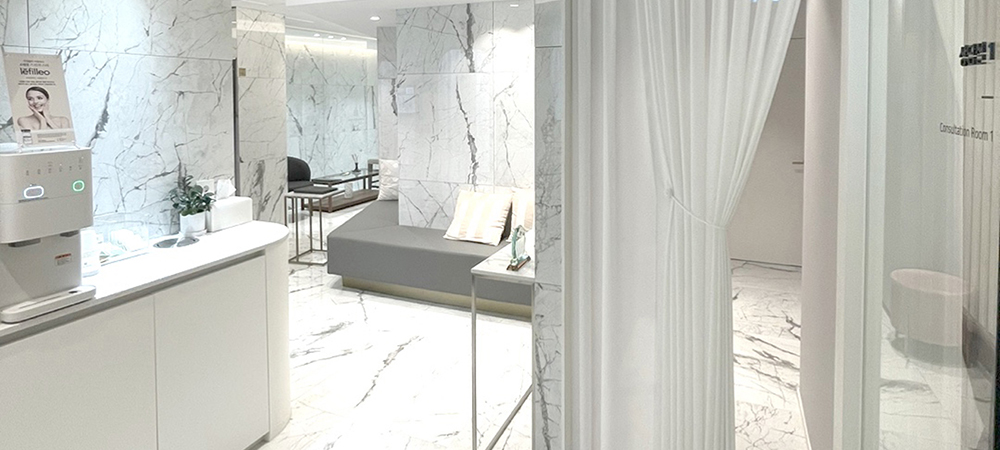
Ahnsungmin Surgical Philosophy
At AHNSUNGMIN Plastic Surgery, epicanthoplasty begins with understanding the relationship between the epicanthal fold, inner corner anatomy, eyelid crease, eye spacing, and overall facial balance—not simply creating larger-looking eyes.
Every treatment plan is individually designed to preserve healthy tissue, avoid excessive exposure, and create a natural inner corner contour that remains stable over time.
What Our Patients Say?

“Words can’t express my gratitude to Dr. Ahn and the team at Ahnsungmin Plastic Surgery. My surgery in July 2023 was more than just a procedure – it was the beginning of a new chapter in my life. Dr. Ahn’s exceptional skill and understanding of facial harmony created results that exceeded my expectations. Thank you for helping me discover my best self!”
“I was nervous about having eyelid surgery, but Dr. Ahn and his team at Ahnsungmin made me feel completely at ease. They were so patient with all my questions and really took the time to understand what I wanted. The results are beyond my expectations – natural and beautiful!”
REQUEST AN EPICANTHOPLASTY EVALUATION
Every patient has a unique inner eye anatomy, facial proportion, and surgical goal.
Share your photos and concerns for a personalized evaluation focused on natural inner corner balance, structural stability, and long-term results.
Online consultation is available for international patients.
Seoul, Republic of Korea
