“My eyes looked bigger before surgery. Why do they look smaller now?”
One of the most common concerns patients express after eyelid surgery is surprisingly simple:
“My eyes look smaller than before.”
For many people, this feeling is unexpected. Surgery was supposed to create brighter, more open-looking eyes, yet the opposite seems to have happened.
In reality, the appearance of a smaller eye does not always mean that the surgery has reduced the size of the eye itself. Eyelid surgery cannot make the eyeball physically smaller.
Instead, this impression is usually related to swelling, eyelid function, muscle tension, or the way the brain adapts to a new appearance during recovery.
The important question is not whether the eyes are actually smaller.
The important question is why they appear that way.
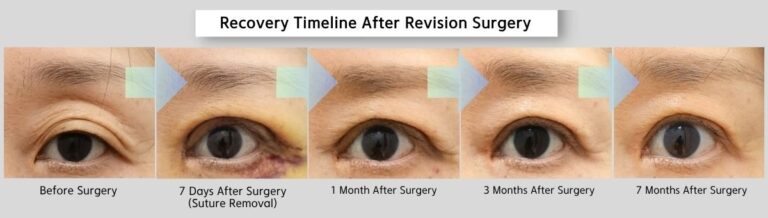
A Smaller Appearance Does Not Always Mean Something Is Wrong
During the early recovery period, the eyelids are still healing.
Swelling increases tissue volume.
Scar tissue is beginning to mature.
The eyelid muscles may temporarily feel tight.
All of these normal healing processes can make the eyes feel heavier or appear less open, even when recovery is progressing normally.
Patients often compare their current appearance with photographs taken immediately before surgery, forgetting that healing is still ongoing.
Feeling that the eyes look smaller during recovery is therefore quite common.
In many cases, it is a temporary stage rather than a permanent result.
Sometimes the Cause Is Functional Rather Than Cosmetic
Not every patient who feels their eyes are smaller is experiencing a cosmetic problem.
Sometimes the issue is related to how the eyelid opens.
Residual ptosis, temporary muscle weakness, postoperative swelling, or protective muscle tension can all reduce the feeling of openness., temporary muscle weakness, postoperative swelling, or protective muscle tension can all reduce the feeling of openness.
In these situations, simply creating a larger eyelid crease does not solve the underlying problem.
A higher or deeper fold cannot compensate for an eyelid that is not functioning properly.
This is why experienced surgeons carefully evaluate eyelid function before recommending revision surgery.
Appearance alone is never enough.
How the eyelid moves is just as important.
A Higher Crease Can Sometimes Make the Eyes Look Smaller
Many people assume that a higher eyelid crease automatically creates larger-looking eyes.
In reality, the opposite can happen.
An An excessively high crease may increase tension in the upper eyelid. may increase tension in the upper eyelid.
The balance between the eyelid and the eyebrow can be disrupted.
The eye opening may appear narrower, even though the crease itself is larger.
As a result, patients often describe their eyes as looking smaller or feeling less natural.
This is one of the most common reasons patients seek revision eyelid surgery after overly aggressive procedures.
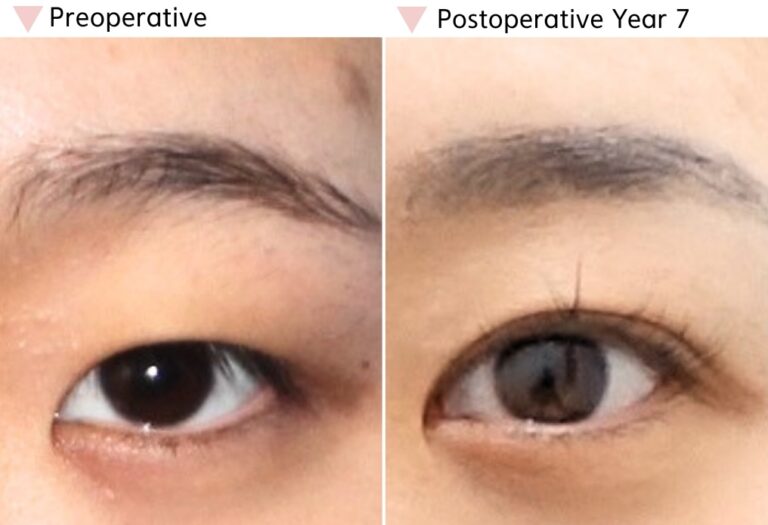
Recovery Changes How the Eyes Are Perceived
Healing is not a straight line.
As recovery progresses,
swelling gradually decreases,
scar tissue softens,
muscle coordination improves,
and the eyelid slowly settles into its long-term position.
Many patients notice that the feeling of having “smaller eyes” gradually disappears during this process.
For this reason, experienced surgeons recommend allowing enough time before judging the final outcome.
Early impressions are often very different from the long-term result.
When Should You Consider an Evaluation?
Although temporary tightness is common, persistent symptoms deserve careful evaluation.
A consultation may be appropriate if you experience:
- Difficulty opening the eyes several months after surgery
- Significant asymmetry that does not improve over time
- Progressive drooping instead of gradual improvement
- Vision being blocked by the eyelid
- A high crease combined with ongoing functional discomfort
These findings do not automatically mean revision surgery is necessary.
However, they do warrant a careful structural evaluation rather than assumptions based solely on appearance.
The Goal Is Not Bigger Eyes—It Is Better Function
Many patients believe the goal of eyelid surgery is simply to create bigger eyes.
Experienced eyelid surgeons often pursue a different goal.
Stable eyelid function.
Natural movement.
Balanced anatomy.
Long-term comfort.
When these elements are achieved, a natural appearance usually follows.
Focusing only on making the eyes look larger can sometimes create the very problems that later require revision surgery.
Frequently Asked Questions
Can swelling make my eyes look smaller?
Yes. Swelling temporarily increases tissue volume and can reduce the visible opening of the eye during recovery.
Is it normal for my eyes to feel tight after surgery?
Yes. Mild tightness is common during healing and usually improves as recovery progresses.
Does a higher eyelid crease always make the eyes look bigger?
No. In some patients, an excessively high crease can actually make the eyes appear smaller and less natural.
When should I become concerned?
If your eyes continue to appear smaller several months after surgery, or if you have difficulty opening them, a professional evaluation is recommended.
Concerned That Your Eyes Look Smaller After Surgery?
If your eyes appear smaller after eyelid surgery, the explanation may be more complex than it first seems. Swelling, recovery, eyelid function, and crease position can all influence how your eyes look while healing.
At Ahnsungmin Plastic Surgery, every evaluation begins by identifying the underlying cause rather than focusing only on appearance. Understanding why your eyes look different is the first step toward determining whether time, recovery, or treatment is the most appropriate next step.
Related Insights
Why One Eye Looks Smaller After Ptosis Surgery.
Why Does One Eye Feel Heavier Even When They Look Similar?
Why Do Eyes Look Uneven After Ptosis Surgery? (Recovery Explained)
Ptosis Surgery Recovery Timeline: What to Expect After Surgery.
When Does Ptosis Surgery Look Natural? Understanding the 6-Month Recovery Point.
Concerned That Your Eyes Look Smaller After Eyelid Surgery?
If your eyes appear smaller after eyelid surgery, the cause may not be as straightforward as it seems. Swelling, eyelid function, crease position, and the normal healing process can all influence how your eyes look during recovery.
A personalized evaluation can help determine whether your appearance is part of normal healing or whether further assessment is appropriate.
Seeing the Eye as a Whole, Not in Parts
A Clinic Dedicated to Eyelid Revision Surgery in Korea
Ahnsungmin Plastic Surgery
