BEFORE / 6 MONTHS AFTER
A Functional Problem in High Fold Eyelid Revision
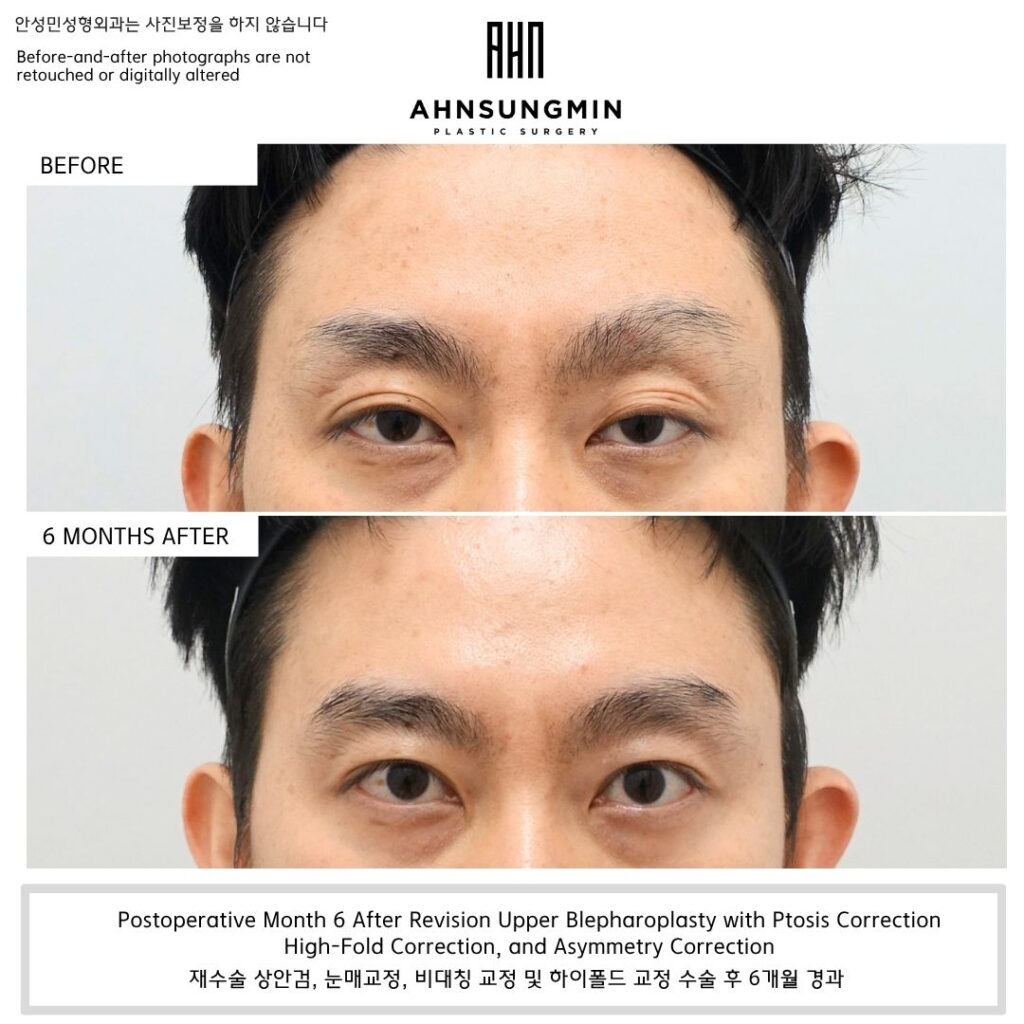
A Functional Problem
At first glance, this case may appear to be a matter of fold height.
However, the underlying issue was not simply how high the crease was.
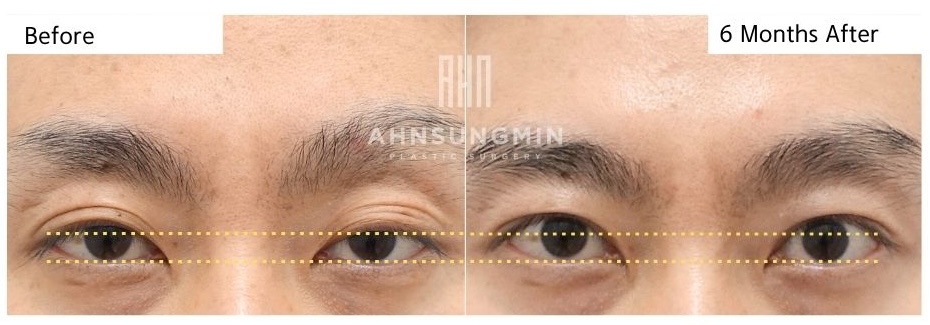
The eyelid shows limited opening and asymmetry,
suggesting underlying ptosis,
and the existing high fold was not supported by proper eyelid function.
As a result, the fold appeared unstable,
visually disconnected from the eye,
and increasingly unnatural over time.
In cases where eyelid function is compromised,
proper evaluation for ptosis correction becomes essential.
Why We Did Not Pursue a Larger Fold
In some cases, a higher fold is mistakenly associated with making the eyes look larger.
However, in male patients, excessive fold height often leads to an artificial look rather than a natural one.
More importantly, when eyelid function is compromised,
raising or maintaining a high fold only increases instability.
In this case, the goal was not to enlarge the fold,
but to realign it with the functional range of the eyelid.
For a detailed approach to correcting this issue,
see how we approach high fold correction in revision cases.
Structural Correction
The surgical approach focused on correcting the underlying structure.
Ptosis correction was performed to restore the ability of the eyelid to open naturally,
reducing the need for compensatory effort.
At the same time, the excessively high fold was lowered
to align with the functional range of the eyelid.
Asymmetry between both eyes was also addressed
to achieve a more stable and balanced result.
If surgery becomes necessary after proper evaluation,
understanding the recovery process is equally important.
You can review the expected recovery timeline here:
upper eyelid surgery recovery timeline
Results
At 6 months postoperatively,
the fold appears more natural and proportionate to the eye.
More importantly, the eyelid function has improved,
allowing the eyes to open without strain or compensation.
The result is not simply a lower fold,
but a fold that is supported by proper function and structural balance.
This high fold eyelid revision case highlights how correcting underlying ptosis is essential for achieving long-term stability. Without proper functional support, even a well-designed fold can become unstable over time.
Surgical Approach
Revision eyelid surgery performed with a focus on structure, restraint, and long-term stability.
Insight
Why Do High Fold Eyelids Look Unnatural
A high fold often appears unnatural not simply because of its height, but because the eyelid cannot functionally support the crease. In many patients, underlying ptosis, structural tension, or imbalance may contribute to an unstable or overly defined appearance over time. Correcting the fold without addressing these structural factors may lead to recurrence or persistent imbalance.
Learn More About High Fold Revision Surgery Korea →
→ Request a Functional Evaluation for High Fold Eyelids
Frequently Asked Questions
1. Why do high fold eyelids look more unnatural in male patients?
Male eyelids typically require a lower and more subtle fold. Excessive height often creates an artificial appearance rather than a natural one.
2. Can a high fold return after revision surgery?
If the underlying functional issue such as ptosis is not properly corrected, the fold may become unstable again over time.
