How to Choose a Credible Eyelid Revision Surgeon in Korea
Choosing a surgeon for revision eyelid surgery requires more than comparing before-and-after photos. The most important question is whether the surgeon can identify why the previous surgery failed and determine what should — and should not — be corrected.
Revision surgery begins with diagnosis, not another operation.
20+ Years
Specializing in Eyelid Surgery
Maximum 2
Surgeries Per Day
One Surgeon
Complete Care
Local
Anesthesia
CHOOSING A REVISION SURGEON
What Makes a Revision Surgeon Credible?
Revision eyelid surgery is not simply a second attempt at the same operation. The anatomy may already have been altered by previous surgery, scar tissue, tissue removal, or changes in eyelid function.
For this reason, choosing a revision surgeon should begin with how the surgeon evaluates the problem — not simply with how many before-and-after photographs are available.
A credible revision surgeon should be able to identify what changed after the previous surgery, determine the underlying cause of the current problem, and explain whether another operation is appropriate.
Board Certification
Verify appropriate specialist training and recognized board certification.
Revision-Specific Experience
Revision surgery requires experience with previously operated tissues, scarring, altered anatomy, and complex secondary problems.
Cause-Based Diagnosis
The surgeon should identify why the previous result occurred before deciding how it should be corrected.
Eyelid Function
Ptosis, muscle balance, eyelid opening, and structural support should be evaluated together with crease appearance.
Tissue Preservation
Existing skin, fat, muscle, and supporting structures should be preserved whenever possible rather than routinely removed.
Conservative Decision-Making
A credible surgeon should also be willing to recommend waiting — or no further surgery — when another operation is unlikely to provide meaningful benefit.
The first question in revision surgery is not “What can we change?” but “What is causing the problem?”
WHY REVISION IS DIFFERENT
Why Revision Surgery Is Different from Primary Eyelid Surgery
Primary eyelid surgery begins with anatomy that has not yet been surgically altered. Revision surgery does not.
After previous surgery, the eyelid may contain scar tissue, adhesions, altered muscle relationships, reduced skin or fat, and changes in the way the eyelid opens and closes.
This means the surgeon is not simply designing a new crease. The first task is to understand what structures remain, what has changed, and which problem is actually responsible for the patient’s concern.
In some cases, improving the eyelid may require releasing scar adhesion. In others, the priority may be restoring eyelid function, preserving remaining tissue, lowering an excessively high crease, or simply allowing more time for recovery.
Revision surgery therefore requires diagnosis before design.
COMMON REVISION PROBLEMS
Common Problems After Eyelid Surgery
Patients seek revision eyelid surgery for many different reasons. Although two eyelids may look similar on the surface, the underlying causes can be very different.
For this reason, the visible problem should not automatically determine the surgical solution.
An excessively high or unnatural crease may result from the original design, deep fixation, scar adhesion, tissue deficiency, or a combination of these factors.
Multiple Folds
Multiple creases can develop when the original fold becomes unstable or when scar adhesion, hollowing, or changes in eyelid function interfere with normal crease formation.
Uneven eyelids may reflect differences in crease height, eyelid opening, muscle function, brow compensation, or structural support.
Scar Adhesion
Internal scar tissue can restrict normal tissue movement and contribute to deep folds, irregular contours, pulling, or functional imbalance.
Residual or Recurrent Ptosis
When eyelid-opening function remains weak or becomes unbalanced, changing the crease alone may not correct the underlying problem.
Hollowing may be related to tissue loss, aging, previous fat removal, scar contraction, or functional changes rather than simply a lack of volume.
Overcorrection
An eyelid that appears too open, too tight, or unnatural may require particularly careful evaluation because additional correction can create new functional problems.
Functional Problems
Difficulty opening or closing the eyes, discomfort, excessive tension, or abnormal eyelid movement should be evaluated as functional concerns rather than cosmetic appearance alone.
The same visible problem can have different causes. Revision surgery should be based on the cause — not the appearance alone.
BEFORE CHOOSING A SURGEON
Questions to Ask Before Choosing an Eyelid Revision Surgeon
A revision consultation should help you understand more than what can be changed. It should clarify why the current problem occurred, what another surgery can realistically improve, and what limitations may remain.
The explanation should go beyond appearance and address scar tissue, eyelid function, tissue deficiency, previous fixation, or other structural factors when relevant.
Not every unsatisfactory result requires immediate revision. In some cases, additional healing time or observation may be the safer choice.
A credible consultation should discuss both the expected improvement and the limitations created by previous surgery.
After previous operations, remaining skin, fat, muscle, and supporting structures may become increasingly important for both function and future stability.
results should not be judged only in the first few weeks. Scar maturation, eyelid movement, swelling, and crease stability can continue to change over time.
A good revision consultation should leave you with a clearer understanding of the problem — not simply a stronger desire for another operation.
EYELID REVISION SPECIALIST IN KOREA
A Surgeon Focused on Complex Eyelid Revision
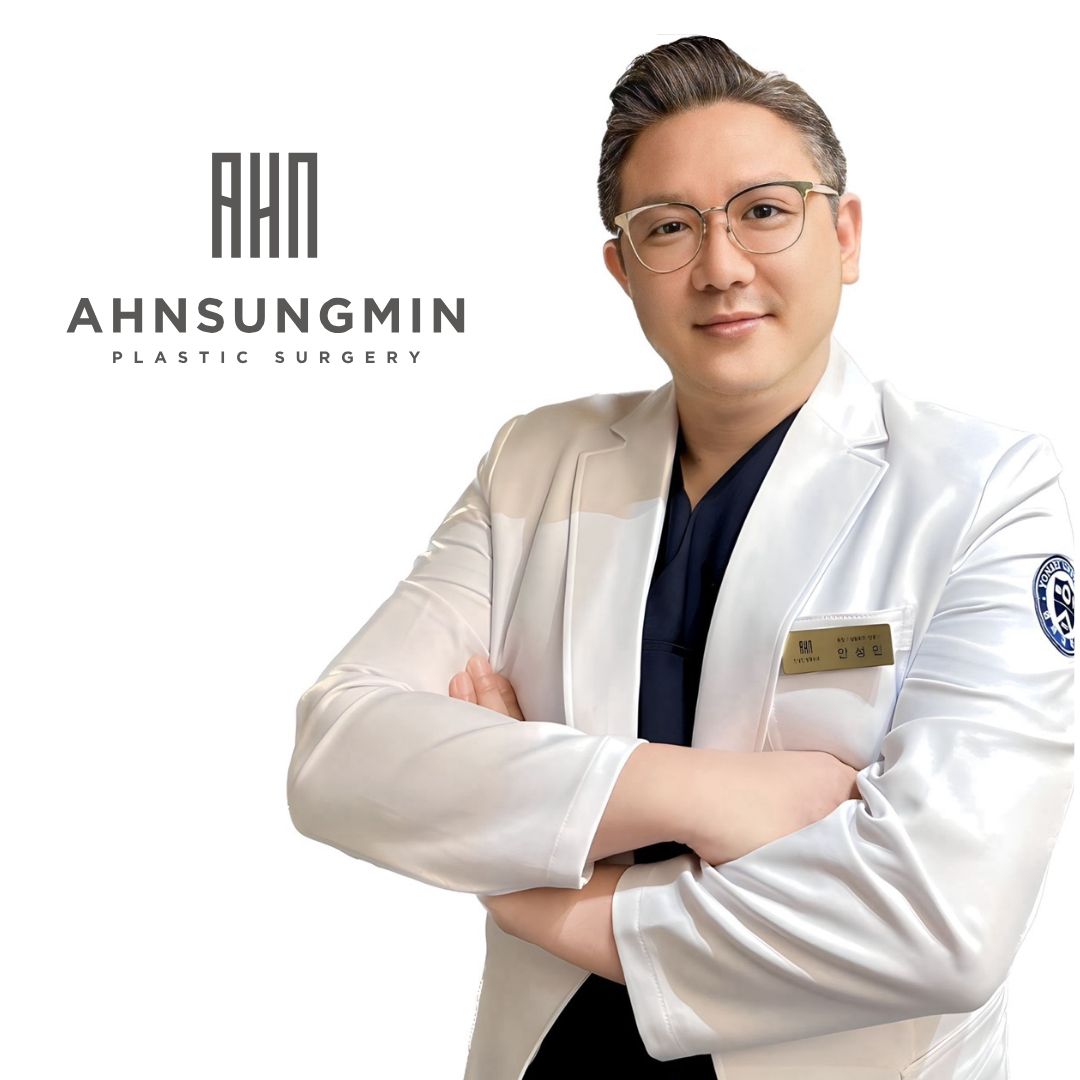
Dr. Ahn Sungmin is a board-certified plastic surgeon in Korea whose clinical practice focuses extensively on eyelid surgery and complex revision cases.
His approach to revision surgery begins with identifying why the previous result occurred — including scar adhesion, altered eyelid anatomy, ptosis, tissue deficiency, muscle imbalance, or problems related to previous fixation.
Rather than treating revision surgery as another cosmetic procedure, the goal is to determine what should be corrected, what should be preserved, and when further surgery may not be appropriate.
Board-Certified Plastic Surgeon
Specialist training and board certification in plastic surgery.
Focused on Eyelid Revision
Extensive clinical focus on primary and revision eyelid surgery.
Cause-Based Surgical Planning
Treatment decisions begin with structural and functional diagnosis.
One Surgeon Continuity
Consultation, surgery, and long-term follow-up are directed by the same surgeon.
How to Verify a Revision Surgeon Before You Decide
Before choosing a revision surgeon, look beyond clinic reputation or advertising. These six points can help you evaluate whether the surgeon’s experience and approach are appropriate for your case.
Verify Board Certification
Confirm the surgeon’s recognized specialist credentials rather than relying only on clinic marketing.
Review Revision Cases
Look for revision cases involving problems similar to yours, such as high creases, multiple folds, scar adhesion, ptosis, or asymmetry.
Look at Long-Term Results
Long-term results can provide more useful information about stability than photographs taken shortly after surgery.
Ask Why the Previous Surgery Failed
A consultation should explain the likely cause of the current problem before proposing another operation.
Ask About Limitations
A credible surgeon should explain what may not be correctable, not only what might improve.
Know Who Performs Your Surgery
Confirm who evaluates you, performs the operation, and manages your postoperative follow-up.
WARNING SIGNS
Red Flags When Choosing a Revision Surgeon
Revision eyelid surgery often involves tissues that have already been altered by previous operations. For this reason, patients should be cautious when a consultation makes a complex problem sound simple or guarantees a specific result before the underlying cause has been fully evaluated.
Promising a Perfect Result
No surgeon can guarantee perfect symmetry or a specific aesthetic outcome, especially when previous surgery has already changed the eyelid anatomy.
Recommending Surgery Without Explaining the Cause
A revision plan should begin with an explanation of why the current problem occurred. Simply proposing a new crease or another procedure is not a diagnosis.
Focusing Only on Before-and-After Photos
Photographs are useful, but they do not show everything about eyelid function, scar tissue, tissue deficiency, or long-term stability.
Minimizing the Limitations of Revision Surgery
Previous operations may limit what can safely be corrected. A credible surgeon should discuss these limitations before surgery, not after.
Encouraging Revision Too Early
Some eyelids need more time for swelling, scar tissue, and crease formation to stabilize. Recommending another operation before adequate healing should be carefully questioned.
More Surgery Is Always Presented as the Solution
Not every problem requires another operation. Sometimes waiting, accepting a minor limitation, or avoiding further surgery may be the safer decision.
A surgeon’s willingness to say “not yet” or even “no” can be as important as the ability to operate.
FOR INTERNATIONAL PATIENTS
Choosing a Revision Surgeon from Overseas
Choosing an eyelid revision surgeon from another country can be more difficult because the first evaluation often takes place before you meet the surgeon in person. International patients should understand how the clinic evaluates cases, plans surgery, and manages follow-up before arranging travel to Korea.
Online Photo Evaluation
Ask whether your photographs are reviewed for surgical suitability before travel. An online evaluation cannot replace an in-person examination, but it can help determine whether further assessment is reasonable.
Direct Surgical Assessment
Understand whether the surgeon who will perform your operation is directly involved in evaluating your case and planning the revision.
Clear Treatment Planning
Before traveling, you should understand the likely surgical approach, important limitations, expected recovery, and how long you may need to stay in Korea.
Postoperative Follow-Up
Ask how postoperative checks, suture removal, and communication will be managed during your stay and after you return home.
Enough Time in Korea
Revision patients should plan enough time in Korea for appropriate postoperative evaluation rather than choosing the shortest possible itinerary. The recommended stay may vary depending on the procedure, recovery, and timing of postoperative checks.
For international patients, choosing a surgeon also means choosing a system of care that continues before, during, and after surgery.
MAKING YOUR DECISION
Making the Final Decision
Choosing an eyelid revision surgeon should not come down to a single photograph, a clinic’s popularity, or a promise of a particular result.
A stronger decision is based on whether the surgeon can explain the cause of your current problem, recognize the limitations created by previous surgery, and distinguish between what should be corrected and what should be preserved.
The consultation should also give you a realistic understanding of timing, recovery, potential limitations, and the possibility that further surgery may not yet be appropriate.
For international patients, communication and continuity of care matter as well. You should know who is evaluating your case, who will perform the surgery, and how your recovery will be followed after you return home.
The right revision surgeon is not simply the surgeon willing to operate. It is the surgeon whose judgment you can understand and trust.
EYELID REVISION EVALUATION
Not Every Eyelid Problem Requires Another Surgery
If you are considering revision eyelid surgery, the first step is to understand what is causing the current problem and whether another operation is appropriate.
At Ahnsungmin Plastic Surgery, each revision case is evaluated individually based on previous surgical history, eyelid structure, function, scar tissue, remaining tissue, and the patient’s current concerns.
For international patients, an initial photo evaluation can help determine whether an in-person consultation in Korea may be appropriate.
The goal of an evaluation is not to recommend surgery. It is to determine whether surgery is the right decision.
Online Consultation Available for International Patients
