Best Ptosis Surgeon in Korea
Many patients believe they have ptosis when their eyes simply appear heavy or tired. In reality, some have true ptosis, while others have pseudoptosis caused by excess skin, brow position, previous surgery, or individual anatomy. Successful treatment begins with identifying the true cause of limited eye opening. At AHNSUNGMIN Plastic Surgery, every surgical plan is based on careful functional evaluation to restore natural eye opening with long-term balance and stability.
What Defines Successful Ptosis Correction?
Successful ptosis correction does not begin in the operating room. It begins with an accurate diagnosis.
Whether the problem is true ptosis, pseudoptosis, brow compensation, or changes following previous surgery, identifying the underlying cause is the foundation of successful treatment.
Natural Eye Opening
The goal is to restore comfortable and natural eye opening without creating an artificial or surprised appearance.
Functional Improvement
Successful ptosis correction begins with improving eyelid function rather than focusing only on cosmetic appearance.
Balanced Eyelid Position
Both eyes should open naturally and work together in harmony, creating balanced facial expression and symmetry.
Individual Structural Design
Every patient has different eyelid anatomy, muscle strength, skin quality, and facial proportions. Surgical planning should always be individualized rather than standardized.
BEST PTOSIS SURGERY IN KOREA
Ptosis Surgery Before and After in Korea
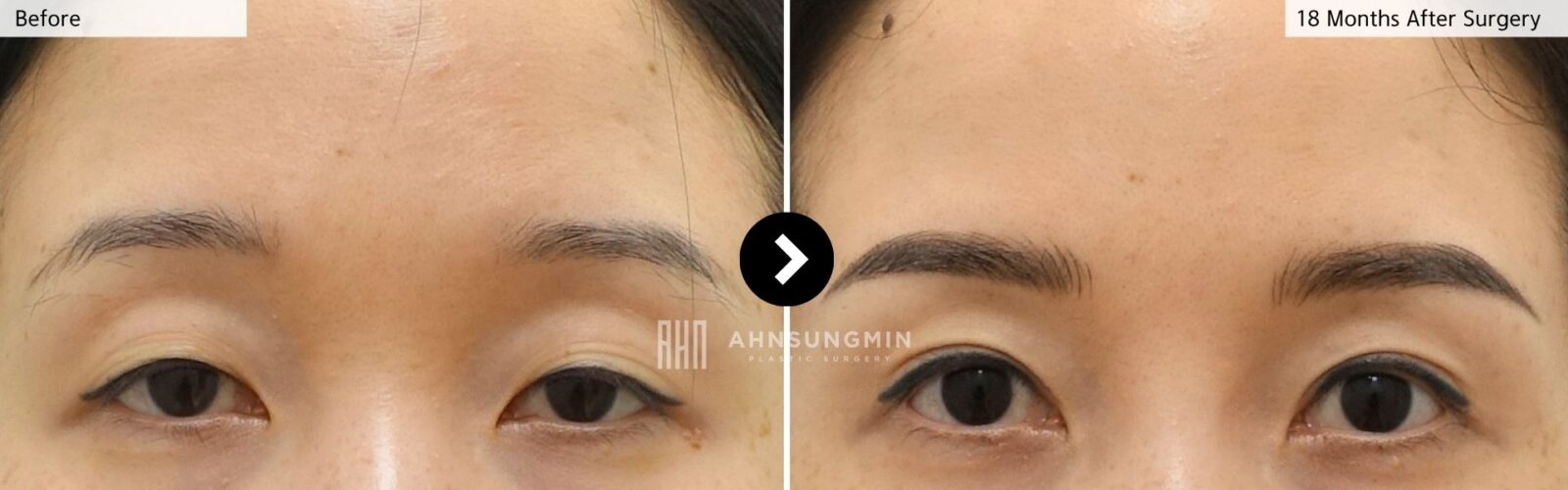
All before-and-after photographs are presented without digital retouching.
Images are photographed under comparable conditions whenever possible.
Natural-looking results with improved eye opening and long-term stability.

Correcting multiple eyelid folds by restoring natural eyelid function and creating a single, stable crease.

Ptosis Correction for
Asymmetric Eyes
Balancing eyelid height and eye opening for a more symmetrical appearance.

View Case
UNDERSTANDING PTOSIS
Not Every Heavy-Looking Eye Has True Ptosis
Many patients assume they have ptosis because their eyes appear small, heavy, or tired. However, not every heavy-looking eyelid is caused by weakened eyelid muscles.
In some patients, the eyelid itself is unable to open normally because of true ptosis. In others, excess skin, brow position, previous surgery, or facial anatomy creates the appearance of drooping despite normal muscle function—a condition commonly known as pseudoptosis.
Although these conditions often look similar, they require different treatment strategies. Successful ptosis correction begins by identifying the underlying cause rather than treating every patient with the same procedure.
At AHNSUNGMIN Plastic Surgery, every patient undergoes a careful evaluation of eyelid function, facial balance, brow position, and structural anatomy before surgery is recommended.
PTOSIS CORRECTION IN KOREA
Why Patients Around the World Choose AHNSUNGMIN
Patients travel from around the world because successful ptosis correction requires more than surgical technique. It requires an accurate diagnosis, thoughtful surgical planning, and a deep understanding of eyelid function.
At AHNSUNGMIN Plastic Surgery, every consultation begins with identifying the true cause of heavy or tired-looking eyes. Rather than assuming every patient has the same condition, we evaluate eyelid muscle function, brow position, previous surgery, facial anatomy, and long-term structural stability before recommending treatment.
This individualized approach allows us to distinguish between true ptosis, pseudoptosis, and other conditions that may produce similar symptoms. By treating the underlying cause instead of simply changing the appearance, we aim to achieve natural eye opening, balanced facial expression, and results that remain stable over time.
Successful recovery reflects careful diagnosis, individualized planning, and precise surgical execution.
These principles guide every stage of treatment at AHNSUNGMIN Plastic Surgery.
Accurate Diagnosis
Every treatment begins with identifying the true cause of heavy-looking eyes rather than assuming every patient requires the same procedure.
Individualized Surgical Planning
Each surgical plan is tailored to the patient’s eyelid function, anatomy, previous surgery, and long-term goals.
Consultation, surgery, and postoperative follow-up are all performed personally by Dr. Ahnsungmin, ensuring consistency throughout every stage of treatment.
Long-Term Functional Stability
Our goal is to restore comfortable eyelid function, natural facial balance, and results that remain stable for years to come.
PTOSIS RECOVERY TIMELINE
Ptosis Recovery Timeline
Recovery after ptosis correction is a gradual process. While eyelid height changes immediately after surgery, swelling, muscle adaptation, and tissue healing continue for several months before the final result can be evaluated.
Every patient heals differently, but understanding the normal stages of recovery helps set realistic expectations and allows the eyelids to stabilize naturally over time.
CASE 1
Restoring Natural Balance
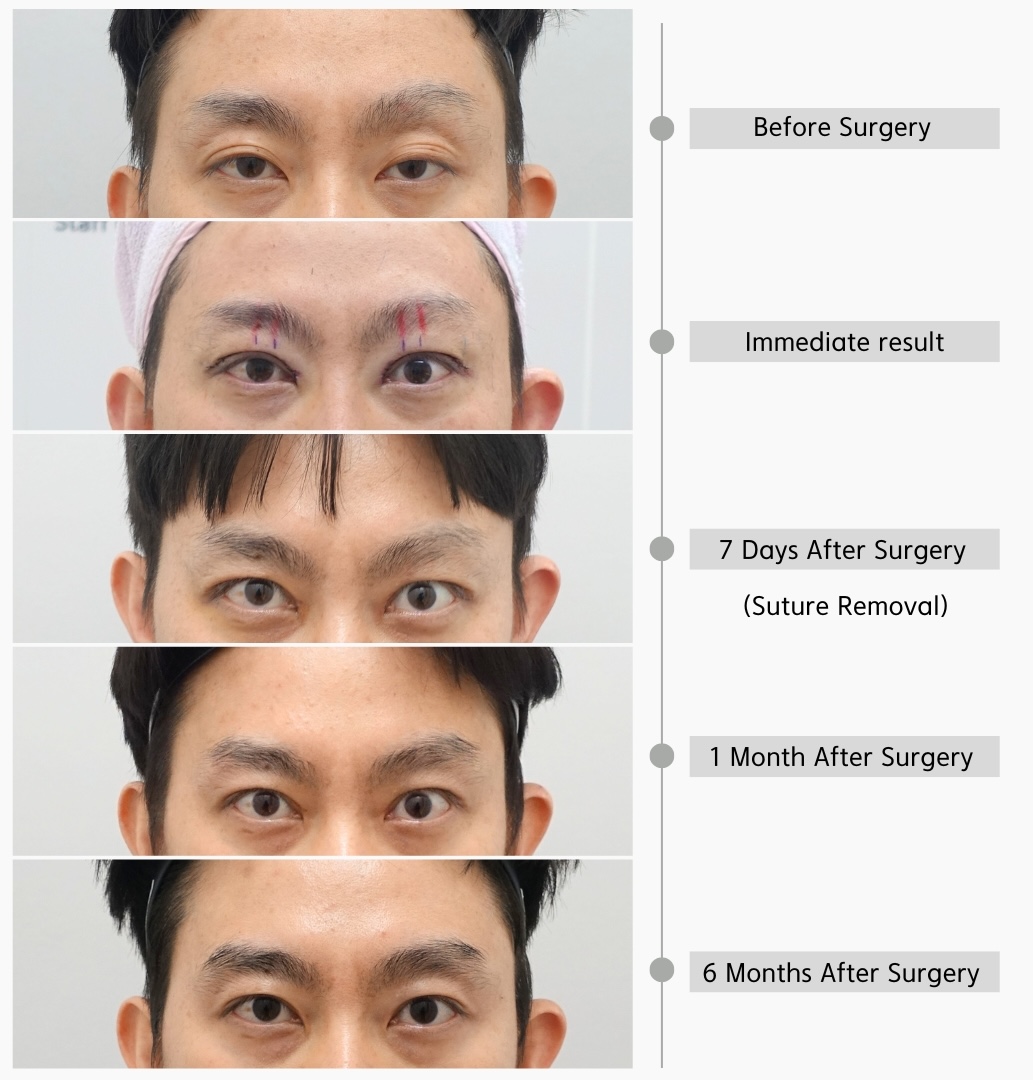
Immediately After Surgery
Swelling and temporary asymmetry are expected immediately after surgery. Because the eyelid muscles have just been adjusted, the eyelids may appear higher or less symmetrical than the final result.
First Week (Suture Removal)
Most bruising begins to improve during the first week. After suture removal, the eyelids gradually become more comfortable, although swelling and temporary tightness may still remain.
One Month After Surgery
The majority of visible swelling has resolved, and eyelid height begins to stabilize. The eyes appear more natural, but subtle improvements in symmetry and muscle adaptation continue.
Six Months After Surgery
By six months, healing is largely complete. The eyelids have reached a stable position with natural eye opening, improved symmetry, and balanced facial expression.
CASE 2
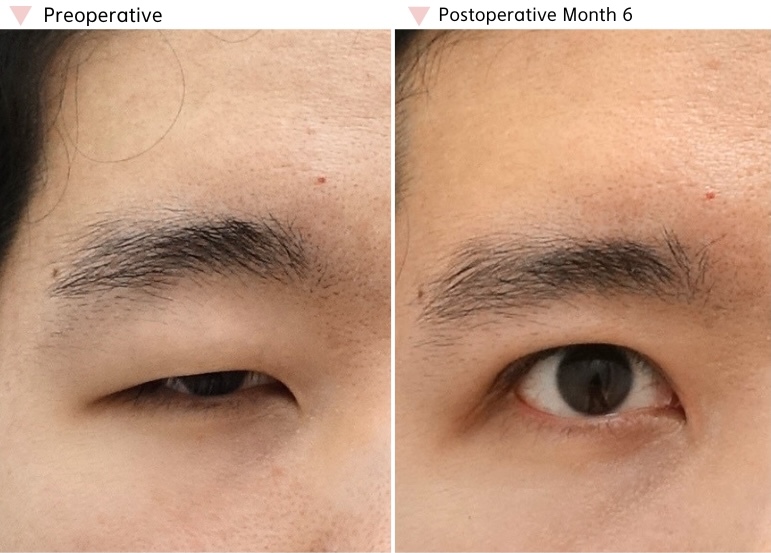
Severe Functional Ptosis Case
Before surgery, severe ptosis caused the patient to constantly rely on forehead elevation to maintain the visual field. Significant forehead muscle tension was present, and the patient frequently raised the chin or excessively used the forehead muscles, leading to chronic fatigue and eye strain.
After ptosis correction, eyelid opening became more stable and natural without excessive forehead compensation. The surgery focused on restoring functional balance and long-term stability rather than exaggerated enlargement.
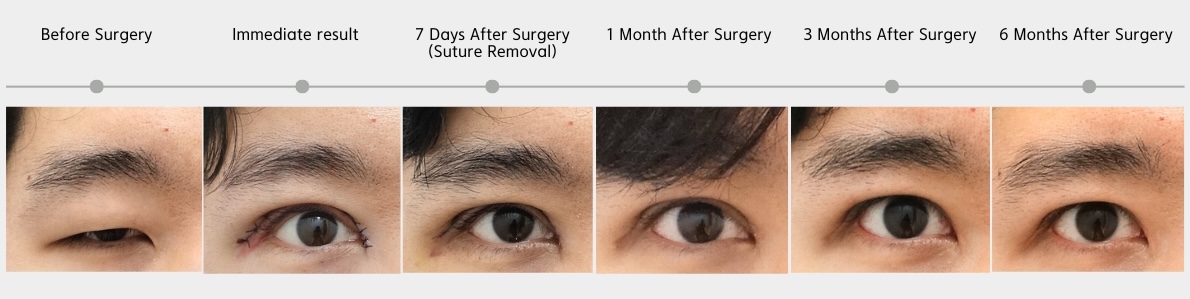
Functional Recovery Timeline After Ptosis Correction
This timeline demonstrates the gradual stabilization of eyelid opening after ptosis correction surgery.
Rather than creating exaggerated enlargement, the goal was to restore more balanced eyelid function, reduce compensatory muscle use, and achieve a natural long-term appearance over time.
Our Philosophy on Recovery
Recovery is an essential part of successful ptosis correction. While eyelid height changes immediately after surgery, natural healing continues for several months as swelling subsides and the eyelids gradually stabilize.
Rather than focusing on the immediate postoperative appearance, we encourage patients to evaluate their results after the tissues have fully healed and eyelid function has naturally adapted.
CASE 3
Functional Recovery Without Forehead Compensation
Upper Blepharoplasty
Ptosis Correction
Epicanthoplasty
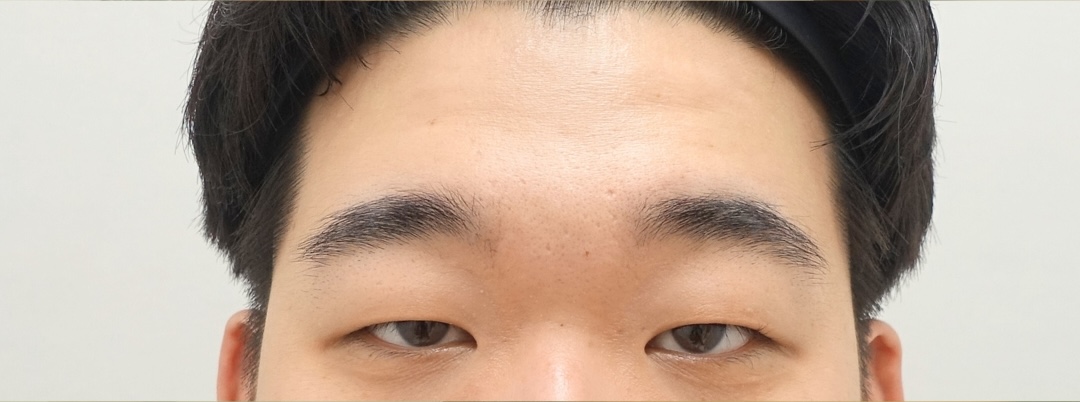
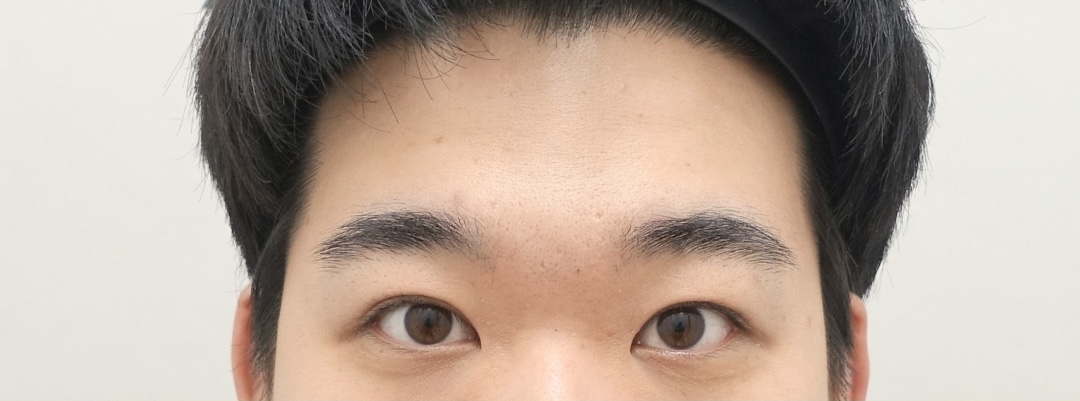
At 4 months after surgery, eyelid opening appears more balanced and stable with reduced forehead compensation.
EYE DETAIL
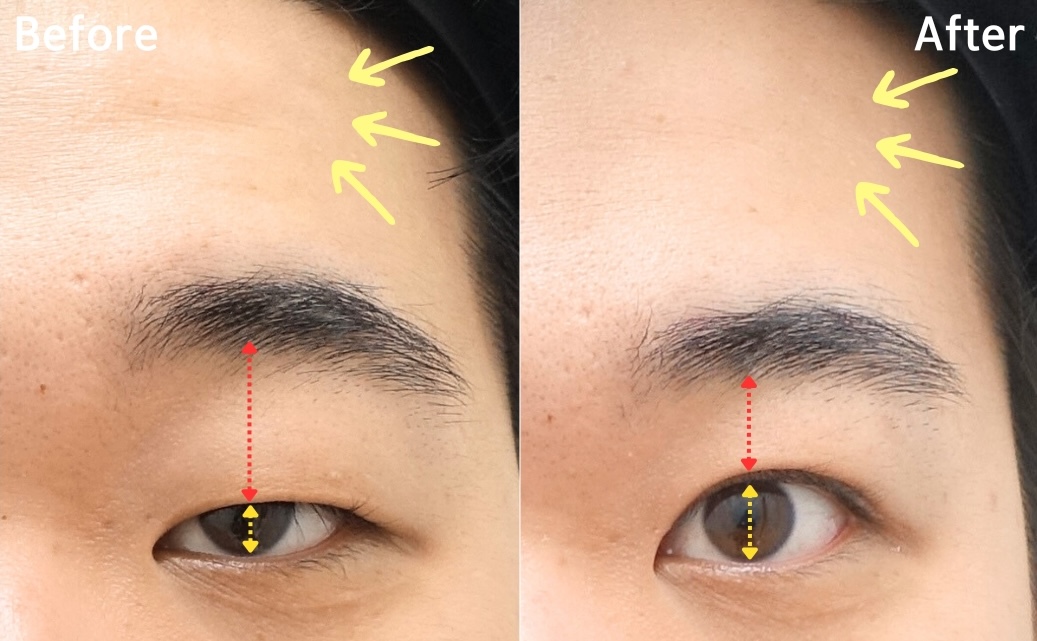
Functional Ptosis with Compensatory Brow Use
At 4 months after surgery, eyelid opening remains stable and balanced.
The need for compensatory brow elevation has been eliminated.
Rather than maximizing eyelid height, the goal was to restore natural eyelid function while maintaining facial harmony.
Controlled correction helped eliminate unnecessary forehead compensation without creating an exaggerated appearance.
Overcorrection was intentionally avoided to promote long-term stability.



Why Patients Choose AHNSUNGMIN Plastic Surgery
Every successful eyelid surgery begins with careful judgment. Our philosophy is built on specialization, personal responsibility, and precise surgical decision-making before, during, and after every procedure.
Experience With Complex Revision Cases
Revision surgery requires extensive experience treating high folds, multiple creases, residual ptosis, hollow upper eyelids, scar adhesion, asymmetry, and previous unsuccessful surgeries. Every revision presents unique anatomical challenges.
One Surgeon, Complete Responsibility
AHNSUNGMIN Plastic Surgery has only one surgeon. From your initial consultation through surgery and long-term follow-up, every decision is made by Dr. Sungmin Ahn to ensure consistency, accountability, and personalized care.
Local Anesthesia for Precision
All eyelid surgeries are performed under local anesthesia. This allows continuous communication during surgery and enables the surgeon to evaluate eyelid function, symmetry, and balance in real time.
Communication During Surgery
The eyelids cannot always be evaluated accurately while a patient is lying still. During surgery, patients may be asked to open and close their eyes, and when appropriate, to change position so the surgeon can assess eyelid height, contour, and symmetry under more natural conditions. This real-time feedback helps guide precise surgical decisions and reflects our commitment to achieving the safest and most natural result possible.
Who Is a Good Candidate for Ptosis Correction?
Ptosis correction is appropriate for patients whose heavy-looking eyes are caused by functional eyelid weakness rather than appearance alone. A comprehensive evaluation helps determine whether surgery is necessary and which approach will provide the most natural and stable result.
- Eyes that feel constantly heavy
- Limited eye opening during daily activities
- Forehead compensation to improve vision
- Residual ptosis after previous surgery
- Asymmetry caused by eyelid muscle weakness
- Patients seeking functional improvement rather than exaggerated enlargement
PTOSIS CORRECTION GUIDE
Frequently Asked Questions
Find answers to the questions patients most commonly ask about ptosis correction,
accurate diagnosis, recovery, candidacy, and long-term functional stability.
Many patients with heavy-looking eyes do not actually have true ptosis. Excess skin, brow position, previous eyelid surgery, or facial anatomy can all create a similar appearance. A careful functional evaluation is necessary to determine the underlying cause and recommend the most appropriate treatment.
No. The goal of ptosis correction is to restore comfortable, natural eyelid opening rather than create exaggerated enlargement. Surgical planning focuses on improving function while maintaining facial balance and long-term stability.
Yes. When appropriate, ptosis correction can be combined with double eyelid surgery, epicanthoplasty, upper blepharoplasty, or other eyelid procedures. The surgical plan depends on each patient's anatomy and functional needs.
Initial swelling improves during the first few weeks, but eyelid height and muscle function continue to stabilize over several months. Most patients can appreciate their final results around six months after surgery.
Long-term stability depends on the underlying cause, surgical technique, and individual healing. While properly performed ptosis correction is intended to provide lasting improvement, some patients may experience changes over time due to aging or other anatomical factors.
Successful treatment begins with understanding why the eyelids appear heavy. Treating pseudoptosis as true ptosis—or overlooking other contributing factors—may lead to unnecessary or unsatisfactory surgery. Accurate diagnosis helps determine whether ptosis correction is the right treatment and allows the surgical plan to be tailored to each patient's individual anatomy and functional needs.
REQUEST A PTOSIS EVALUATION
Every patient has unique eyelid anatomy, muscle function, and facial balance.
A personalized evaluation helps determine whether true ptosis, pseudoptosis,
or another condition is affecting your eye opening and identifies the treatment most appropriate for your long-term functional goals.
Online consultation is available for international patients.
Online Consultation Available for International Patients
