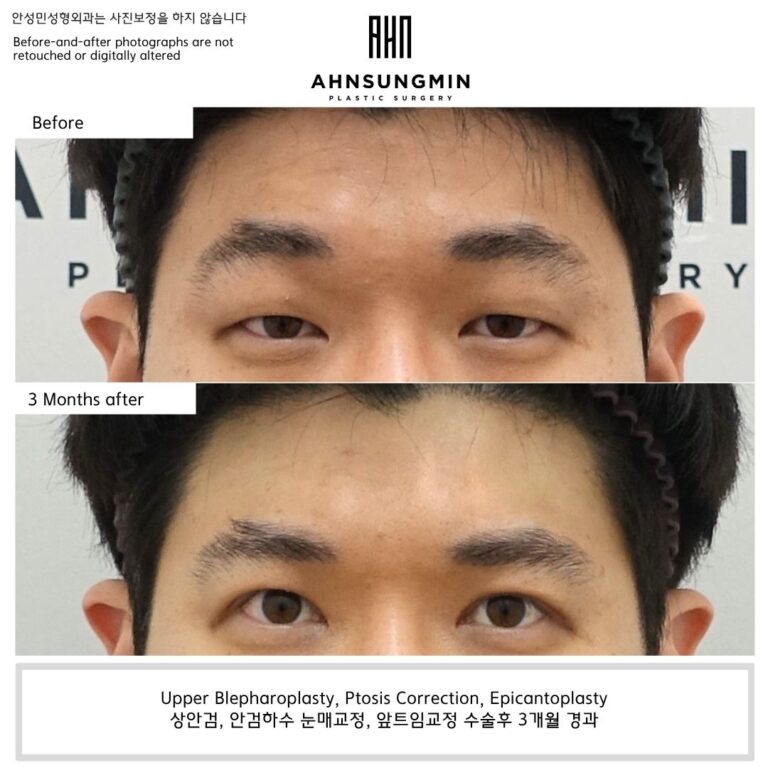
Ptosis is not simply an eyelid problem
Many patients with ptosis do not immediately recognize that their eyelid opening strength is reduced.
Instead, they unconsciously compensate by lifting their eyebrows. The forehead muscle becomes active in order to help raise the eyelids and improve the visual field.
Over time, this compensation becomes habitual. Patients may feel that their eyes appear tired, heavy, or constantly strained without realizing that the underlying issue is weakened eyelid elevation.
Ptosis correction therefore focuses on restoring the eyelid’s natural opening function rather than artificially enlarging the appearance of the eyes.
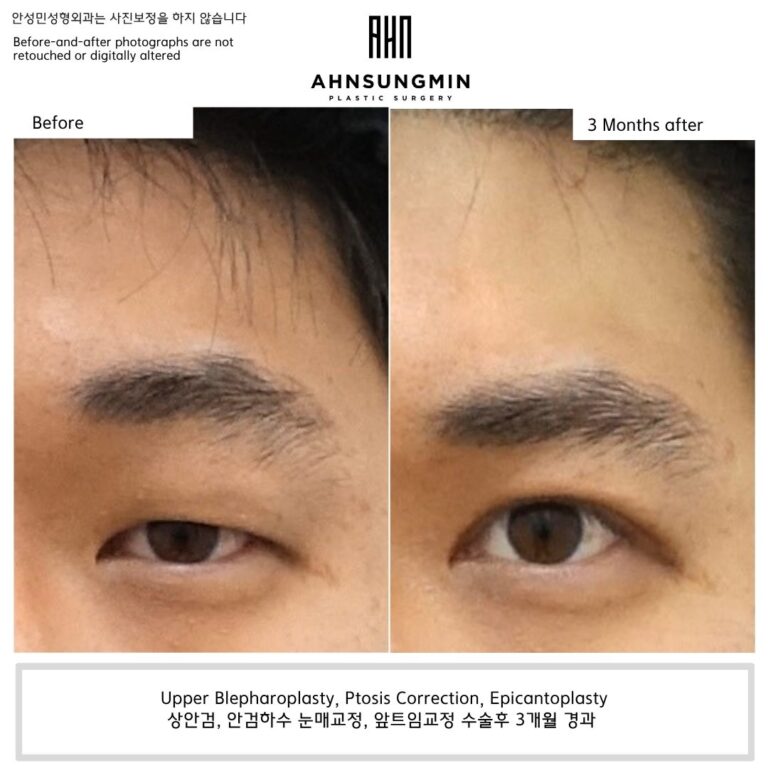
The role of the forehead muscle in compensation
When the levator muscle that lifts the eyelid becomes weak, the body instinctively attempts to maintain clear vision. The most common compensation mechanism is activation of the frontalis muscle, which lifts the eyebrows.
This creates several visible changes:
• The eyebrows remain constantly elevated
• Forehead wrinkles become more pronounced
• The eyelid skin gradually stretches from repeated lifting
• Patients feel fatigue in the forehead and brow area
Many patients believe they simply have “small eyes” or “heavy eyelids,” when in reality the body has been compensating for reduced eyelid opening strength.
How prolonged compensation affects eyelid appearance
Long-term eyebrow lifting can gradually change the appearance of the upper eyelid.
As the forehead repeatedly pulls the brow upward, the eyelid skin stretches like an accordion. Over time, this can lead to a hollow appearance in the upper eyelid and an imbalance between the eyelid and brow position.
In some patients, the eyelid may appear sunken even though the underlying issue is not simply fat loss. Functional factors such as ptosis and chronic forehead compensation often contribute to these changes.
Understanding this relationship is important when planning surgery. Treating the eyelid without addressing the functional imbalance may lead to unstable results.
Why ptosis correction restores balance
Ptosis correction surgery aims to restore the natural lifting strength of the eyelid by adjusting the levator muscle.
Once the eyelid is able to open normally again, the forehead muscle no longer needs to compensate. As a result, the eyebrows can relax to a natural position and the tension in the forehead gradually decreases.
Rather than focusing on making the eyes appear larger, ptosis correction focuses on restoring the functional balance between the eyelid, brow, and forehead.
When this balance is restored, the eyes often appear brighter and more natural without excessive surgical manipulation.
Frequently Asked Questions
Why do patients raise their eyebrows when they have ptosis?
Many people unconsciously lift their eyebrows to compensate for weakened eyelid opening. The forehead muscles help elevate the eyelids and improve the visual field when ptosis is present.
Does ptosis always cause forehead wrinkles?
Not always, but long-term forehead compensation can contribute to deeper forehead lines and persistent muscle tension. Many patients are unaware that frequent eyebrow lifting is a sign of functional compensation.
Will my eyebrows relax after ptosis surgery?
In many patients, yes. Once normal eyelid opening is restored, the forehead muscles no longer need to compensate, allowing the eyebrows to return to a more natural position over time.
Can eyebrow lifting hide ptosis?
Raising the eyebrows may temporarily make the eyes appear more open, but it does not correct the underlying weakness of the eyelid muscles. Proper diagnosis is necessary to determine whether ptosis correction is needed.
Is constantly raising my eyebrows a sign of ptosis?
It can be. Persistent eyebrow elevation, forehead fatigue, or difficulty keeping the eyes open may indicate that your forehead is compensating for reduced eyelid function. A clinical evaluation can determine whether ptosis is present.
Insights
Best Ptosis Surgeon in Korea
Choosing the right ptosis surgeon is about more than creating a larger-looking eye. Learn why accurate diagnosis, individualized planning, and functional restoration are essential for achieving natural, long-lasting results.
Best Male Eyelid Surgeon in Korea
Male ptosis correction requires preserving masculine eyelid characteristics while restoring natural eyelid function. Discover how individualized planning helps achieve balanced and natural-looking results.
Internal References
→ See ptosis correction cases
Request a Ptosis Evaluation
Many patients who constantly raise their eyebrows are unknowingly compensating for reduced eyelid opening. A careful evaluation can determine whether ptosis is present and whether functional correction is appropriate for your condition.
Seeing the Eye as a Whole, Not in Parts
A Clinic Dedicated to Eyelid Revision Surgery in Korea
Ahnsungmin Plastic Surgery
