Ptosis correction is not simply about making the eyes appear larger.
In many patients, the real problem is weakened eyelid opening strength, forehead compensation, asymmetry, or fatigue caused by unstable eyelid function.
At Ahnsungmin Plastic Surgery, ptosis correction focuses on restoring a more natural and stable eyelid opening while preserving long-term balance and function—not creating an excessively strong or unnatural appearance.
In many patients, what appears to be excess eyelid skin or a small-looking eye is actually a problem of muscle function and eyelid opening strength.
When the levator muscle weakens, the eyelid cannot open fully. Patients often compensate by raising the brows or using the forehead muscles excessively, leading to fatigue, asymmetry, heaviness, and an unstable eyelid appearance over time.
What seems like an aesthetic issue is often a structural imbalance.
Ptosis correction is therefore not simply about creating a crease, but restoring more natural and stable eyelid movement.
BEFORE & AFTER
Real Results.
Naturally Restored.
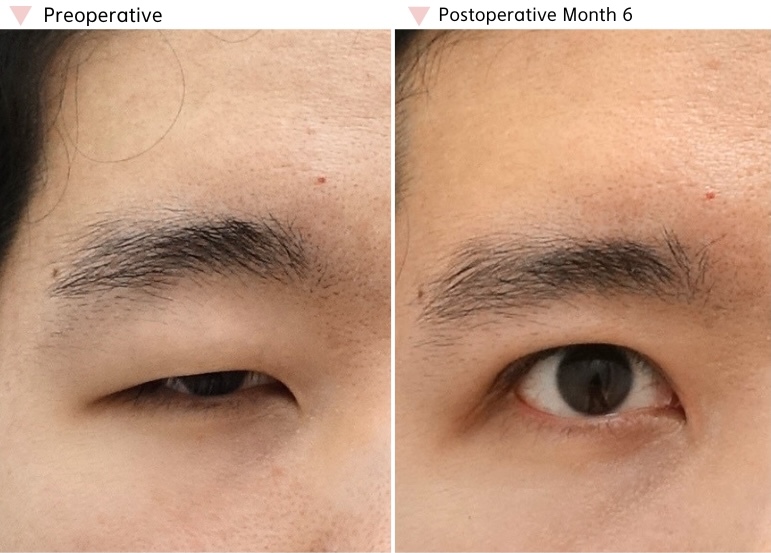
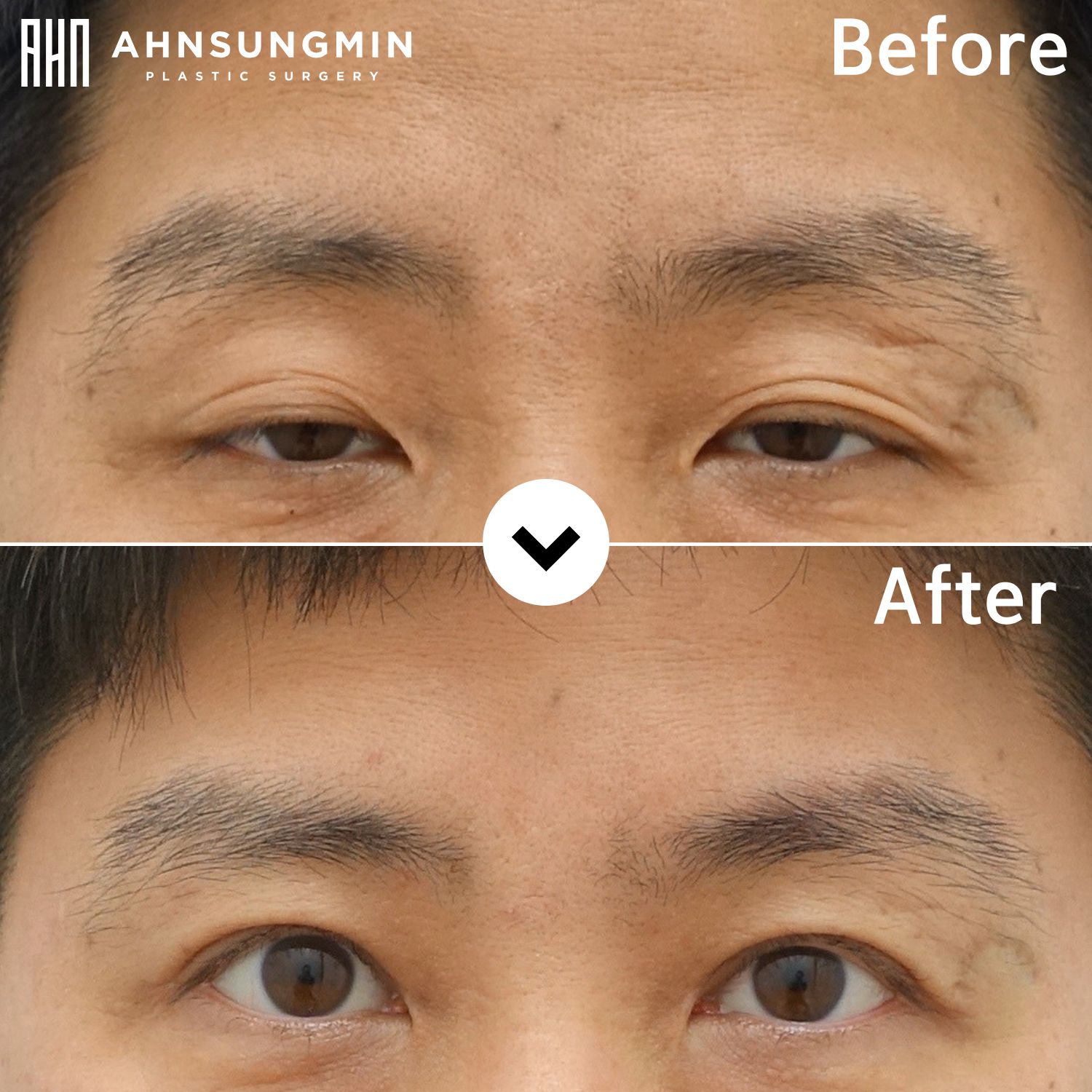
Ptosis correction is not about making the eyes look bigger — it’s about restoring stable eyelid opening, reducing unnecessary forehead compensation, and creating more natural, balanced eye movement over time.
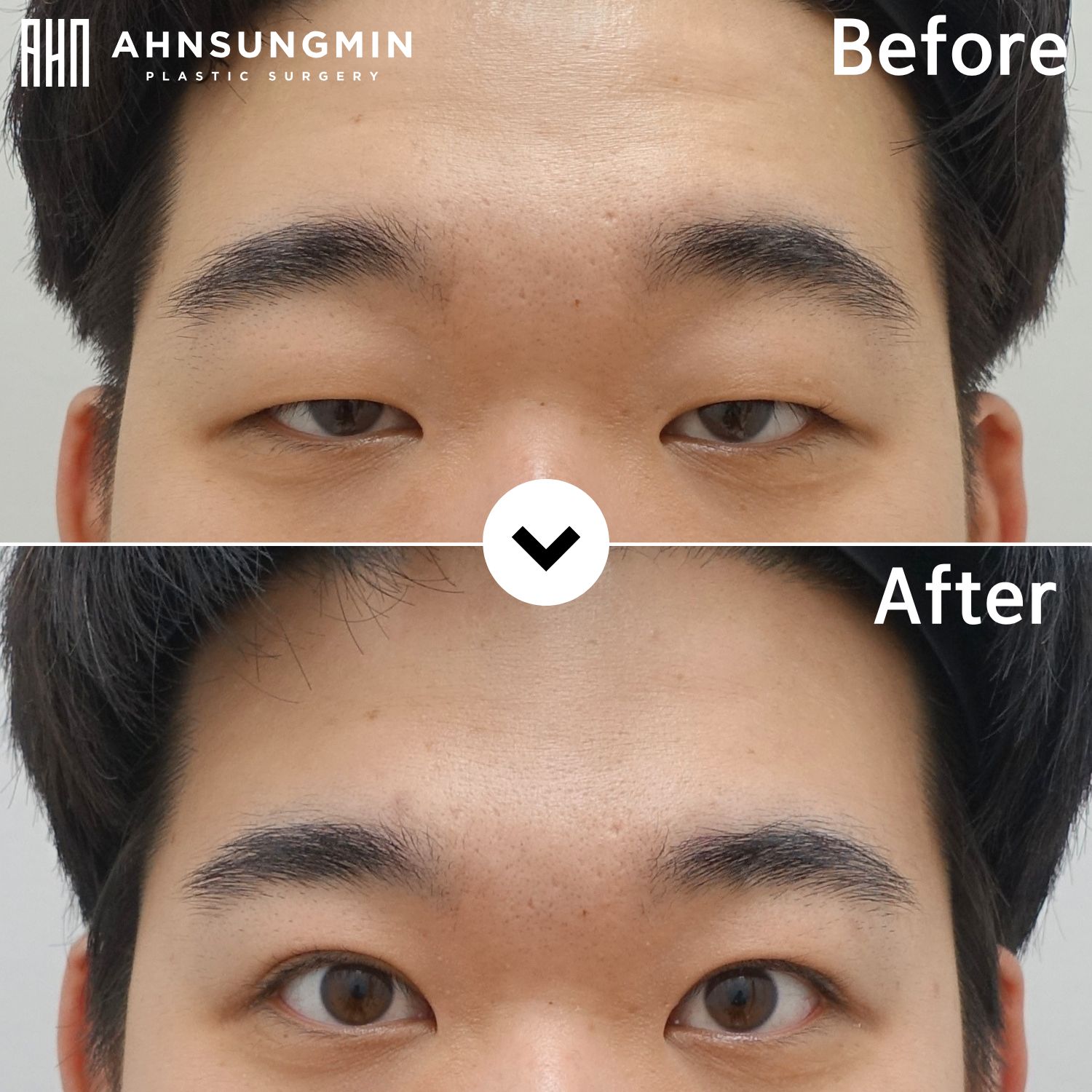
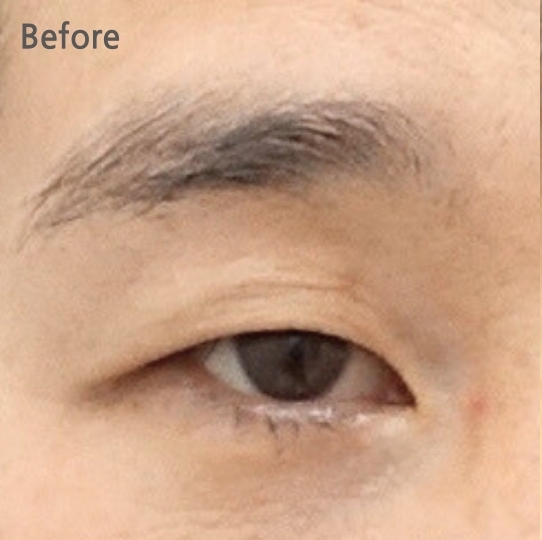
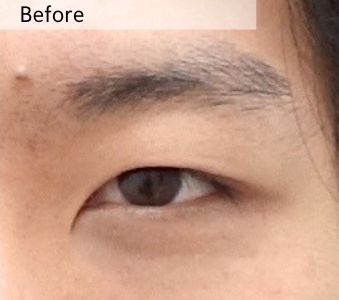
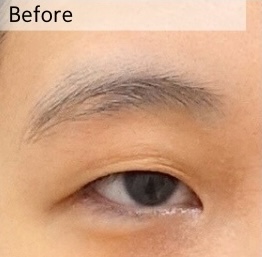
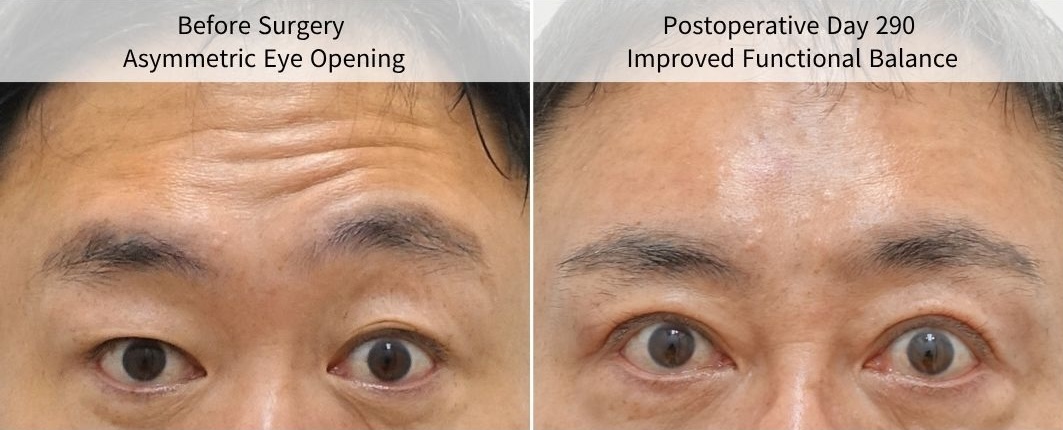
Before surgery, severe ptosis caused the patient to constantly rely on forehead elevation to maintain the visual field. Significant forehead muscle tension was present, and the patient frequently raised the chin or excessively used the forehead muscles, leading to chronic fatigue and eye strain.
After ptosis correction, eyelid opening became more stable and natural without excessive forehead compensation. The surgery focused on restoring functional balance and long-term stability rather than exaggerated enlargement.
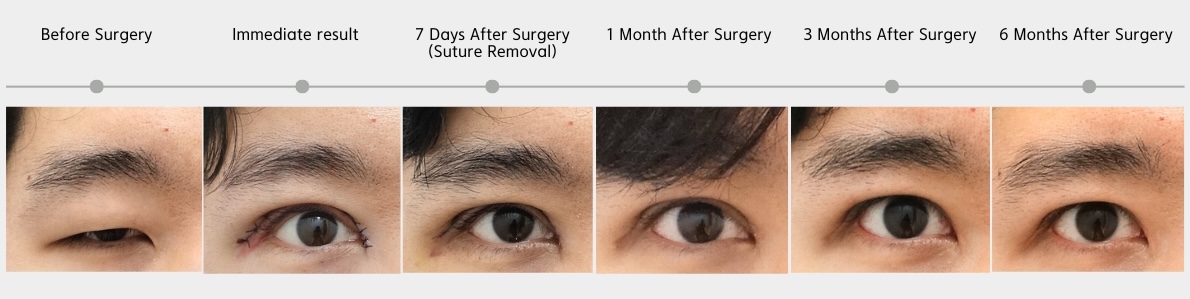
Ptosis Correction Recovery Timeline
Gradual Stabilization of Eyelid Opening and Functional Balance Over Time
Recovery after ptosis correction is gradual. Swelling, eyelid position, and symmetry continue to change during the healing process. Early postoperative appearance should not be considered the final result, as eyelid opening and functional balance may continue to stabilize for several months.
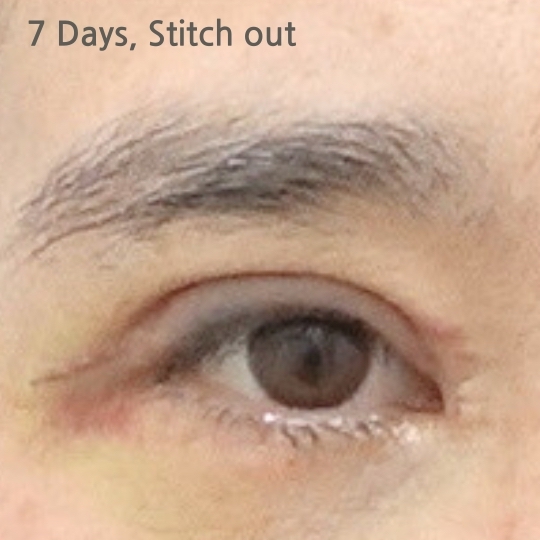
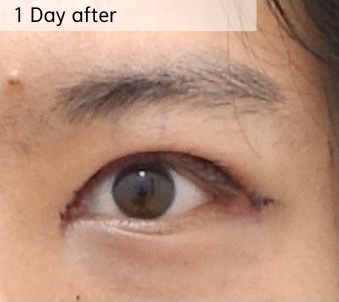
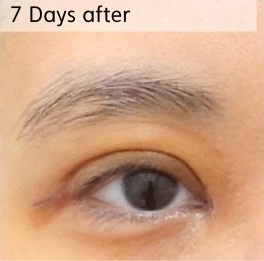
Postoperative Day 7
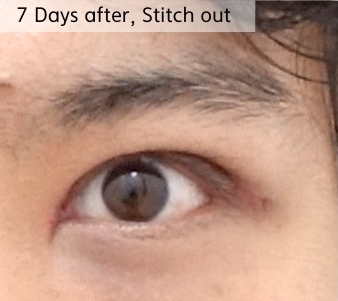
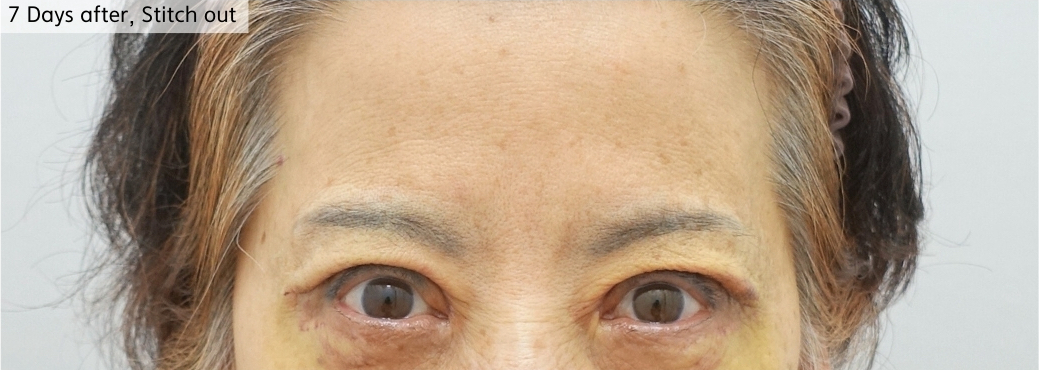
Sutures are typically removed around this stage. Swelling, tightness, and temporary asymmetry may still be present.
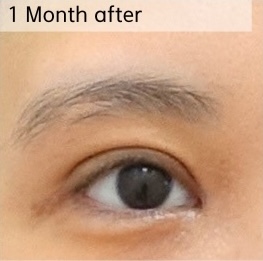
Postoperative Month 1
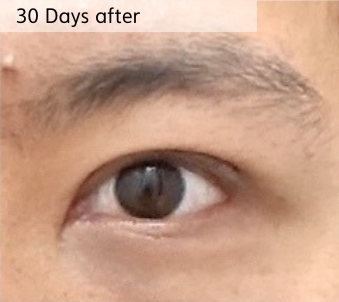
Early swelling has significantly improved, although eyelid position and movement may continue to change.
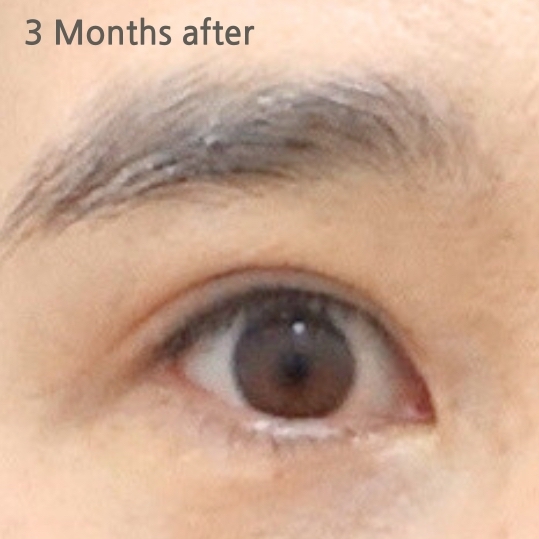
Postoperative Month 3
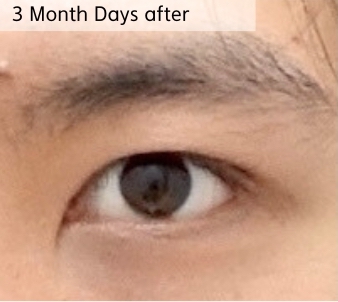
Eyelid opening and functional balance become more stable, allowing a clearer evaluation of the surgical result.
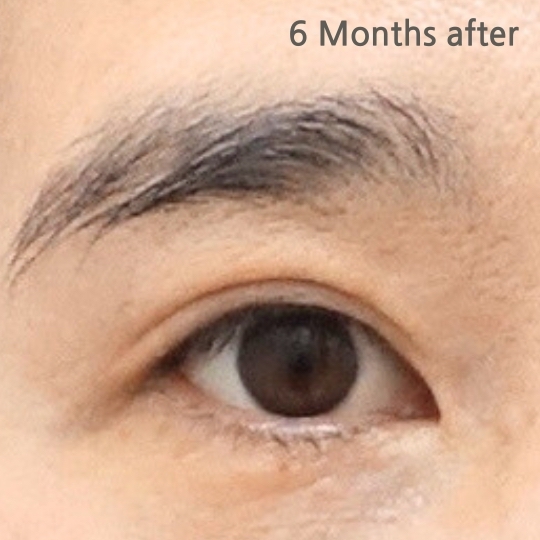
Postoperative Month 6
Long-term eyelid position, symmetry, and functional stability can usually be evaluated more reliably.
Recovery varies between patients, and final eyelid position should be evaluated only after sufficient healing and functional stabilization.
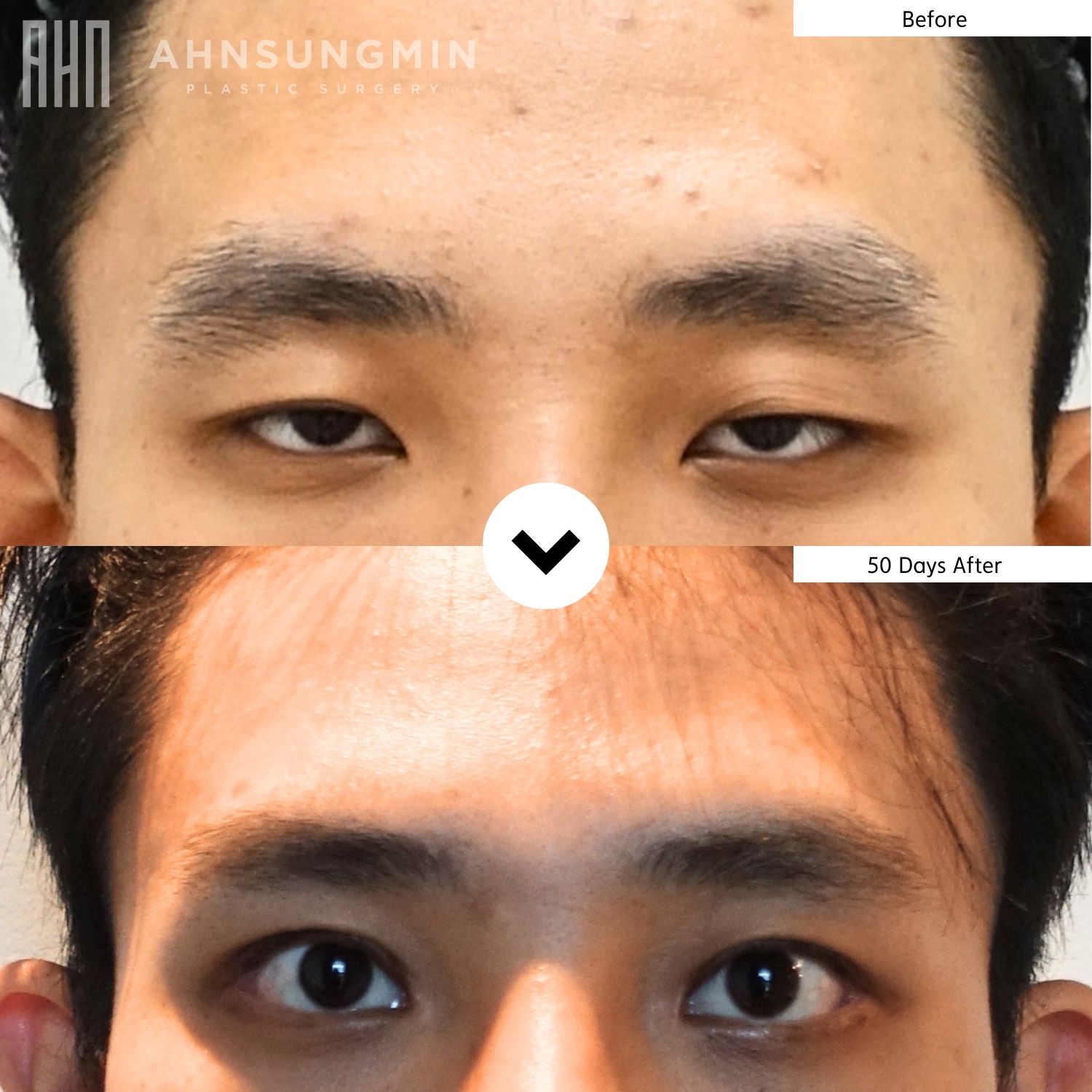
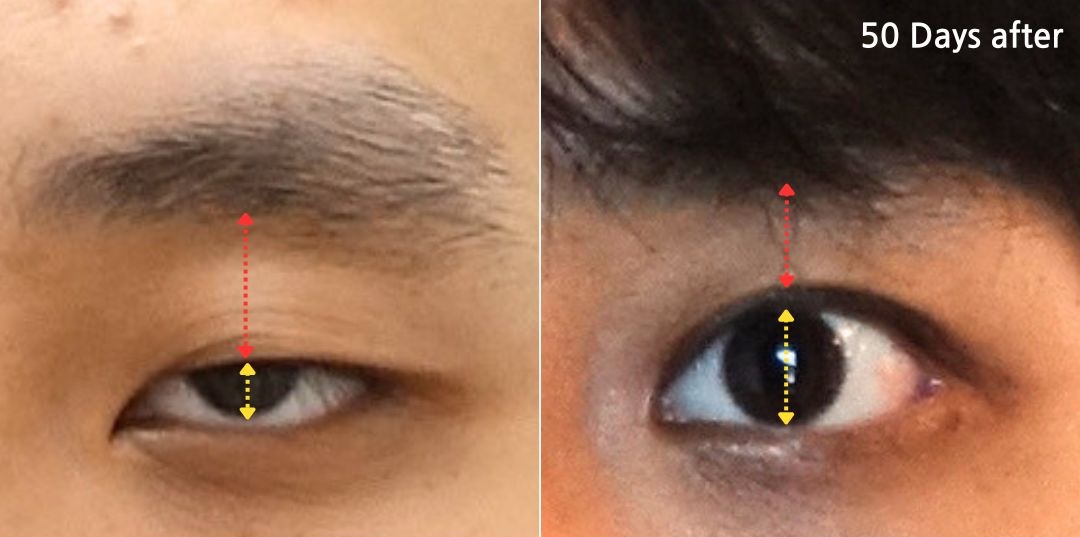
Preoperative functional ptosis with compensatory brow use. At 50 days after surgery, eyelid opening appears more stable and balanced without excessive forehead activation.
EYE DETAIL
Restoring Natural Balance
At 50 days after surgery, eyelid opening is more balanced and stable. The patient no longer relies on brow elevation to maintain eye opening.
The result does not aim for exaggerated enlargement. Instead, it reflects functional recovery and long-term stability.
Overcorrection was intentionally avoided to preserve natural movement and prevent recurrence.
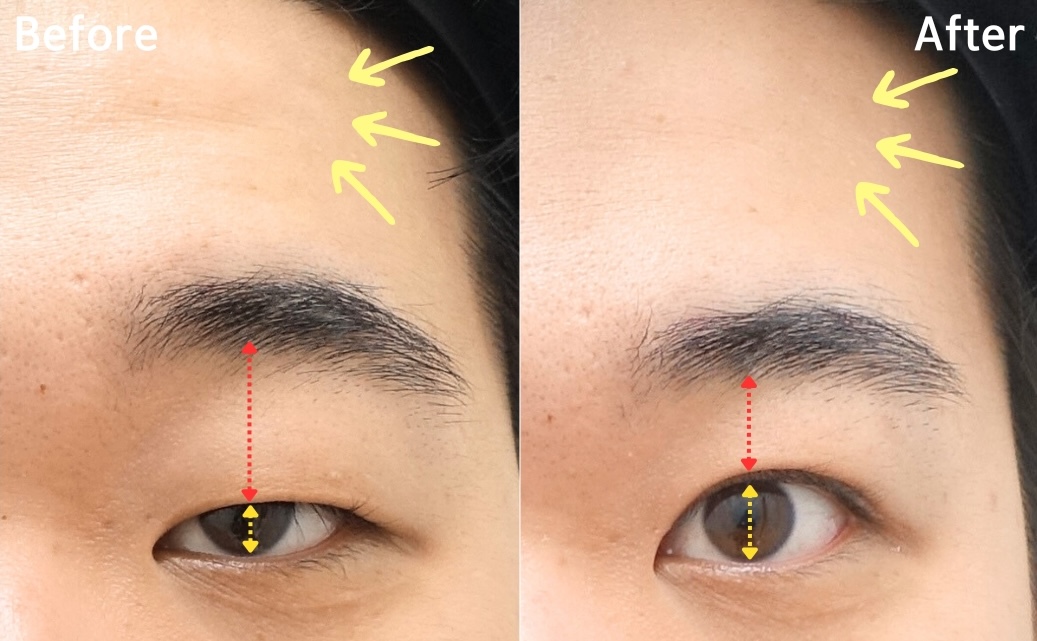
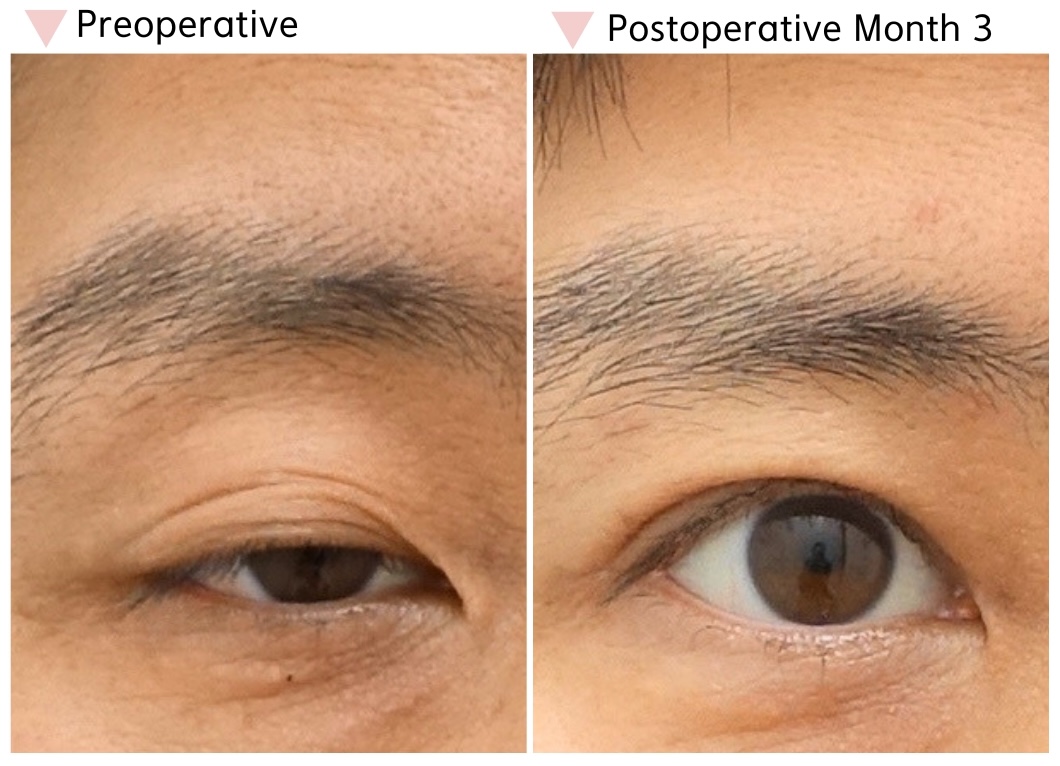
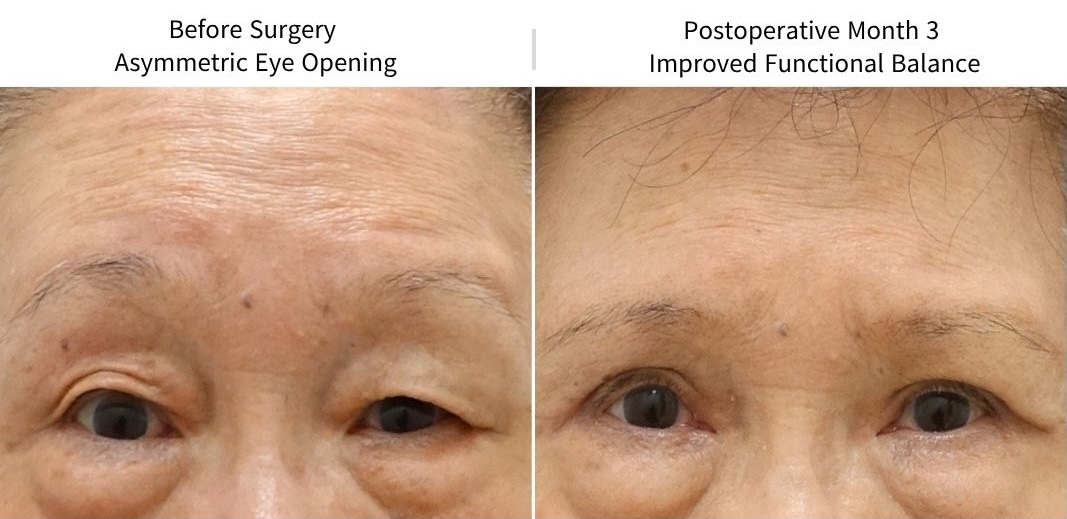
Preoperative ptosis with asymmetric eyelid opening and functional imbalance.
At 3 months after surgery, eyelid opening appears more stable and balanced with improved symmetry.
EYE DETAIL
Restoring Balanced Eyelid Opening
At 3 months after surgery, eyelid opening is more balanced and stable. The difference in eyelid opening between the two eyes has been reduced.
The goal was not simply to make the eyes appear larger. Instead, correction focused on restoring functional balance while maintaining a natural eyelid shape.
Overcorrection was intentionally avoided to preserve long-term stability.
When Ptosis Correction Is Necessary—and When It Is Not
Not every tired-looking or asymmetric eye requires ptosis correction surgery.
Surgery becomes necessary when there is clear functional limitation, including restricted eyelid opening, visual obstruction, forehead compensation, or imbalance caused by weakened eyelid muscles.
However, operating without proper indication may create unnatural results or long-term instability. In some patients, conservative observation or alternative approaches may be more appropriate than surgery itself.
The decision should be based on function—not simply appearance.
Why Double Eyelid Surgery Cannot Replace Ptosis Correction
Double eyelid surgery can create a crease, but it cannot restore eyelid lifting strength.
In patients with ptosis, performing only double eyelid surgery may actually worsen imbalance. The crease may appear higher or deeper, while the eye itself still cannot open properly.
Over time, this often leads to thick folds, forehead compensation, asymmetry, or unstable eyelid appearance.
Ptosis correction focuses on restoring functional eyelid opening—not simply changing the fold design.
Why Patients Think They Need Bigger Creases
Many patients believe their eyes appear smaller because the double eyelid crease is too low or not visible enough.
In reality, the problem is often not the crease itself, but unstable eyelid opening function, forehead compensation, or ptosis-related imbalance.
As eyelid opening weakens, patients may unconsciously rely on stronger crease definition to create the appearance of larger eyes. Over time, this can lead to excessively high folds, thick eyelids, or unnatural eye appearance.
For this reason, ptosis correction should not focus simply on creating a larger or higher crease.
Restoring stable and natural eyelid opening is often more important than increasing crease size itself.
Our Surgical Philosophy
Functional Restoration
Ptosis correction focuses on restoring stable and natural eyelid opening rather than creating excessive enlargement or an unnatural appearance.
Precise Muscle Evaluation
Levator muscle function, asymmetry, forehead compensation, and eyelid balance are carefully evaluated before surgery.
Real-Time Functional Adjustment
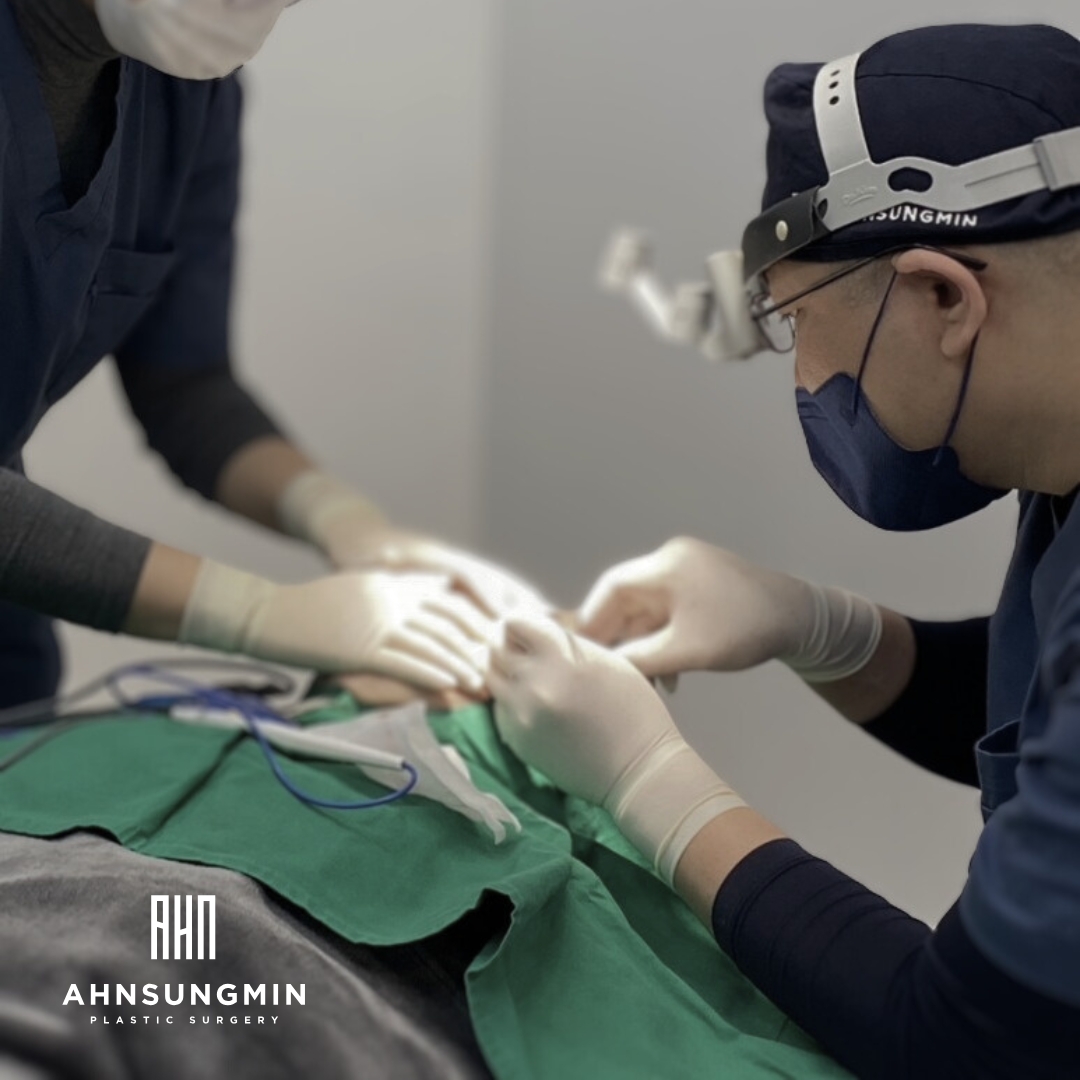
All procedures are performed under local anesthesia, allowing real-time assessment of eyelid movement and functional balance during surgery.
Long-Term Stability
Our goal is not maximum correction, but natural eyelid movement and stable long-term functional results while avoiding overcorrection.
Our Approach: Structural Diagnosis Before Any Correction
At Ahnsungmin Plastic Surgery, ptosis correction begins with structural evaluation.
We carefully analyze:
Levator muscle function
Brow compensation patterns
Degree of asymmetry
Eyelid tension and skin condition
Previous surgical history and structural imbalance
Rather than focusing only on surface appearance, we identify the underlying functional cause before deciding whether surgery is truly necessary.
Surgery is performed conservatively and only when stable long-term improvement can realistically be achieved.
How We Perform Ptosis Correction Under Local Anesthesia
All ptosis correction procedures are performed under local anesthesia.
This allows real-time evaluation of eyelid opening, symmetry, and muscle function during surgery itself.
Adjustments are made based on actual eyelid movement rather than estimation under sedation or general anesthesia.
The goal is not maximum opening. The goal is balanced, natural, and stable eyelid function.
Overcorrection is intentionally avoided whenever possible.
Limitations Patients Must Understand Before Surgery
Ptosis correction does not guarantee dramatic cosmetic change.
The purpose of surgery is functional normalization—not exaggeration.
Patients must understand that:
Perfect symmetry is not always possible
Overcorrection can create long-term complications
Healing and balance improve gradually over time
Structural limitations may remain after previous surgeries
The most important outcome is stable and comfortable eyelid function—not excessive enlargement.
Recovery and What Actually Changes Over Time
Recovery after ptosis correction is gradual.
Temporary swelling, asymmetry, tightness, or overcorrection may appear early during healing and often improve over time.
True functional stabilization cannot be judged immediately after surgery.
Evaluating the results too early frequently leads to unnecessary anxiety or premature revision decisions.
Patience is often one of the most important parts of recovery.
When Revision Becomes Necessary
Revision surgery should only be considered after sufficient healing time has passed.
In most cases, at least 6–12 months are necessary before accurately evaluating long-term stability.
Premature revision may worsen scarring, tension, and structural imbalance.
Revision surgery is not performed for small imperfections alone. It becomes necessary when there is significant functional or structural failure.
The Principle That Guides Every Decision
Ptosis correction is not about making the eyes look unnaturally large.
It is about restoring balance, reducing compensatory strain, and improving long-term eyelid function.
In some cases, the most appropriate medical decision may even be not to operate.
Surgery is only meaningful when it improves function in a stable and sustainable way.
Duration: Approximately 2 hours
Incision: Performed along the eyelid crease based on structural needs
Hospitalization: Not required
Stitch removal: Typically 5-7 days after surgery
Recovery period: Initial recovery generally occurs within 1–2 weeks.
Anesthesia: Local anesthesia with real-time functional evaluation
RECOVERY TIMELINE
A Gradual Recovery Process. Long-Term Stability Over Time.
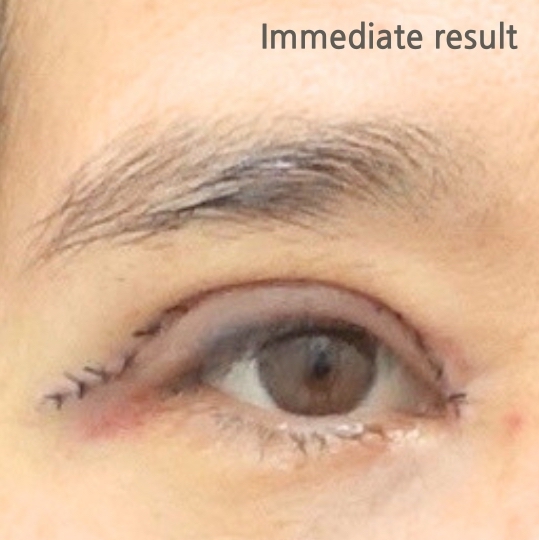
Changes following ptosis correction do not stabilize immediately. Early postoperative appearance may seem overcorrected, but this reflects temporary swelling and muscle adaptation. Final eyelid position becomes more predictable as healing progresses.
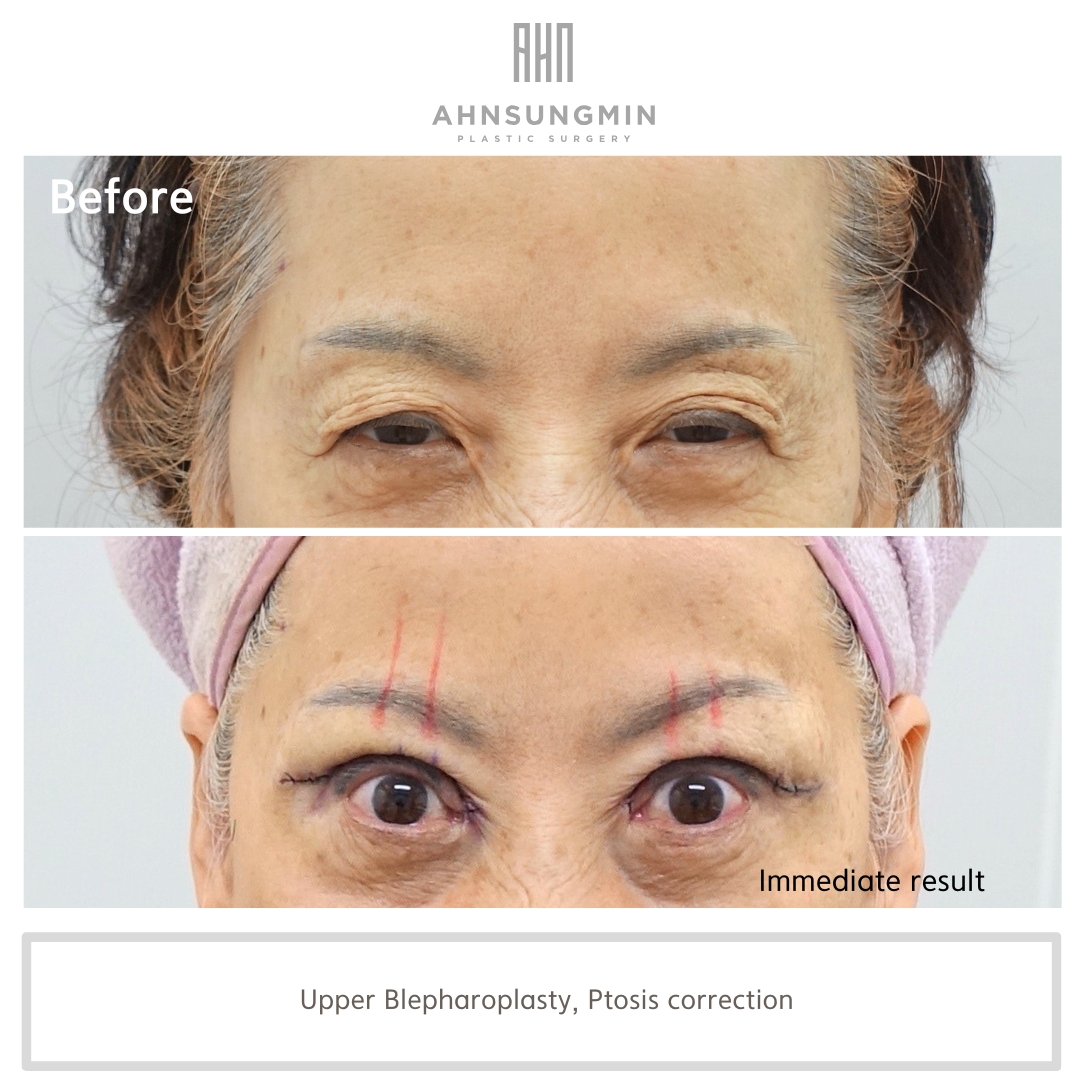
Before
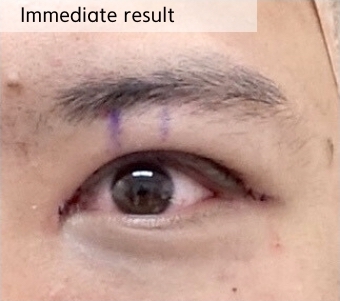
Immediate Postoperative
Postoperative Day 7 (Suture Removal)
Postoperative Month 3
Postoperative Month 6
Before
Immediate Postoperative
Postoperative Day 1
Postoperative Day 7 (Suture Removal)
Postoperative Day 30
Postoperative Month 3
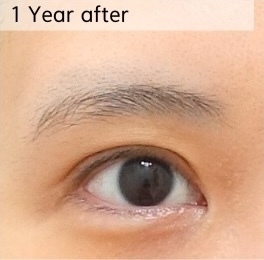
Before
Postoperative Day 7 (Suture Removal)
Postoperative Month 1
Postoperative Year 1
Not every problem requires surgery. But every successful outcome begins with understanding the cause.
Ptosis Correction in Patients With Facial Nerve Paralysis
Facial nerve paralysis can create significant asymmetry around the eyes by affecting the balance of the muscles that control facial and eyelid movement.
In these patients, eyelid asymmetry should not be evaluated simply by comparing the height of the two eyes. The underlying nerve function, compensatory muscle use, eyelid opening strength, and movement of both sides must be considered together.
For this reason, ptosis correction in patients with facial nerve paralysis requires a more individualized approach. The goal is not to make both eyes mechanically identical or to maximize eyelid opening. It is to improve functional balance while preserving natural movement and avoiding excessive correction.
The following cases demonstrate how surgical planning may differ depending on the patient’s individual pattern of facial nerve dysfunction and eyelid asymmetry.
CASE 1
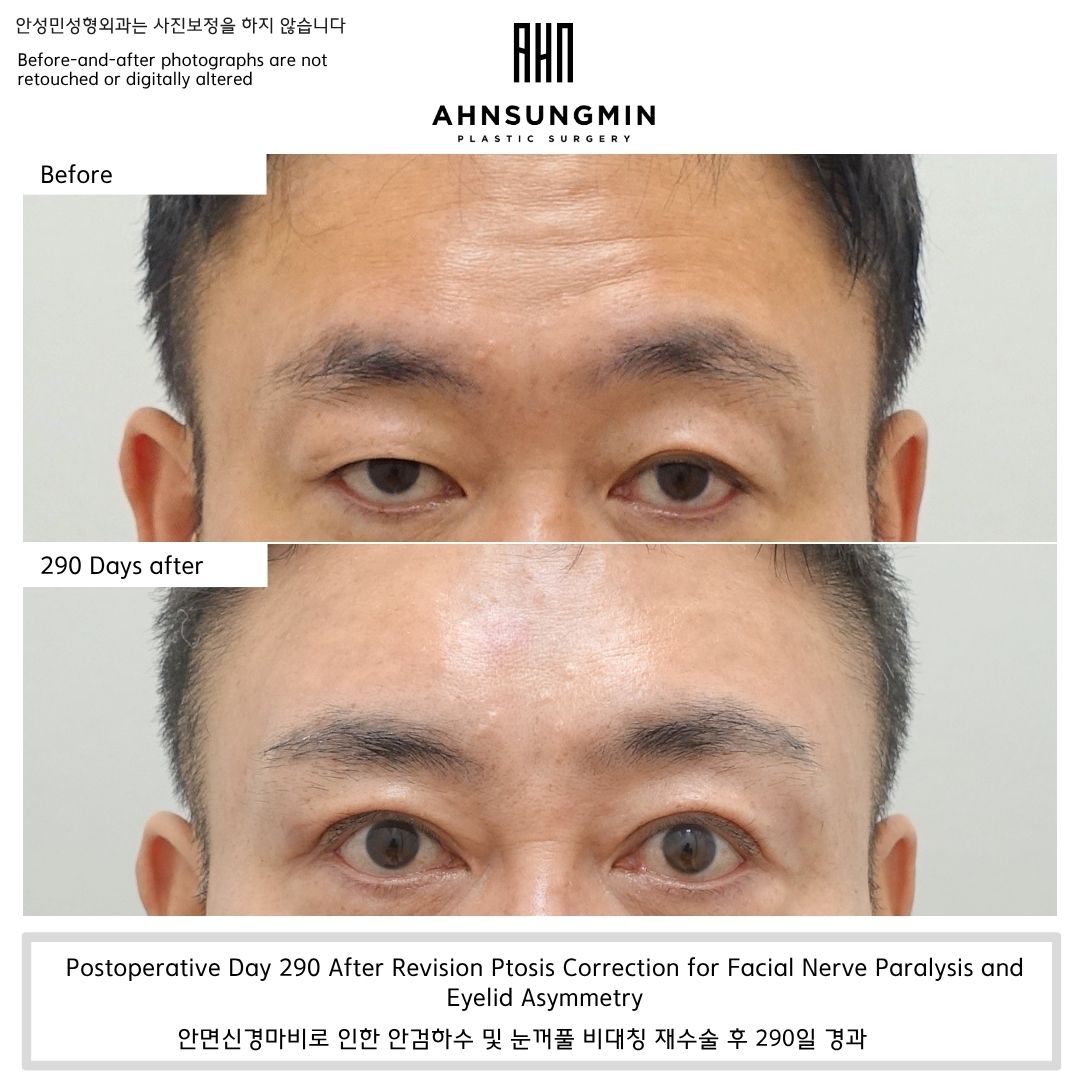
Revision Ptosis Correction in a Patient With Facial Nerve Paralysis
Facial nerve paralysis can cause
Facial nerve paralysis can cause complex eyelid asymmetry that cannot be evaluated by eyelid height alone.
In this revision case, treatment focused on improving functional balance while respecting the underlying difference in eyelid movement.
Blepharospasm is a condition in which a person intentionally loses control of their eyes.
7 Days after, Stitch out
PTOSIS CORRECTION SURGERY IN KOREA
Frequently Asked Questions
About Ptosis Correction Surgery
Answers to the most common questions about ptosis correction, recovery, eyelid opening function, and long-term stability.
Frequently Asked Questions
1. What Is Ptosis Correction?
Ptosis correction is a functional eyelid surgery designed to improve weakened eyelid opening strength. In many patients, the problem is not simply excess skin, but reduced muscle function causing heaviness, asymmetry, or forehead compensation.
2. Does Everyone With Heavy Eyelids Need Ptosis Correction?
No. Not every heavy or tired-looking eye requires surgery. Ptosis correction is recommended only when there is clear functional limitation, such as restricted eyelid opening, excessive brow use, or visual obstruction.
3. Can Double Eyelid Surgery Correct Ptosis?
No. Double eyelid surgery can create a crease, but it does not restore eyelid opening strength. In patients with ptosis, crease surgery alone may worsen imbalance or create a higher but still heavy-looking eyelid.
4. Why Do Some Patients Use Their Forehead to Open Their Eyes?
When eyelid opening strength weakens, patients often unconsciously raise their brows or use forehead muscles to compensate. Over time, this can cause fatigue, asymmetry, and a strained appearance.
5. Is Ptosis Correction Only About Making the Eyes Bigger?
No. The goal is not maximum enlargement. Ptosis correction focuses on restoring balanced, natural eyelid movement while preserving long-term stability and avoiding overcorrection.
6. Why Is Local Anesthesia Important During Ptosis Correction?
Local anesthesia allows real-time evaluation of eyelid movement during surgery. Adjustments can be made based on actual function and symmetry rather than estimation alone.
7. How Long Does Recovery Take After Ptosis Correction?
Recovery is gradual. Swelling, temporary asymmetry, or stiffness are common early in healing. Functional stabilization often continues for several months after surgery.
8. When Should Revision Ptosis Surgery Be Considered?
Revision surgery should only be considered after sufficient healing time. In most cases, at least 6–12 months are needed before evaluating long-term functional stability and determining whether revision is truly necessary.
Ptosis Correction Insights
Understanding ptosis requires more than evaluating crease height alone. In many patients, the real issue is not simply the fold itself, but the function of the eyelid opening muscles and the structural balance surrounding them.
The following articles explain common misconceptions and important considerations related to ptosis correction, eyelid function, and long-term structural stability.
Some patients continue to experience heaviness, forehead compensation, asymmetry, or unstable eyelid opening even after previous ptosis surgery.
Successful revision ptosis correction often requires careful structural analysis, scar evaluation, and restoration of long-term functional balance rather than stronger or more aggressive correction alone.
Understanding High Fold Revision and Ptosis Imbalance
In many patients, excessively high or unstable folds are closely related to weakened eyelid opening function and compensatory muscle use rather than crease height alone.
Understanding how ptosis influences eyelid balance is often an important part of successful high fold revision surgery.
At Ahnsungmin Plastic Surgery, eyelid surgery is approached through careful structural analysis rather than simply focusing on cosmetic change.
Many eyelid conditions such as ptosis, eyelid hollowing, lower eyelid bags, or postoperative imbalance are closely related to the underlying anatomy of the eyelid.
Our surgical philosophy focuses on restoring natural balance while preserving healthy tissue and achieving long-term structural stability.
What Our Patients Say?
“From the moment I stepped into Ahnsungmin Plastic Surgery, I knew I had made the right choice. Dr. Ahn took the time to truly understand what I wanted and explained everything so clearly. His expertise gave me complete confidence, and the care I received from consultation through recovery was exceptional. I couldn’t be happier with my results – they look so natural, exactly what I hoped for. Thank you, Dr. Ahn and the entire team, for making this such a positive experience!”
Alina, Singapore
“It’s been over a year since my surgery with Dr. Ahn, and I’m still amazed every time I look in the mirror. The natural results and attention to detail truly set Ahnsungmin Plastic Surgery apart. Dr. Ahn’s expertise has given me a confidence I never knew was possible. Thank you for changing my life with your incredible skill!”
Vivian, USA
Contact Us Today
Contact
Phone: +82-2-414-1114 (korea)
WhapsApp: +82-10-8498-0462 (English)
Address
4, Olympic-ro 12-gil, Songpa-gu, Seoul, Republic of Korea