Lower blepharoplasty is often associated with removing or repositioning under-eye fat. While these techniques can improve eye bags, long-lasting results depend on more than fat treatment alone.
Equally important is how well the lower eyelid is supported after surgery. In carefully selected patients, supporting the midface can improve lower eyelid stability, create a smoother eyelid–cheek transition, and contribute to more natural long-term results.
Supporting the Lower Eyelid
A successful lower blepharoplasty should maintain the natural position of the lower eyelid throughout healing.
When the lower eyelid lacks adequate structural support, excessive tension may increase the risk of lower eyelid retraction or ectropion. Supporting the deeper midface structures helps distribute this tension more evenly, allowing the eyelid to heal in a stable position.
Rather than focusing only on removing tissue, modern lower blepharoplasty emphasizes preserving support while creating natural improvement.
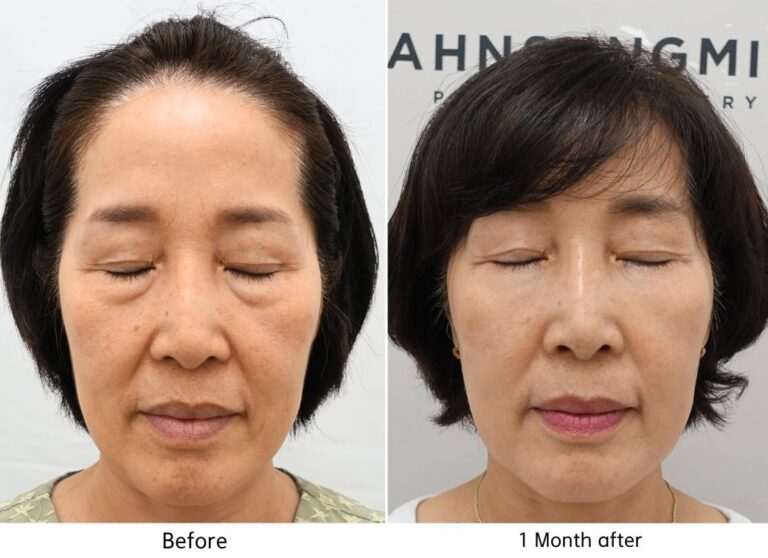
The comparison above demonstrates early healing one month after surgery. Although recovery is still ongoing, the lower eyelid already appears more stable, and the transition between the eyelid and cheek has become smoother while maintaining a natural appearance.
Creating a Smooth Lower Eyelid–Cheek Transition
The appearance of the lower eyelid is closely connected to the position of the cheek.
As the midface gradually descends with aging, the separation between the lower eyelid and cheek becomes more noticeable, making eye bags and tear troughs appear deeper. Supporting the midface helps restore continuity between these structures instead of treating the lower eyelid in isolation.
The objective is not simply to remove fat but to improve the overall relationship between the eyelid and the cheek.
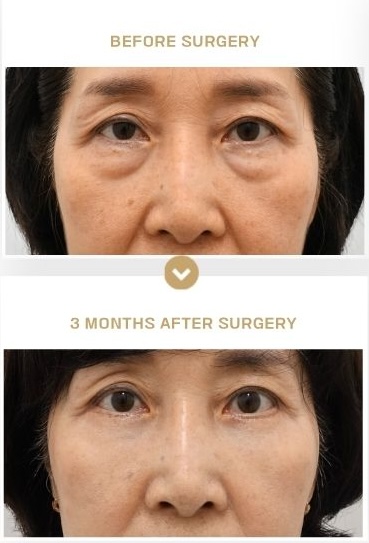
Three months after surgery, the healing process is more advanced. As swelling continues to resolve, the lower eyelid–cheek junction appears smoother, facial balance improves, and the results become more natural over time.
Long-Term Stability Is the Goal
The lower eyelid should never be evaluated independently from the surrounding facial structures.
Every patient presents different anatomy, skin quality, lower eyelid support, and midface volume. For this reason, the appropriate amount of structural support varies from patient to patient and should always be determined through careful diagnosis and individualized surgical planning.
The goal of lower blepharoplasty is not simply to remove eye bags, but to achieve natural, stable, and long-lasting results through structural balance.
Successful lower blepharoplasty depends not only on surgical technique but also on accurate diagnosis and individualized planning.
Learn how to choose the best lower blepharoplasty surgeon in Korea.
Lower Blepharoplasty Recovery Timeline in Korea: How Long Does Healing Really Take?
