Brow Lift Case: Improving Eye Comfort in a Patient in Their 60s.
This patient in their 60s presented with a persistent sense of heaviness around the eyes and difficulty keeping the eyes open. Rather than being concerned primarily about appearance, the patient described functional discomfort affecting daily life.
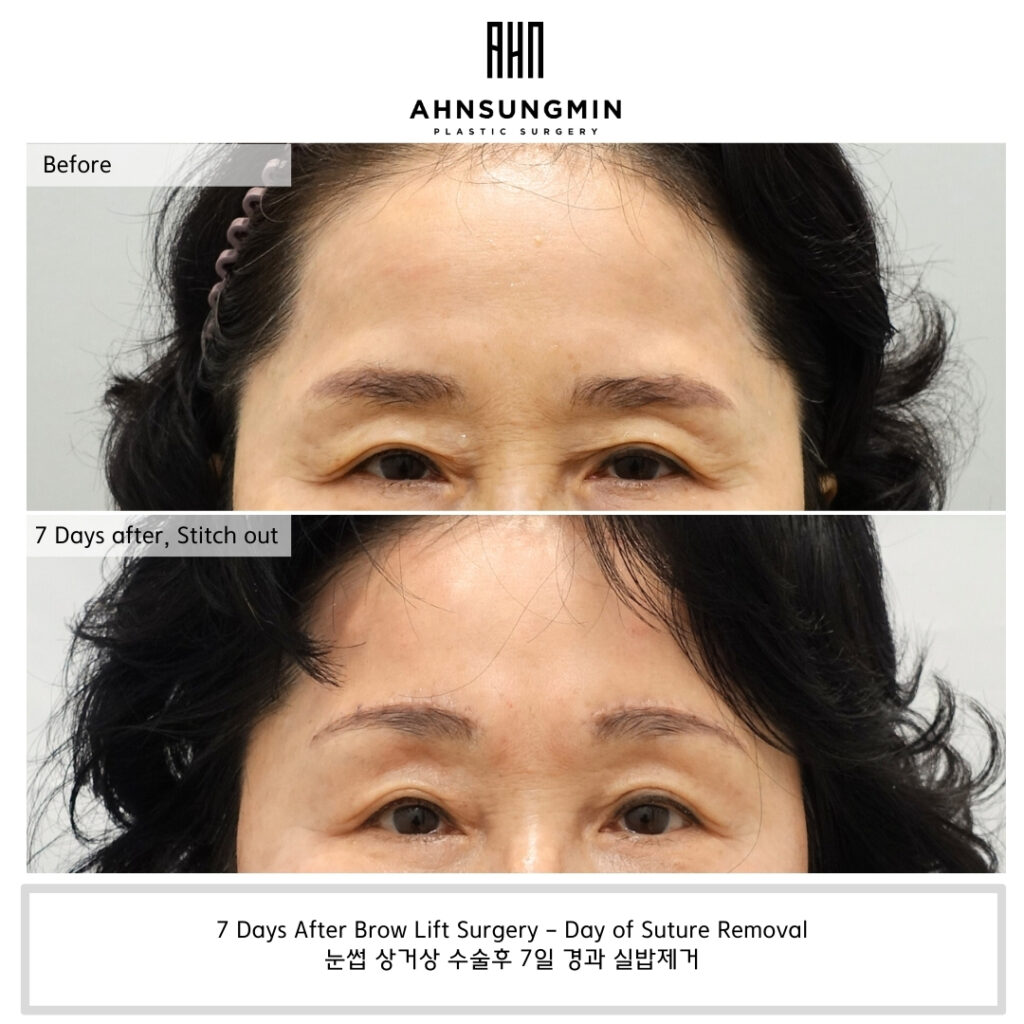
Preoperative Evaluation
Before surgery, the patient demonstrated a low eyebrow position and a reduced distance between the eyebrows and upper eyelids. This anatomical relationship increased the functional burden on the eyes and required continuous effort to maintain eye opening.
In situations where the brow-to-eye distance is already limited, removing upper eyelid skin alone may not address the root cause and can sometimes worsen the imbalance.
In situations where the brow-to-eye distance is already limited, removing upper eyelid skin alone may not address the root cause and can sometimes worsen the imbalance.
To better understand why eyelid sagging often relates to brow position, you can also read:
Why Do Eyelids Sag & How an Eyebrow Lift Can Help
Understanding the Structural Cause
As aging progresses, the supporting structures of the forehead and eyebrows weaken, leading to brow descent. This downward shift places pressure on the upper eyelids and can result in:
– A reduced visual field
– Increased reliance on forehead muscle activation
– Progressive deepening of forehead lines
In this patient, these structural changes played a more significant role than skin excess alone.
Surgical Approach
A brow lift was selected to reposition the descended brow and relieve the pressure on the upper eyelids. The goal was not aggressive elevation, but a controlled and conservative correction that restores functional comfort while maintaining a natural appearance.
Surgical planning was based on:
– Degree of brow descent
– Skin laxity
– Left-right balance
– Functional muscle activity related to eye opening
In this case, the primary goal was not to enlarge the eyes, but to reduce the functional burden caused by brow descent.
Postoperative Progress
Postoperative Day 7 After Brow Lift Surgery
Following suture removal at 7 days, the patient showed an improved brow position and a more relaxed upper facial appearance. Although mild swelling remained, the overall reduction in heaviness was evident even at this early stage.
In cases like this, understanding the relationship between brow position and eyelid function is critical.
For a more detailed explanation, see:
Why Brow Position Matters More Than Eyelid Skin
Close-up Comparison
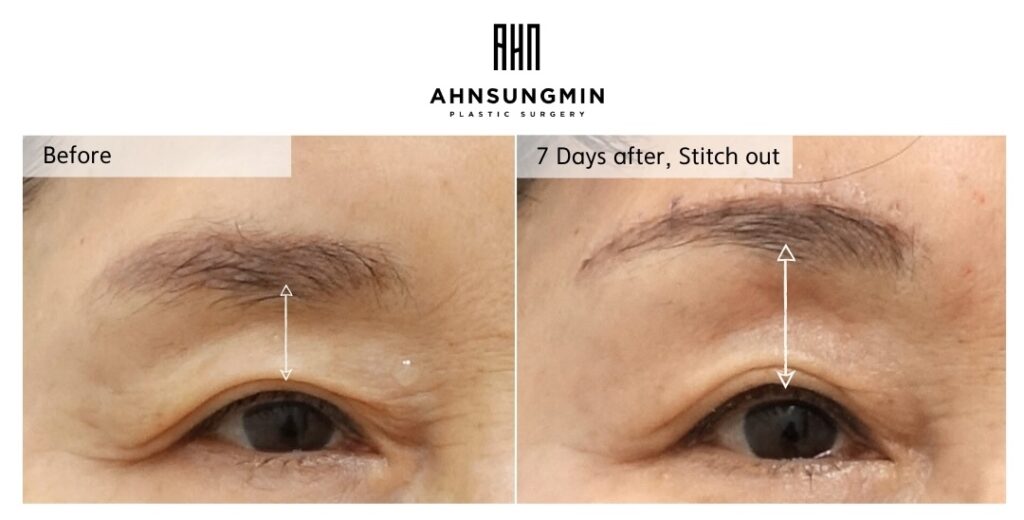
This close-up comparison highlights the change in distance between the eyebrow and the upper eyelid before surgery and at 7 days postoperatively. The increased vertical space reduces downward pressure on the eyelid and decreases the need for compensatory forehead muscle activation.
Rather than dramatically changing eye size, the procedure improves functional comfort and structural balance.
Recovery
Recovery typically follows this course:
– Suture removal at approximately 7 days
– Reduction of swelling and bruising within 2–3 weeks
– Gradual stabilization over 1–3 months
Individual recovery may vary depending on skin condition and surgical extent.
Key Consideration
In patients in their 60s, brow lift surgery often serves a functional role. Overcorrection can lead to an unnatural appearance, making careful diagnosis and restrained surgical planning essential.
Final Thought
In this case, the result is best understood not as making the eyes larger, but as making them feel more comfortable.
If you are experiencing heaviness, difficulty keeping your eyes open, or are unsure whether your condition requires eyelid surgery or a brow lift, a proper diagnosis is critical.
Request a Brow Lift Consultation →
Seeing the Eye as a Whole, Not in Parts
A Clinic Dedicated to Eyelid Revision Surgery in Korea
Ahnsungmin Plastic Surgery
