Before and After
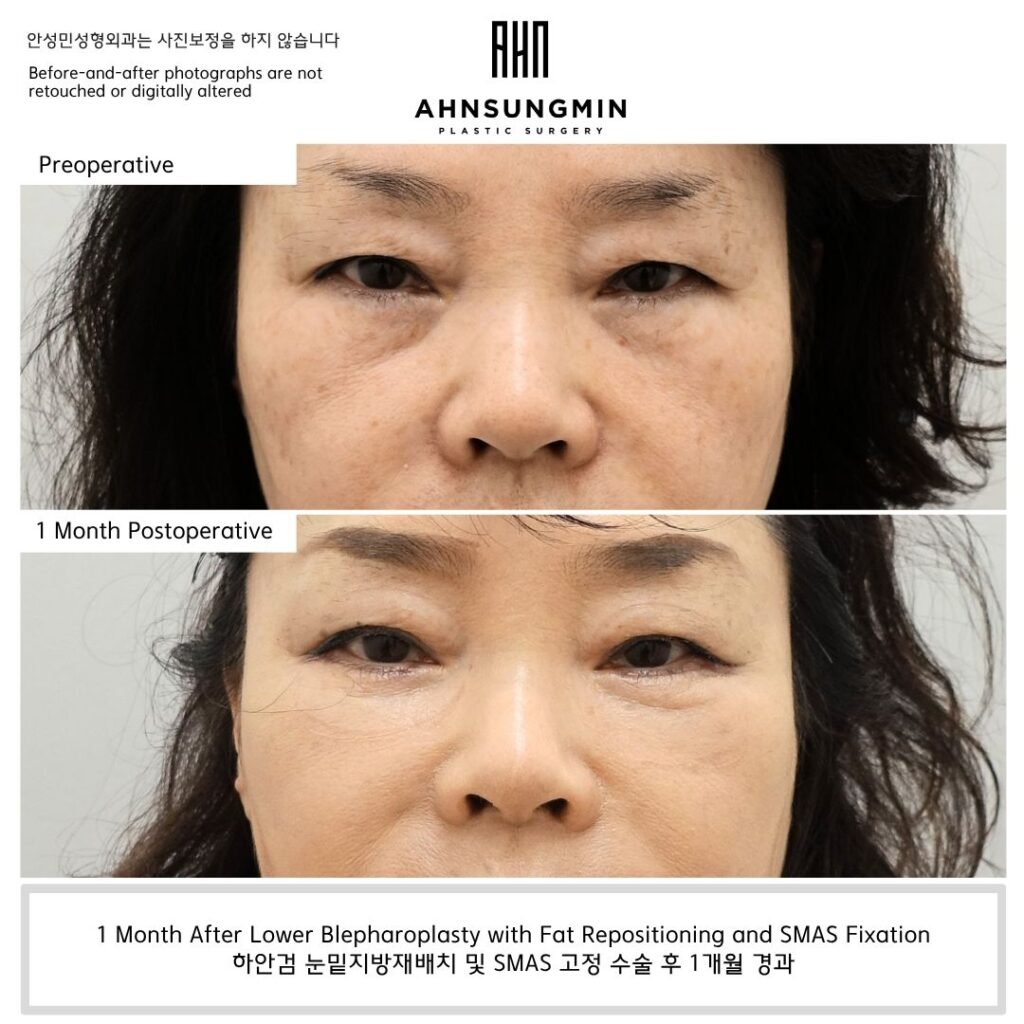
Revision lower blepharoplasty in Korea is often more complex than primary lower eyelid surgery because previously operated tissues already contain scar formation, structural changes, and altered healing patterns.
Many patients seeking revision surgery are not simply concerned about “remaining fat.”
More commonly, they experience persistent under-eye bulging, hollow transition, contour irregularity, or unnatural tension that developed after prior surgery.
In revision lower eyelid surgery, the goal is often not aggressive correction, but restoration of smoother structural balance beneath the eyes.
Why This Patient Required Revision Lower Blepharoplasty
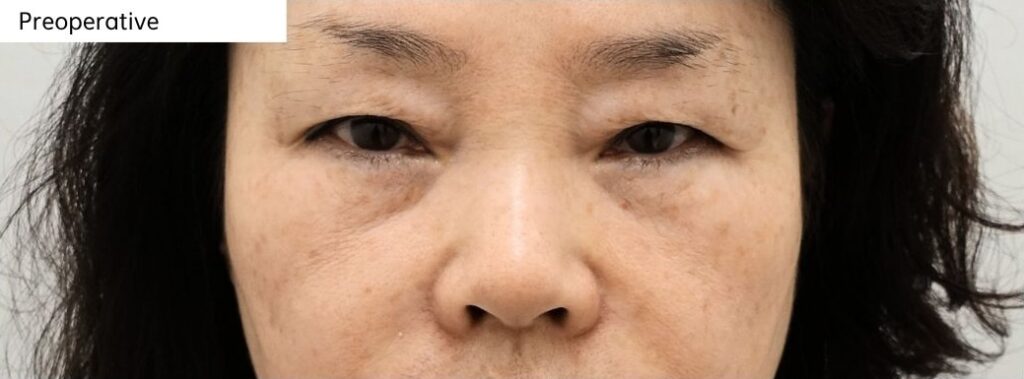
Before revision surgery, this patient continued to demonstrate under-eye bulging, uneven contour transition, and persistent lower eyelid heaviness following previous lower eyelid surgery.
In many revision cases, excessive fat removal alone is not the correct solution.
Instead, the problem often involves imbalance between remaining fat volume, weakened lower eyelid support, scar tissue, and structural instability from prior surgery.
Because revision lower blepharoplasty must address altered anatomy and previous healing changes, surgical restraint becomes extremely important.
Rather than creating a tighter appearance, the procedure focused on restoring smoother lower eyelid contour while preserving natural tissue balance.
Why Structural Support Was Prioritized
Revision lower eyelid surgery requires careful attention to long-term stability.
Overly aggressive fat excision may temporarily flatten the under-eye area, but can later create hollowing, sharper contours, stiffness, or accelerated aging appearance.
For this reason, fat repositioning and SMAS fixation were performed to improve contour transition while supporting lower eyelid stability during healing.
The objective was not excessive tightening, but balanced structural correction that would age more naturally over time.
Patients concerned about hollow eyes after previous surgery may also review our related article:
Why Does My Under-Eye Look Hollow After Lower Eyelid Surgery?
1 Month Recovery After Revision Lower Blepharoplasty
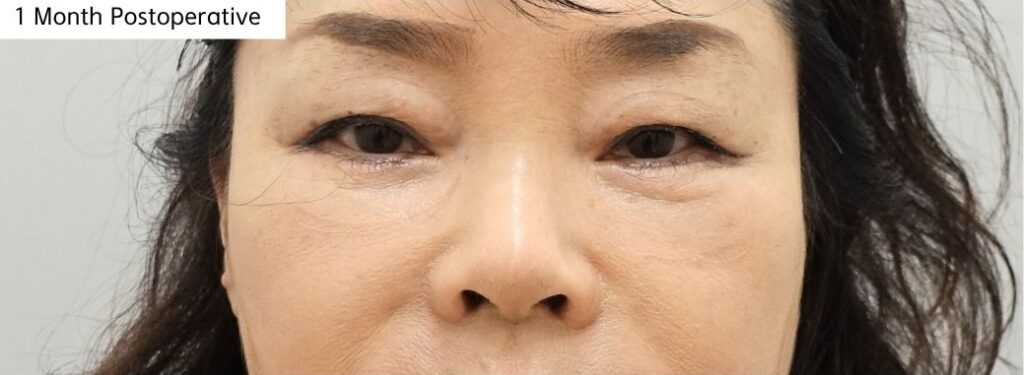
At 1 month after surgery, most major swelling had already improved significantly.
The lower eyelid contour appeared softer and more continuous beneath the eyes while maintaining natural volume without excessive hollowing.
However, revision lower blepharoplasty recovery continues gradually beneath the surface for many additional months.
Scar remodeling, tissue softening, and lower eyelid stabilization continue long after visible swelling improves.
Patients considering revision surgery should understand that early recovery does not represent the final long-term result.
Most revision lower eyelid swelling improves gradually, but structural stabilization often continues for several months beneath the surface.
To better understand how lower eyelid healing evolves over time, review our related article:
Lower Eyelid Surgery Recovery Timeline in Korea
Surgical Approach
Revision lower blepharoplasty was performed with a focus on structural correction, fat preservation, SMAS support, and long-term lower eyelid stability rather than aggressive tissue removal.
Because revision surgery involves previously operated anatomy, maintaining healthy tissue balance is often more important than pursuing excessive correction.
Request a Revision Lower Eyelid Surgery Evaluation
Every revision lower eyelid case is different because previous surgery changes tissue structure, healing patterns, and support strength differently in each patient.
If you are considering revision lower blepharoplasty in Korea, you may request a personalized evaluation based on your current lower eyelid condition, tissue stability, and long-term recovery potential.
Request a Revision Lower Eyelid Evaluation
