Removal Is Easy. Balance Is Not.
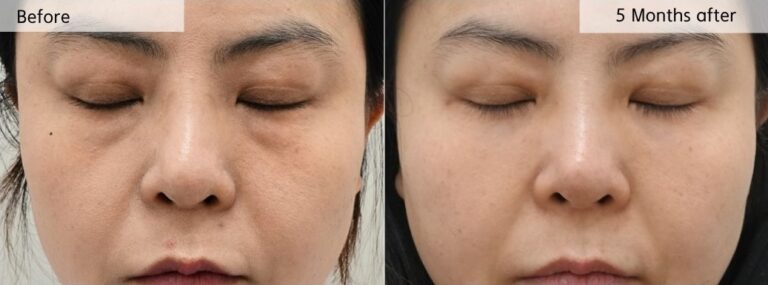
When patients look in the mirror, they often see one thing: bulging fat.
The instinct is simple.
If it bulges, remove it.
But the lower eyelid is not a flat surface.
It is a transition zone.
Between the lower lid and the cheek, volume is not a defect. It is structure.
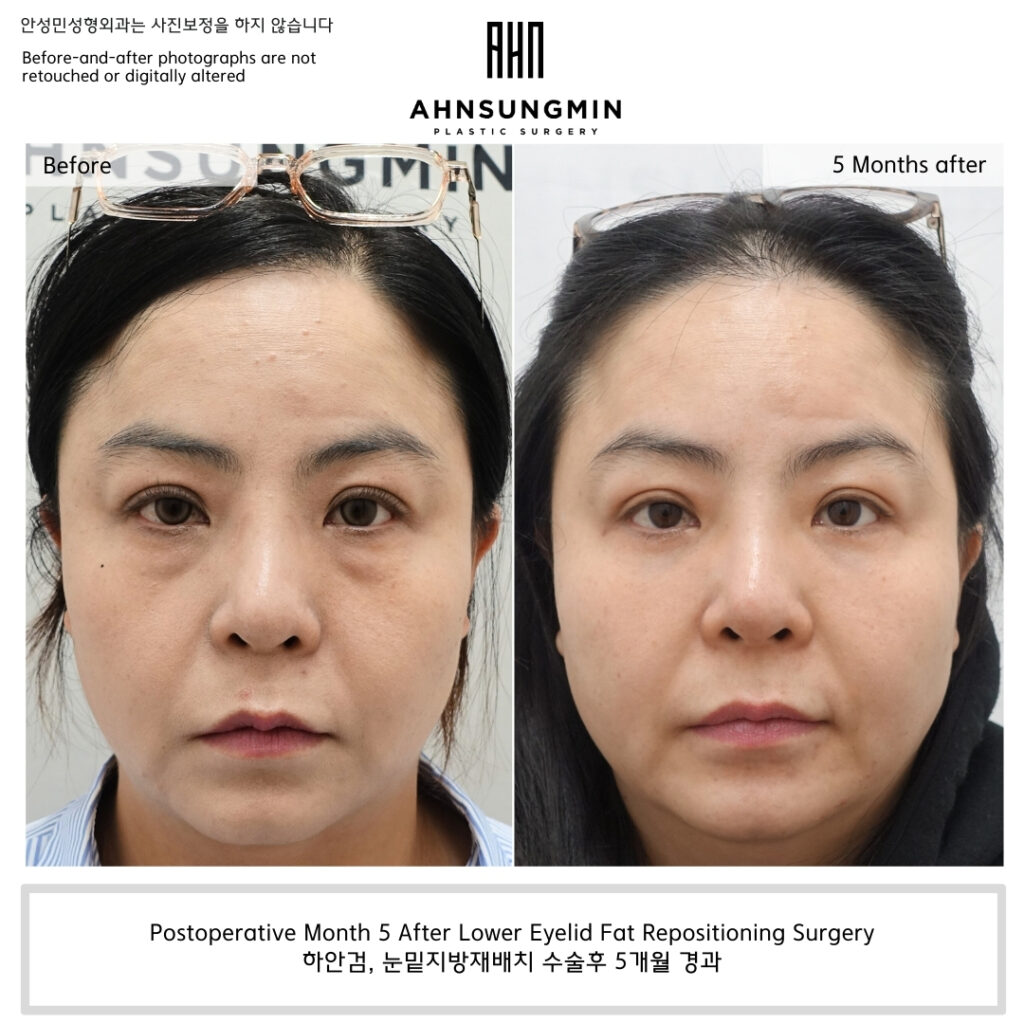
Under-eye bulging has been softened while preserving structural volume and lower eyelid support.
Before-and-after photographs are not retouched or digitally altered.
Removing fat may flatten the bulge temporarily.
But flattening is not always correction.In some cases, this is why lower eyelid bulging returns after surgery.
At five months, the contour is smoother, yet the lower lid is not aggressively hollowed.
Volume was preserved where structure required it.
The Hollow Is Harder to Fix Than the Bulge.
Excessive fat removal creates a different problem.
The under-eye becomes skeletal.
Shadows deepen.
The lid-cheek junction becomes sharp instead of smooth.
Once volume is lost, it is far more difficult to restore than to preserve.
Fat grafting in this area is unpredictable.
Scarred tissue does not accept volume naturally.
That is why restraint at the first surgery is critical.
Repositioning Is Structural Thinking.
In appropriate cases, fat is not removed.
It is repositioned.
The goal is not subtraction.
It is redistribution.
Bulging fat is often not excess volume.
It is displaced volume.
When repositioned over the tear trough, the transition softens.
The contour improves without creating deficiency.
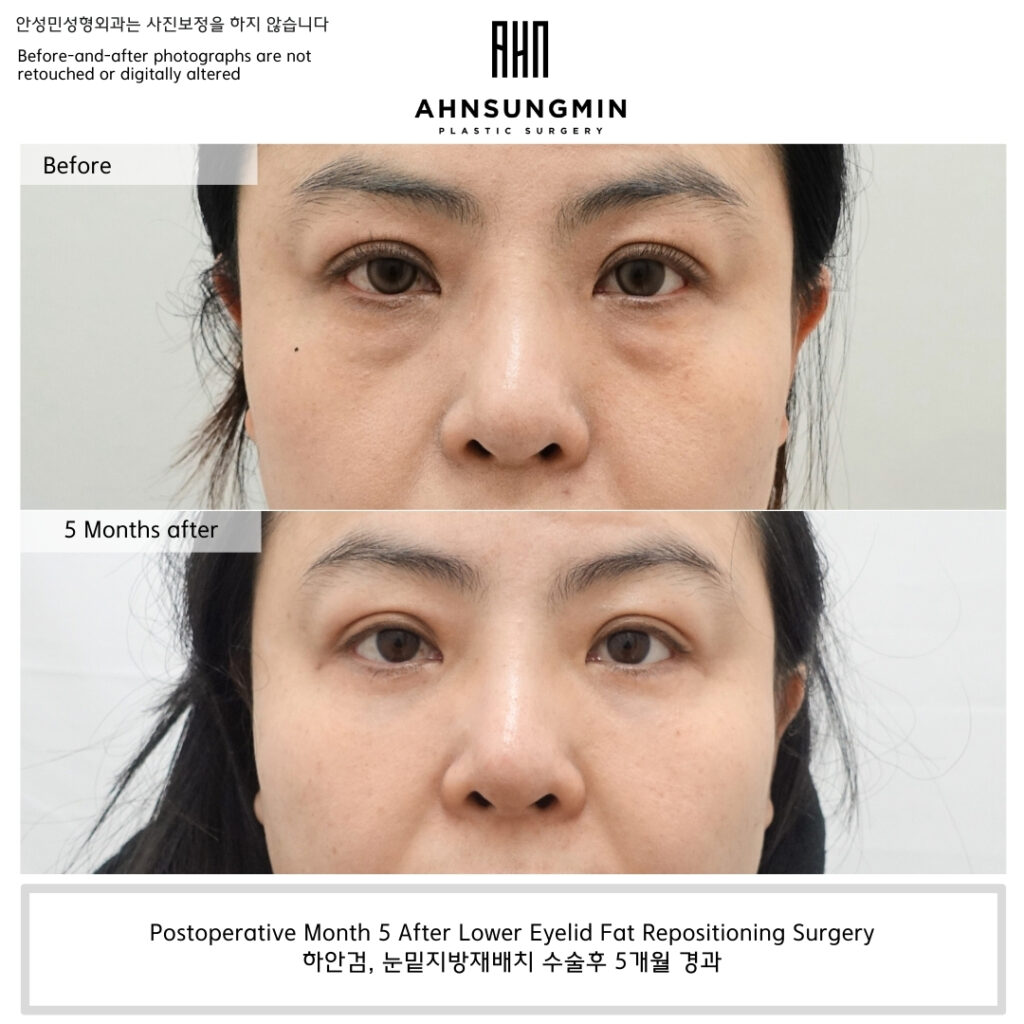
The tear trough transition has been softened through fat repositioning, not aggressive removal.
Before-and-after photographs are not retouched or digitally altered.
This case illustrates how smoothing the lid-cheek junction does not require aggressive removal.
Structure was balanced, not emptied.
Pigmentation Is Not Fat.
Not all dark circles are caused by protruding fat.
Pigment-related dark circles come from skin coloration and vascular show-through.
No amount of fat removal will correct pigmentation.
If we remove volume trying to fix color, we create hollowing without improving darkness.
Understanding the cause prevents unnecessary surgery.
Long-Term Stability Over Immediate Flatness.
A slightly full lower eyelid at five months may look more natural at five years.
An aggressively flattened eyelid may look sharp early — and hollow later.
The goal is not to eliminate every curve.
The goal is to preserve balance.
In lower eyelid surgery, what we choose not to remove is often more important than what we take away.
Related insight:
Why Lower Eyelid Surgery Is About Support, Not Removal
Related Insight:
When Fat Removal Becomes the Beginning of Hollowing
Seeing the Eye as a Whole, Not in Parts
A Clinic Dedicated to Eyelid Revision Surgery in Korea
Ahnsungmin Plastic Surgery
