A Flat Lower Eyelid Does Not Always Look Younger
One of the most common misconceptions in lower eyelid surgery is that a smoother, flatter under-eye area automatically appears younger.
It does not.
In many failed lower eyelid surgeries, the issue is not what was done—but what was removed.
Aegyo-Sal Is Not Just Fat.
Aegyo-sal is often misunderstood as excess fat beneath the eye.
In reality, it is closely related to the orbicularis oculi muscle and the dynamic movement of facial expression.
This structure plays a critical role not only in how the eye looks at rest, but also in how it appears when smiling.
Removing or flattening this area indiscriminately often leads to an unnatural and aged appearance.
Why Balance Matters More Than Symmetry.
Many patients request perfectly symmetrical lower eyelids.
However, facial muscles are rarely symmetrical.
Differences in smiling patterns, muscle strength, and support structures are normal.
Attempting to erase these differences surgically often results in stiffness rather than harmony.
Lower eyelid surgery should aim for balance—not forced symmetry.
What Happens When Aegyo-Sal Is Removed
When aegyo-sal is excessively reduced or flattened:
- The natural contour of the lower eyelid is lost
- Facial expressions appear rigid
- The eyes may look hollow or tired despite surgery
This is not rejuvenation.
It is overcorrection.
Why Does My Under-Eye Look Hollow After Lower Eyelid Surgery?
→ A hollow or flattened lower eyelid is often the result of excessive fat removal or loss of structural support.
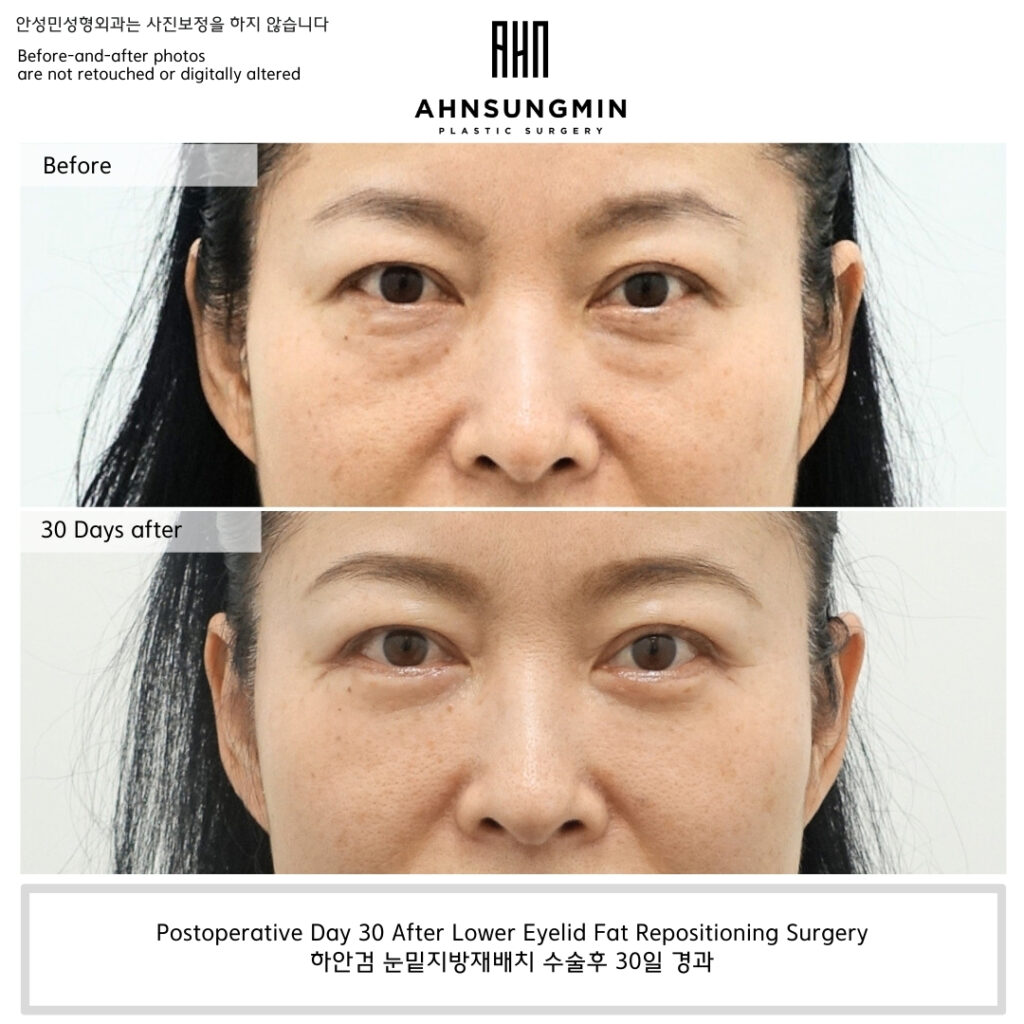
Preserving Aegyo-Sal Requires Structural Judgment
Preserving aegyo-sal does not mean performing less surgery.
It means understanding which structures must remain intact.
This requires careful evaluation of muscle dynamics, fat positioning, skin elasticity, and long-term stability.
In lower eyelid surgery, restraint is often the most advanced technique.
Our Approach
Our goal is not to eliminate every contour beneath the eye.
It is to preserve natural expression, maintain structural support, and prevent long-term complications that may lead to revision surgery.
Lower eyelid surgery must respect how the face moves—not just how it appears in a static image.
Why Does My Under-Eye Look Hollow After Lower Eyelid Surgery?
→ A flattened lower eyelid often results from excessive removal of fat or loss of aegyo-sal.
Why Does Preserving Aegyo-Sal Matter in Lower Eyelid Surgery?
→ Loss of aegyo-sal can lead to a flat, aged appearance even after surgery.
Common Questions About Aegyo-Sal in Lower Eyelid Surgery
Q. Is aegyo-sal just fat that should be removed?
A. No. Aegyo-sal is closely related to muscle structure and facial expression, and removing it can lead to an unnatural appearance.
Q. Can removing aegyo-sal make the eyes look older?
A. Yes. Over-removal can flatten the lower eyelid and create a hollow or aged look.
If you are considering revision lower blepharoplasty in Korea, you may request a personalized evaluation based on your current lower eyelid condition, tissue stability, and long-term recovery potential.
Request a Revision Lower Eyelid Evaluation
Online consultation and image-based evaluation are available for international revision patients.
Seeing the Eye as a Whole, Not in Parts
A Clinic Dedicated to Eyelid Revision Surgery in Korea
Ahnsungmin Plastic Surgery
