When a Thick Double Eyelid Is Not Just a Design Problem
A thick double eyelid crease is often assumed to be a design problem—but in many cases, it is not. Commonly referred to as a “sausage eyelid”, this appearance can look heavy and overly dramatic, often failing to match a natural and balanced appearance.
While this can be congenital, one of the most common causes is when a double eyelid crease is created without addressing underlying ptosis.
If a thick or high fold eyelid is affecting how your eyes function or appear, the underlying cause may need to be evaluated before deciding on revision.
→ Request a High Fold & Ptosis Evaluation in Korea
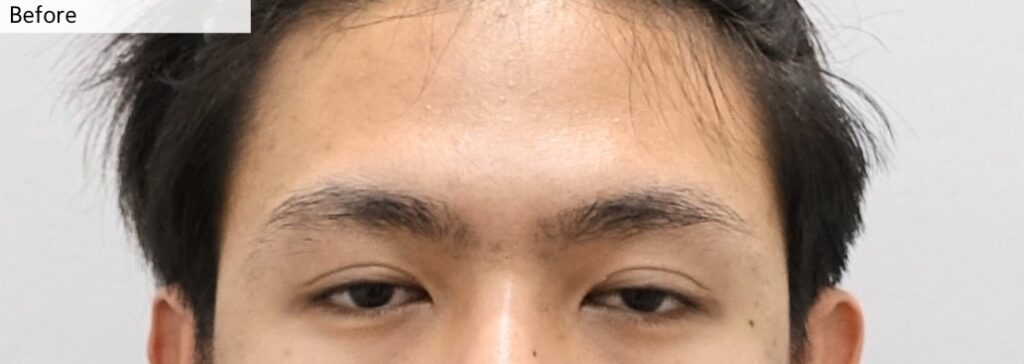
What Actually Causes a Thick or High Fold Eyelid
So what makes a double eyelid crease look too thick?
A high crease design is often part of the problem. But more importantly, ptosis is frequently present at the same time.
When ptosis is not corrected, the eyes cannot open properly. As a result, the patient unconsciously lifts the eyebrows to compensate. Over time, this repeated forehead activation pulls the crease upward again, making the eyelid appear thicker and higher.
Why Ptosis Correction Matters More Than Lowering the Fold
Ptosis refers to a condition in which the muscle responsible for lifting the eyelid is weakened.
In these cases, simply lowering the crease is not enough. Without restoring proper eyelid function, the same problem often recurs.
Ptosis correction strengthens and repositions the lifting muscle so that the eyes can open naturally—without relying on the forehead. This reduces the upward pull on the crease and prevents it from thickening again over time.
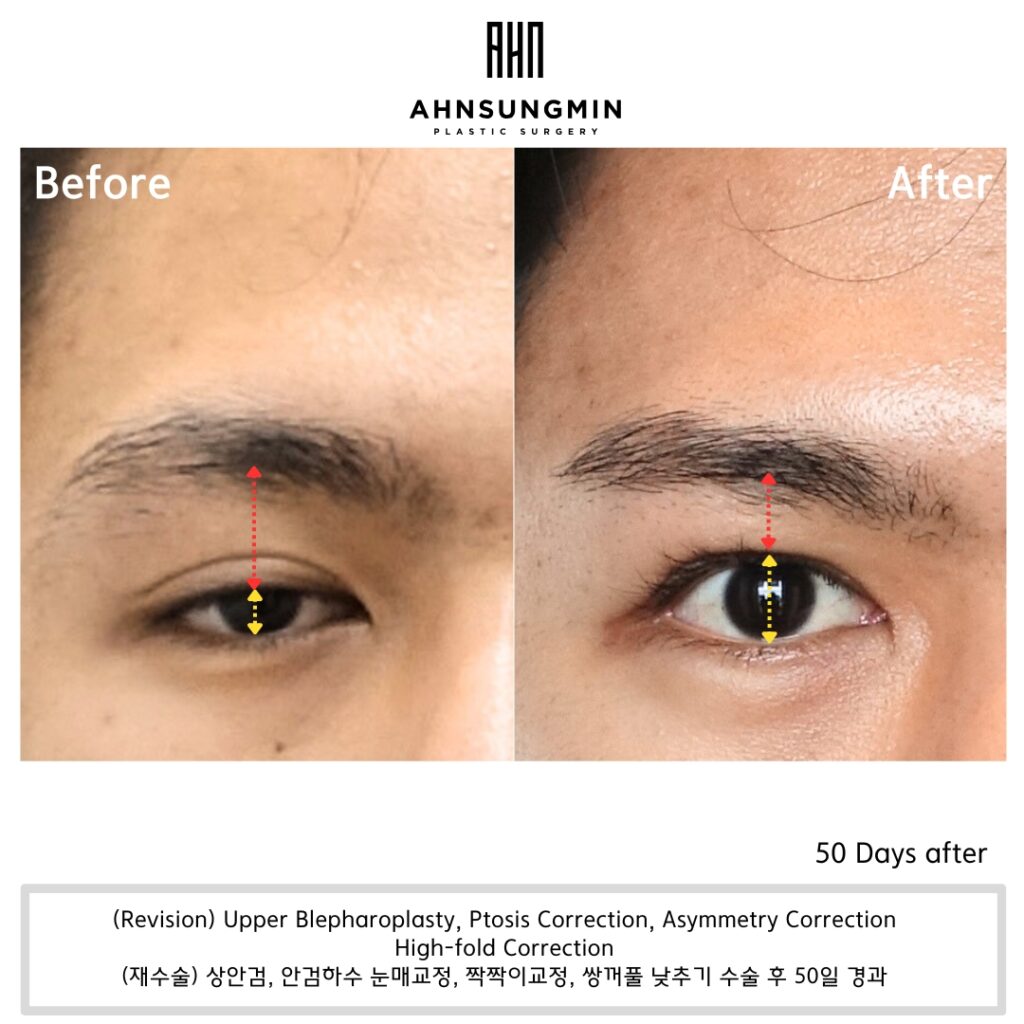
Why High Fold Revision Is More Complex Than It Seems
Correcting a high or thick double eyelid is not a simple adjustment.
When the original crease is deeply set, a secondary fold may appear, or the previous crease may remain visible. In some cases, there may also be insufficient skin to fully lower the fold.
Repeated revision surgeries can increase scarring and adhesion, making the procedure significantly more complex and recovery slower.
Without correcting ptosis, lowering the crease alone often leads to recurrence.
→ Request a High Fold & Ptosis Evaluation in Korea
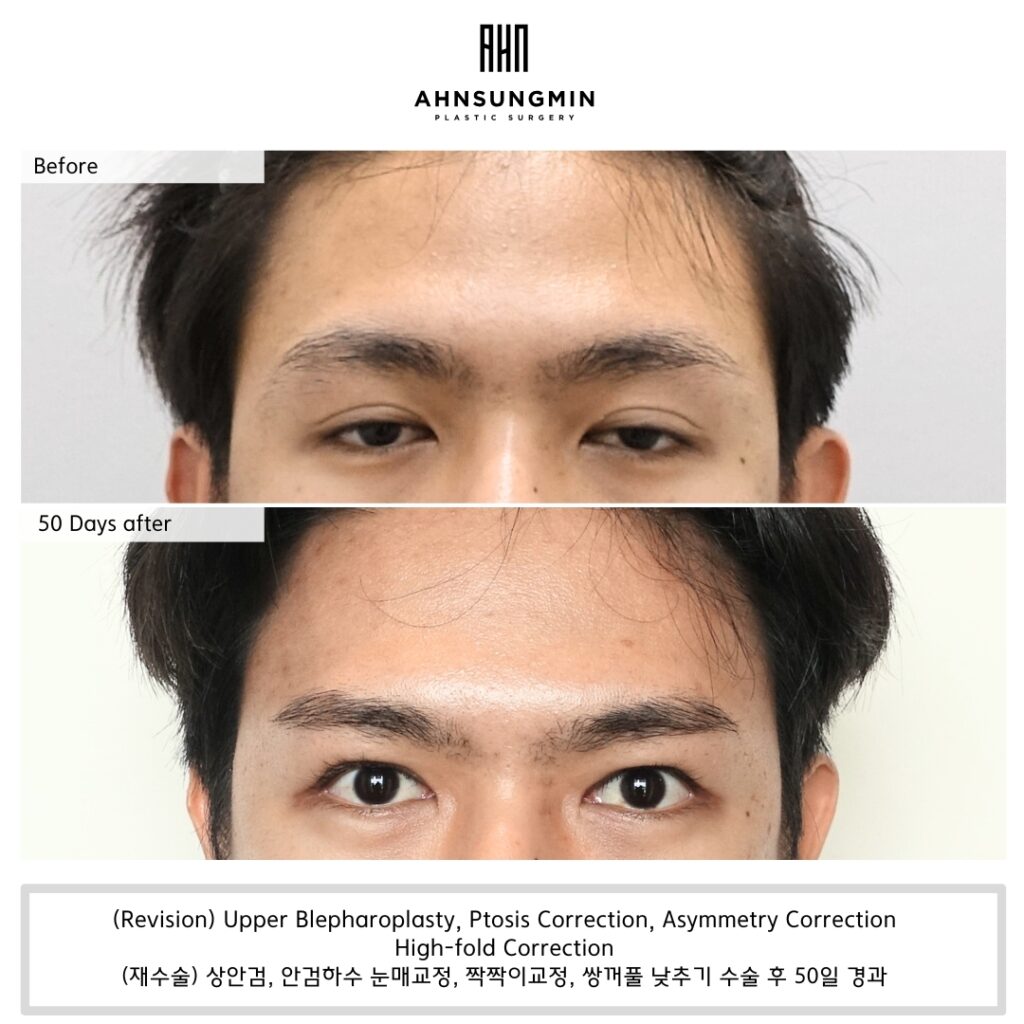
Correcting a thick or high double eyelid is not simply about lowering the line.
The decision depends on whether the issue is caused by crease height, tissue thickness, or underlying functional imbalance.
In many cases, restoring eyelid function through ptosis correction is more important than adjusting the crease itself.
Surgical planning must be based on structure—not appearance alone. When this distinction is overlooked, recurrence becomes highly likely.
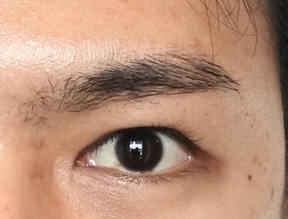
Seeing the Eye as a Whole, Not in Parts
A Clinic Dedicated to Eyelid Revision Surgery in Korea
Ahnsungmin Plastic Surgery
→ Request a High Fold & Ptosis Correction Consultation in Korea
If your double eyelid appears too thick, high, or unnatural, the issue is not always the crease design itself.
In many cases, a high fold or thick eyelid is caused by underlying ptosis or functional imbalance.
The decision is not whether to make the crease larger, but whether the current structure allows the eye to open naturally and remain stable.
Why Does My Double Eyelid Look Too High Over Time?
→ A high fold or thick eyelid is often caused by functional imbalance rather than design.
Common Questions About Thick Double Eyelids
Q. Can a thick double eyelid be fixed without ptosis correction?
A. In most cases, no. Without correcting ptosis, the crease often becomes thick again over time.
Q. Why does my double eyelid become thicker over time?
A. This often happens when ptosis is present. The forehead compensates, gradually pulling the crease higher.
