Male Ptosis Correction: Why More Men Need This Procedure Today
More men today are seeking a natural, refreshed eye appearance, and as a result, male ptosis correction has become one of the fastest-growing eyelid procedures. Unlike women, men usually require a subtle, thin, and natural eyelid crease to maintain a masculine look. Therefore, precise surgical design and functional correction are essential.
In this article, we explain what male ptosis is, why it often goes unnoticed, and how ptosis correction can dramatically improve both appearance and eyelid function.
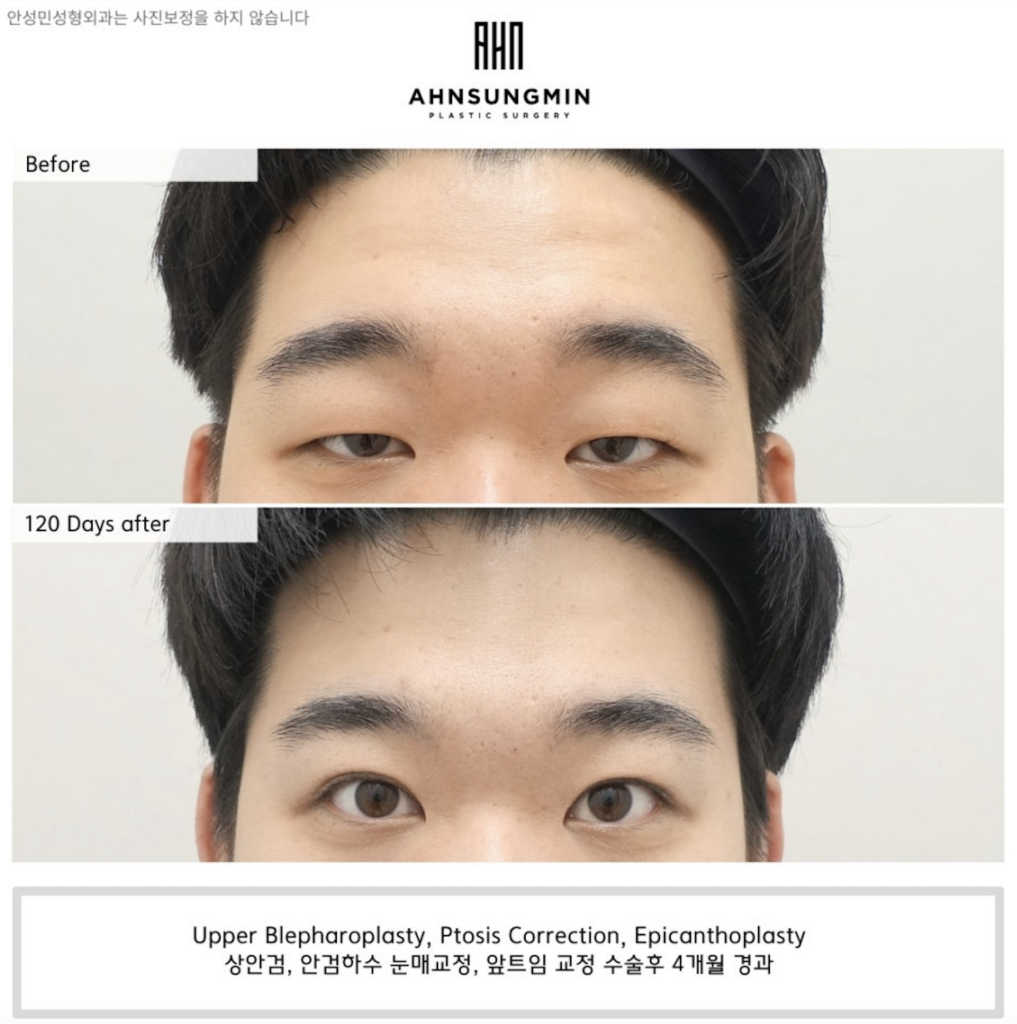
What Is Ptosis? (Droopy Eyelids in Men)
Ptosis is a condition in which the levator muscle (levator palpebrae superioris) is weak or underdeveloped, causing the upper eyelid to open incompletely.
In men, the eyelid skin tends to be thicker, and the upper eyelid often contains more fat. Because of this, ptosis in men is easily overlooked, frequently mistaken for:
- A naturally sleepy look
- Tired eyes
- Heavy eyelids
However, ptosis is not just a cosmetic concern—it affects eyelid function and causes compensatory muscle strain.
In men, the eyelid skin tends to be thicker, and the upper eyelid often contains more fat. Because of this, ptosis in men is easily overlooked, frequently mistaken for:
- A naturally sleepy look
- Tired eyes
- Heavy eyelids
However, ptosis is not just a cosmetic concern—it affects eyelid function and causes compensatory muscle strain. In such cases, proper ptosis correction is essential to restore normal eyelid function.
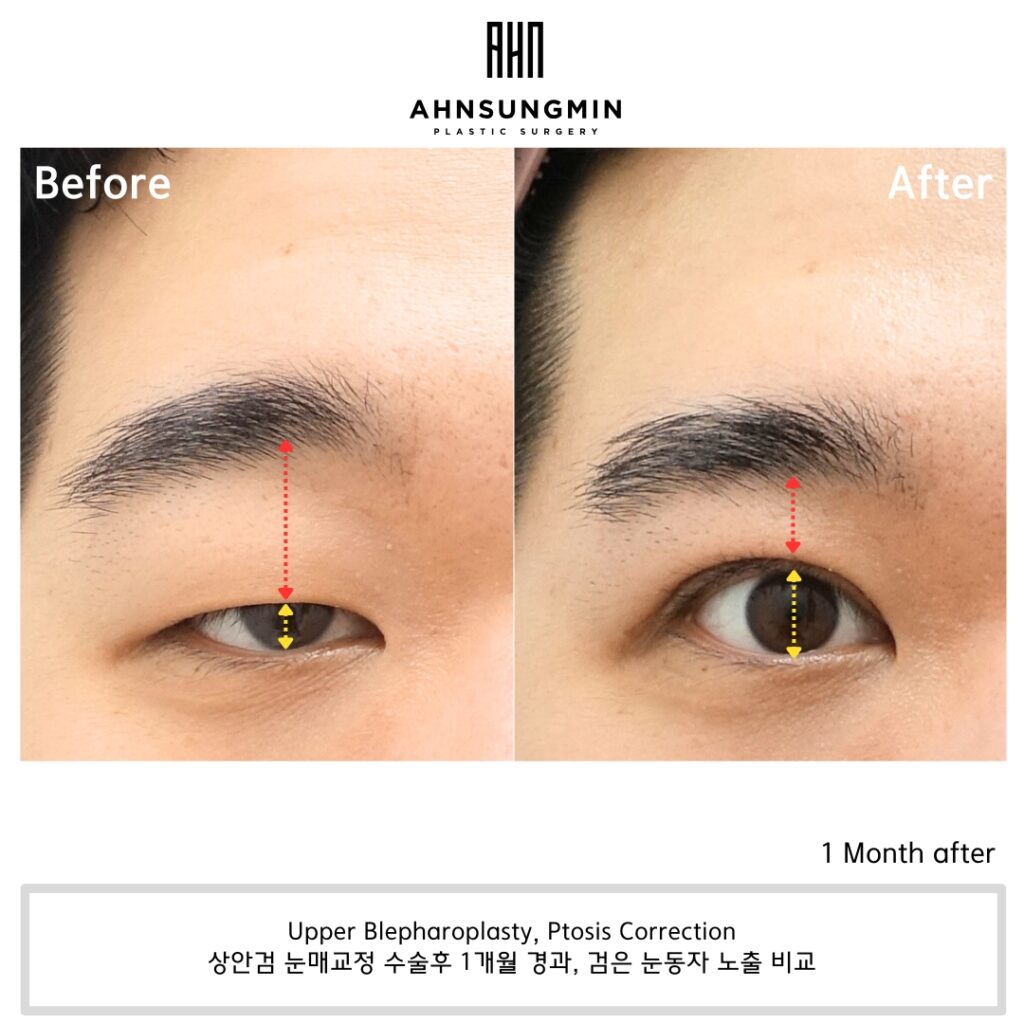
Typical Symptoms of Male Ptosis
Men with ptosis often experience:
- Small, sleepy, or droopy-looking eyes
- Heavy upper eyelids
- Overuse of eyebrow and forehead muscles
- Fine forehead wrinkles (even in younger men)
- Lifting the chin to improve vision
- Tired appearance in photos
Because men unconsciously compensate with their forehead, ptosis may progress for years without being recognized as a functional issue.
Common Characteristics of Male Ptosis
- Forehead strain to lift the eyelids
- Constantly tired or dull appearance
- Eyes appearing smaller in pictures
- Premature forehead lines
- Asymmetrical eyelid opening
These features often lead men to seek treatment not for cosmetic reasons alone, but to correct the underlying muscle imbalance.
Why Male Ptosis Correction Is Important
Ptosis correction surgically adjusts the levator muscle to restore normal eyelid function and improve the eye’s appearance. Unlike double eyelid surgery, ptosis correction focuses on function first, aesthetics second.
This distinction is especially important for men who want natural, non-surgical-looking results.
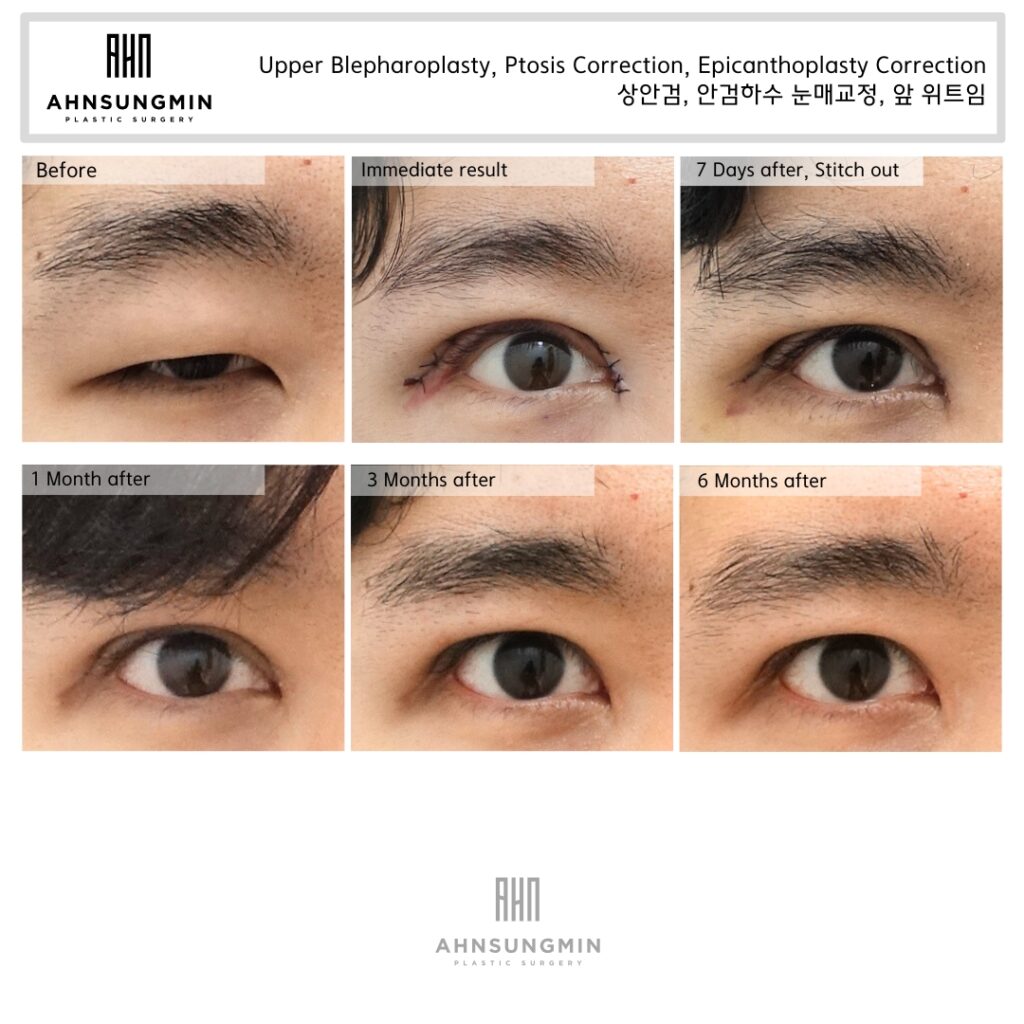
Key Principles in Male Ptosis Surgery
1. Maintain a Subtle, Natural Eyelid Crease
Men generally do not suit high or deep folds. The goal is a natural open-eye effect without creating an artificial-looking crease.
2. Avoid Overcorrection
Overly lifted eyelids can appear feminine or unnatural. Balanced correction is crucial to maintaining a masculine eye shape.
3. Improve Forehead Wrinkles
Once the eyelids function properly, the forehead no longer compensates—leading to a natural reduction in forehead lines.
4. Customized Surgical Plan for Male Anatomy
Men vary widely in eyelid thickness, fat distribution, and levator muscle strength. A tailored approach ensures results that look natural and masculine.
Expected Results of Male Ptosis Correction
- A less sleepy, less tired appearance
- Brighter and more defined eyes
- Reduction of forehead wrinkles
- Younger, more alert facial expression
- Improved symmetry
- More photogenic eye appearance
Most male patients report that friends notice they “look more awake,” not that they “had surgery.”
A Functional Problem
This patient presented with reduced eyelid opening and a heavy appearance.
The primary issue was not the crease itself, but weakened eyelid function.
The eyes required effort to open, and there was a reliance on the forehead for compensation.
This created both a functional limitation and an unnatural appearance.
In cases like this, the issue is not simply how the eyelid looks—
but how it works.
Why We Did Not Focus on the Crease
In this case, the crease was not the primary problem.
Attempting to adjust or emphasize the fold without addressing eyelid function
would not have improved the overall result.
The key issue was reduced opening strength,
not the design of the crease.
Structural Correction
The surgical approach focused on restoring eyelid function through ptosis correction.
By improving the lifting strength of the eyelid,
the eye could open more naturally without compensatory effort.
This functional correction allowed the eye to appear clearer and more defined
without forcing a change in crease design.
Results
At postoperative follow-up:
- Eyelid opening is significantly improved
- The eyes appear more alert and balanced
- Forehead compensation is reduced
- The gaze is more relaxed
The improvement reflects restored function,
not just a change in appearance.
Surgical Approach
Upper Blepharoplasty
Ptosis Correction
Epicanthoplasty
Performed under local anesthesia with a focus on functional recovery and structural balance
→ Request a Ptosis Evaluation
If your eyes feel heavy or require effort to open,
it may be important to evaluate eyelid function rather than focusing only on appearance.
Frequently Asked Questions
Is ptosis correction necessary even if I have a double eyelid?
-Yes. The presence of a crease does not guarantee proper eyelid function.
Can ptosis cause a tired or heavy appearance?
-Yes. Reduced eyelid opening often makes the eyes appear fatigued.
Will ptosis correction change how my eyes look?
-Yes. The eyes often appear clearer and more open after functional improvement.
How long does recovery take?
-Initial recovery occurs within weeks, but full stabilization may take several months.
Insights
Reduced eyelid opening strength often causes patients to rely unconsciously on forehead compensation over time.
When Eye Shape Correction Is Necessary
Eyes that continue to feel heavy after eyelid surgery may still have unresolved functional instability rather than a simple crease issue.
Why Do My Eyes Still Feel Heavy After Double Eyelid Surgery?
Ptosis correction is intended to restore more natural eye-opening function rather than simply creating larger or stronger-looking eyes.
Ptosis Correction Is Not About Making the Eyes Bigger
Natural eye opening and long-term functional balance are often more important than creating a stronger or higher eyelid crease.
Why Natural Eye Opening Matters More Than Crease Design
Best Ptosis Surgeon in Korea
