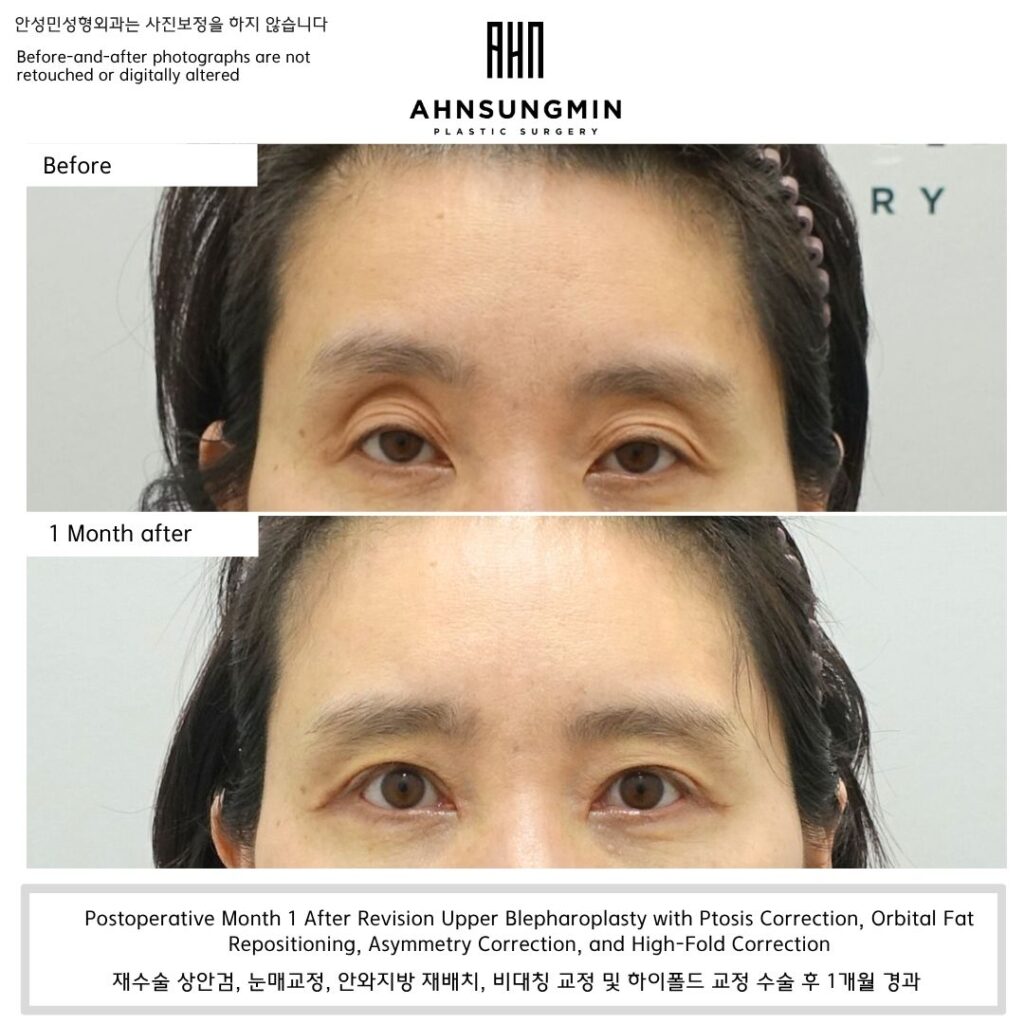
Upper eyelid hollowing is often attributed to aging and volume loss.
While aging can contribute to a hollow appearance, it is not always the primary cause.
In many patients, upper eyelid hollowing develops due to ptosis compensation, chronic muscle imbalance, structural changes after previous eyelid surgery, or loss of natural support around the upper eyelid.
When these underlying problems are not properly identified, the hollow appearance may persist—or gradually recur—even after volume-based treatment.
For this reason, long-term improvement depends not only on adding volume, but on understanding what is actually causing the hollowed appearance in the first place.
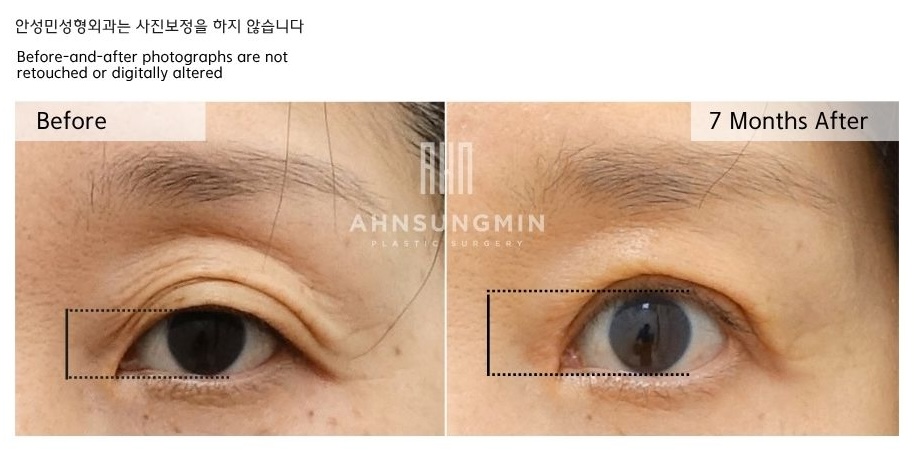
In selected patients, orbital fat repositioning may help restore support while preserving the patient’s own remaining tissue and blood supply.
However, no single procedure is appropriate for every case.
The most important decision is not simply choosing a surgical technique, but identifying the structural and functional cause behind the hollow appearance and selecting an approach that addresses it more fundamentally.
Without understanding the underlying mechanism, even technically successful surgery may fail to provide lasting stability over time.
Related Insights
→ Why Your Eyelids Look Hollow—And Why Filler May Not Be the Answer
→ Why Hollow Eyelids Are Not Always a Volume Problem
→ Upper Eyelid Fat Reposition Surgery for Hollow Eyelids
→ Why Eyelid Hollowing Can Return After Fat Grafting
→ When Eyelid Hollowing Is Worsened by Ptosis Asymmetry
Frequently Asked Questions
Is upper eyelid hollowing always caused by aging?
No.
While aging and volume loss may contribute, upper eyelid hollowing can also develop due to ptosis compensation, muscle imbalance, previous eyelid surgery, or structural support changes.
Why can hollow upper eyelids appear even in younger patients?
In some patients, chronic compensation patterns, naturally limited volume, or structural imbalance around the upper eyelid may create a hollow appearance even without significant aging.
Can ptosis make upper eyelid hollowing appear worse?
Yes.
When patients constantly use the forehead or eyelid muscles to compensate for weak eye opening, the upper eyelid area may gradually appear more hollow or strained over time.
Is adding volume always the best treatment for hollow eyelids?
Not always.
If the hollow appearance is caused by structural imbalance or functional compensation, volume alone may not fully correct the underlying problem.
What is orbital fat repositioning?
Orbital fat repositioning is a technique that redistributes the patient’s existing orbital fat while preserving its blood supply in selected cases. This approach may help restore support and improve hollowing more naturally.
Can hollow eyelids return after surgery or fat grafting?
In some patients, yes.
If the underlying structural or functional cause is not addressed, the hollow appearance may gradually recur over time.
Why is structural balance important in hollow eyelid correction?
Long-term stability often depends on maintaining balance between the upper eyelid, surrounding support structures, and eye-opening function rather than simply increasing volume.
Is every hollow eyelid case treated the same way?
No.
The cause of upper eyelid hollowing varies from patient to patient, and treatment planning should be individualized based on anatomy, support structures, prior surgery history, and functional balance.
Request an Upper Eyelid Hollowing Evaluation
If you are concerned about hollow upper eyelids, you may request a personalized evaluation based on eyelid structure, ptosis compensation, previous surgery history, support balance, and long-term stability.
Seeing the Eye as a Whole, Not in Parts
A Clinic Dedicated to Eyelid Revision Surgery in Korea
Ahnsungmin Plastic Surgery
