Understanding the Real Cause of Lower Eyelid Instability
Many patients who seek lower eyelid revision surgery believe that the problem lies mainly in the skin. When the lower eyelid appears loose, pulled downward, or uneven after previous surgery, it is natural to assume that the issue can be corrected simply by adjusting or tightening the skin.
However, in many revision cases, the underlying problem is not the skin itself but the structural support of the lower eyelid.
The lower eyelid is supported by a complex balance of structures, including the eyelid muscles, lateral canthal support, orbital fat, and surrounding connective tissues. When this support system becomes weakened or disrupted—often due to previous surgery—the eyelid may gradually lose stability and begin to pull downward.
In these situations, adjusting the skin alone rarely solves the problem.
Why Skin Adjustment Alone Is Often Not Enough
One of the most common causes of lower eyelid complications after surgery is the loss of structural balance.
For example, excessive skin removal during previous procedures can create vertical tension that pulls the eyelid downward. At the same time, weakening of the lateral support structures may reduce the eyelid’s ability to maintain its natural position.
When these structural problems exist, simply tightening or trimming the skin may temporarily change the appearance but does not address the underlying instability.
In fact, additional skin adjustment in such cases may sometimes increase tension and worsen eyelid malposition.
The Importance of Structural Support in Revision Surgery
Because of these factors, successful lower eyelid revision surgery often requires restoring structural support, not just modifying the skin.
Depending on the patient’s condition, this may involve techniques that stabilize the eyelid and redistribute tension away from the eyelid margin. Structural reinforcement can help restore balance between the eyelid, surrounding tissues, and the supporting framework of the eye.
The goal is not simply to reposition the eyelid, but to allow it to maintain a stable and natural position over time.
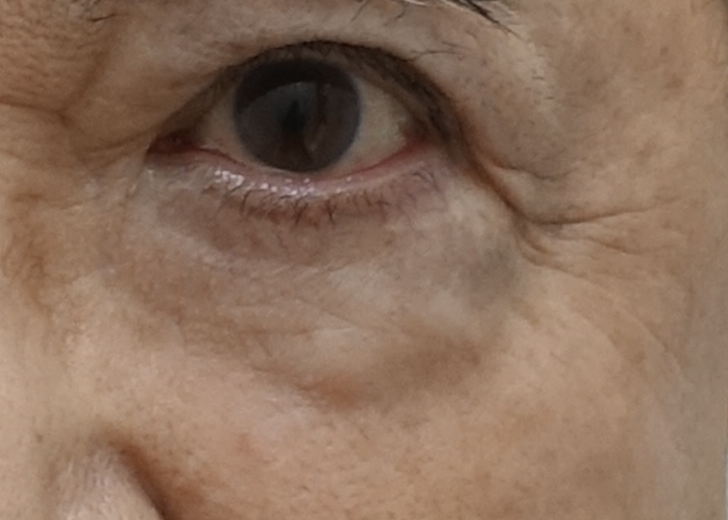
Why Careful Evaluation Is Essential
Every lower eyelid revision case is different. Some patients primarily have skin-related issues, while others have deeper structural problems involving scar adhesion, tissue imbalance, or weakened support structures.
For this reason, revision surgery must begin with a careful evaluation of the entire eyelid system.
Understanding whether the problem originates from the skin or from deeper structural support is essential in determining the safest and most effective approach.
In many cases, restoring structural stability is the key to achieving a natural and lasting result.
Related Insight:
Why Skin Shortage Becomes the Most Difficult Problem in Lower Eyelid Revision Surgery
Seeing the Eye as a Whole, Not in Parts
A Clinic Dedicated to Eyelid Revision Surgery in Korea
Ahnsungmin Plastic Surgery