What Should You Do When Your Eyelids Appear Sunken?
Sunken eyelid correction, also known as eyelid hollowing correction, is a surgical procedure that addresses volume loss by accessing the fat layers through a small incision and repositioning the fat to the hollow areas of the upper eyelids.
When you diet intensely or feel fatigued, your eyes may appear sunken or give off a tired appearance, which is closely related to the hollowing of the eyelids.
If eyelid drooping is severe, the eyes can appear noticeably sunken, making the face look older and more fatigued.
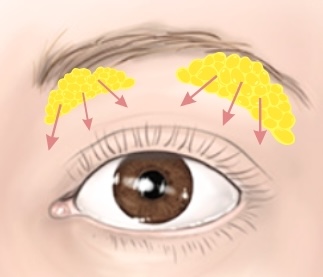
How to Correct Sunken Eyes
Sunken eyes can be addressed using several methods. Some temporary solutions involve injecting foreign substances or harvesting fat from other areas of the body, such as the abdomen or thighs, to transplant into the eyelids. However, these methods are not always safe. The eyelid is a delicate and thin area, and transplanted fat often fails to settle evenly, resulting in an uneven surface that may require additional grafting or removal.
At Ahnsungmin Plastic Surgery, we use the patient’s own orbital fat, carefully repositioned onto the eyelids to restore volume. This technique is considered the safest and most natural way to correct sunken eyes.
Case Example
The patient is a woman in her mid-50s experiencing severe eyelid drooping. The drooping causes her eyelids to fold inward, making the double eyelids appear larger and often creating multiple folds. She underwent upper blepharoplasty, eyelid contour correction, and orbital fat repositioning surgery to restore a more youthful and balanced eyelid appearance.
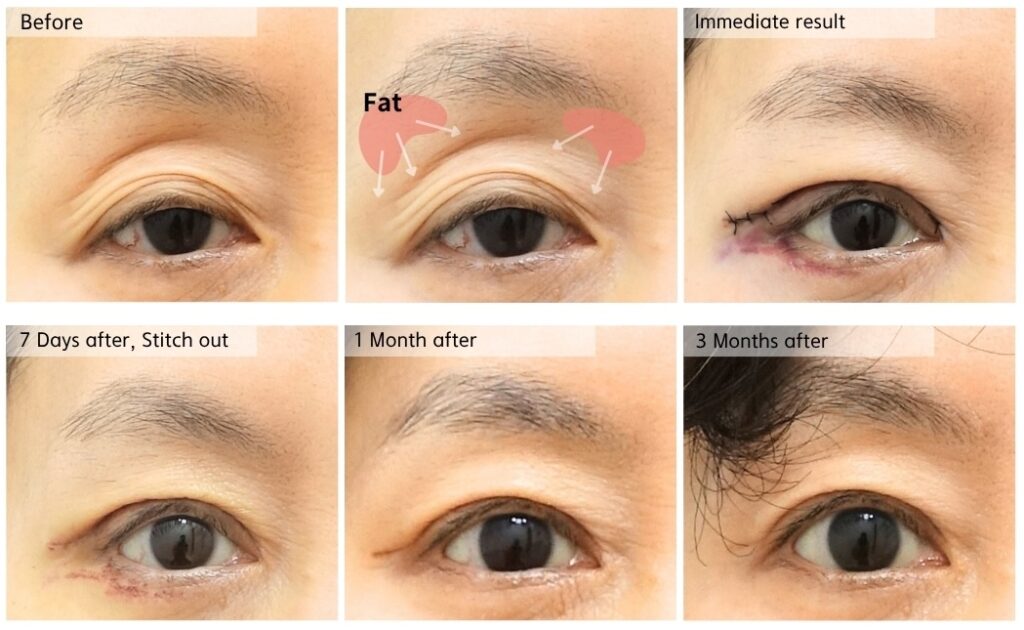
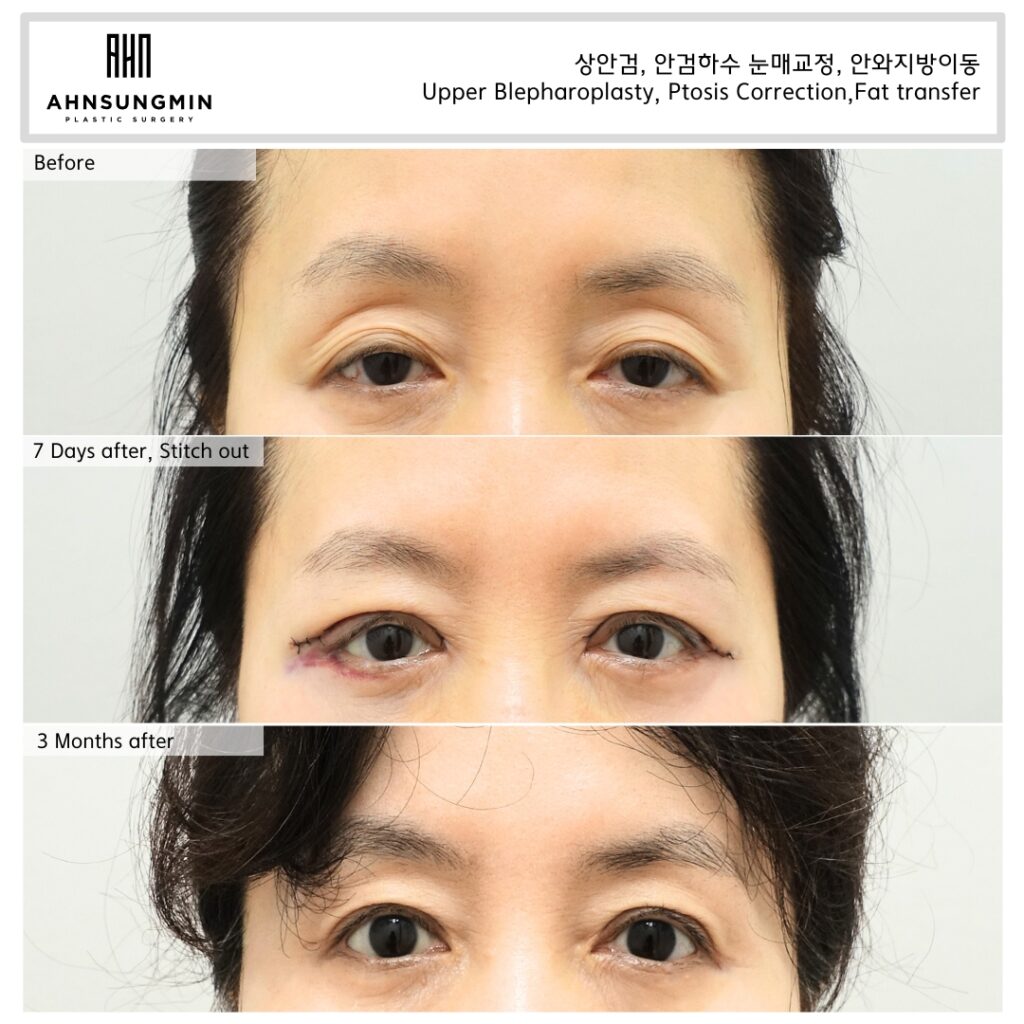
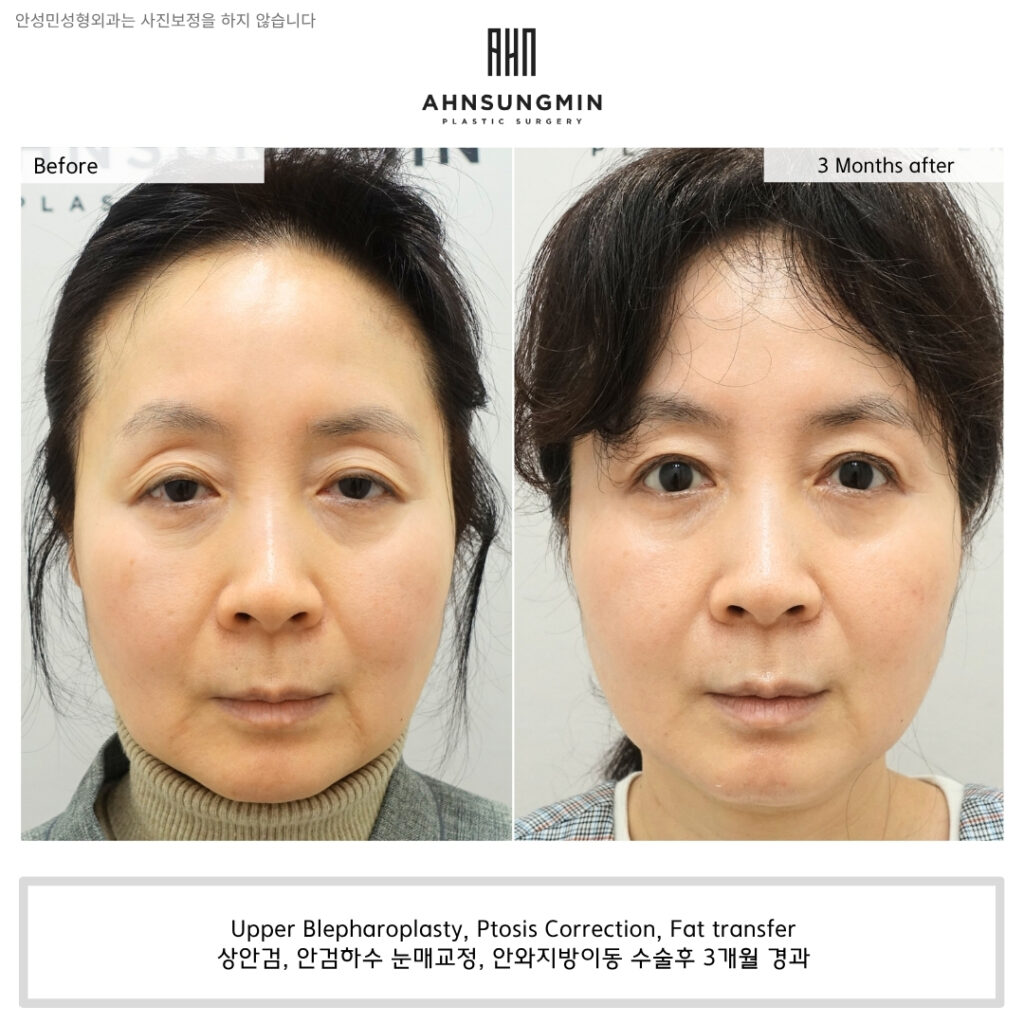
Orbital Fat Repositioning for Sunken Eyelids
This procedure improves sunken eyelids by repositioning the patient’s own orbital fat to add natural volume.
Using the patient’s own orbital fat allows for easy transfer, precise placement, and stable fixation in the hollow areas. Because the fat is moved within the same tissue layer, there is no foreign body sensation and minimal risk of inflammation.
When the patient has sufficient orbital fat, this method can be performed without additional fat harvesting, making it the most ideal and natural approach. While some degree of eyelid hollowing may reappear with age, it is usually much less severe than before. This makes it a safe and natural fat transfer technique.
Limitations of Traditional Fat Grafting
Fat grafting from other parts of the body, such as the abdomen or thighs, can be less predictable. During liposuction, blood vessels are disrupted, which can leave dead fat cells and lower survival rates.
Some transplanted fat may take, but portions may be reabsorbed or transformed into scar tissue. This can result in uneven distribution, hardened or lumpy areas, and irregular eyelid contours due to the thin skin of the eyelids.
To address these issues, orbital fat is carefully repositioned without cutting blood vessels, minimizing complications and ensuring a smoother, more natural outcome.